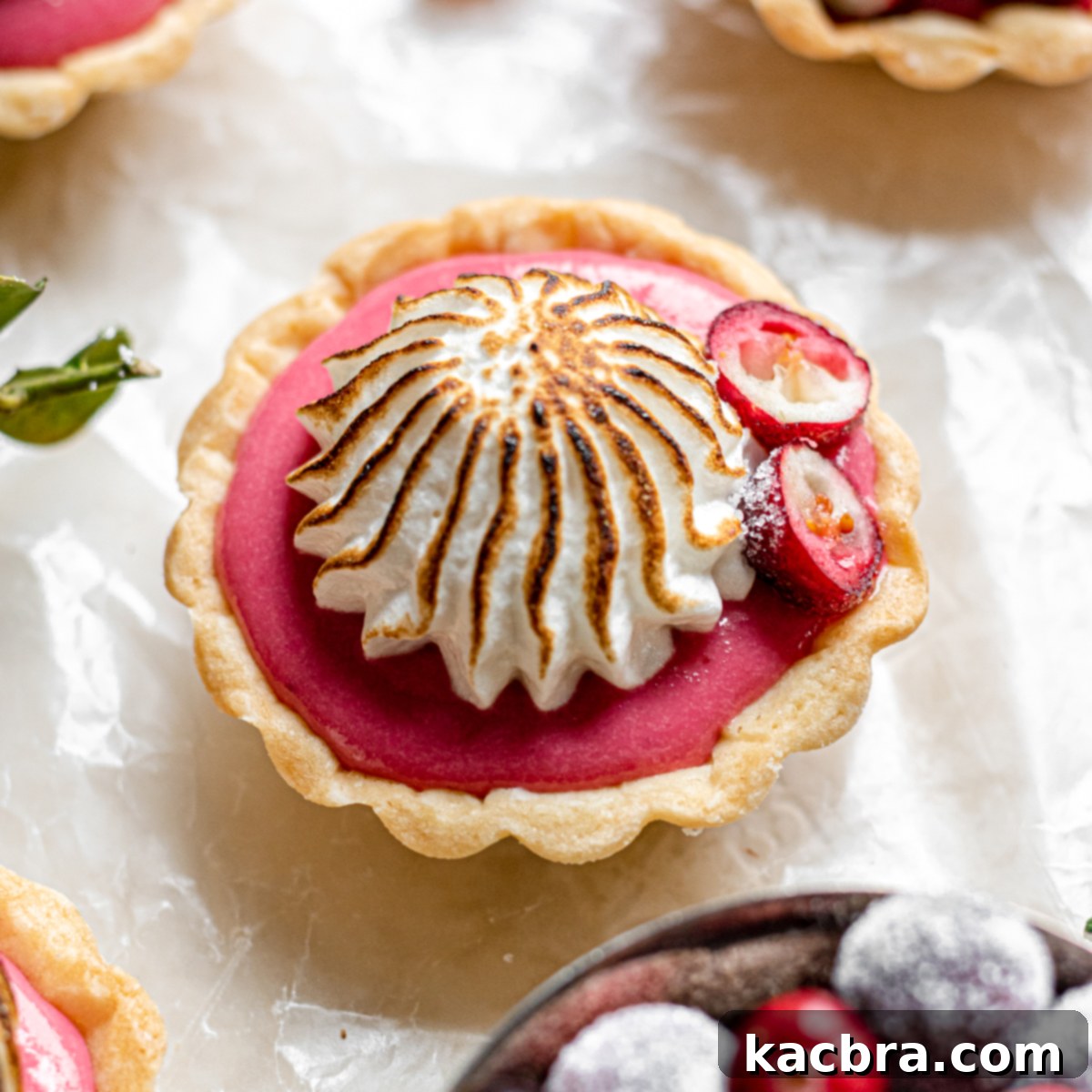
Delight your senses and elevate your holiday table with these exquisite Cranberry Curd Tarts. Each miniature masterpiece features a buttery, shortbread-like sweet tart crust, generously filled with a vibrant, tangy-sweet cranberry curd, and crowned with a cloud of perfectly toasted vanilla Swiss meringue. For an extra touch of festive charm and a burst of flavor, consider garnishing them with shimmering sugared cranberries. These elegant tartlets are a standout on their own or can be beautifully paired with other seasonal treats, offering a delightful contrast to something like mini lemon meringue tarts.
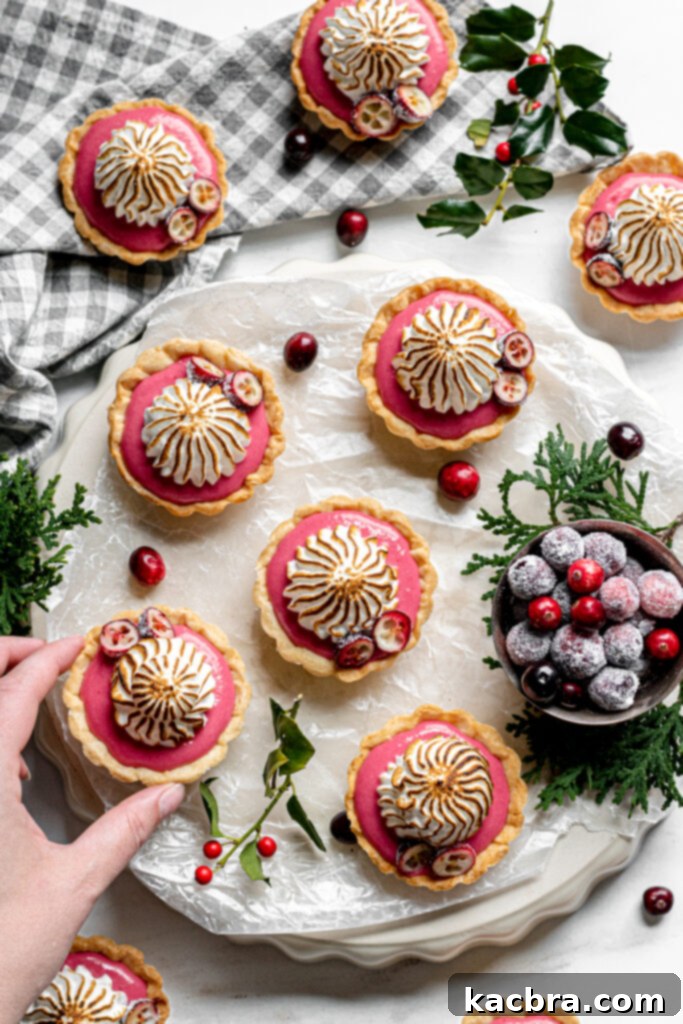
These Cranberry Curd Mini Tarts, often affectionately called tartlets, are not just a dessert; they are a celebration of holiday flavors and textures. The journey begins with a crisp yet tender pastry shell, providing the ideal foundation for the rich filling. Inside, you’ll discover a punchy cranberry curd that perfectly balances tartness with a subtle sweetness, creating a taste sensation that’s both comforting and invigorating.
Each tart is then artfully topped with a billowy vanilla Swiss meringue, gently toasted to golden perfection. This creates a mesmerizing visual appeal and adds a delicate caramelization to the airy topping, enhancing its flavor profile. The result is a harmonious blend of airy meringue, creamy curd, and crunchy crust—a truly irresistible experience. For an ultimate presentation and an additional layer of sweet-tart goodness, I highly recommend adding a scattering of fresh sugared cranberries. You can find my detailed sugared cranberries recipe here to complete this stunning dessert.
Our unique cranberry curd recipe sets itself apart by utilizing whole eggs instead of just yolks. This thoughtful approach yields a curd that is remarkably less “eggy” in taste and possesses a lighter, more delicate texture. Consequently, the filling maintains a softer, more pink hue compared to many yolk-only cranberry curd recipes you might encounter. While the natural color is lovely, for those desiring an even brighter, more vivid pink or red, a touch of food coloring can be added. This step is entirely optional, allowing you to customize the visual appeal to your preference.
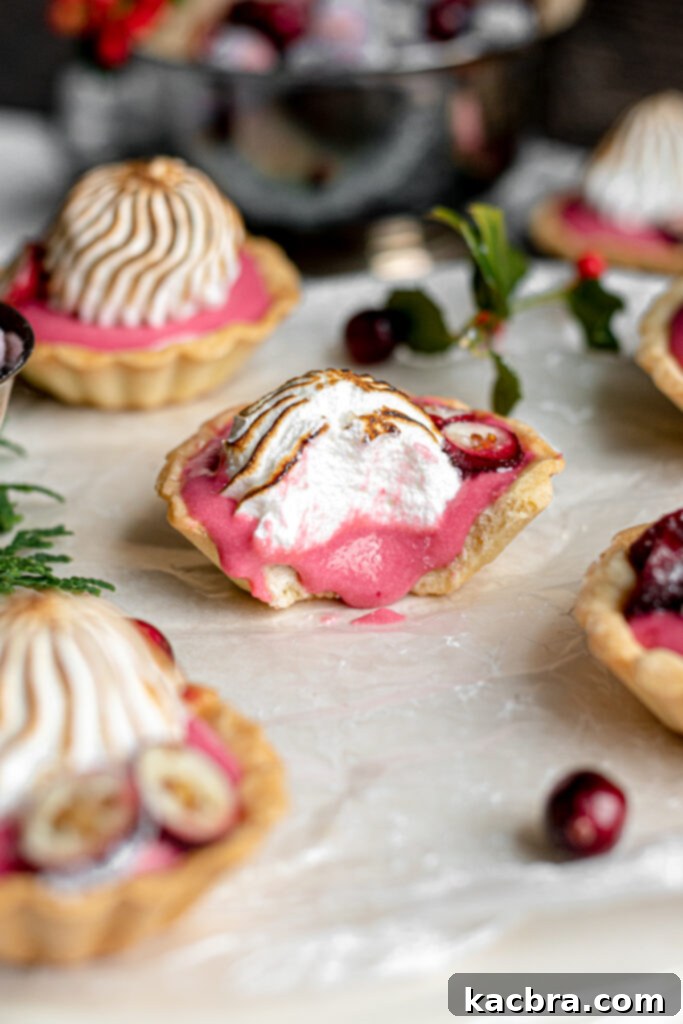
The foundation of these delightful tartlets is my signature, no-fail Sweet Tart Crust (Pâte Sucrée) recipe. This versatile pastry dough is a staple in my kitchen, also serving as the delicious base for my Blueberry White Chocolate Ganache Tart. For a fun and elegant twist, especially for chocolate lovers, you can easily substitute it with my Chocolate Sweet Tart Crust, adding a rich depth of flavor that complements the tart cranberries beautifully. Whichever crust you choose, you’re guaranteed a sturdy yet tender foundation for these festive treats.
Essential Ingredients for Perfect Cranberry Curd Tarts
Creating truly exceptional cranberry curd tarts begins with understanding the role of each ingredient. Here’s a closer look at what you’ll need and why it matters:
- Fresh Cranberries: These vibrant berries are the star of our curd, providing its signature tartness and beautiful color. You’ll cook them down and strain them for a silky-smooth puree. Plan to have extra on hand if you intend to make sugared cranberries for garnish, which truly elevate the presentation and flavor. Don’t let any leftovers go to waste; they’re perfect for making these delicious lemon cranberry bars!
- Large Eggs: Eggs play a crucial role across all three components. You’ll need one full egg for the tender tart crust, three full eggs for the smooth and light cranberry curd, and specifically two egg whites for the airy and stable Swiss meringue. Ensuring your eggs are fresh will impact the overall quality and stability of your tarts.
- Granulated Sugar: This provides the necessary sweetness to balance the tartness of the cranberries and the richness of the other components. It’s used in measured amounts for the crust, curd, and meringue, contributing to both flavor and structure.
- Unsalted Butter: High-quality unsalted butter is key for both the richness of the sweet tart crust and the luxurious texture of the curd. Ensure it’s at room temperature for optimal creaming in the crust and smooth incorporation into the curd.
- All-Purpose Flour: The backbone of our Sweet Tart Crust, all-purpose flour provides structure and a delicate crumb. Proper measurement is essential for the desired tender, yet crisp, texture.
- Food Coloring (Optional): Pink or red food coloring can significantly enhance the visual appeal of the cranberry curd. Because our recipe uses whole eggs, the curd naturally has a lighter, more pinkish hue. A small touch of food coloring can intensify this, making your tarts even more festive and visually striking.
Necessary Tools for Baking Success
Having the right tools can make all the difference in achieving perfect cranberry curd tarts. Here’s what you’ll need:
- Tartlet Pans: These individual pans are essential for shaping the mini tart shells. If you don’t own them or prefer an alternative, a standard muffin tin can be used with similar instructions, though the shape will differ slightly.
- Stand Mixer: Equipped with both paddle and whisk attachments, a stand mixer is invaluable for creaming the butter and sugar for the crust, and whipping the meringue to perfect stiff peaks. A reliable handheld mixer can also be used as a substitute.
- Piping Bags & Tips: While not strictly necessary, using piping bags and decorative tips makes filling the tartlets with curd and topping them with meringue significantly easier and more aesthetically pleasing.
- Kitchen Torch: An optional but highly recommended tool for achieving that beautiful, lightly browned finish on your Swiss meringue. It offers precise control and a professional look that’s hard to replicate otherwise.
How to Make Festive Cranberry Curd Tarts: A Detailed Guide
To ensure a smooth and enjoyable baking experience, it’s helpful to plan your timeline. This recipe is designed with a thoughtful progression: first the cranberry curd (allowing ample time to chill), then the tartlet shells, and finally the meringue. For best results and reduced stress, I highly recommend preparing the cranberry curd and baking the tartlet shells the day before you plan to serve them.
This advance preparation allows the curd sufficient time to fully set and the shells to cool completely, ensuring optimal texture. On the day of serving, all that’s left is to prepare the meringue and assemble your stunning tarts. If you’re also making the optional sugared cranberries, plan to prepare those on the day you assemble for maximum freshness and sparkle.
Crafting the Silky Cranberry Curd
Unlike some recipes that bake the curd directly in the crust, our cranberry curd is prepared entirely on the stovetop. This method ensures a consistently smooth and luscious texture. Once cooked and cooled, the curd is then elegantly piped or spooned into the pre-baked tartlet shells.
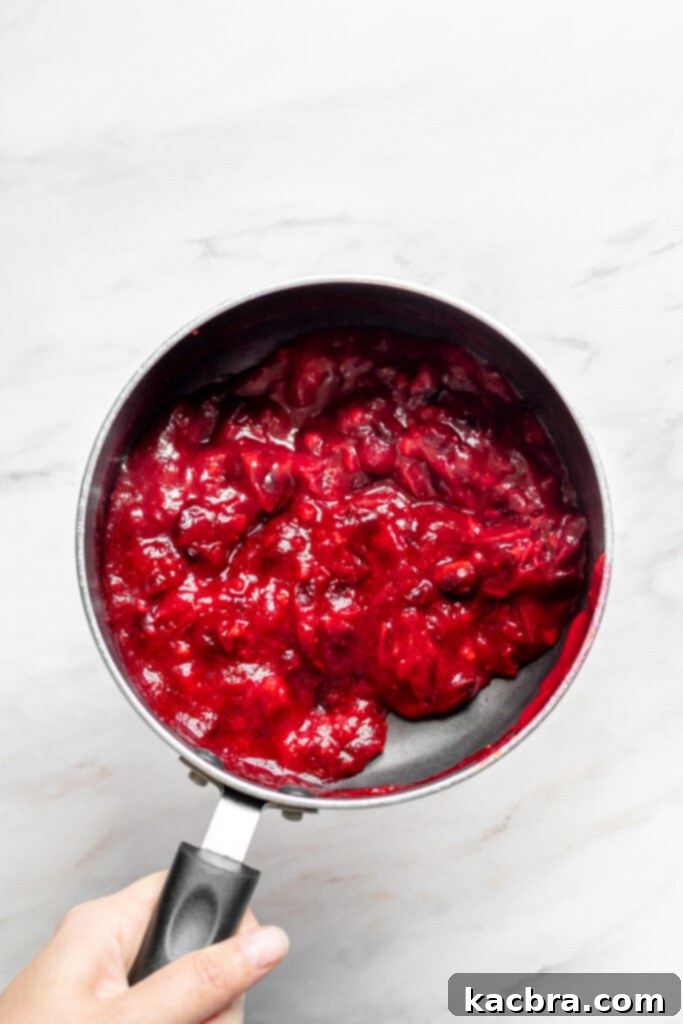
STEP 1: Begin by combining the fresh cranberries and water in a medium saucepan over medium heat. Cook the mixture gently, stirring occasionally, until all the cranberries have softened and burst, releasing their vibrant juices. You can use a rubber spatula to help break down any stubborn berries, ensuring a consistent texture. This process usually takes about 10-15 minutes.
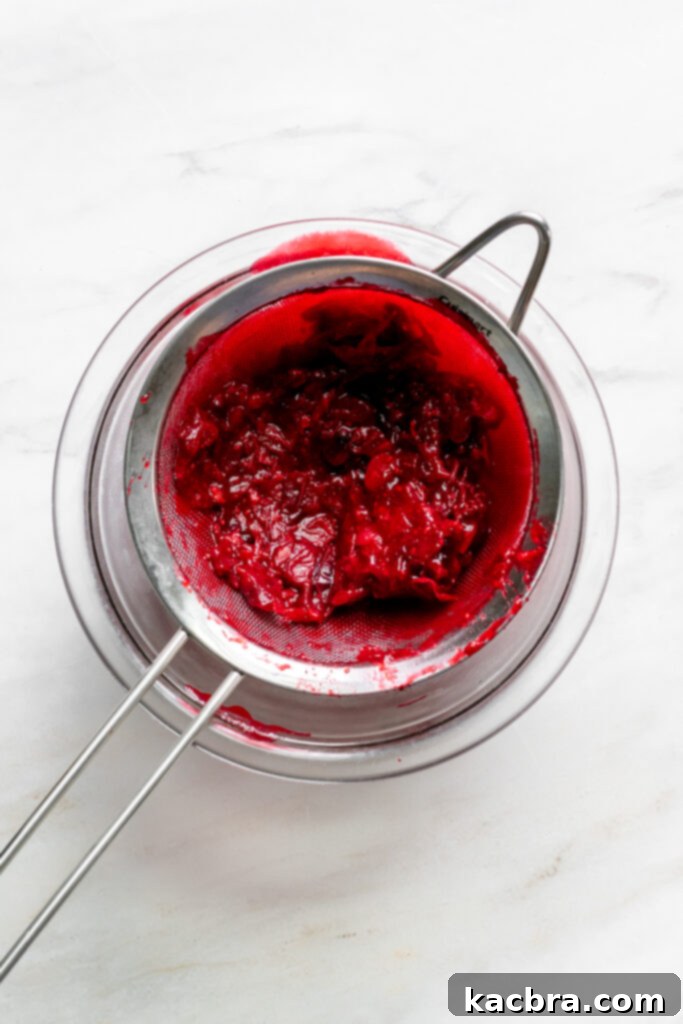
Once cooked, carefully pass the cranberry mixture through a fine-mesh sieve into a clean bowl. Use a rubber spatula or wooden spoon to press the fruit pulp thoroughly against the sieve, extracting as much liquid and smooth puree as possible. Remember to scrape any accumulated puree from the underside of the sieve into your bowl. This crucial step removes all the fibrous cranberry pulp and skins, resulting in an incredibly smooth and refined curd. You should aim for approximately ¾ cup or about 160g of smooth cranberry puree.
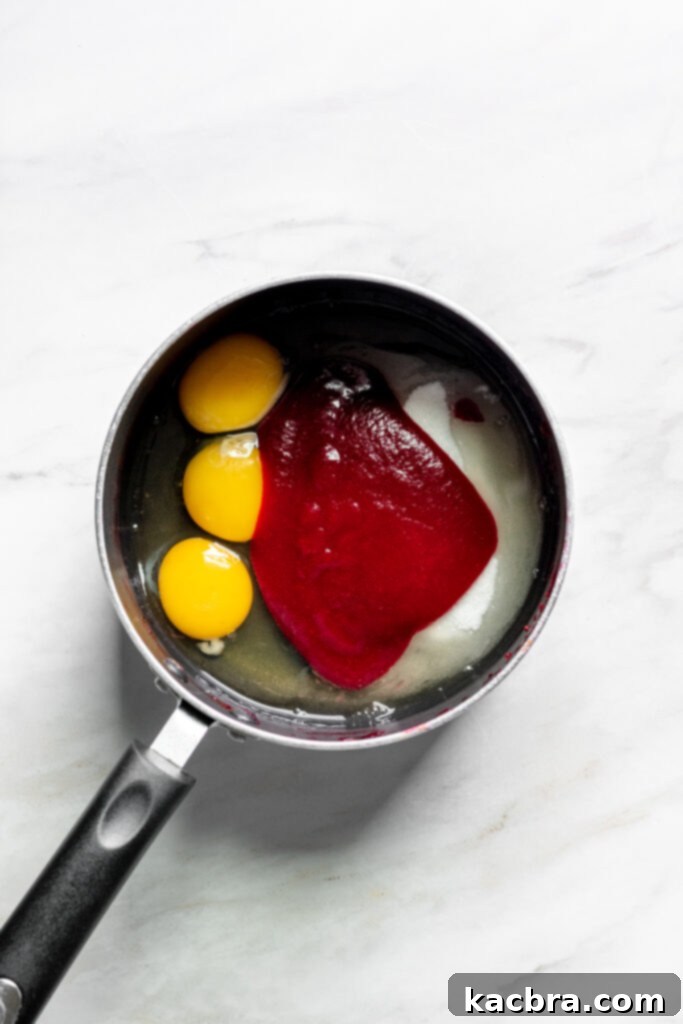
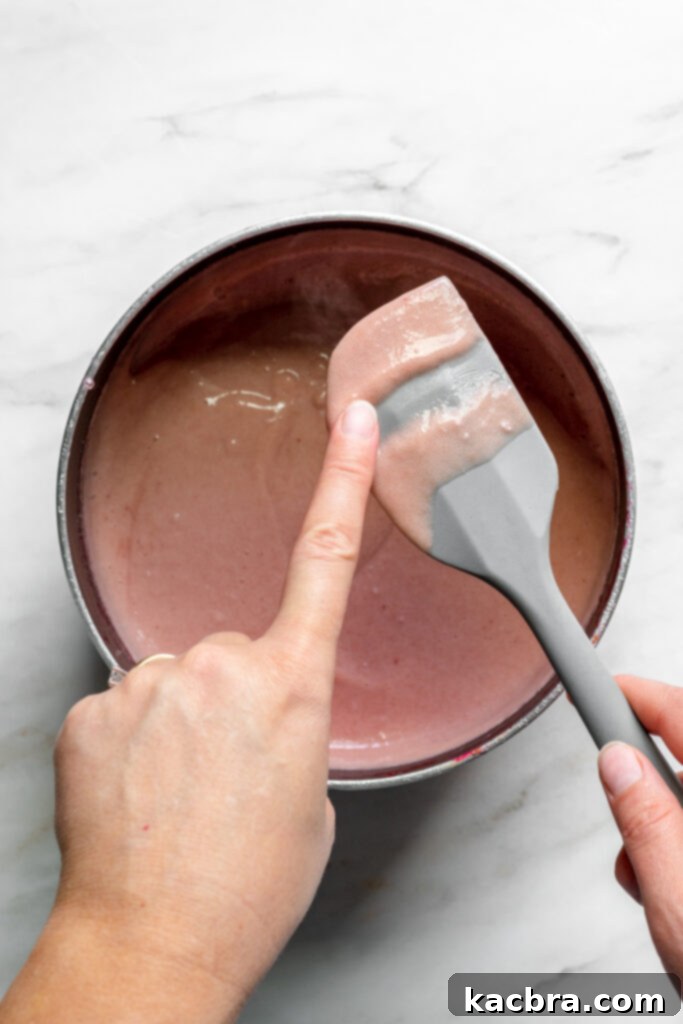
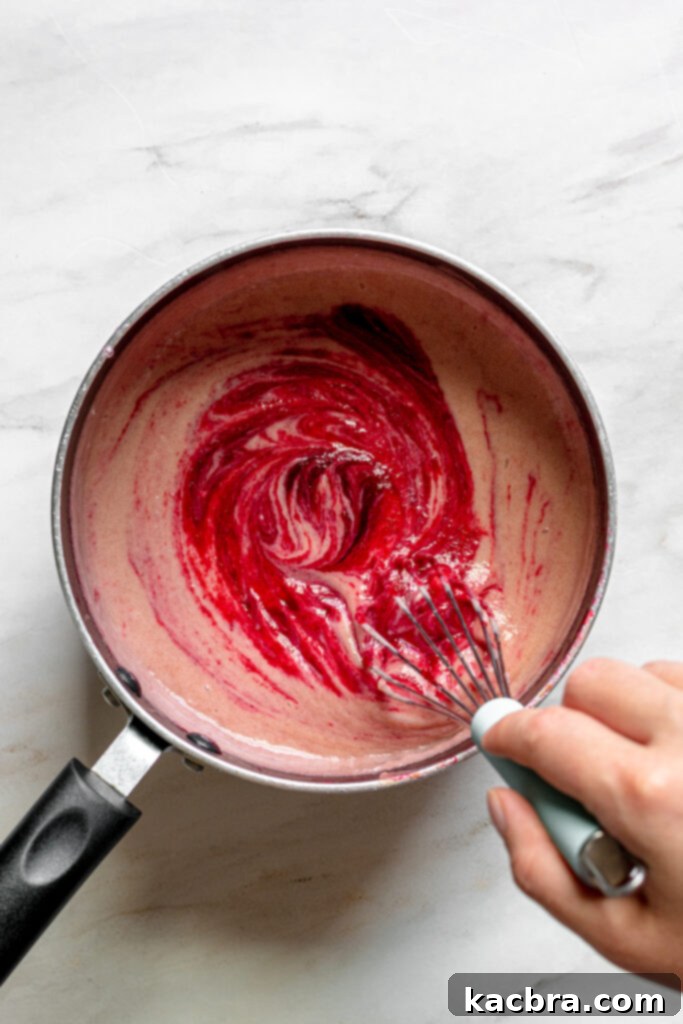
STEP 2: In a separate medium saucepan, set over medium-low heat, whisk together the whole eggs, granulated sugar, and half of the prepared cranberry puree. It is essential to whisk constantly and thoroughly, ensuring you reach into the corners of the pan, to prevent the eggs from scrambling. Continue whisking until the mixture visibly thickens and begins to bubble gently. This transformation typically occurs within five to eight minutes, though the exact time can vary depending on your stovetop’s heat. You’ll notice a distinct change in viscosity, and when you lift your spatula, you should be able to wipe a clear streak across its surface, indicating the curd has reached the proper consistency.
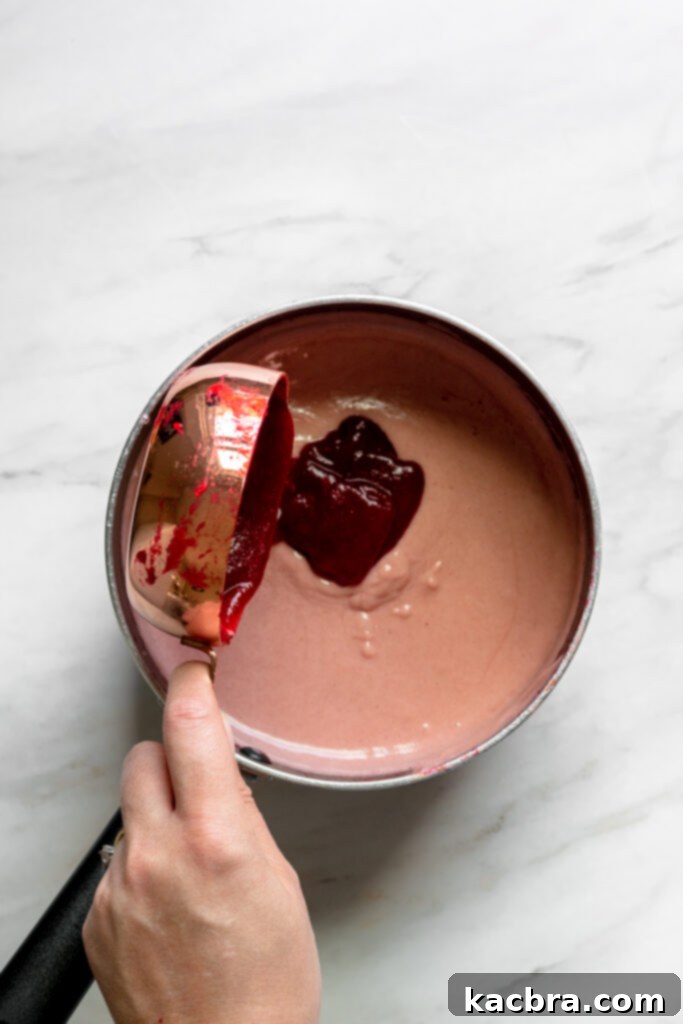
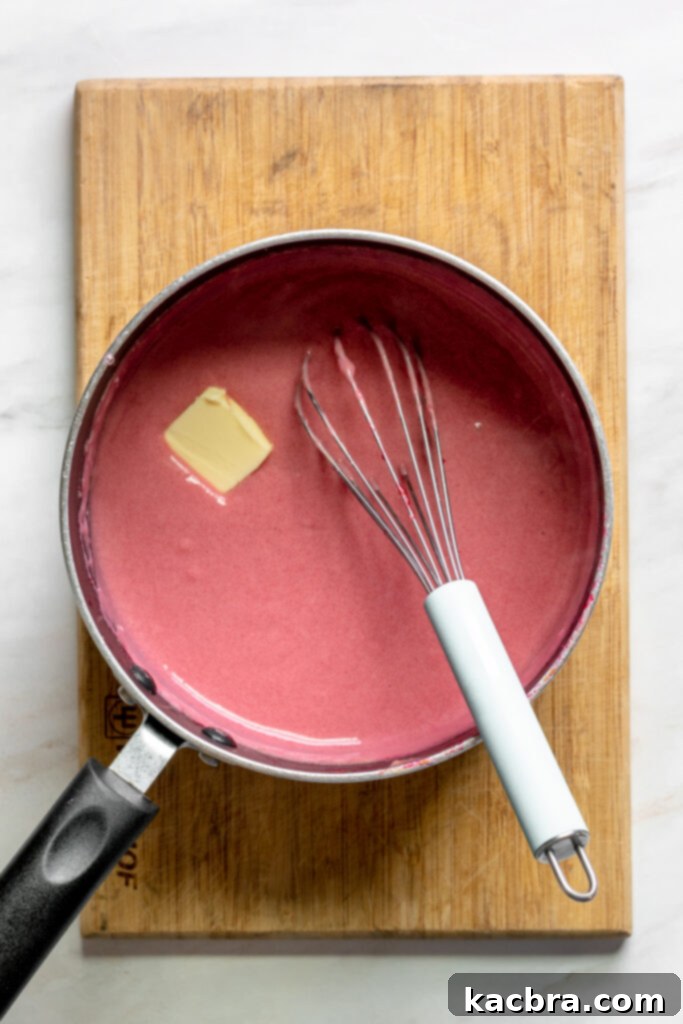
STEP 3: Once the curd has thickened appropriately, remove the saucepan from the heat immediately. Begin incorporating the unsalted butter, one tablespoon at a time, whisking continuously after each addition until it is completely melted and fully emulsified before adding the next piece. This gradual addition ensures a smooth and glossy finish. Finally, stir in the remaining cranberry puree to combine all the flavors. At this stage, if you desire a deeper, more vibrant color for your curd, feel free to add a tiny amount of red or pink food coloring, stirring until the desired shade is achieved.
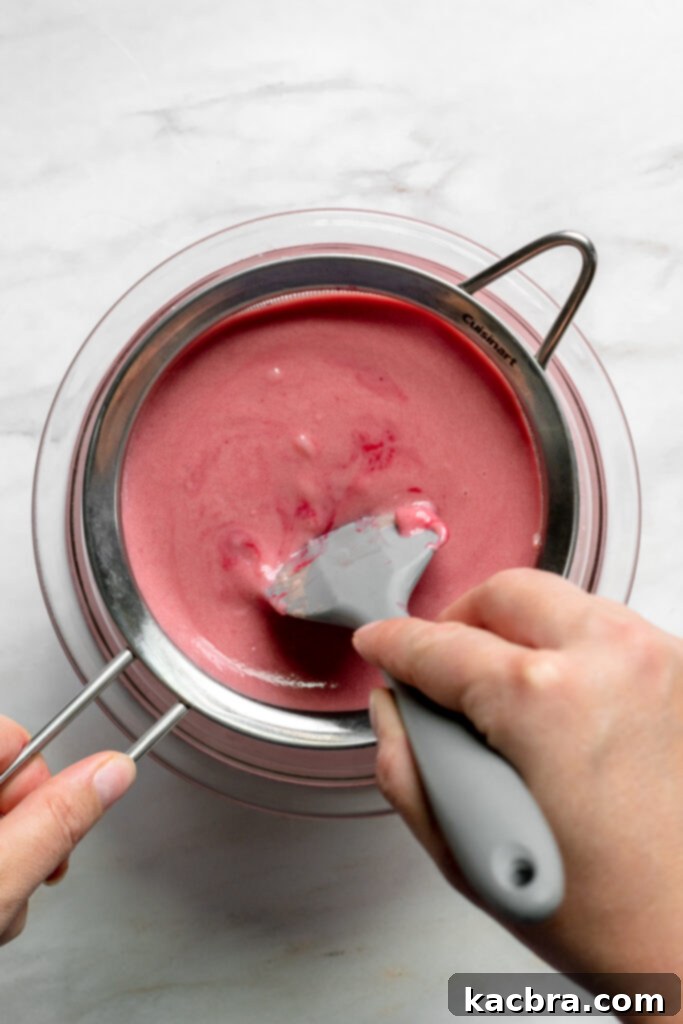
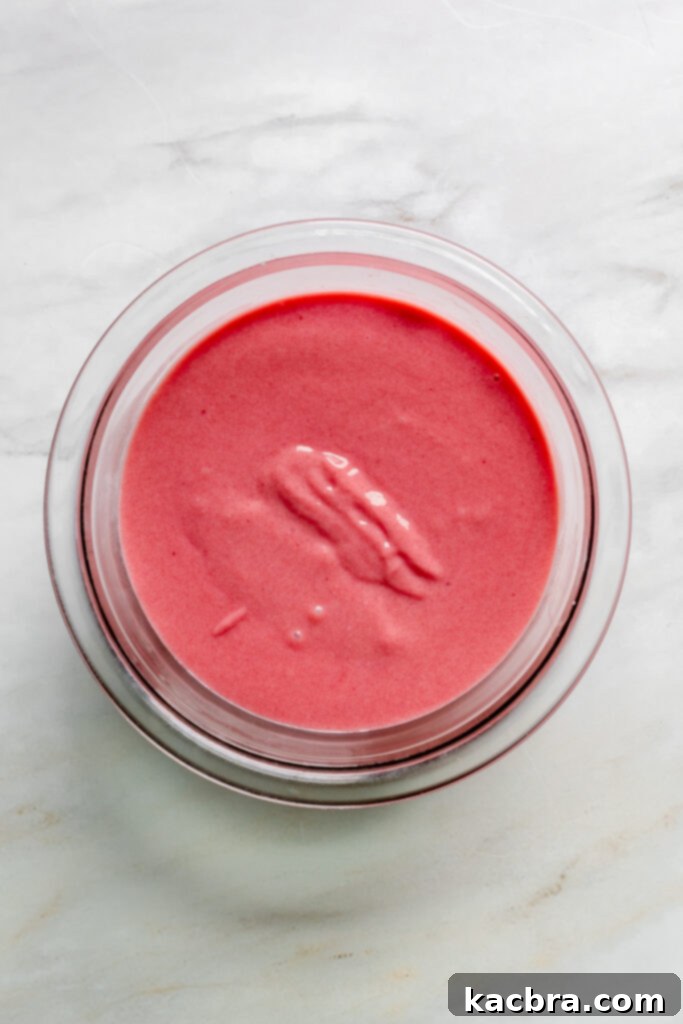
To ensure absolute smoothness and remove any minuscule pieces of cooked egg that might have formed, pass the warm curd through a fine-mesh sieve one last time. This step guarantees a perfectly silky texture. Cover the surface of the curd directly with plastic wrap, pressing it down so it touches the curd completely. This prevents a “skin” from forming as it cools. Chill the cranberry curd in the refrigerator for at least three to four hours, or preferably overnight, to allow it to fully set and firm up before assembly.
Baking the Perfect Sweet Tart Shells
For a comprehensive, step-by-step guide to mastering this delightful pastry, I encourage you to read through my dedicated Sweet Tart Crust post. Below, you’ll find a concise version tailored for these mini tarts.
STEP 4: In the bowl of a stand mixer fitted with the paddle attachment (or using a reliable hand mixer), cream together the softened unsalted butter, granulated sugar, and kosher salt until the mixture is light, fluffy, and completely smooth. Incorporate the large egg, mixing until it is fully blended, then pause to scrape down the sides of the bowl to ensure everything is evenly combined. Gradually add the all-purpose flour, mixing on low speed until the flour is just incorporated and a cohesive dough forms. Avoid overmixing to keep the crust tender.
Remove the dough from the bowl, flatten it into a disc approximately 1 inch thick, and wrap it tightly in plastic wrap. Place this disc in the refrigerator to chill for about two hours. This chilling period is crucial as it allows the butter to firm up, preventing the dough from becoming sticky and ensuring a flaky, tender crust.
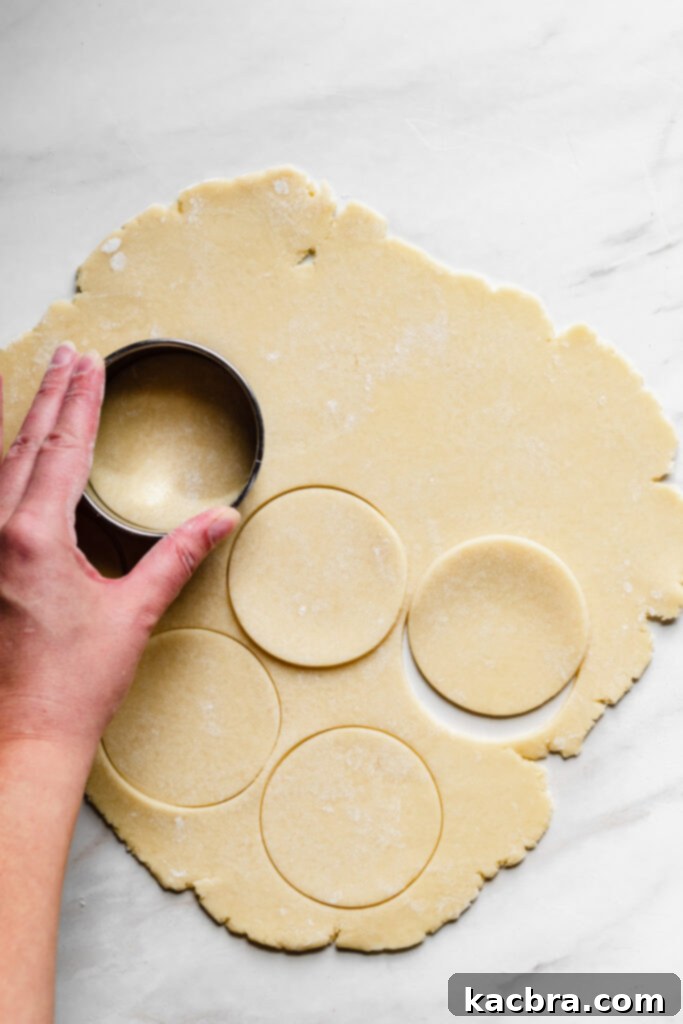
STEP 5: Once chilled, remove the dough from the fridge and its plastic wrap, letting it rest at room temperature for about 15 minutes to become slightly more pliable. Lightly flour your work surface and rolling pin. Roll out the dough evenly until it reaches a thickness of about ⅛ to ¼ inch. This sweet tart dough is wonderfully forgiving; if it cracks during rolling, simply press it back together—you can patch it seamlessly later. Use a cookie cutter or a drinking glass that is just slightly larger than your tartlet pans to cut out 12 individual rounds. Typically, you can get about 9 rounds from the initial roll; gather the scraps, gently re-roll them, and cut the remaining three. Lightly flour your cutter as needed to prevent sticking.
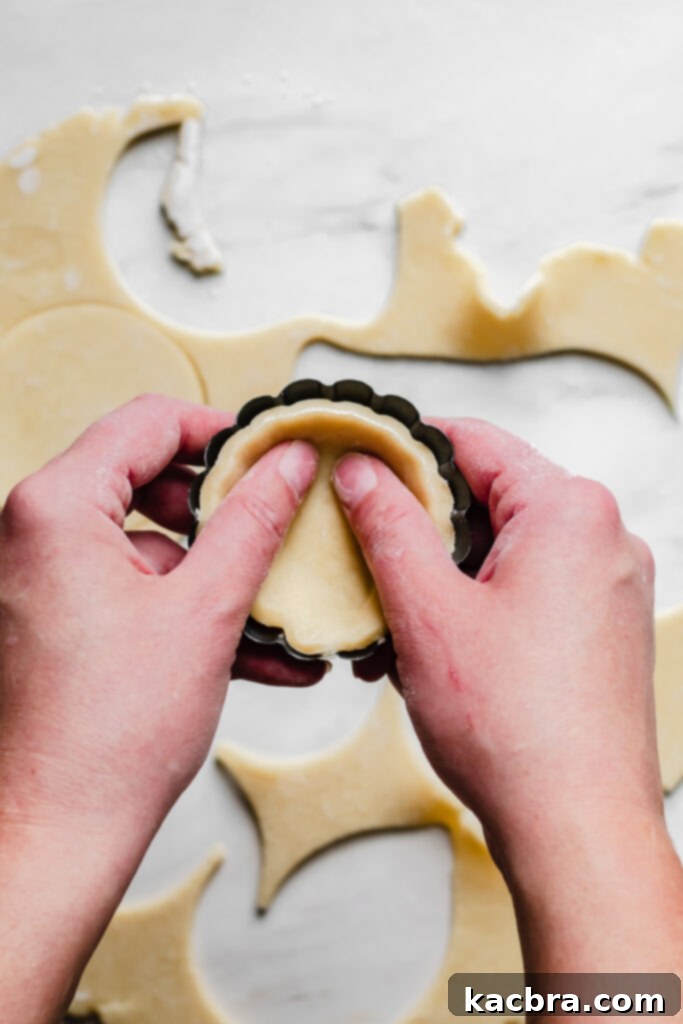
Carefully place each dough round into a tartlet pan, gently pressing it into the bottom and up the sides. Ensure an even thickness around the edges. Transfer the filled pans to a cookie sheet and place them in the freezer for 15 minutes. This quick freeze helps the crust maintain its shape during baking. While the dough chills, preheat your oven to 325℉/163℃.
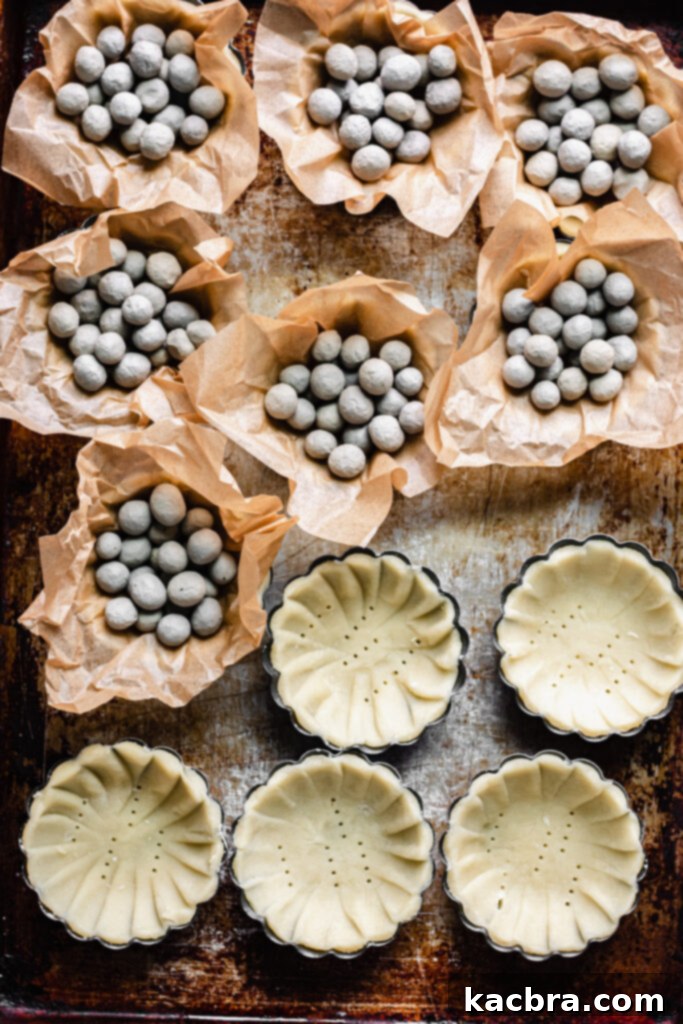
STEP 6: Remove the tart shells from the freezer. Using a fork, “dock” the bottom of each tart shell multiple times; this prevents the crust from puffing up excessively. Line each shell with a small piece of parchment paper, then fill them completely with pie weights (or dried beans/rice). This “blind baking” technique prevents the sides from collapsing and the bottom from bubbling.
Bake for 10 minutes. Carefully remove the pie weights and parchment paper, then continue to bake the crusts for an additional 10-15 minutes, or until they are a beautiful light golden brown and appear dry and firm in the center. The middle should not look moist or raw. Once baked, remove the pans from the oven and transfer them to a wire rack to cool completely. Once cool, the crusts should slip effortlessly out of their pans, ready for assembly.
Whipping Up Fluffy Swiss Meringue
Swiss meringue is renowned for its smooth, stable, and glossy texture, making it an ideal topping for these elegant tarts.
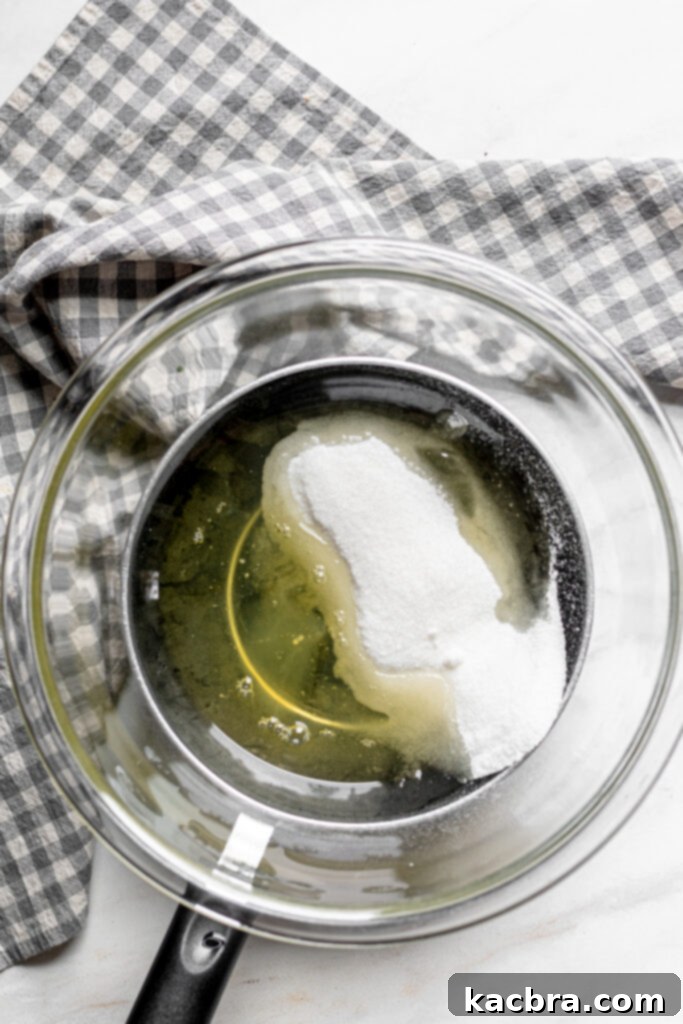
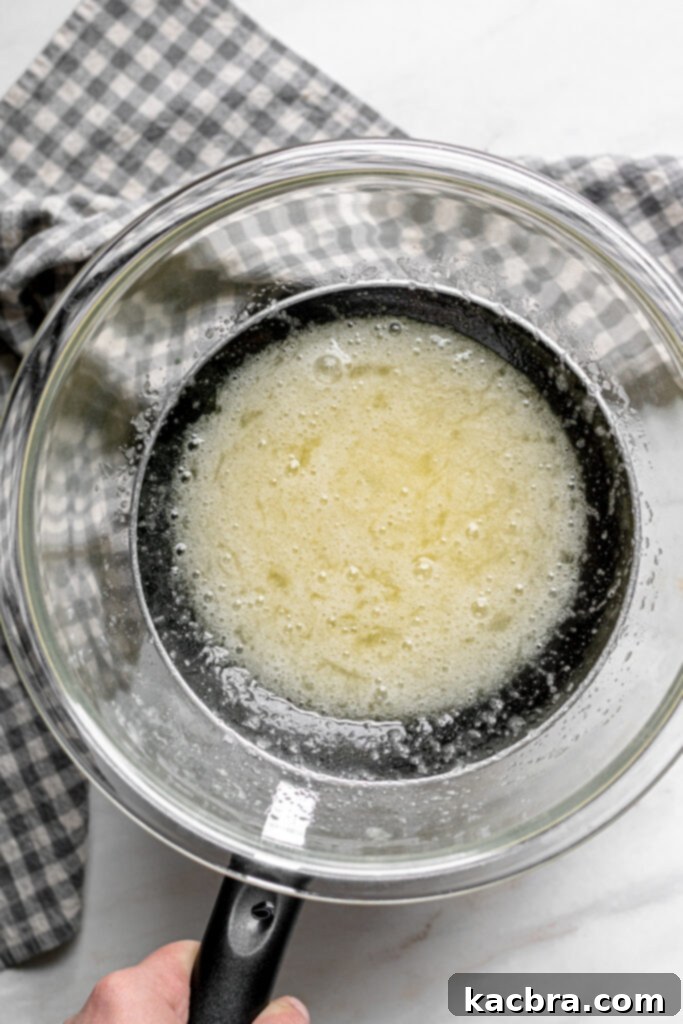
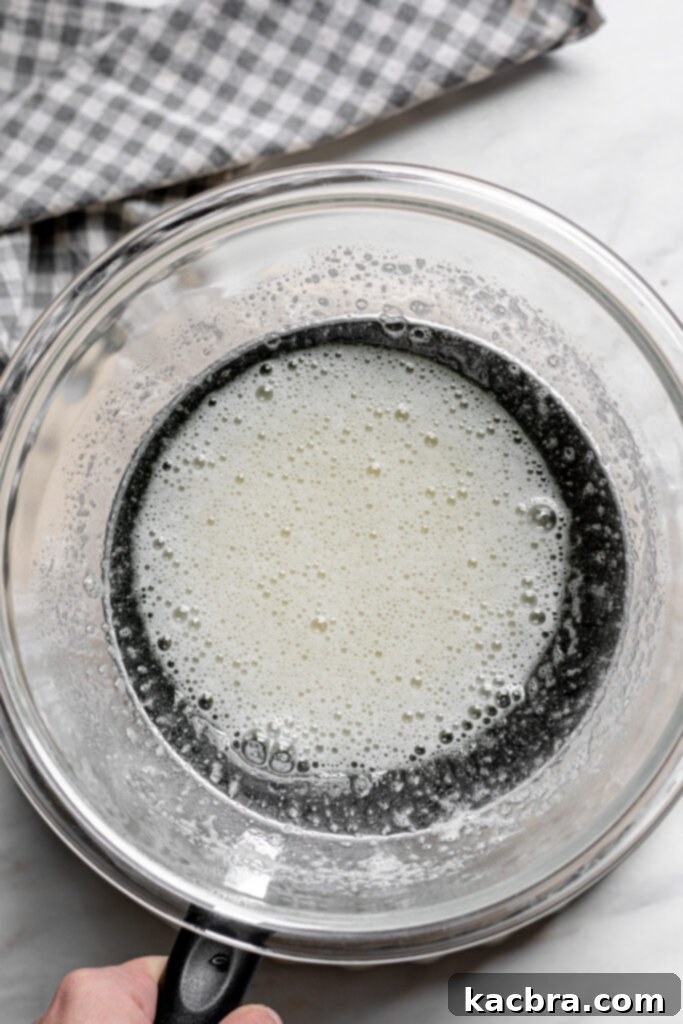
STEP 7: Prepare a double boiler: fill a saucepan with about 1 inch of water and bring it to a simmer over high heat. Place a heatproof bowl securely over the saucepan, ensuring the bottom of the bowl does not touch the simmering water. To this bowl, add the egg whites, granulated sugar, and a pinch of salt. Whisk the mixture gently but continuously until it feels warm to the touch (about 150℉/66℃ on an instant-read thermometer) and, crucially, until all the sugar granules have completely dissolved. You can test this by rubbing a small amount of the mixture between your fingers; if it feels gritty, continue whisking over the heat until smooth.
STEP 8: Once the egg white mixture is warm and smooth, carefully transfer it to the clean bowl of a stand mixer fitted with the whisk attachment (or use a powerful handheld mixer). Begin whipping on medium speed for approximately one minute to start incorporating air.
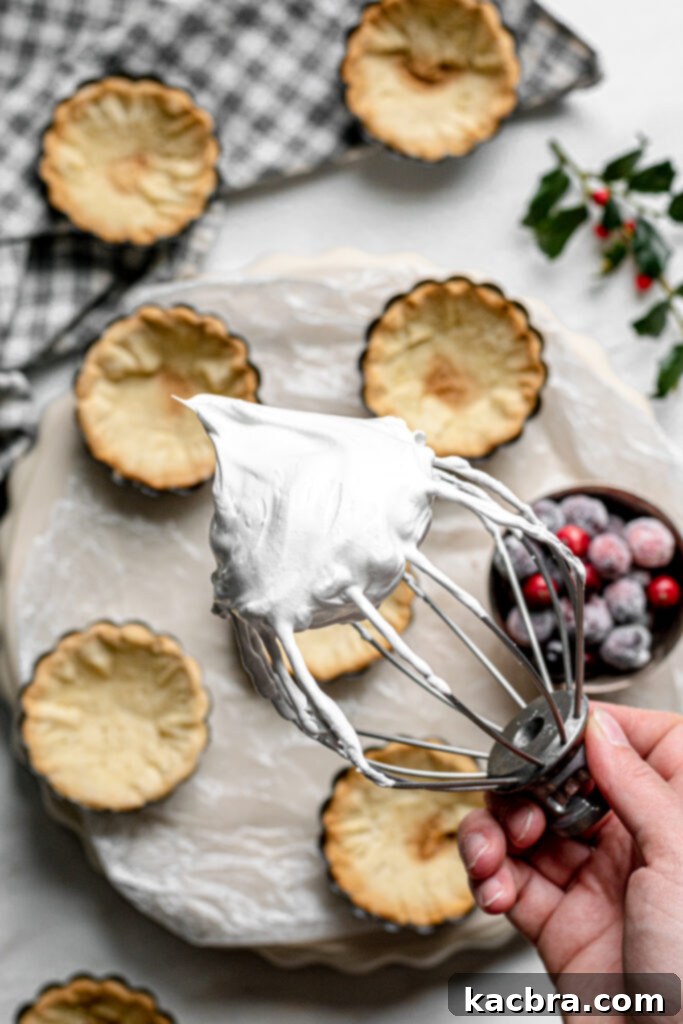
Increase the speed to high and continue whipping until stiff, glossy peaks form. The meringue is ready when it holds its shape firmly when the whisk is lifted, and when you can confidently turn the bowl upside down without any movement or sliding of the meringue. At this point, add the vanilla paste or extract and mix briefly on low speed just until combined. The vanilla adds a wonderful aromatic depth that complements the tart cranberry curd beautifully.
Assembling Your Elegant Cranberry Tartlets
Now for the fun part – bringing all the components together to create your stunning mini cranberry tarts!
To assemble, pipe or spoon the chilled cranberry curd into each pre-baked tartlet shell, filling it almost completely. Next, pipe or dollop generous mounds of the freshly made Swiss meringue on top of the curd. For a beautiful, professional finish and enhanced flavor, lightly brown the meringue using a kitchen torch. Alternatively, you can place the tartlets very briefly and carefully under a preheated, very hot broiler, keeping a watchful eye to prevent burning.
If you wish to add that extra special garnish, follow my recipe for Sugared Cranberries! They are incredibly simple to make and offer a delightful balance of sweet and tart, providing a wonderful textural contrast and an undeniable festive touch that truly makes these tartlets shine.
Storing and Freezing Tips for Freshness
Proper storage ensures your Cranberry Curd Tarts remain delicious and beautiful. Once fully assembled with the meringue, these tartlets can be stored uncovered in the refrigerator for up to three days. The Swiss meringue is wonderfully stable, meaning it will hold its shape and texture well during refrigeration. However, for the most appealing presentation and best flavor, I highly recommend torching the meringue right before serving to achieve that perfect golden hue and delicate caramelization.
For longer storage, the baked tart shells can be kept at room temperature in an airtight container for up to 3 days, or frozen for up to 3 weeks. The cranberry curd can be stored separately in an airtight container in the refrigerator for up to two weeks, or frozen for up to 2 months. It’s best to assemble and add the meringue fresh.
Frequently Asked Questions & Expert Baking Tips
What to do with leftover cranberry curd?
If you find yourself with any extra cranberry curd (a delightful problem to have!), there are many delicious ways to enjoy it. It’s fantastic spread on warm toast, stirred into yogurt, added to pancakes or waffles, used as a filling for cupcakes, or simply enjoyed by the spoonful! Store any leftover curd in a sealed container in the fridge for up to two weeks.
Can I use frozen cranberries for the curd?
Yes, you can absolutely use frozen cranberries! There’s no need to thaw them first. Simply add them to the saucepan with the water and proceed with the recipe as directed. They will break down just as effectively as fresh cranberries during the cooking process.
Troubleshooting common tart issues.
Crumbly Dough: If your sweet tart dough is too crumbly, it might be too cold or dry. Let it warm up slightly at room temperature, or add a tiny amount of ice water (half a teaspoon at a time) to bring it together.
Runny Curd: A runny curd usually means it hasn’t cooked long enough to thicken properly. Return it to medium-low heat and continue whisking constantly until it coats the back of a spoon and a streak can be wiped.
Weeping Meringue: If your meringue starts to “weep” (release liquid), it might be due to humidity or undissolved sugar. Ensure all sugar is fully dissolved over the double boiler and whip to very stiff peaks. Torch right before serving for best results.
More Delectable Desserts to Explore
If you’ve enjoyed these Cranberry Curd Tarts, you might love exploring these other delightful recipes:
- Blueberry White Chocolate Ganache Tart
- Caramel Brownie Pretzel Pie
- Cinnamon Panna Cotta Tart
- Lemon Meringue Tartlets
Connect with The Cozy Plum Community!
I absolutely love seeing your culinary creations! Be sure to tag me on Instagram @thecozyplum and use #TheCozyPlum when you share your delicious Cranberry Curd Tarts. For even more baking inspiration, dessert ideas, and seasonal treats, follow me on Pinterest.
Pin This Recipe for Later Inspiration

📖 Recipe Card: Mini Cranberry Curd Tarts
Cranberry Curd Tart (mini version)
Authored by Callan Wenner
These festive Cranberry Curd Tarts are made with a shortbread-like sweet tart crust, filled with tangy and sweet cranberry curd, and topped with a vanilla meringue. Add sugared cranberries for even more color and flavor!
Average Rating: 5 from 2 votes
Print Recipe | Pin Recipe
Prep Time: 1 hr
Cook Time: 15 mins
Chill Time: 4 hrs
Total Time: 5 hrs 15 mins
Course: Dessert
Cuisine: American, French
Servings: 12 tartlets
Calories: 256 kcal
Equipment
- Stand mixer with paddle attachment, or handheld mixer
- Tartlet pans or muffin tin
- Piping bag and tips (or ziptop bag)
- Kitchen torch (optional)
Ingredients
Cranberry Curd
- 8 oz fresh cranberries
- ¾ cup water (6oz)
- 3 large eggs
- ½ cup granulated sugar (100g)
- 6 tablespoons unsalted butter, sliced into tablespoon pieces (85g)
Sweet Tart Crust
- 6 tablespoons unsalted butter, room temperature (85g)
- ⅓ cup granulated sugar (67g)
- ⅛ teaspoon kosher salt
- 1 large egg, room temperature
- 1 ¼ cup + 2 tablespoons all-purpose flour (165g)
Swiss Meringue
- 2 large egg whites (~50g)
- ½ cup granulated sugar (100g)
- 1 teaspoon vanilla paste or extract
Instructions
Cranberry Curd
- Add the cranberries and water to a saucepan over medium heat and cook until the cranberries have all broken down and released their juices. Use a rubber spatula to help break them up.
- Pass the cranberries through a fine mesh sieve into a bowl, pushing it through with a rubber spatula or wooden spoon (and don’t forget to scrape it off the bottom of the sieve). The puree should produce about ¾ cup or ~160g.
- In a medium saucepan over medium low heat, whisk together the eggs, sugar, and half of the cranberry puree. Whisk constantly until the mixture begins to thicken and starts to bubble (be sure to get in the corners). This usually happens within five minutes. You will see a noticeable difference in the viscosity and will be able to wipe a streak through to your spatula.
- Once thickened, remove from the heat and whisk in one tablespoon of butter at a time, not adding another piece until the first is totally incorporated. Add the remaining cranberry and stir to combine. At this point, if you’d like a darker curd, feel free to add a bit of red or pink food coloring.
- Pass the curd through a fine mesh sieve to remove any potentially cooked egg pieces. Cover the curd with plastic wrap, putting the wrap directly onto the curd to prevent a skin from forming, and chill for at least four hours in the fridge to set.
Sweet Tart Crust
- In the bowl of a stand mixer fitted with the paddle attachment (or with a hand mixer), cream together the butter, sugar and salt until smooth. Add in the egg and mix until incorporated, then scrape down the sides. Add the flour and mix on low until just incorporated.
- Wrap the dough in plastic wrap and flatten into a 1 inch thick disc. Place in the fridge for about two hours.
- Remove the dough from the fridge and plastic wrap and allow it to sit at room temperature for about 15 minutes. Flour your work surface and rolling pin and roll out the dough until it’s ⅛-¼” thick. This dough is very forgiving, so if it cracks, you can patch it later.
- Use a cookie cutter (or drinking glass) just slightly larger than your tartlet pans to cut out 12 rounds. You can typically get 9 out of the first round, then squish up the scraps, re-roll, and cut the final three. Lightly flour the cutter if it begins to stick.
- Place each dough round into the pan and press into the sides and bottom, gently working it up the sides a bit. Transfer to a cookie sheet and freeze for 15 minutes. Also preheat the oven to 325℉/163℃.
- Remove the dough from the freezer and dock the bottom of the tart with a fork multiple times. Line the shells with parchment paper and fill completely with pie weights (or dried beans/rice).
- Bake for 10 minutes. Carefully remove the weights and parchment, and continue to bake for another 10-15 minutes until lightly golden. When done, the middle of the tart should not look moist or raw. Remove the pans to a wire rack to cool completely, then remove the crust from the shells before assembling. They should slip right out.
Swiss Meringue
- Fill a saucepan with about 1 inch of water and turn to high heat. Add a heat proof bowl over top that fits securely. You don’t want any of the water touching the bottom of the bowl.
- To the bowl, add the egg whites, sugar, and salt and whisk to combine. Continue lightly whisking until the mixture is warm and the sugar granules have dissolved. Check this by rubbing your fingers together in the mixture. If you can still feel sugar granules, continue cooking. If you have a thermometer, cook it to around 150℉/66℃.
- Once the mixture is ready, transfer it to the bowl of a stand mixer fitted with the whisk attachment (or use a handheld mixer) and whip on medium speed for about a minute.
- Turn to high speed and whip until stiff peaks form. Once the meringue hits stiff peaks, add the vanilla then mix once more to combine. The meringue is ready when the bowl can be turned upside down without any movement or sliding and holds a peak on the tip of the whisk without falling.
Assembly
- To assemble, pipe or spoon the curd into each tartlet shell until it’s almost full. Then, pipe or dollop the meringue on top of the curd. Lightly brown the meringue with a blow torch, or omit completely.
Notes
It’s best to make the curd and tartlets shells in one day, then make the sugared cranberries, meringue and assemble the next day. The tartlet shells can be stored uncovered at room temperature until ready to assemble (no more than 3 days).
Garnish these tartlets with sugared cranberries. Find my sugared cranberry recipe here.
Store the fully assembled tartlets uncovered in the refrigerator for 3 days.
Nutritional Information (Approximate per serving)
Calories: 256kcal | Carbohydrates: 22g | Protein: 1g | Fat: 11g | Saturated Fat: 7g | Polyunsaturated Fat: 1g | Monounsaturated Fat: 3g | Trans Fat: 1g | Cholesterol: 30mg | Sodium: 27mg | Potassium: 4mg | Sugar: 22g | Vitamin A: 350IU | Calcium: 4mg | Iron: 1mg
The provided nutritional information is an estimate per serving. Accuracy is not guaranteed.
Tried this recipe? Let us know how it was!