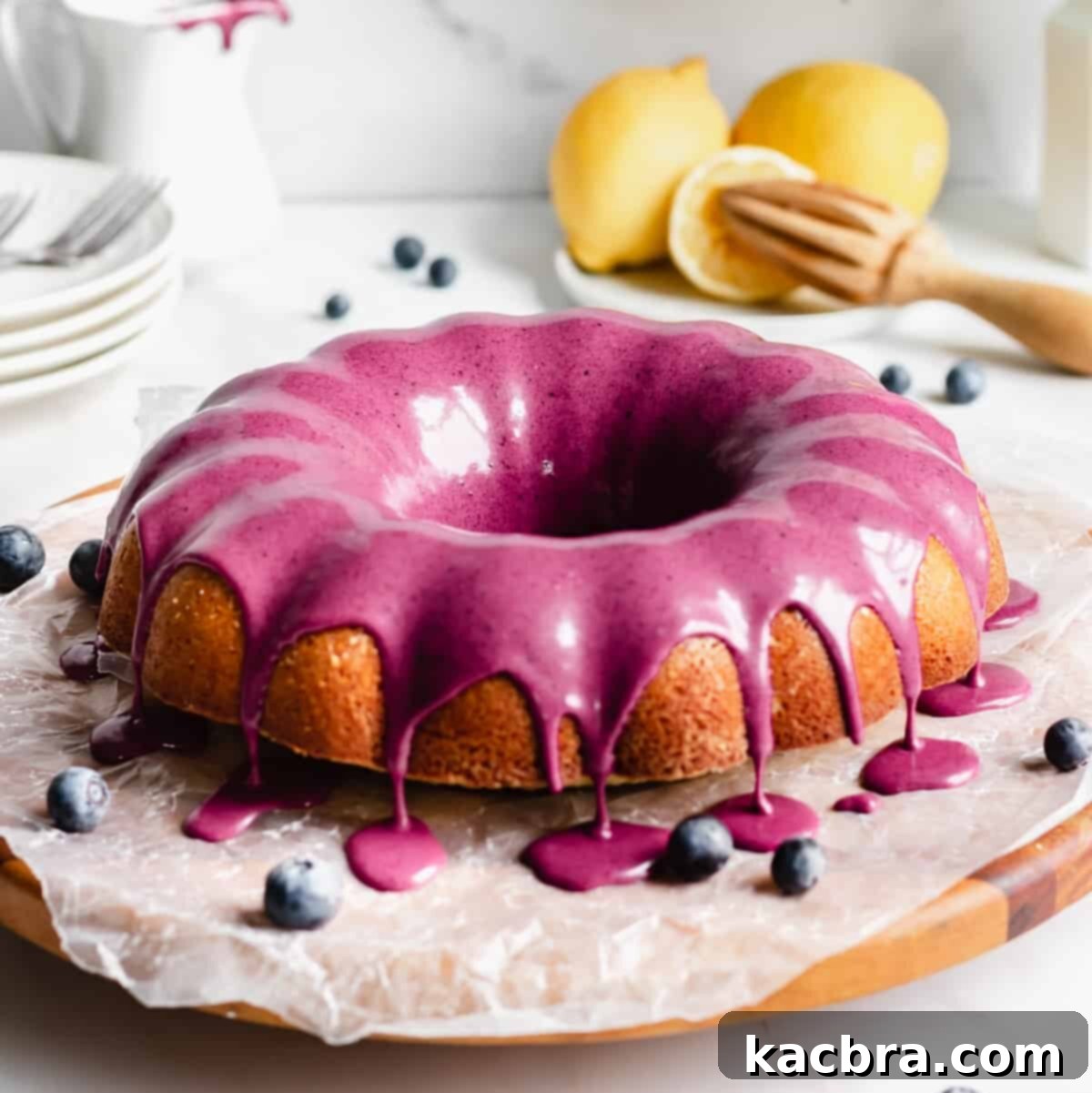
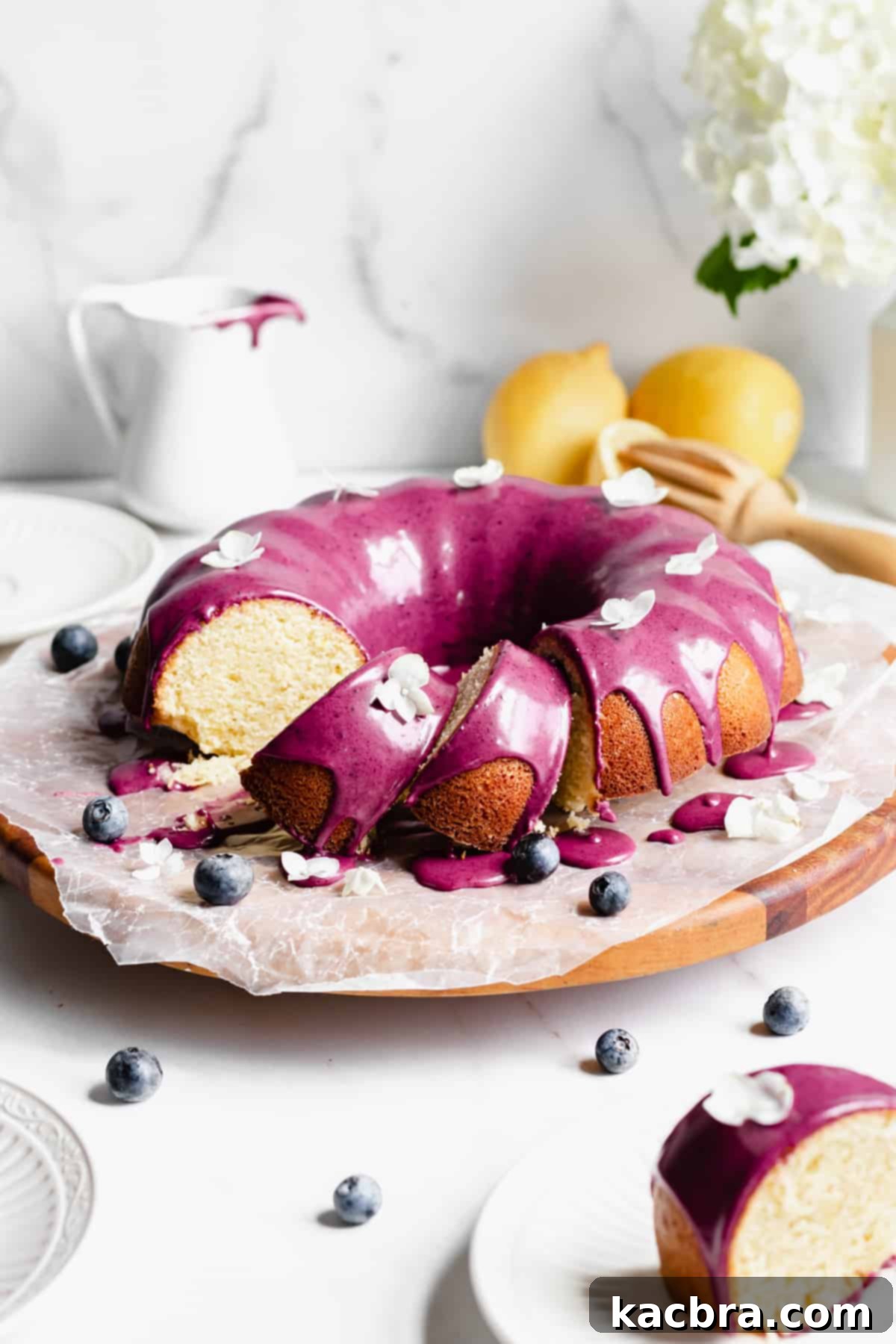
Indulge in the bright, refreshing flavors of our sensational Lemon Ricotta Cake, perfectly crowned with a vibrant blueberry glaze. This isn’t just any cake; it’s a culinary masterpiece that combines a light, fluffy texture with an irresistibly moist crumb, delivering a burst of citrusy goodness in every bite. Whether you’re a seasoned baker or just starting your baking journey, this easy-to-follow recipe promises a truly perfect dessert that will impress family and friends alike.
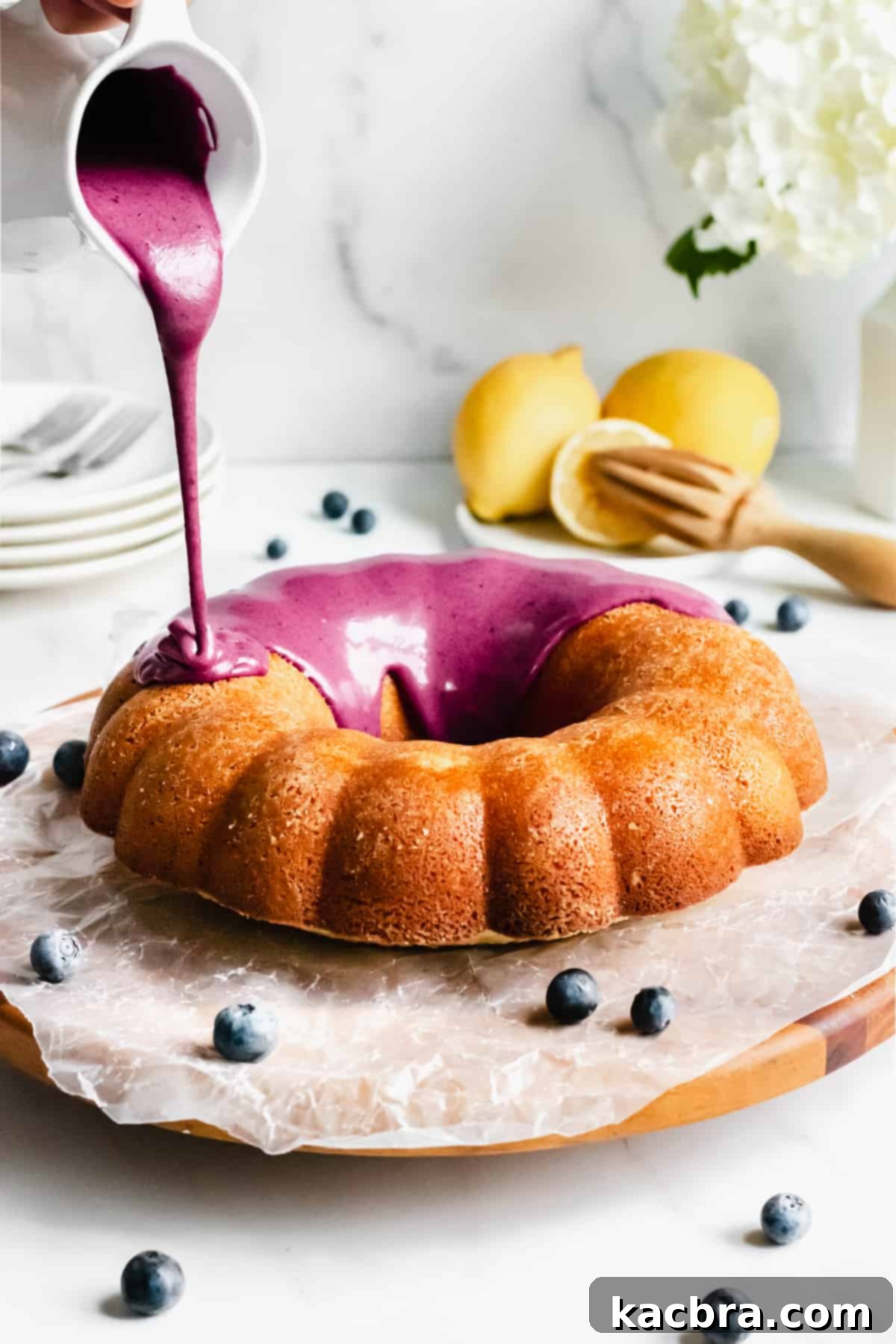
Why This Lemon Ricotta Cake Will Become Your New Favorite
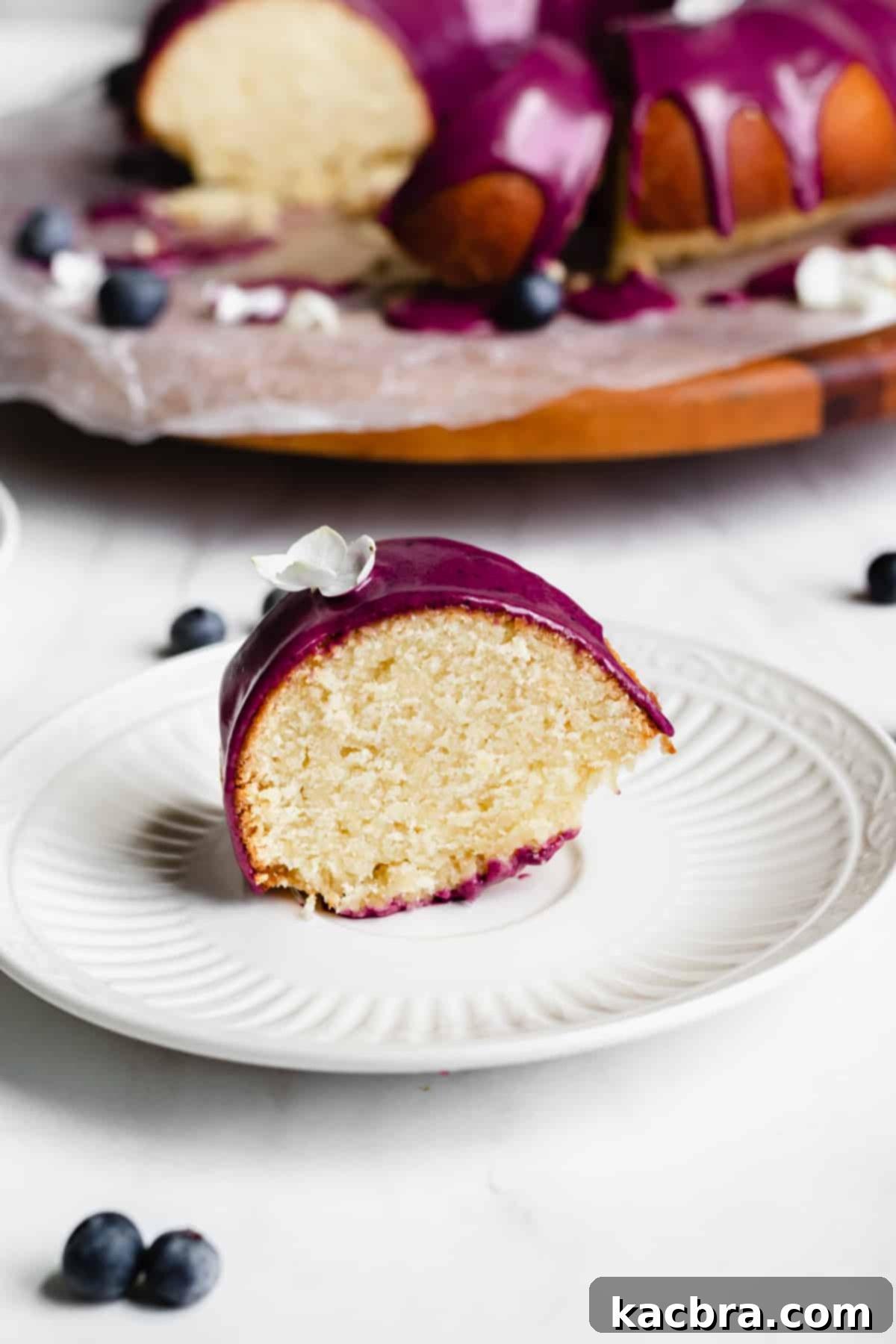
If you’ve been searching for an easy-to-make lemon ricotta bundt cake recipe that delivers on both flavor and texture, your quest ends here! This recipe has quickly become a cherished favorite for its incredible balance and delightful simplicity. Unlike traditional pound cakes, which can sometimes be dense and heavy, our Lemon Ricotta Cake boasts a wonderfully lighter-than-air texture and an open, tender crumb that practically melts in your mouth.
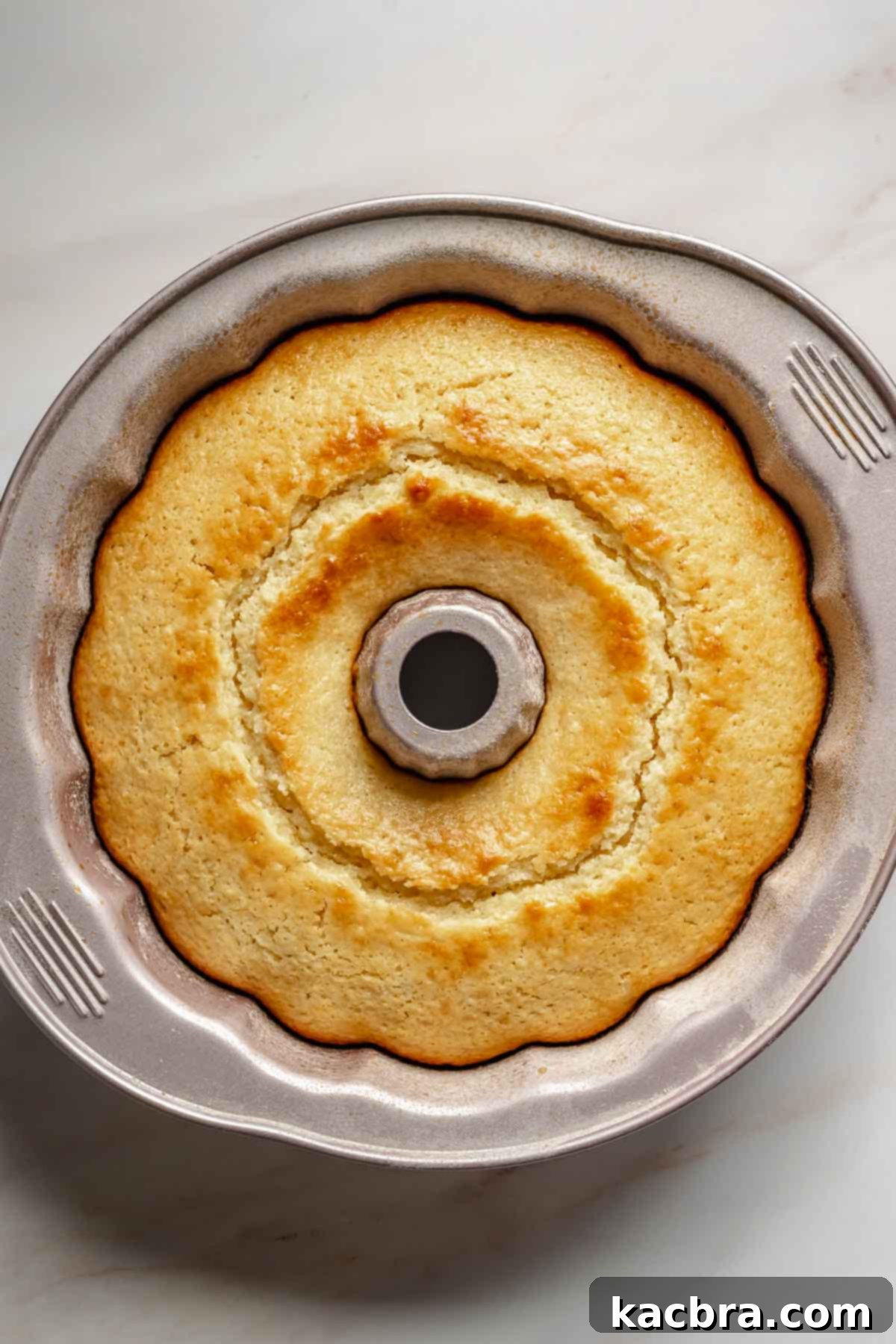
The secret to this cake’s unique character lies in the high-quality ricotta cheese, which imparts an unparalleled moisture and richness without making the cake overly heavy. Each slice reveals a beautifully even, golden-brown exterior, thanks to baking in a bundt pan. This distinctive shape not only creates a visually appealing cake but also encourages a lightly caramelized crust, locking in that intense, aromatic lemon flavor that is so characteristic of this dessert.
This is truly a standout cake for anyone who adores lemon-infused desserts. The vibrant citrus notes are perfectly complemented by a luscious, naturally colored blueberry glaze. You can customize the glaze’s hue, ranging from a delicate lavender to a rich purple, making it as pleasing to the eye as it is to the palate. For an even more intense lemon experience, consider serving a slice with a dollop of bright, tangy homemade lemon curd, which amplifies the citrus profile beautifully.
One of the many benefits of this recipe is its make-ahead potential. You can bake the cake a day in advance, allowing the flavors to meld and deepen, then simply prepare and drizzle the blueberry icing just before serving. This convenience makes it an ideal dessert for any occasion, from casual family gatherings to elegant dinner parties, where it’s sure to be a show-stopping hit.
Essential Ingredients for a Perfect Lemon Ricotta Cake
Crafting this divine lemon ricotta cake requires a selection of surprisingly basic, readily available ingredients. However, the quality and preparation of these components are key to achieving the cake’s signature fluffy texture and moist crumb. Let’s explore each one in detail to ensure your baking success.
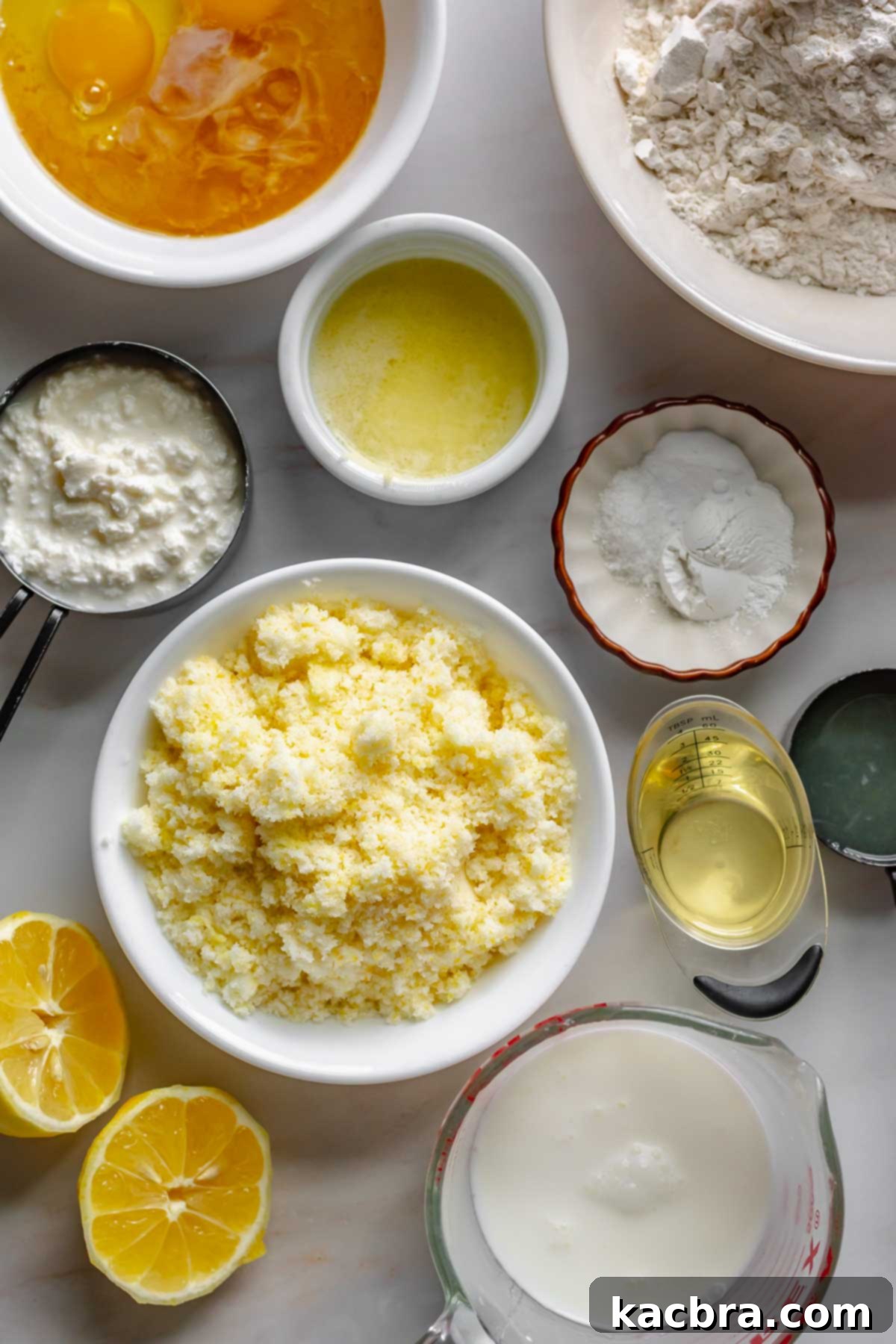
- Dry Ingredients:
- All-purpose flour: The foundation of our cake. For the best results, always measure flour by weight (grams) if possible, or use the spoon-and-level method to avoid over-packing, which can lead to a dry cake.
- Baking powder & baking soda: These leavening agents work in harmony to give the cake its desirable lift and airy texture. Ensure they are fresh for maximum effectiveness.
- Kosher salt: A pinch of salt is crucial for balancing the sweetness and enhancing all the other flavors in the cake.
- Wet Ingredients:
- Granulated sugar: Provides sweetness and helps create a tender crumb. When combined with lemon zest, it creates a wonderfully aromatic lemon sugar that infuses the cake with vibrant flavor.
- Large eggs: Acts as a binder, provides structure, and contributes to the richness and moisture. Make sure they are at room temperature for a smooth, emulsified batter.
- Vegetable oil: Adds moisture and keeps the cake tender, often more so than butter alone. It also contributes to the cake’s longevity.
- Melted butter: Offers a rich, buttery flavor profile. Unsalted butter is preferred, allowing you to control the salt content in the recipe.
- Whole milk ricotta cheese: This is the star ingredient! Full-fat ricotta is essential for achieving the creamy texture and incredible moisture that sets this cake apart. If your ricotta appears particularly watery, take a moment to drain any excess liquid using a fine-mesh sieve or cheesecloth to prevent a soggy cake.
- Vanilla extract: A classic flavor enhancer that complements the lemon beautifully. Use a good quality vanilla extract or, for an even richer flavor, vanilla bean paste.
- Fresh lemons: The essence of this cake! You’ll need both fresh lemon zest and freshly squeezed lemon juice. This typically requires about four large lemons to yield the necessary amounts, delivering a bright, tangy, and truly authentic lemon flavor. Avoid bottled lemon juice for the best taste.
- Blueberries: The star of our colorful glaze. You can use either fresh or frozen blueberries. If using frozen, there’s no need to thaw them beforehand when making the glaze.
- Powdered sugar: Also known as confectioners’ sugar or icing sugar, it’s the base for our smooth, pourable blueberry glaze. Sifting it prevents lumps.
Always refer to the complete recipe card below for precise quantities and detailed instructions to ensure the best possible outcome for your lemon ricotta cake.
Essential Kitchen Tools for Baking Success
Having the right tools on hand can make all the difference in the baking process, ensuring efficiency and contributing to the perfect outcome for your Lemon Ricotta Cake. Here are the key kitchen essentials you’ll need:
- Stand mixer or electric hand mixer: Crucial for creaming the sugar with the eggs until light and fluffy, and for combining the batter smoothly. While a stand mixer offers convenience, a good electric hand mixer will certainly get the job done.
- Bundt pan: The iconic shape of this cake is achieved with a bundt pan. Its fluted design not only looks elegant but also helps the cake bake more evenly. Because this recipe doesn’t typically use a springform pan, you won’t need parchment paper for lining – just good old-fashioned greasing and flouring.
- Food processor or Microplane: For extracting the most vibrant lemon flavor, you’ll need to zest your lemons. A Microplane zester is excellent for fine zest, while a food processor can be used to incorporate lemon peels directly into the sugar, creating a highly aromatic lemon sugar.
- Fine-mesh sieve: Indispensable for straining the cooked blueberry juice, ensuring your blueberry glaze is silky smooth and free of any pulp or seeds. It’s also useful for sifting powdered sugar to prevent lumps.
Smart Substitutions for Your Lemon Ricotta Cake
While this easy ricotta cake shines with its simple, traditional ingredients, sometimes you need a little flexibility. Here are a few reliable substitutions that can be made without compromising the cake’s integrity, along with insights into how they might affect the final product:
- For the ricotta cheese: If full-fat ricotta isn’t available or if you’re looking for a slightly different tang, you could successfully use other full-fat dairy products.
- Sour cream: Offers a rich, creamy texture and a pleasant tang that complements the lemon.
- Buttermilk: Will yield a slightly more tender and tangy cake due to its acidity reacting with the baking soda.
- Greek yogurt: (Full-fat, plain) Provides a similar moisture and richness to ricotta, with a delightful tang.
*Note: While these alternatives work, they will subtly alter the flavor and texture profile compared to the unique creaminess of ricotta.*
- For the blueberry glaze liquid: Instead of relying solely on milk, cream, or water for thinning your glaze, you have options to enhance the flavor:
- Lemon juice: A fantastic choice to amplify the lemon flavor in the glaze, creating a brighter, tangier finish that perfectly matches the cake.
- Limoncello: For an adult twist, a splash of limoncello can add a sophisticated lemon liqueur flavor to your glaze.
- Combination: Feel free to use a mix of milk/cream and a smaller amount of lemon juice or limoncello to strike your preferred balance of richness and tang.
Creative Variations for Your Ricotta Cake
This moist lemon ricotta cake serves as a fantastic base for a variety of flavor adventures. While the blueberry glaze is a classic pairing, don’t hesitate to get creative and adapt the recipe to your personal taste or seasonal availability:
- Fresh Blueberry Sauce: If you prefer a richer, fruitier topping than a simple glaze, cook down an extra cup of fresh or frozen blueberries with two tablespoons of granulated sugar over medium heat. Stir occasionally until the blueberries burst and their juices thicken into a beautiful, spoonable sauce. This adds a more intense berry flavor and a lovely texture contrast.
- Orange Ricotta Cake: Swap out the lemon for fresh oranges! Use orange zest and freshly squeezed orange juice in place of their lemon counterparts. This will create a sweeter, slightly less tart cake with a wonderful sunny disposition.
- Almond Ricotta Cake: Introduce a nutty aroma by adding 1 to 2 teaspoons of pure almond extract to the cake batter along with the vanilla. For an extra touch, you could even sprinkle sliced almonds over the top of the glaze before it sets.
- Lemon Poppy Seed: Incorporate 1-2 tablespoons of poppy seeds into the dry ingredients for a classic texture and appearance.
- Raspberry Glaze: Instead of blueberries, use raspberries to create a beautiful pink or red glaze. The method remains the same: cook down the berries, strain, and mix with powdered sugar.
Step-by-Step Guide: Crafting Your Lemon Ricotta Cake
Baking this delightful Lemon Ricotta Cake is a straightforward process, broken down into easy-to-follow steps. Precision in preparation and attention to detail will ensure a perfect, fluffy, and moist cake every time.
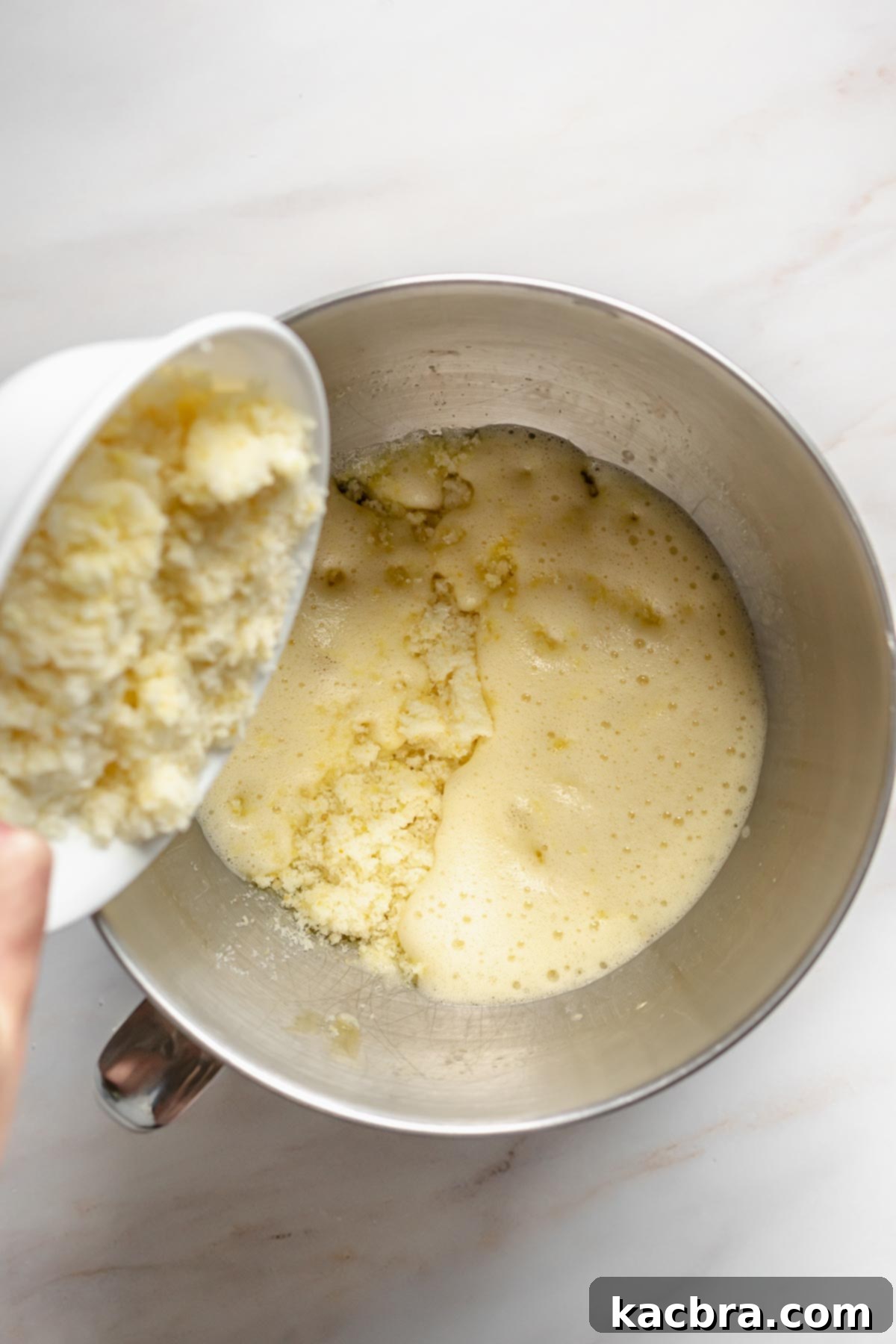
Step 1: Prepare the Lemon Sugar and Eggs. Begin by preheating your oven to 350°F (180°C) and thoroughly greasing and flouring your bundt pan, ensuring every crevice is coated to prevent sticking. Set it aside. In a separate bowl, whisk together your dry ingredients: all-purpose flour, baking powder, baking soda, and kosher salt. For the lemon sugar, either process 1.5 peeled lemons with granulated sugar in a food processor until fine and fragrant, or simply rub 3-4 tablespoons of lemon zest into the granulated sugar with your fingertips. This crucial step infuses the sugar with intense lemon aroma. Next, in the bowl of your stand mixer (or using an electric hand mixer), add the whole eggs and egg whites. Beat them on medium-high speed for approximately 3 minutes until they are light, foamy, and significantly increased in volume. This aeration is key to a light cake.
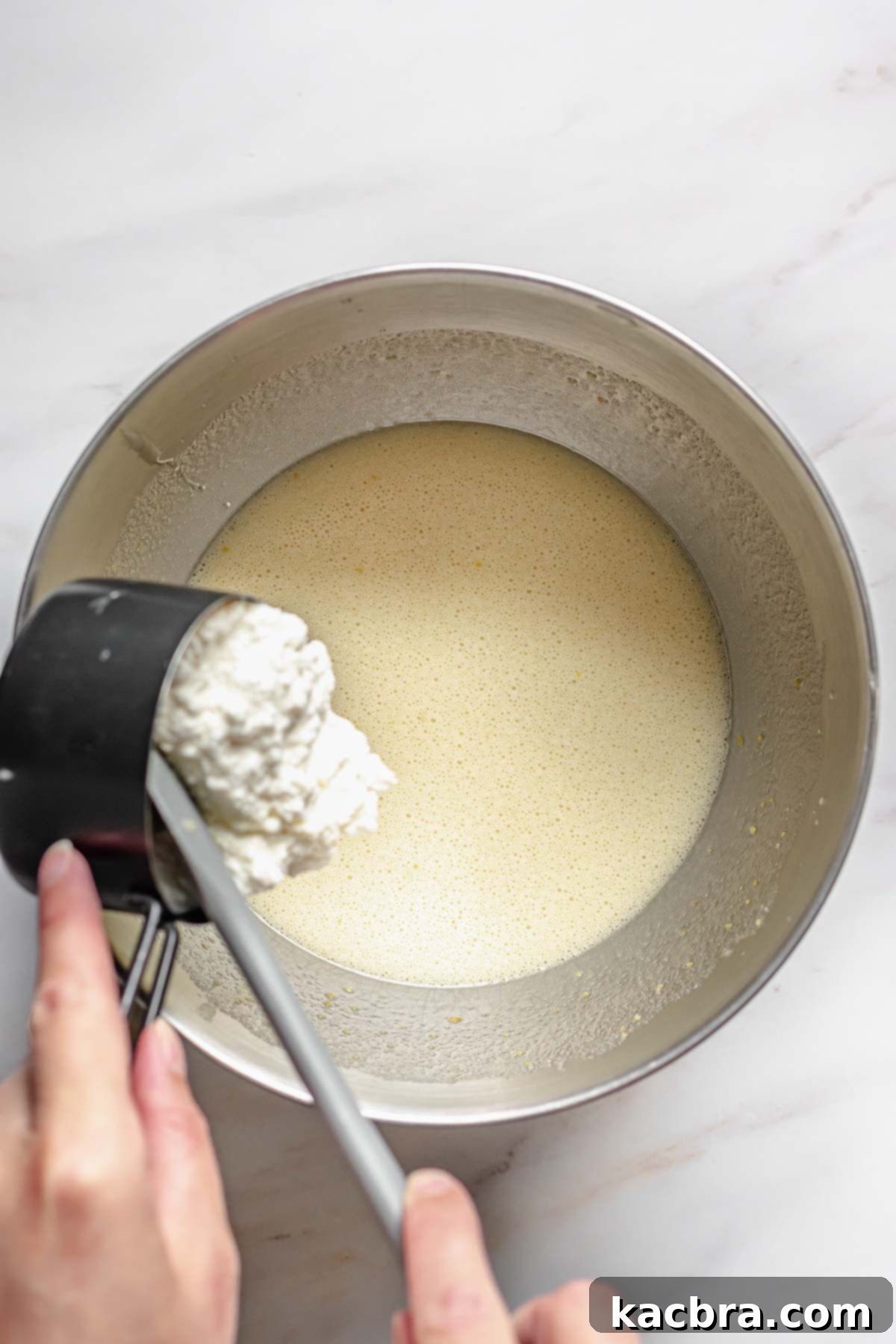
Step 2: Incorporate Wet Ingredients and Ricotta. With the aerated eggs as your base, it’s time to introduce the rich and flavorful wet components. Add the prepared lemon zest sugar, vegetable oil, melted unsalted butter, freshly squeezed lemon juice, vanilla extract or paste, and the full-fat ricotta cheese to the mixing bowl. Mix on low speed until all these ingredients are just combined. Be careful not to overmix at this stage. Once combined, use a rubber spatula to scrape down the sides of the bowl, ensuring everything is thoroughly incorporated and no pockets of unmixed ingredients remain.
Hot tip! For the smoothest batter and the most even bake, always ensure all your dairy ingredients – eggs, ricotta, and milk – are brought to room temperature before you begin mixing. This allows them to emulsify properly, creating a uniform and tender cake structure.
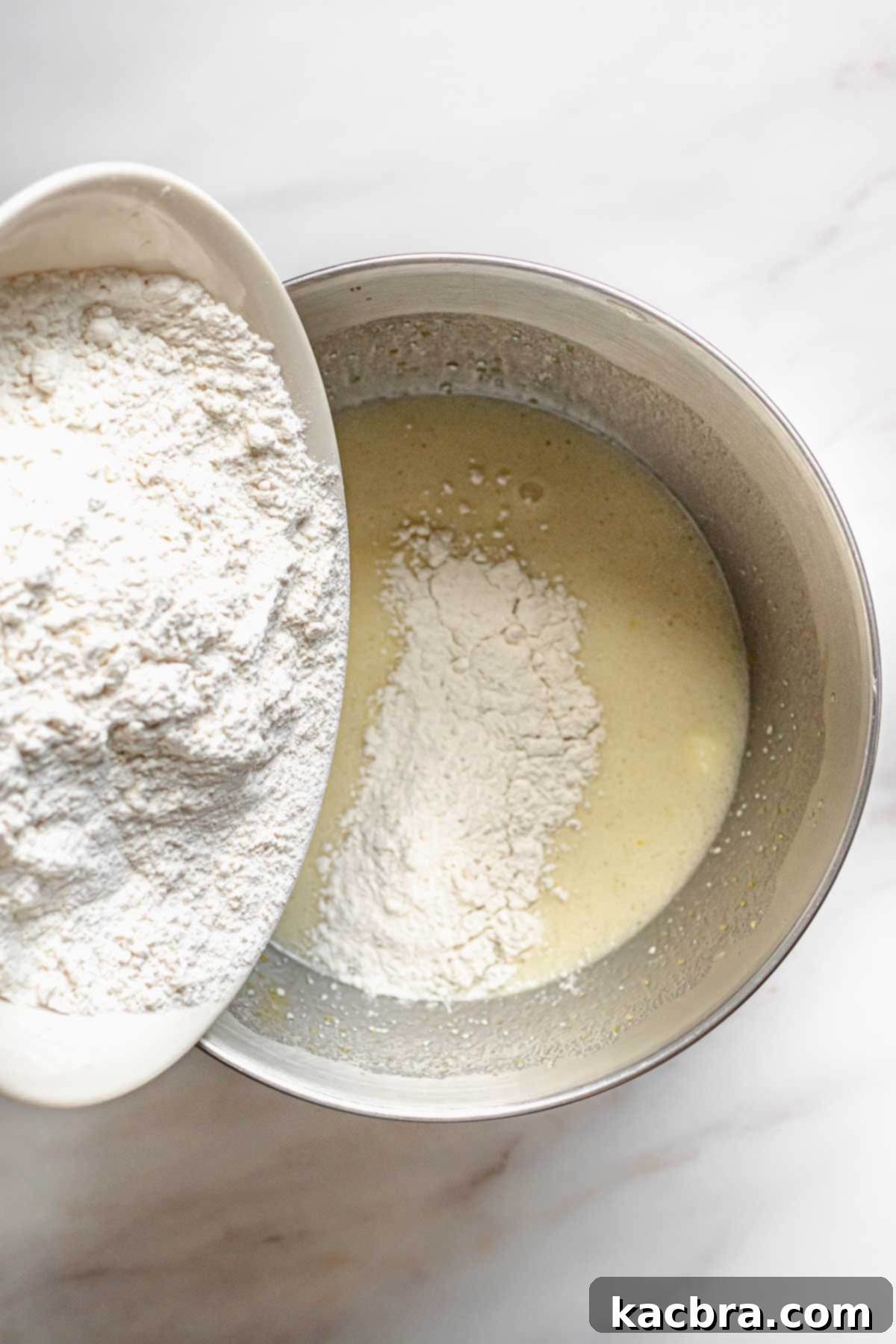
Step 3: Alternate Dry and Wet Additions. This step is crucial for developing the cake’s delicate texture. With your mixer running on the lowest speed, begin by adding about half of the reserved dry flour mixture to the wet ingredients. Mix until just combined. Next, slowly drizzle in the whole milk, allowing it to fully incorporate into the batter. Finally, add the remaining half of the flour mixture. It’s imperative to stop mixing as soon as the last of the flour streaks disappear. Over-mixing at this stage can overdevelop the gluten in the flour, resulting in a tough, chewy cake rather than the desired fluffy and moist consistency.
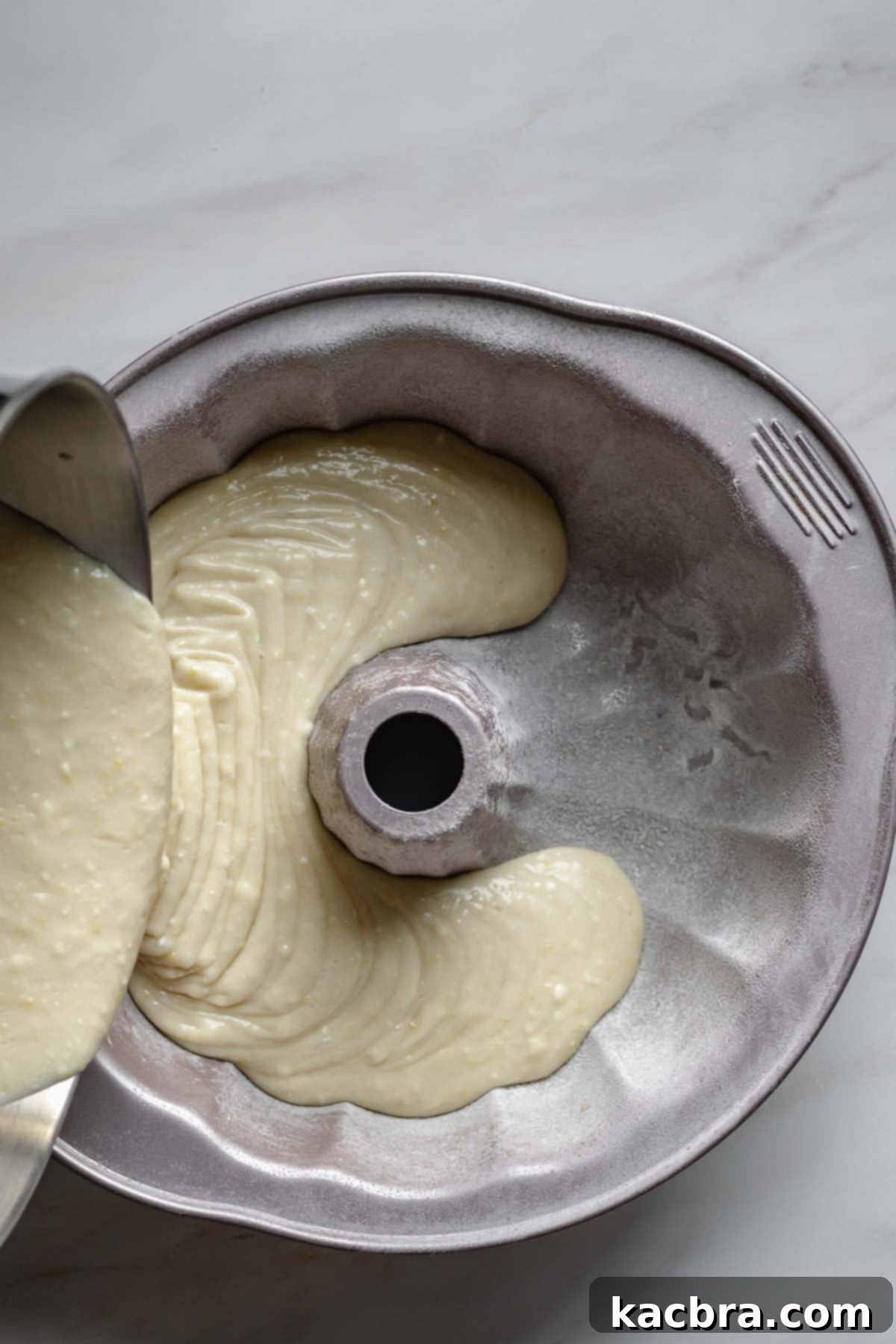
Step 4: Bake and Cool to Perfection. Gently pour the prepared cake batter into your greased and floured bundt pan, using a spatula to spread it evenly. Place the pan in your preheated oven and bake for approximately 45-50 minutes. The cake is done when a wooden toothpick or skewer inserted into the center comes out clean, though a few moist crumbs are a good sign of a truly tender cake. Avoid overbaking, as this is the primary cause of dry cakes. Once baked, remove the bundt cake from the oven and let it rest in the pan on a wire cooling rack for about 20 minutes. This allows the cake to set and firm up slightly before you attempt to invert it. After 20 minutes, carefully turn the cake out onto your serving platter or cooling rack to finish cooling completely. A fully cooled cake ensures the glaze will set properly.
Hot tip! For a bundt cake that releases flawlessly every time, don’t just grease – grease and flour! Apply a generous, even layer of butter or baking spray to every nook and cranny of the pan. Then, sprinkle in a few tablespoons of flour, gently rotating and tapping the pan to ensure the flour coats the entire greased surface. Discard any excess flour.
Crafting the Irresistible Blueberry Glaze
This vibrant blueberry glaze is the perfect complement to the bright lemon flavors of the ricotta cake. Its beautiful color and sweet-tart profile add an extra layer of deliciousness. Here’s how to create it:
- Prepare the Blueberry Juice: In a small saucepan, combine one cup of fresh or frozen blueberries over medium heat. Cook the blueberries for about 5 minutes, gently mashing them with the back of a spoon as they soften. This process helps to release all their flavorful juices.
- Strain for Smoothness: Once the blueberries have broken down and released a good amount of liquid, remove the saucepan from the heat. Carefully pour the blueberry mixture through a fine-mesh sieve into a small heatproof bowl. Use the back of a spoon to press down on the solids, extracting as much vibrant juice as possible. Discard the remaining pulp. Allow the blueberry juice to cool completely before proceeding; warm juice will melt your powdered sugar.
- Mix the Glaze: In a separate medium-sized bowl, sift 1½ cups of powdered sugar. Sifting is crucial to prevent any lumps in your finished glaze. Begin by adding just 1 to 2 tablespoons of the cooled blueberry juice to the powdered sugar. Mix this thoroughly; it will initially be very thick and pasty.
- Adjust Consistency: Gradually add a very small drizzle of additional liquid at a time—this could be more blueberry juice, heavy cream, milk, or water—whisking continuously after each addition. The goal is to achieve a thick but pourable consistency that will gracefully drip down the sides of the cake. If it becomes too thin, add a little more sifted powdered sugar. If it’s too thick, add a tiny bit more liquid.
For detailed guidance on adjusting the color of your blueberry glaze to achieve your preferred shade, from subtle lavender to deep purple, check out my comprehensive Easy Blueberry Glaze for Desserts post.
Once your Lemon Ricotta Cake is completely cool to the touch, generously pour the prepared blueberry glaze over the top, allowing it to artfully cascade down the fluted sides. Serve immediately and enjoy the harmonious blend of flavors!
Expert Tips for Baking Your Best Cake
Achieving a bakery-worthy Lemon Ricotta Cake is simpler than you think with these expert tips:
- Room Temperature Ingredients are Non-Negotiable: This cannot be stressed enough! Ensuring your eggs, ricotta cheese, and milk are all at room temperature is vital. Cold ingredients don’t emulsify properly, leading to a lumpy batter and a less uniform cake texture. Plan ahead and take them out of the fridge at least 30-60 minutes before you start baking.
- The Art of Mixing: When combining the dry and wet ingredients, mix only until the final round of flour is just incorporated. Over-mixing is the enemy of a tender cake. Excessive mixing develops gluten, which can result in a tough, dense, and less enjoyable texture. A few streaks of flour are better than a fully overworked batter.
- Mastering Glaze Consistency: Before drizzling your beautiful blueberry glaze over the entire cake, perform a quick test. Spoon a small amount onto an overturned cup or a piece of parchment paper to observe how it flows. If it falls too quickly and thinly, whisk in a tablespoon or two more of sifted powdered sugar. If it’s too thick and doesn’t flow, add half a teaspoon of liquid (milk, cream, or water) at a time until you achieve a slow, elegant pour.
- Don’t Overbake: Overbaking is a common culprit for dry cakes. Start checking your cake at the earlier end of the suggested baking time. A toothpick inserted into the center should come out clean, but a few moist crumbs clinging to it often indicate a perfectly tender and moist cake.
- Cool Completely Before Glazing: Patience is a virtue here. Glazing a warm cake will cause the glaze to melt and run off, resulting in a thin, messy coating. Ensure your cake is completely cool to the touch before applying the blueberry glaze for the best adhesion and appearance.
Common Questions About Lemon Ricotta Cake
A dry cake can be quite disappointing, but it’s a common issue with a few potential culprits. Firstly, over-baking is often the main reason. Ovens can vary, so always keep an eye on your cake and begin checking for doneness at the lower end of the recommended baking time. Secondly, too much flour can absorb excess moisture, leading to a dry result. It’s highly recommended to weigh your flour using a digital scale for accuracy. If you don’t have one, fluff the flour with a spoon before gently spooning it into your measuring cup and leveling it off. Never scoop directly from the bag. Finally, over-mixing the batter can also contribute to dryness. Mix only until the flour is just incorporated to avoid overdeveloping the gluten.
If your blueberry glaze is too thin and runny, it simply means that slightly too much liquid (blueberry juice, milk, or water) has been added. Don’t worry, this is easily fixed! Simply add more sifted powdered sugar, a bit at a time, stirring thoroughly between each addition. Continue this process until the glaze thickens to your desired consistency—a slow, pourable ribbon that holds its shape slightly on a spoon.
A cake sticking to the pan is one of the most frustrating baking mishaps! The most common reason is inadequate greasing and flouring of the bundt pan. You must ensure every nook and cranny is thoroughly coated. Even if you did grease and flour, inspect your pan for scratches. Scratches, especially on non-stick surfaces, can create tiny points where the cake batter can cling, preventing a clean release. Sometimes older pans just need a bit more love (and grease!).
Releasing a bundt cake successfully requires a gentle touch and proper timing. After removing the cake from the oven, allow it to cool in the pan on a wire rack for precisely 15-20 minutes. This critical cooling period allows the cake to firm up slightly and pull away from the sides of the pan. To release, place a serving platter or another cooling rack (slightly larger than the bundt pan opening) on top of the pan. Using both hands to hold the pan and platter firmly together, quickly and confidently flip them over so the pan is now upside down on the platter. Give the top and sides of the bundt pan a few gentle taps. Then, slowly and steadily lift the bundt pan straight up. If the cake doesn’t come out immediately, allow it to sit for an additional few minutes upside down, as gravity can sometimes work its magic. If it still resists, turn it back over and carefully run a thin, flexible offset spatula or knife around the edges where it might be sticking, then try inverting it again.
Storage Tips for Your Lemon Ricotta Cake
Proper storage is essential to keep your delicious Lemon Ricotta Cake fresh, moist, and flavorful for as long as possible. Here are the best ways to store it:
- Room Temperature: If your cake is unglazed, it can be stored at room temperature for up to one day. Ensure it is tightly covered with plastic wrap or placed in an airtight cake dome to prevent it from drying out.
- Refrigeration: Once glazed with the blueberry icing, or for longer storage, this cake should be stored in the refrigerator. Wrap it tightly in plastic wrap or place it in an airtight container. It will stay fresh for an additional three days in the fridge. Be mindful that any exposed surfaces can dry out considerably, so complete coverage is key.
- Freezing: This cake freezes exceptionally well, making it perfect for preparing in advance or saving leftovers.
- Whole Cake: For a whole cake, ensure it is completely cooled and unglazed. Wrap it very tightly in several layers of plastic wrap, then an additional layer of aluminum foil.
- Slices: Individual slices can also be frozen, which is convenient for single servings. Wrap each slice tightly in plastic wrap, then place them in a freezer-safe bag or airtight container.
The cake or slices can be frozen for up to two months. When ready to enjoy, unwrap the cake completely and thaw it at room temperature. Add the blueberry glaze after the cake has fully thawed, as freezing the cake with the glaze already on top is not recommended; the glaze’s texture can change upon thawing.
More Irresistible Cake Recipes to Discover
If you loved the delightful flavors and tender crumb of this Lemon Ricotta Cake, you’re in for a treat! Explore more of our beloved cake recipes that are perfect for any occasion and sure to satisfy your sweet cravings. Each recipe is crafted with care to bring joy to your kitchen and your taste buds.
- Orange Poppy Seed Bundt Cake
- Coconut Almond Cake
- Salted Caramel Chocolate Cake
- Raspberry White Chocolate Bundt Cake
Did you make this recipe? We’d love to see it! Share your creations with us! Tag @thecozyplum on Instagram & Facebook and don’t forget to leave a star rating ★ below!
📖Recipe
Lemon Ricotta Cake with Blueberry Glaze
Callan Wenner
Pin Recipe
Equipment
- Food processor, microplane, or zester
- Stand mixer with paddle attachment, or handheld mixer
- Bundt pan
- Fine mesh sieve
Equipment
- Food processor, microplane, or zester
- Stand mixer with paddle attachment, or handheld mixer
- Bundt pan
- Fine mesh sieve
Ingredients
Lemon Ricotta Cake
- 3 cups all-purpose flour 360g
- 2 teaspoons baking powder
- ½ teaspoon baking soda
- ½ teaspoon kosher salt
- 4 large eggs two whole eggs, two egg whites (room temperature)
- 1½ cups granulated sugar 300g
- 3-4 tablespoons lemon zest or 1½ peeled lemons
- ¼ cup vegetable oil 60ml
- ¼ cup unsalted butter melted (57g)
- ¼ cup lemon juice freshly squeezed (60ml)
- 2 teaspoons vanilla paste or extract
- ¾ cup ricotta cheese (full-fat) room temperature (180g)
- 1 cup whole milk (240ml)
Blueberry Glaze
- 1 cup blueberries fresh or frozen (115g fresh)
- 1½ cups powdered sugar sifted (180g)
- 1-2 tablespoons water, milk, or heavy cream
Instructions
- Preheat the oven to 350℉/180℃. Grease and flour a bundt pan and set aside.
- Whisk together the flour, baking powder, baking soda and salt and set aside.3 cups all-purpose flour, 2 teaspoons baking powder, ½ teaspoon baking soda, ½ teaspoon kosher salt
- Separate two of the eggs, keeping the whites and saving the yolks for another time.4 large eggs
- Peel one and a half lemons and add the peels to the food processor with the sugar. Blend until no chunks of peels remain. Alternatively, zest 3-4 tablespoons of lemon zest using a microplane and mix it into the sugar with your fingertips.1½ cups granulated sugar, 3-4 tablespoons lemon zest
- Add the eggs and egg whites to the bowl of a stand mixer and beat on medium high speed for about 3 minutes until foamy and fluffy.
- Add the lemon zest sugar, vegetable oil, melted butter, lemon juice, vanilla, and ricotta and mix to combine, then scrape down the sides.¼ cup vegetable oil, ¼ cup unsalted butter, ¼ cup lemon juice, 2 teaspoons vanilla paste or extract, ¾ cup ricotta cheese (full-fat)
- With the mixer running on low speed, add half of the flour mixture, drizzle in the milk, then add the remaining flour. Stop mixing as soon as the flour is incoprorated.1 cup whole milk
- Pour the mixture into the prepared bundt pan and spread evenly. Bake for 45-50 minutes, until a toothpick comes out clean from the center (but still has moist crumbs).
- Remove the pound cake from the oven and rest on a cooling rack for 20 minutes, then turn the cake out of the pan onto a serving platter to finish cooling.
Blueberry Glaze
- When the cake has finished cooling, add the blueberries to a small saucepan over medium heat for about 5 minutes. Gently mash down the blueberries as they are cooking to release all the juices.1 cup blueberries
- Once the blueberries have started to break down and produce juices, pass them through a fine mesh sieve into a small bowl so you are left with only the thick liquid.
- Sift the powdered sugar into a separate bowl, and start by adding only 1 – 2 tablespoons of the blueberry juice to the sugar. Mix until incorporated (it will be very thick and pasty at this point), then slowly add in a small drizzle of liquid at a time and whisk together. The glaze should be thick, but pourable.1½ cups powdered sugar, 1-2 tablespoons water, milk, or heavy cream
- Once the cake is cool, spoon or pour as much glaze as desired over the cake. Slice, and serve!
Notes
Test the pour of the glaze on an overturned drinking glass to see how it falls. Add more powdered sugar if it’s too thin, and more liquid if it’s too thick.
Note that the glaze can be a different color and shade each time it’s made and depends on the batch of blueberries. Follow my blueberry glaze post for guidance on how to make different shades of glaze.
Note: This recipe has been adjusted to create a lighter, fluffier texture and was updated on June 22, 2022.
The provided nutritional information is an estimate per serving. Accuracy is not guaranteed.