A truly exceptional dessert often begins with an impeccable base. The sweet tart crust, known in French as pâté sucrée, is a pastry chef’s secret weapon, offering a delicate crunch and buttery flavor that beautifully complements a myriad of fillings. This guide focuses on a particularly indulgent variation: the Chocolate Sweet Tart Crust. Imagine a rich, deep chocolate cookie-style dough, perfectly baked to a crisp, ready to embrace all types of creams, custards, curds, or luscious ganaches. This recipe ensures a sturdy yet tender foundation for your most exquisite tart creations.
Mastering the Chocolate Sweet Tart Crust (Pâté Sucrée)
The foundation of any great pâté sucrée lies in its method. Unlike flaky pie crusts, sweet tart dough is crafted using the creaming method, akin to making cookies. This involves first creaming together softened butter, sugar, and a pinch of salt until light and fluffy. A single egg is then incorporated to bind the mixture, followed by the dry ingredients. For this decadent chocolate version, we introduce Dutch-processed cocoa powder. This special cocoa, with its darker hue and milder, richer chocolate flavor compared to natural cocoa, is crucial for achieving that intense chocolate taste and a beautiful deep color in your tart crust.
The creaming method is precisely why this chocolate tart crust boasts a texture so wonderfully similar to a crisp shortbread cookie. It’s not just delicious; it’s also incredibly forgiving, making it a joy to work with, even for novice bakers. The dough remains soft and pliable, allowing for easy handling and patching if any cracks appear during rolling. For consistently perfect tarts, a reliable 9-inch tart pan with a removable bottom is invaluable. This tool simplifies the process of achieving perfectly formed edges and effortless tart removal, ensuring your culinary masterpiece remains intact.
Essential Ingredients for Your Chocolate Tart Crust
Creating this rich chocolate sweet tart crust requires a few key ingredients, each playing a vital role in the final texture and flavor. Quality ingredients are paramount for the best results.
- Unsalted Butter: This is the backbone of your tart crust. Ensure it’s at true room temperature (around 68-70°F or 20-21°C). Softened butter creams beautifully with sugar, creating a light, airy base, but it should not be melted. If you’re unsure about the correct temperature and texture, understanding butter’s ideal consistency is crucial for pastry success.
- Granulated Sugar: Provides sweetness and helps achieve that desirable crisp, almost cookie-like texture. It also aids in the creaming process, aerating the butter.
- Kosher Salt: A small amount of salt enhances the chocolate flavor and balances the sweetness. Don’t skip it!
- Large Egg: Just one egg, also at room temperature, acts as a binder, bringing the dough together and adding richness. A cold egg can seize the butter, affecting the dough’s smooth consistency.
- All-Purpose Flour: The structural component of the dough. Measure it accurately, preferably by weight, to avoid a tough crust.
- Dutch-Processed Cocoa Powder: This is what gives our tart its signature deep color and intense chocolate flavor. Unlike natural cocoa, Dutch-processed cocoa is less acidic, resulting in a smoother, mellow chocolate taste. Brands like Rodelle offer excellent quality, or you can find Hershey’s Special Dark Cocoa in most grocery stores for a similar effect.
Recommended Tools for Tart Making
Having the right tools can make all the difference in ensuring a smooth and successful tart-making experience. These are the essentials you’ll need:
- Stand Mixer or Hand Mixer: A stand mixer fitted with a paddle attachment is ideal for the creaming method, ensuring thorough mixing without overworking the dough. If using a hand mixer, be mindful not to overmix, as this can lead to a tough crust.
- 8-inch or 9-inch Tart Pan with Removable Bottom: This specialized pan is crucial for achieving that classic tart shape and for easy removal of the finished crust without damaging its delicate structure. While a pie dish can be used in a pinch, it won’t yield the same elegant presentation.
- Rolling Pin: Essential for evenly rolling out the dough to the desired thickness.
- Paring Knife: A sharp paring knife is indispensable for precisely trimming excess dough from the edges of the tart pan.
- Pie Weights: These are used during blind baking to prevent the crust from puffing up and shrinking. Ceramic pie weights are best, but you can also use dried rice or beans. Remember to store these dedicated baking weights in a separate bag or container and do not consume them after use.
- Parchment Paper: Used to line the tart shell before adding pie weights for blind baking, preventing the dough from sticking and ensuring a clean lift-out of the weights.
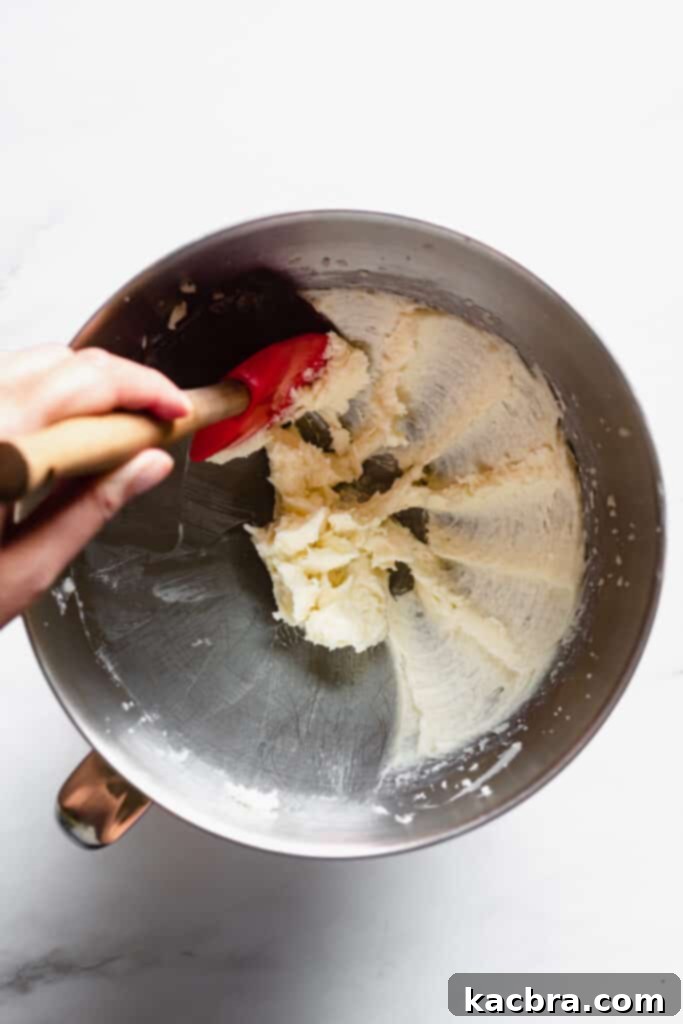
Let’s begin the exciting journey of creating your chocolate sweet tart crust. The process starts with the creaming method, where room temperature butter, sugar, and salt are combined in a mixer. In the bowl of a stand mixer fitted with the paddle attachment (or using a hand mixer), cream these ingredients on medium speed for about one minute. The mixture should become pale and fluffy. Don’t forget to scrape down the sides of the bowl to ensure everything is evenly combined.
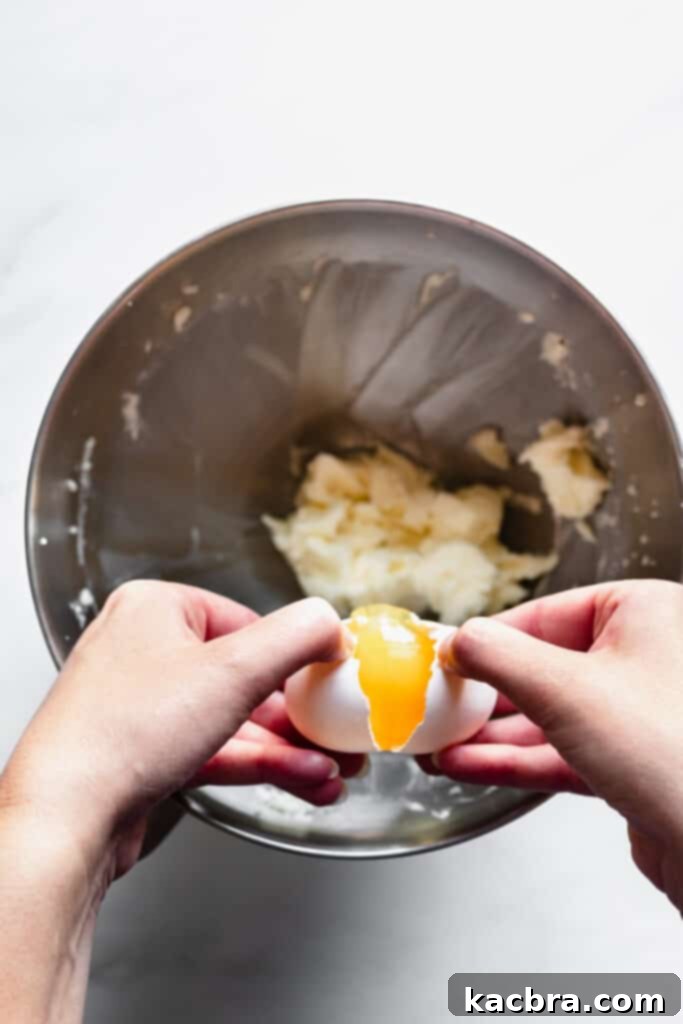
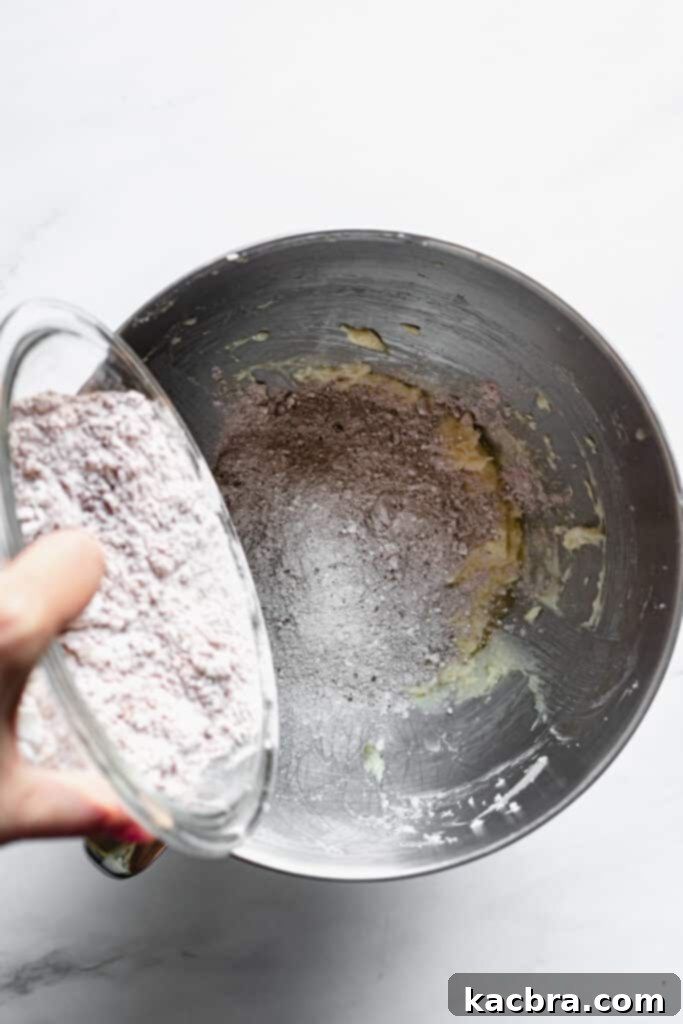
Next, crack in the room temperature egg and continue mixing until it is fully incorporated into the butter mixture. Scrape down the bowl once more. Then, gradually add the all-purpose flour and Dutch-processed cocoa powder. Mix on low speed just until the dry ingredients are combined with the wet, being careful not to overmix. Overmixing can develop the gluten in the flour, resulting in a tough crust.
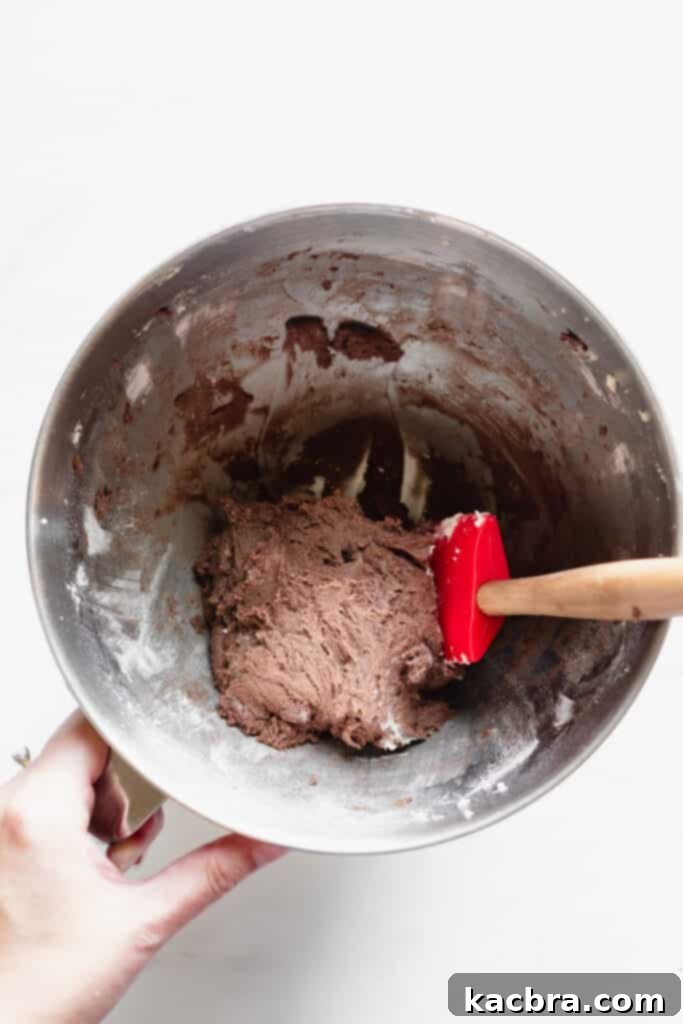
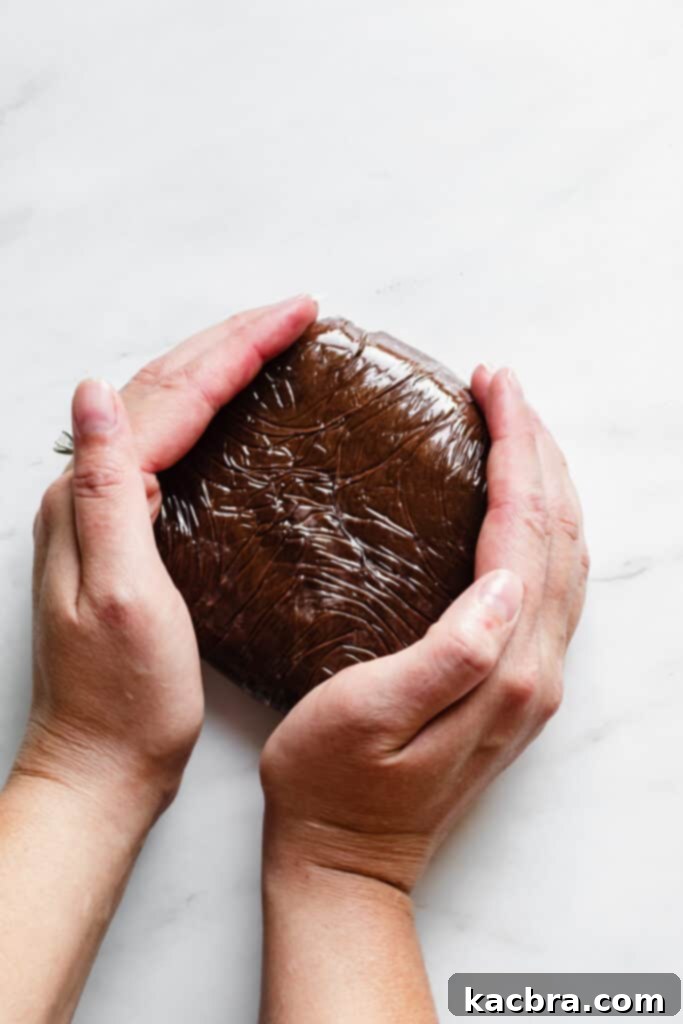
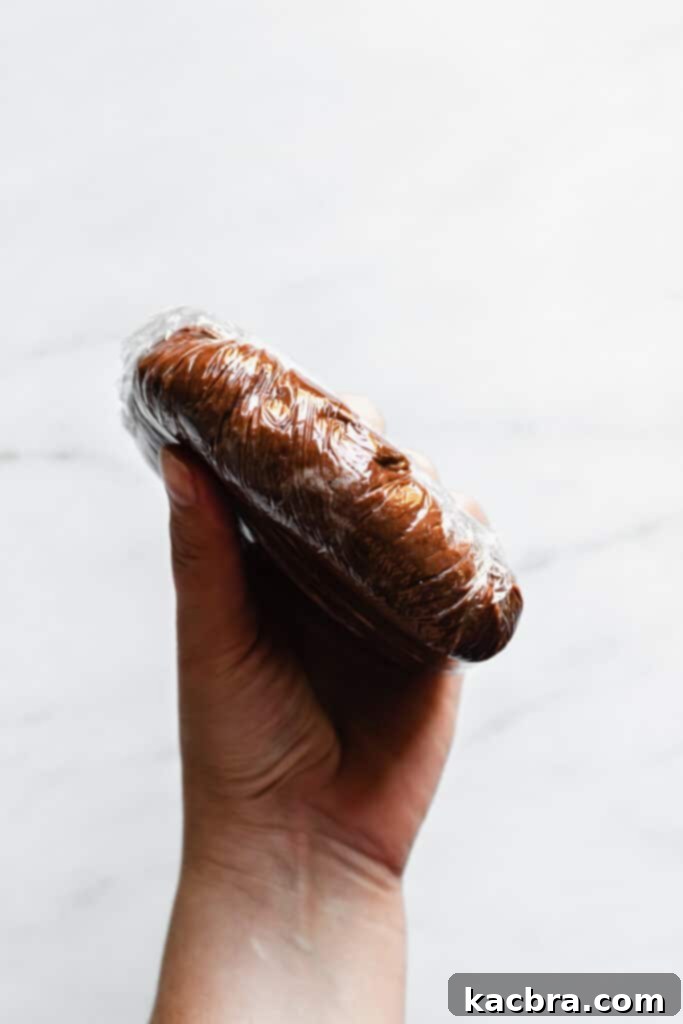
At this stage, your dough will feel remarkably soft and pliable. Transfer the freshly mixed dough onto a large piece of plastic wrap. Wrap it completely, ensuring it’s sealed, then gently press it into a flat, round disk about 1 inch thick. This disk shape will make it easier to roll out later. Crucially, allow the dough to chill in the refrigerator for at least two hours. This resting period is essential; it not only firms up the butter in the dough, making it easier to handle and less prone to sticking, but also allows the flour to fully hydrate, resulting in a tender, flaky crust. Do not skip this critical chilling step.
Prepping the Dough for Rolling
Once the essential chilling time is complete, remove your chocolate tart dough from the refrigerator. Allow it to sit at room temperature for approximately 15 minutes. This brief period is vital for letting the chill subside just enough, preventing excessive cracking as you roll it out. The dough should still be firm but slightly more pliable.
Lightly flour a clean work surface and your rolling pin. Begin rolling out the dough, starting from the center and working outwards. To ensure an even, circular shape, rotate the dough 90 degrees every few rolls. If, at any point, the dough begins to stick to your counter or rolling pin, simply sprinkle a little more flour to prevent adhesion. Continue this process until the dough is about 2 inches wider than your tart pan – a quick way to check is by simply placing your tart pan over the rolled-out dough. Aim for a thickness between ⅛ and ¼ inch. Don’t worry if the edges develop a few cracks; this dough is incredibly forgiving, and any imperfections can be easily patched once it’s in the pan.
Hot Tip: Transform Scraps into Pâté Sucrée Cookies!
Given the cookie-like nature of this pâté sucrée dough, any leftover scraps from trimming your tart crust are too delicious to waste! Instead of discarding them, gently smoosh the scraps back together, re-roll them, and cut them into delightful cookies using your favorite cutters or even just a knife. Bake these mini treats on a parchment-lined baking sheet at 325°F (163°C) for about 10 minutes, or until just firm to the touch. These chocolate shortbread-style cookies can be enjoyed plain, or elevated with a dusting of powdered sugar, a drizzle of glaze, or a simple icing, offering a wonderful bonus treat from your tart-making endeavor.
Effortless Transferring to the Tart Pan
Once your chocolate sweet tart dough is rolled to the perfect thickness and size, the next step is transferring it carefully to the tart pan. A common technique is to gently roll the dough onto your rolling pin. Then, position the rolling pin over your tart pan and slowly unroll the dough, allowing it to drape evenly over the pan.
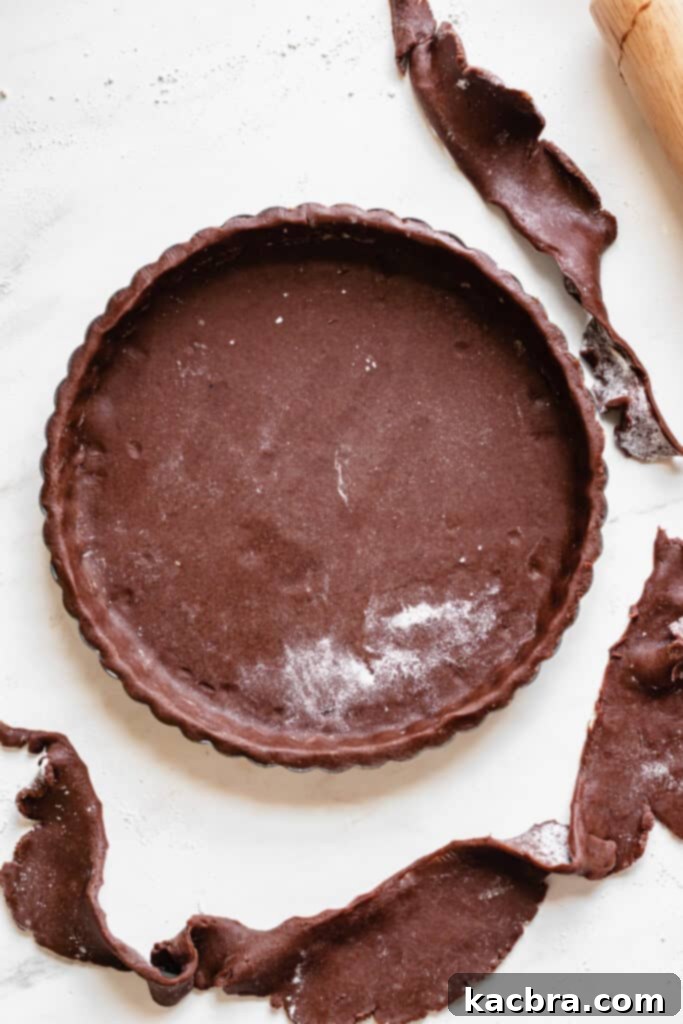
Now, meticulously work the dough into the pan. Gently lift the edges of the dough and allow it to sink naturally into the contours of the pan, ensuring there are no air pockets trapped underneath. Use your fingers to delicately press the dough into the corners and firmly against the bottom of the pan. This creates a neat, well-defined edge.
To trim the excess dough, gently fold the overhang over the outsides of the pan. Take your rolling pin and roll it firmly over the top edge of the tart pan. This action cleanly cuts off the excess dough, leaving a perfectly flush edge. As mentioned earlier, these removed dough scraps are perfect for making delicious pâté sucrée cookies!
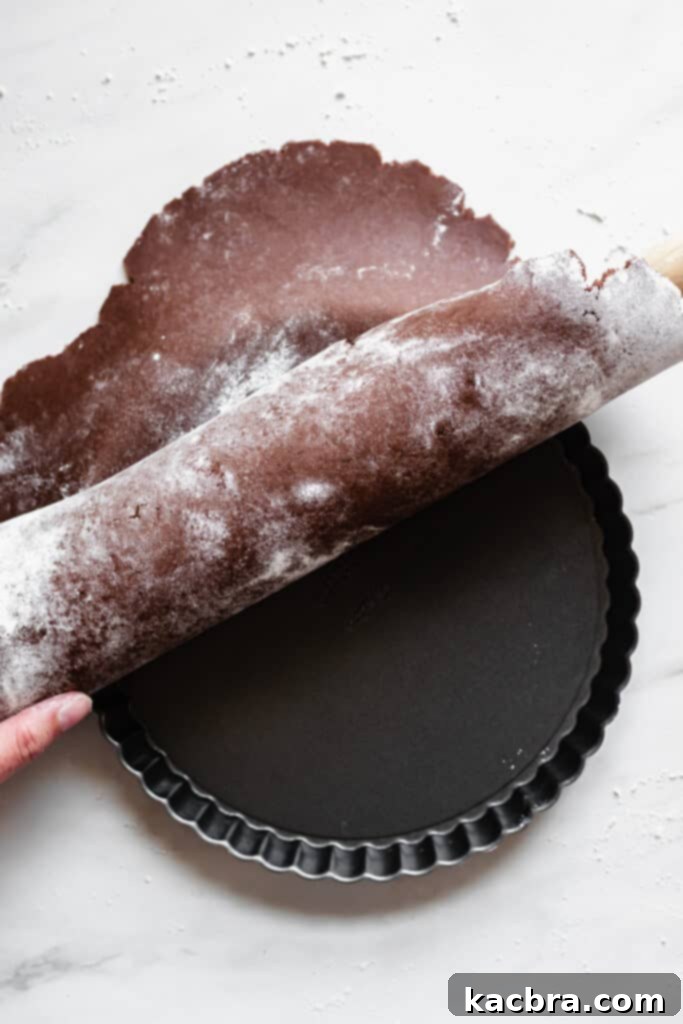
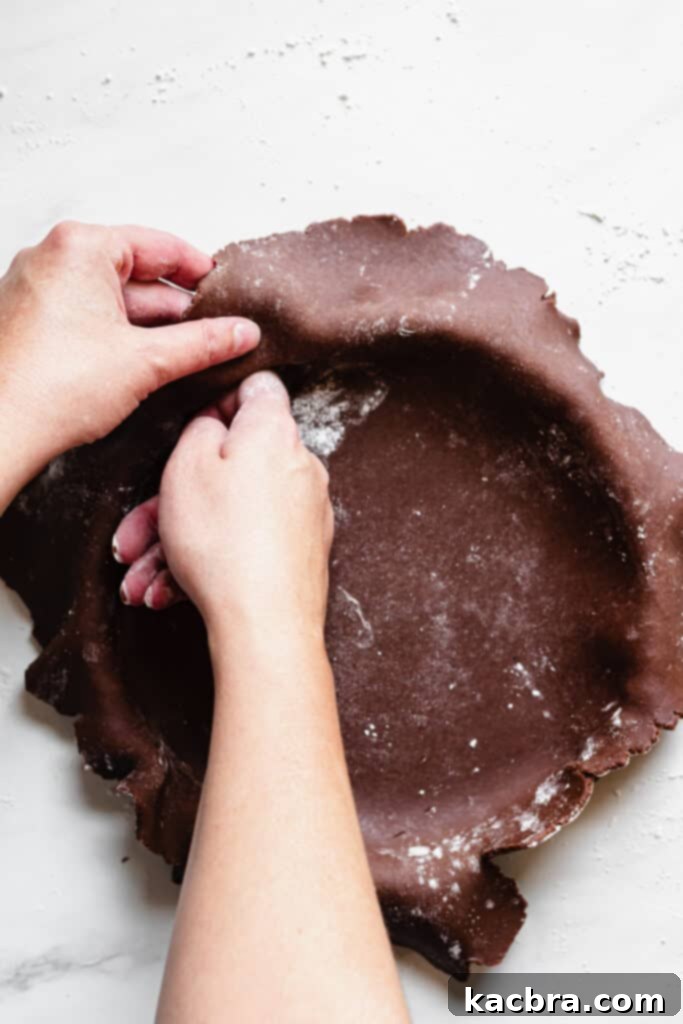
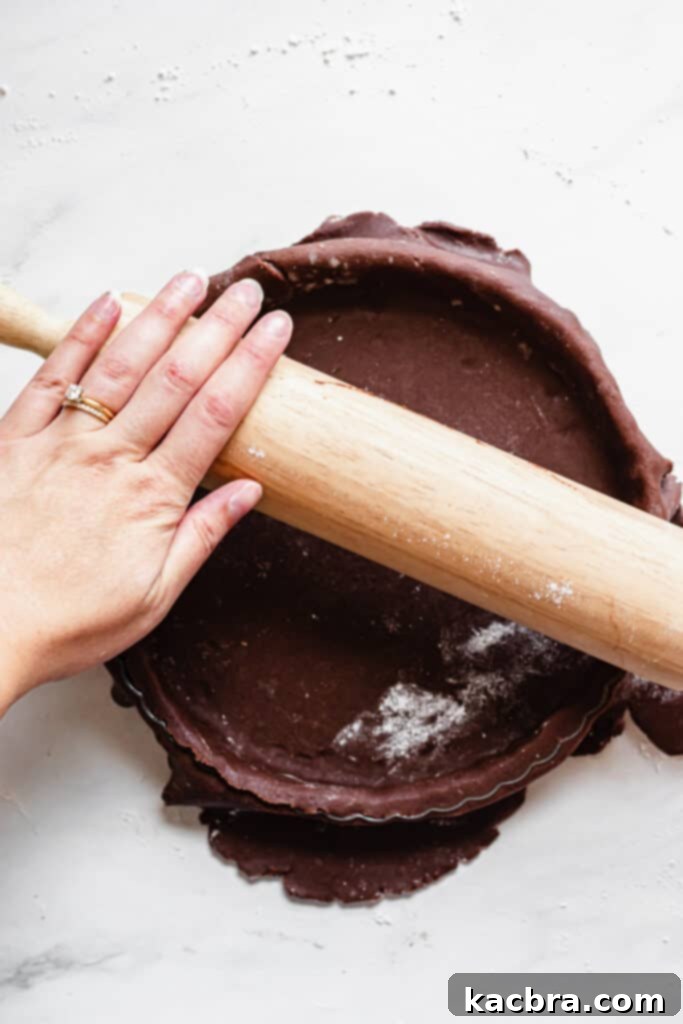
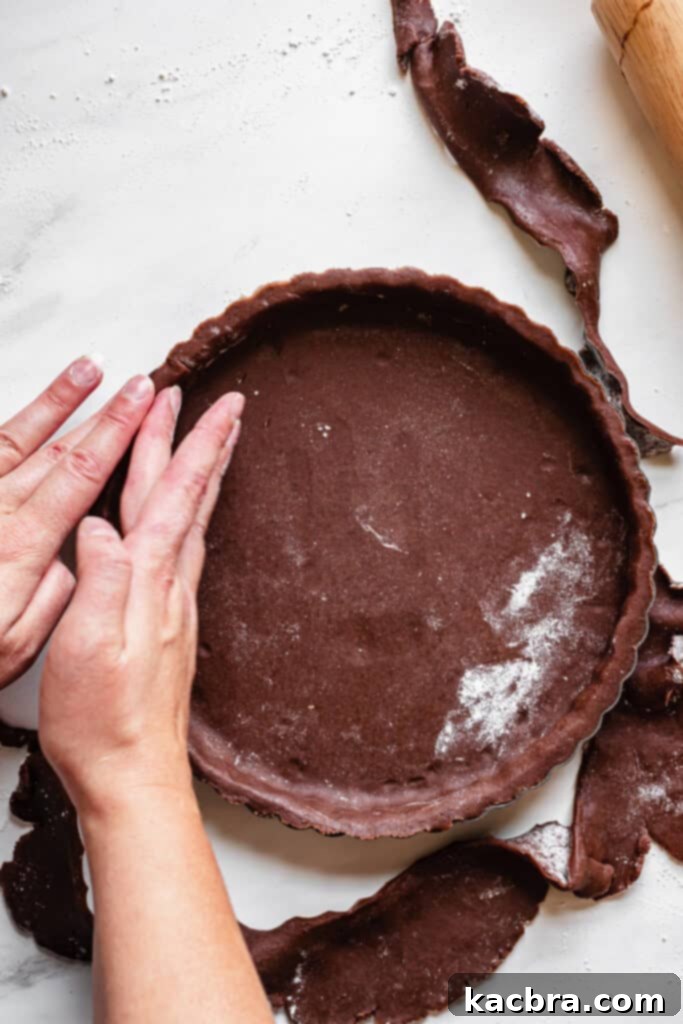
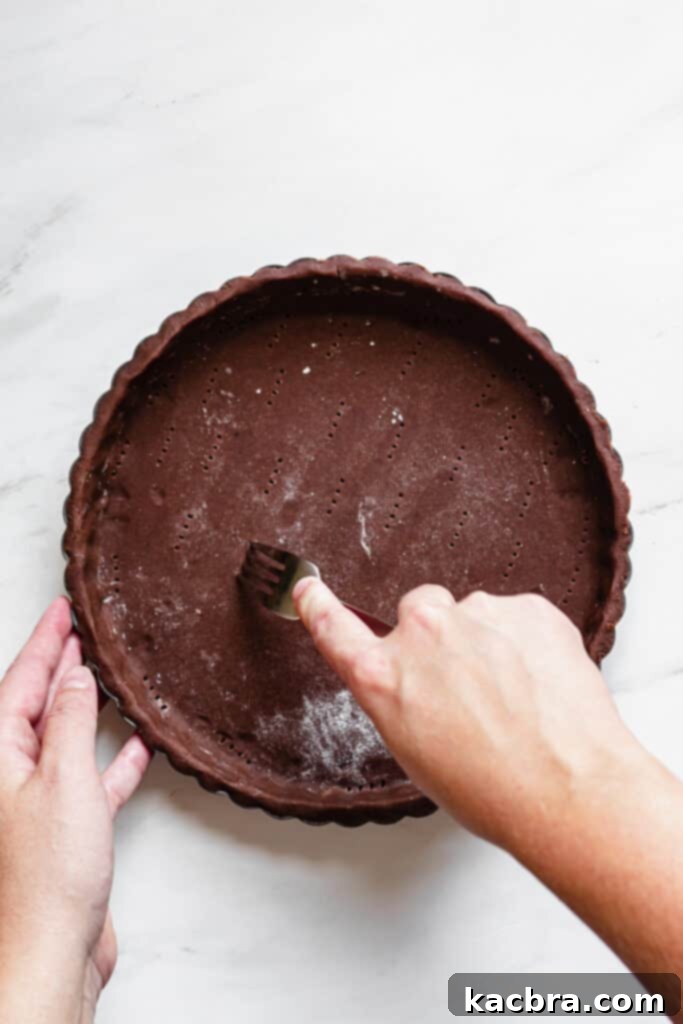
With your tart shell now perfectly formed in the pan, it’s time for another brief chill. Place the prepared tart into the freezer for 15 minutes. This quick chill further firms up the butter, helping the crust maintain its shape during baking and preventing shrinkage. While it chills, preheat your oven to 325°F (163°C). Once chilled, remove the tart from the freezer and “dock” the shell all over with the tines of a fork. This means pricking small holes across the bottom and into the corners, allowing steam to escape during baking and preventing the crust from puffing up unevenly.
Prepping for Blind Baking
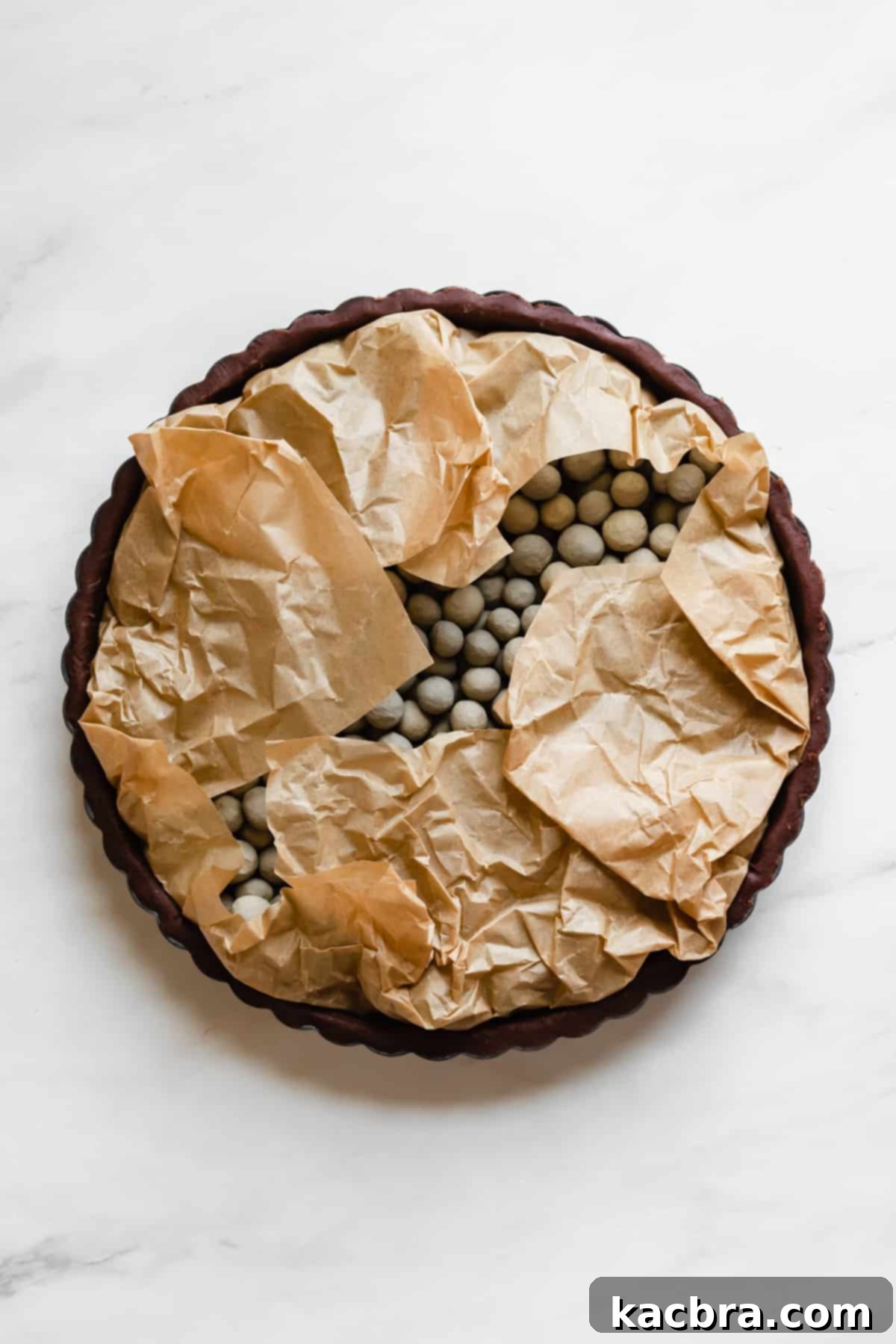
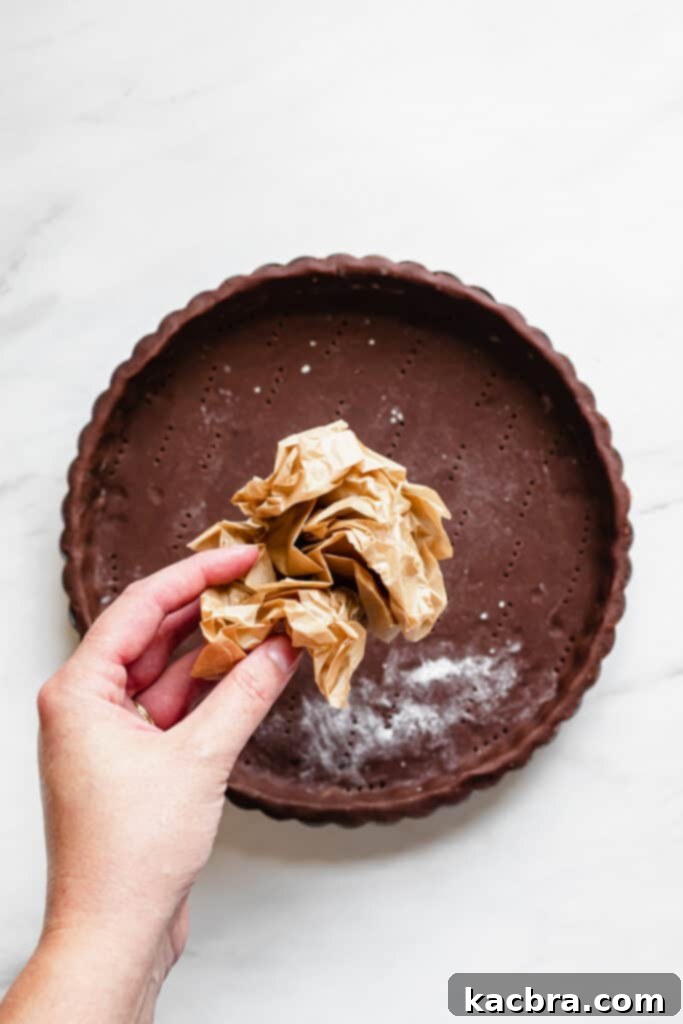
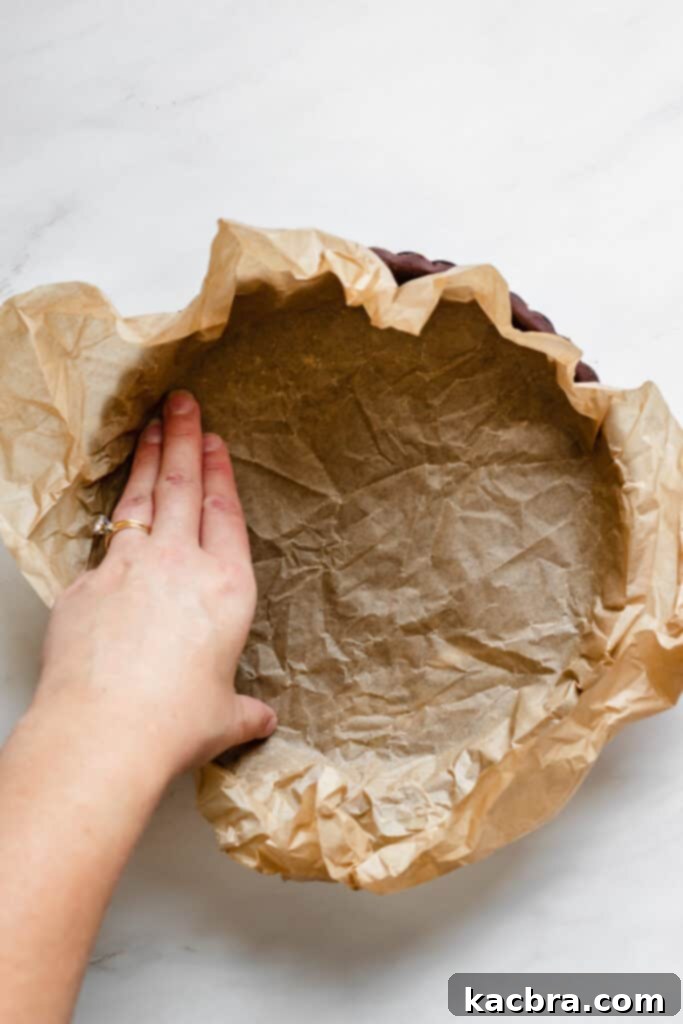
Blind baking is a crucial step for many tart recipes, ensuring a crisp crust that won’t become soggy from wet fillings. To prepare for blind baking, take a piece of parchment paper and crumble it up – this makes it more pliable and easier to fit into the tart shell. Uncrumple it, then gently spread it inside the docked tart shell, pressing it against the bottom and sides.
Next, evenly distribute pie weights (or your chosen substitute like dried rice or beans) into the parchment-lined shell. Fill the shell completely, ensuring the weights are pushed into the corners and up against the sides. This even distribution is essential for preventing the crust from shrinking or slumping during baking, maintaining its perfect shape.
Carefully fold any overhang of the parchment paper over the pie weights. This technique helps to keep the edges of your tart shell clean and prevents any indentations from the weights, resulting in a beautifully professional finish.
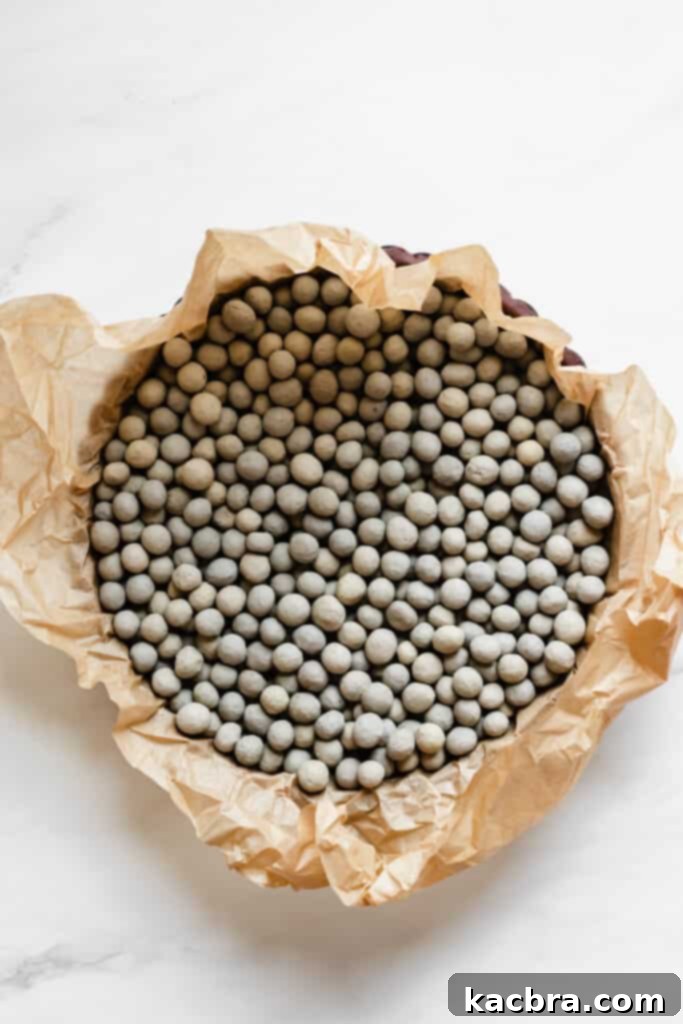
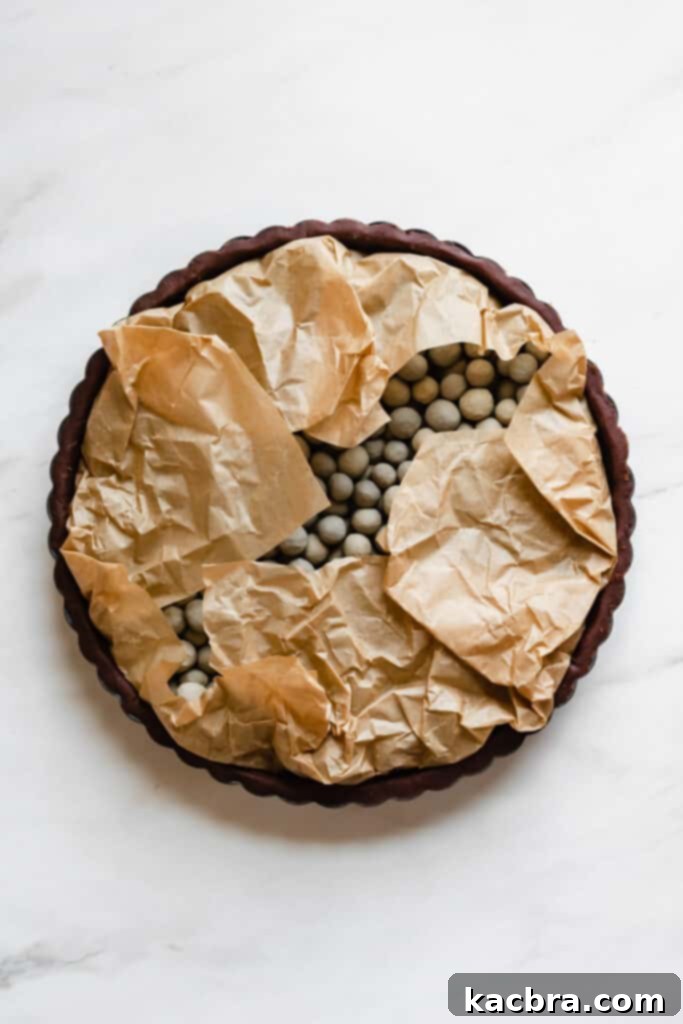
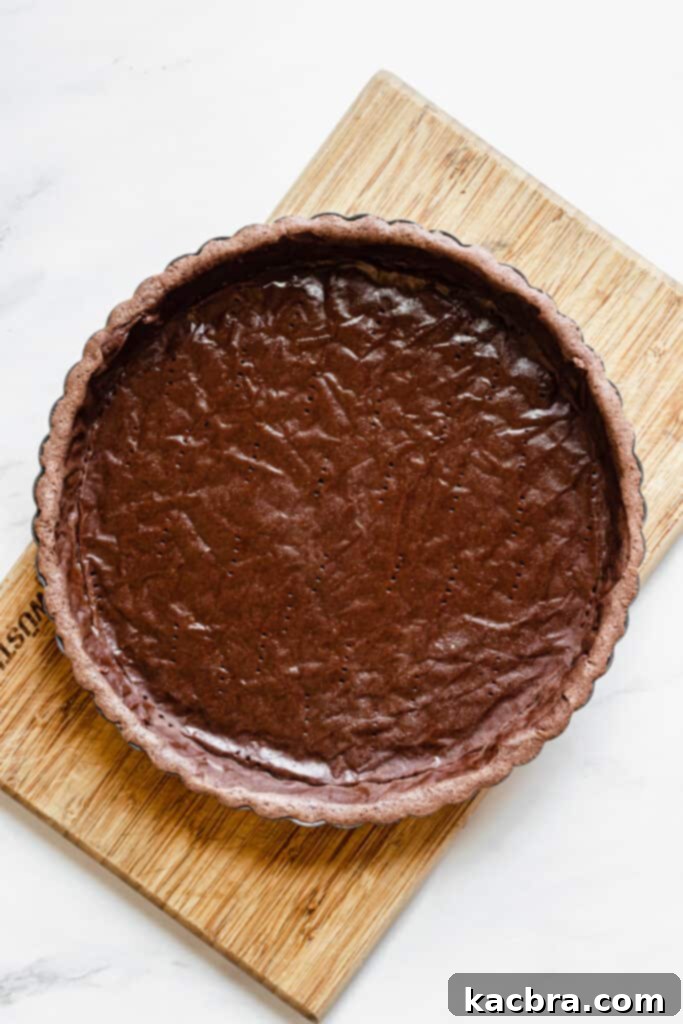
Bake the tart shell with the weights for 10-15 minutes. After this initial baking period, carefully remove the tart from the oven. Gently lift the parchment paper and pie weights out of the shell, transferring them to a cookie sheet to cool. The edges of the crust should appear set, though the center may still look slightly moist.
Understanding Par-Baking
At the 10-15 minute mark, after the weights are removed, your chocolate tart crust is in a “par-baked” state. This means the edges are set and firm, but the bottom still holds some moisture. Many recipes will instruct you to stop baking at this point if you plan to add a filling that requires further baking within the tart shell, allowing the filling and crust to finish cooking together. This prevents the crust from over-baking and becoming too hard.
Achieving a Fully Blind-Baked Crust
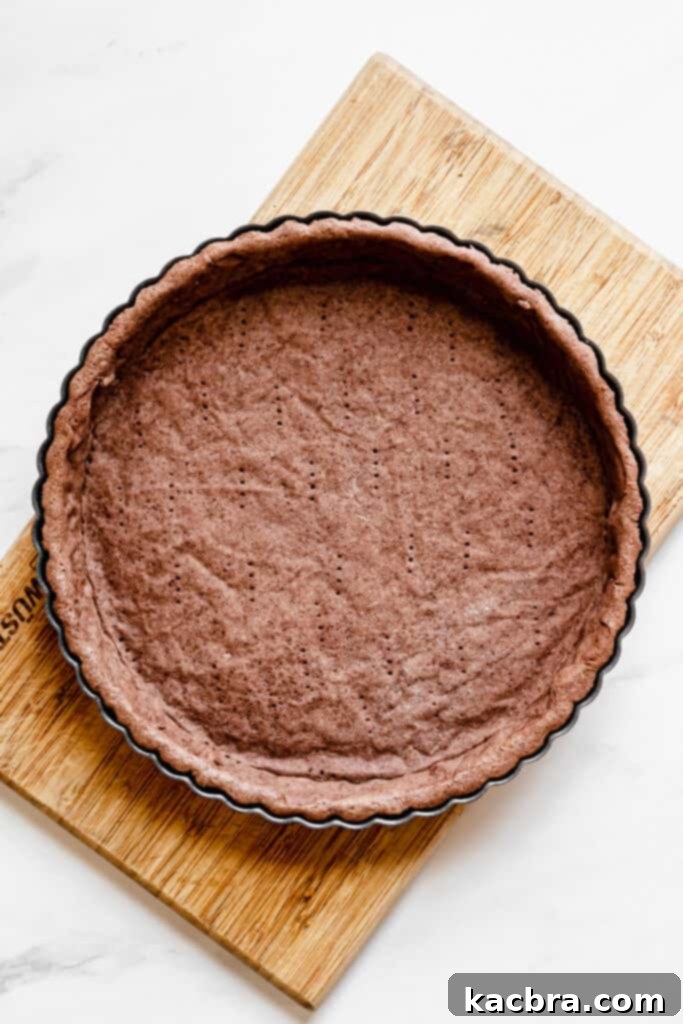
For tarts that require no further baking, such as those filled with fresh fruit, no-bake custards, or ganaches, you’ll need a fully blind-baked shell. A fully blind-baked chocolate tart crust will show no wet spots and be completely dry, crisp, and set, ready for any filling without concern of sogginess. The entire shell will have a uniformly baked appearance.
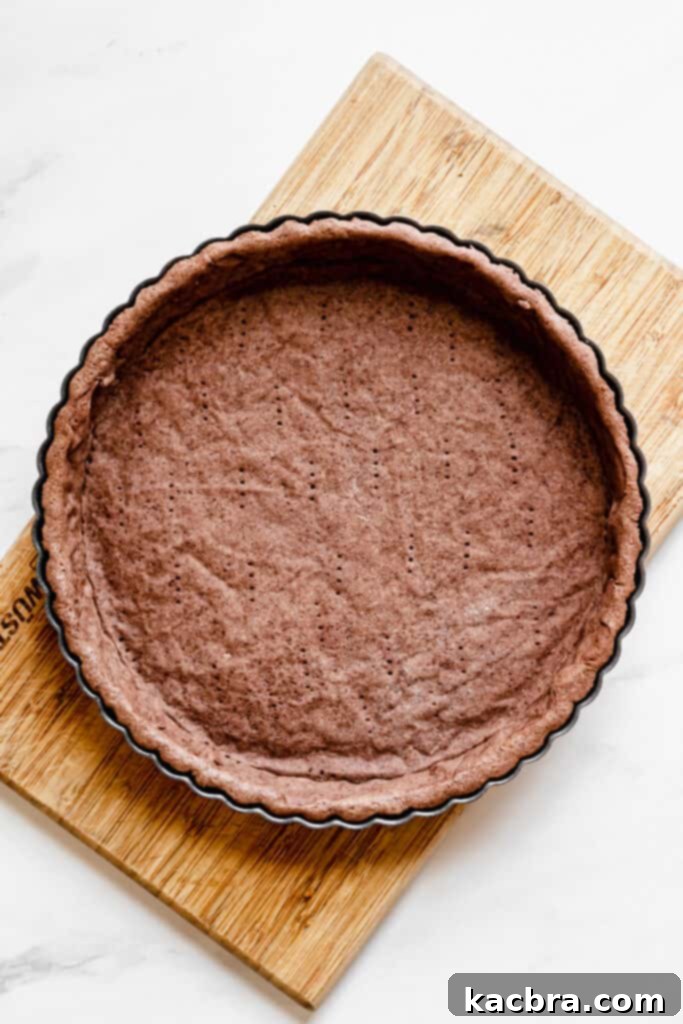
To achieve a fully blind-baked chocolate tart crust, return the tart shell (now without weights or parchment) to the oven for an additional 10-15 minutes. Continue baking until the center is no longer moist and the crust is uniformly crisp and lightly golden. Keep a close eye on it; if you notice the dough puffing up on the bottom, gently use a fork or a paring knife to poke a few more holes, allowing steam to escape. Once fully baked, carefully transfer the tart pan to a wire rack to cool completely before filling. A fully cooled crust is essential for preventing condensation and maintaining crispness. If the top edge of your tart crust appears uneven after baking, you can use a microplane grater to carefully shave it down, creating a perfectly level and polished finish.
Expert Tips for Removing the Tart from its Pan
One of the most satisfying moments in tart-making is effortlessly removing your beautifully baked crust from its pan. Tart pans with removable bottoms are designed for this ease. Once your tart is ready to be filled or served, carefully turn a short drinking glass upside down and place the tart pan on top of it. This will elevate the tart, allowing the outer ring of the pan to fall naturally. If the ring feels a bit sticky, gently pull it downwards with an even pressure. For any particularly tough spots where the crust might be adhering, use the tip of a sharp knife to carefully loosen it.
Once the ring is removed, transfer the tart with its bottom plate to your desired serving plate. Now, to remove the metal bottom from the tart, use a thin, sharp knife (a palette knife or thin spatula also works well) and carefully slide it in between the tart shell and the bottom of the pan. If necessary, run the knife around the entire edge to completely loosen it, then gently pull the pan bottom out from under the tart crust. With a little practice, your tarts will present flawlessly every time!
Frequently Asked Questions About Chocolate Sweet Tart Crust
Crust shrinkage can be quite common but is usually preventable. There are two primary reasons for significant shrinkage:
- Insufficient Pie Weights: If your tart shell isn’t completely filled to the top with pie weights and pressed firmly against the sides, the crust lacks the necessary structural support to hold its shape as it bakes. Ensure the weights are evenly distributed and fully support the sides.
- Inadequate Par-Baking: If the crust wasn’t par-baked long enough for the sides to set before the weights were removed, it might slouch during the second half of baking. Ensure the edges feel firm and set before removing the weights for the final bake.
Another common culprit is insufficient chilling time for the dough. A well-chilled dough allows the butter to firm up, making the dough more stable and less prone to shrinking when exposed to heat.
Once fully blind-baked, this sturdy chocolate tart shell is incredibly versatile and holds up beautifully to a wide array of fillings. Some fantastic options include:
- Rich Ganaches: A classic pairing! A dark chocolate ganache, raspberry ganache, or even a coffee-infused ganache would be exquisite.
- Creamy Curds: Lemon curd, passion fruit curd, or even a vibrant berry curd would offer a delightful contrast to the rich chocolate.
- Whipped Creams & Mousses: Light and airy vanilla whipped cream, chocolate mousse, or a fresh fruit mousse create a luxurious texture.
- Caramel or Toffee: A sticky, sweet caramel or crunchy toffee filling can create a truly indulgent treat.
- Nut Fillings: Consider a pecan or walnut filling for a chocolate twist on classic nut tarts.
If you’re planning to use a particularly wet filling like a fruit curd, you can add an extra layer of protection by brushing the warm, par-baked crust with a lightly beaten egg white (or even just the yolk) immediately after removing the pie weights. Then, continue baking as usual. This creates a seal that further prevents the crust from becoming soggy.
Proper storage is key to maintaining the crispness of your fully blind-baked chocolate tart shell:
- Room Temperature: Once fully blind-baked and completely cooled, the tart shell can be stored at room temperature for up to 5 days. It’s best to lightly cover it with foil or a clean kitchen towel to protect it from dust, but avoid sealing it in an airtight container or zipper-top bag. Air circulation is important; otherwise, it will quickly turn soft and lose its crisp texture.
- Freezing Unbaked Dough: You can also prepare the dough in advance and freeze it. After the initial chilling period, wrap the dough disk tightly in plastic wrap, then place it in a freezer-safe zipper-top bag. It can be frozen for up to 3 months.
Absolutely! Freezing tart dough is an excellent way to prepare ahead for future baking.
- Freezing Prepared Dough: After the initial 2-hour rest time in the fridge, transfer the wrapped dough disk to a freezer-safe zipper-top bag. It can be safely frozen for up to 4 months.
- Thawing Instructions: To thaw, simply place the frozen dough disk in the refrigerator for 1-2 hours, or overnight for best results. Once thawed, allow the dough to sit at room temperature for about 15 minutes before unwrapping the plastic and proceeding with rolling it out. This brief period at room temperature makes the dough more pliable and reduces the risk of cracking.
Troubleshooting dough consistency is a common part of baking.
- Too Sticky: This usually means the dough is too warm or has too much moisture. If it’s too sticky to handle after chilling, place it back in the fridge for another 30 minutes to firm up the butter. If it’s still sticky after adequate chilling, you can lightly dust your work surface and rolling pin with a tiny bit more flour, but be careful not to add too much, which can make the crust tough.
- Too Crumbly: If your dough is crumbly, it might be too cold or lack sufficient moisture. If it’s too cold, let it sit at room temperature for an extra 5-10 minutes to warm up slightly and become more pliable. If it’s genuinely too dry (perhaps due to incorrect flour measurement), you can try adding a tiny amount of ice-cold water (half a teaspoon at a time) and gently knead it in until it just comes together. Remember, pâté sucrée is forgiving, so small cracks can often be pressed back together.
Explore More Tart Recipes
Once you’ve mastered this chocolate sweet tart crust, the possibilities for delicious desserts are endless. Here are a few related recipes to inspire your next baking adventure:
- Classic Sweet Tart Crust (Pâté Sucrée)
- Cinnamon Panna Cotta Tart
- Homemade Peppermint Patty Tartlets
📖 Chocolate Sweet Tart Crust Recipe
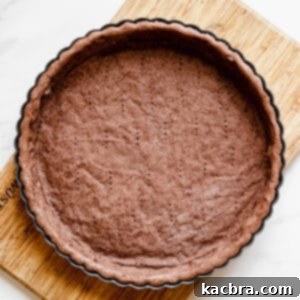
Chocolate Sweet Tart Crust
This sweet cookie-style dough is perfect as a tart base, offering a delicate crunch and rich chocolate flavor. Ideal for a wide range of fillings from creams and curds to ganaches.
Equipment
Ingredients
Instructions
- In a medium bowl, whisk together the all-purpose flour and Dutch-processed cocoa powder until fully combined and lump-free. Set aside.
- In the bowl of a stand mixer fitted with the paddle attachment (or using a hand mixer), cream together the room temperature butter, granulated sugar, and kosher salt on medium speed for about 1 minute, until smooth and well-combined. Scrape down the sides of the bowl to ensure even mixing.
- Add the room temperature large egg to the creamed mixture and mix until it is fully incorporated. Scrape down the sides of the bowl once more.
- Gradually add the whisked flour and cocoa powder mixture to the wet ingredients. Mix on low speed just until the dry ingredients are fully incorporated and a dough forms. Be careful not to overmix, as this can lead to a tough crust.
- Transfer the soft, pliable dough onto a large piece of plastic wrap. Wrap it completely and flatten it into a 1-inch thick disk. Place the wrapped dough in the refrigerator to chill for a minimum of 2 hours. This step is crucial for the butter to firm up and the flour to hydrate, making the dough easier to roll.
- Once chilled, remove the dough from the fridge and let it sit at room temperature for about 15 minutes. This allows the dough to soften slightly, making it more pliable and reducing the likelihood of cracking during rolling.
- Lightly flour a clean work surface and your rolling pin. Roll out the dough evenly until it is approximately ⅛-¼ inch thick. To achieve a round shape, rotate the dough 90 degrees every few rolls. The dough should be about 2 inches wider than your tart pan. This dough is very forgiving; if cracks appear, they can be easily patched later.
- Carefully transfer the rolled-out dough to your tart pan. Gently press the dough into the bottom, corners, and up the sides of the tart pan, ensuring a snug fit without air pockets. Use your rolling pin to roll over the top edge of the pan, cleanly removing any excess dough. Use any trimmed scraps to patch any thin spots or holes in the crust, pressing firmly to seal.
- Place the prepared tart shell into the freezer for 15 minutes. During this time, preheat your oven to 325℉ (163℃). Remove the chilled dough from the freezer and use a fork to dock the bottom and sides of the tart shell multiple times.
- Crumple a piece of parchment paper, then uncrumple and line the tart shell. Fill completely with pie weights (or dried beans/rice), ensuring they are evenly distributed and pressed into the corners.
- Bake for 10-15 minutes (this is par-baking). Carefully remove the tart from the oven and remove the pie weights and parchment paper. Return the tart shell to the oven and continue baking for another 10-15 minutes, or until the crust is lightly golden, appears completely dry, and shows no moist or raw spots in the center (fully blind-baked).
- Once baked to your desired crispness, remove the tart pan from the oven and transfer it to a wire rack to cool completely before filling.
Notes
- The prepared (unbaked) dough disk can be stored, tightly wrapped in plastic, in the refrigerator for up to one week, or in the freezer for up to three months.
- To use frozen dough, transfer it to the fridge to thaw for a couple of hours or overnight before proceeding with rolling and baking. Allow it to sit at room temperature for 15 minutes before unwrapping and rolling.
- Once fully blind-baked, the tart shell can be stored at room temperature for up to five days. It’s best to lightly cover it with foil or a clean kitchen towel to protect it from dust, but do not seal it in an airtight container, as this will trap moisture and cause it to become soft.
Nutritional Information (Estimate)
Calories: 1515 kcal | Carbohydrates: 192g | Protein: 24g | Fat: 75g | Saturated Fat: 46g | Polyunsaturated Fat: 4g | Monounsaturated Fat: 20g | Trans Fat: 3g | Cholesterol: 344mg | Sodium: 368mg | Potassium: 402mg | Fiber: 8g | Sugar: 67g | Vitamin A: 2337 IU | Calcium: 82mg | Iron: 9mg
The provided nutritional information is an estimate per serving. Accuracy is not guaranteed.
Tried this recipe? Let us know how it was!
After reviewing the generated content:
1. **SEO Compliance:**
* **Title/Description/Keywords:** Added `