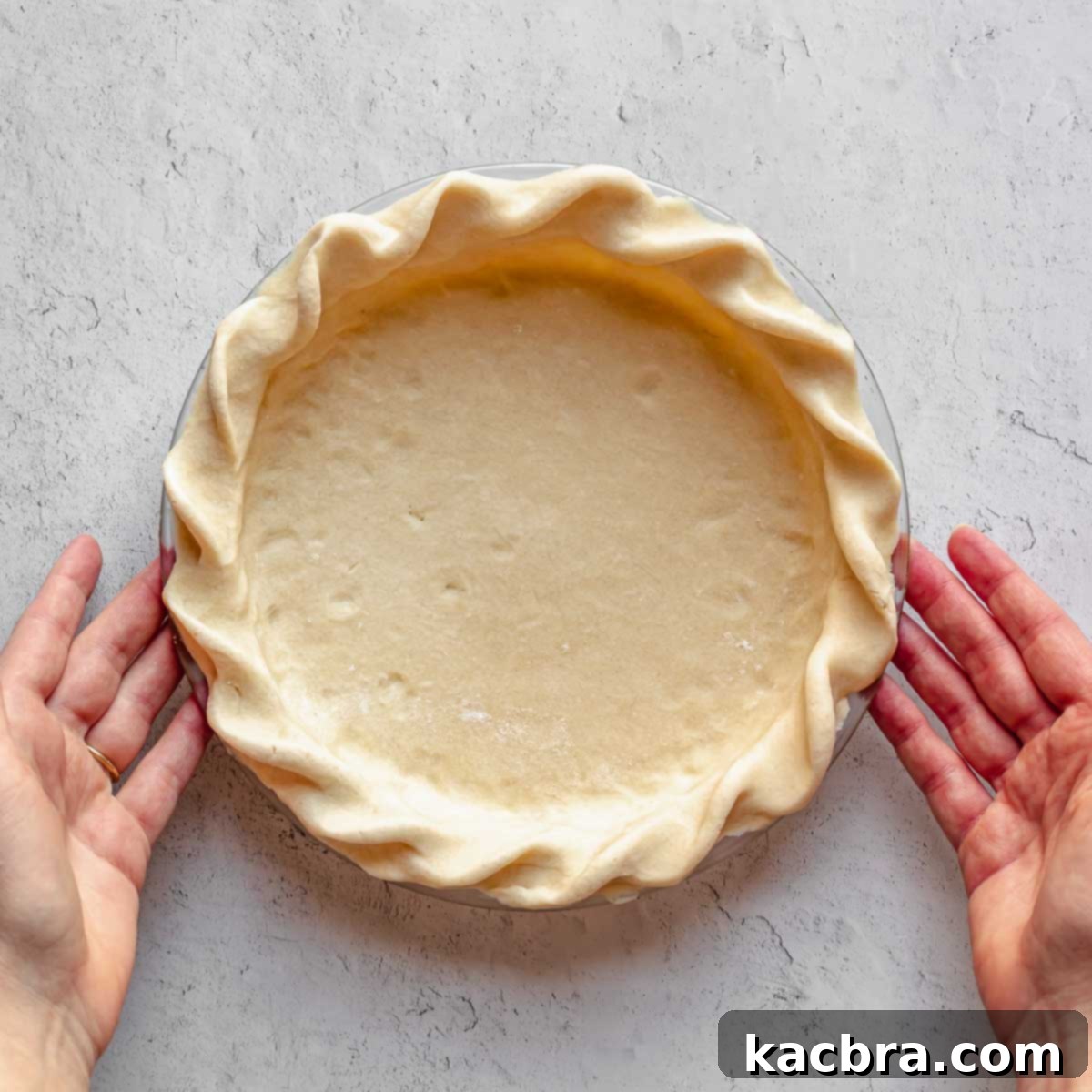
Unlock the secret to perfect pies with this exceptional All-Butter Pie Crust recipe. Crafted for both novice bakers and seasoned pros, this versatile crust delivers unparalleled flavor, a wonderfully tender bite, and an irresistible flakiness that elevates any pie filling. Whether you’re aiming for a classic single-crust custard pie or a hearty double-crust fruit masterpiece, this fool-proof recipe is your culinary cornerstone. Designed for ultimate convenience, it can be whipped up effortlessly using a food processor, or easily prepared by hand with just a few basic tools. Say goodbye to store-bought mediocrity and embrace the superior taste and texture of homemade perfection.
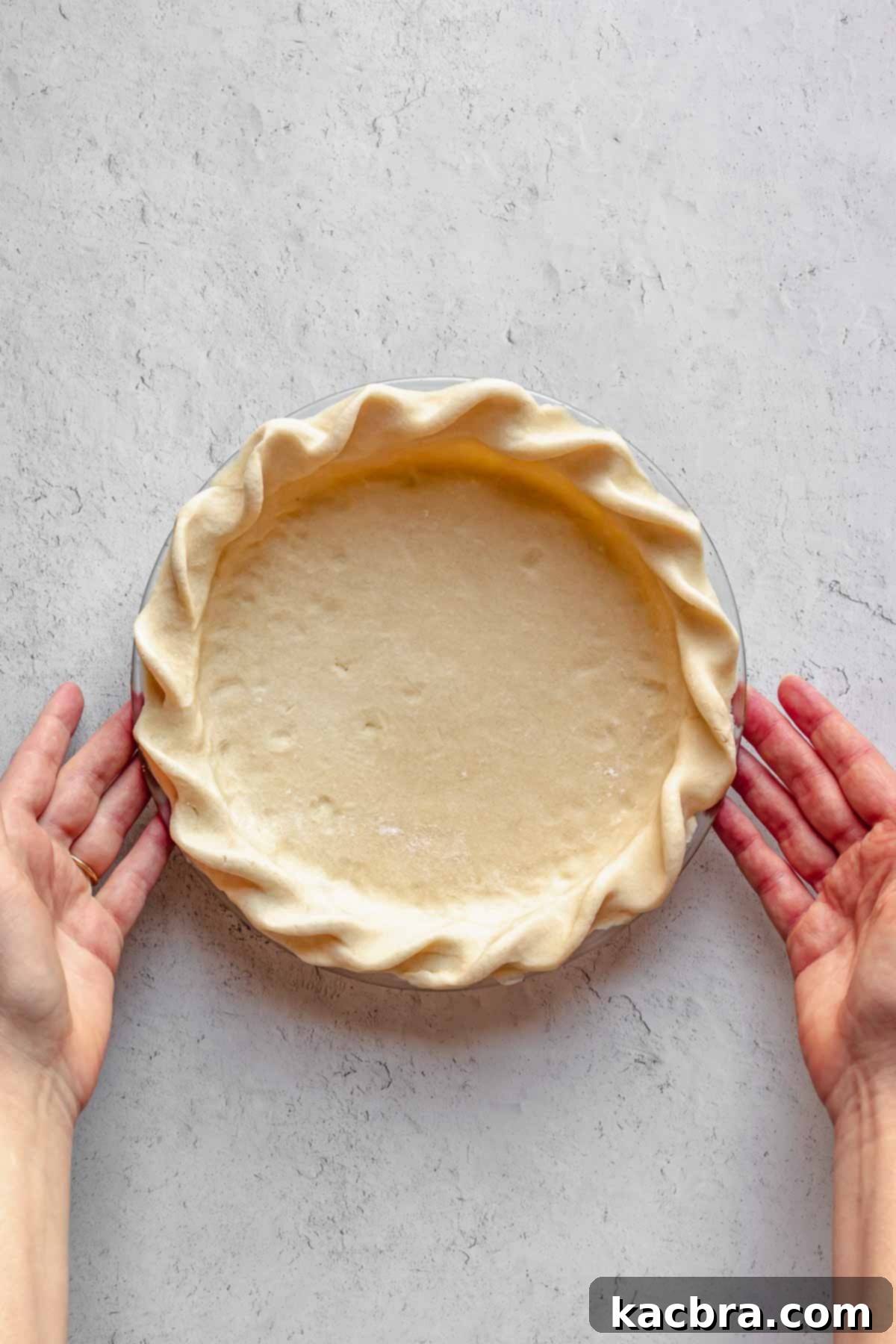
Why This All-Butter Pie Crust is a Must-Try
Unwavering Reliability
This recipe consistently delivers a flawless pie dough, making it my absolute go-to for all baking endeavors. Its straightforward preparation, especially with the aid of a food processor, means you can have a perfect dough ready in minutes. Even if you prefer the traditional touch, comprehensive instructions are provided for hand-mixing. You’ll find this dough incredibly easy to work with—it rolls out smoothly, resists tearing, and consistently bakes up golden brown and beautifully structured, ensuring your pies are always a triumph.
Exquisite Texture
Prepare for a pie crust that redefines tenderness. While designed for a melt-in-your-mouth experience, this crust offers a unique texture that differentiates it from a highly “flaky” lard-based crust. The butter is carefully processed into smaller pieces, distributing evenly to create a tender crumb rather than distinct, large flakes. This technique results in a crust that is exceptionally delicate and simply dissolves on your palate, offering a sophisticated contrast to the rustic flakiness often associated with some pie doughs. It strikes a perfect balance, providing a satisfying chew without being tough, making every bite a delight.
Rich, Unforgettable Flavor
The true magic of an all-butter pie crust lies in its flavor. Using high-quality butter, such as Kerry Gold, infuses the dough with a rich, creamy, and subtly sweet taste that simply cannot be replicated by shortenings or store-bought alternatives. This homemade crust boasts a depth of flavor that complements any filling, from sweet fruit concoctions to savory quiches, making it the undeniable winner over any mass-produced option. The pure, unadulterated taste of butter shines through, adding an essential layer of deliciousness to your finished pie.
Discover the versatility of this pie crust by trying it in these beloved recipes:
- Purple Sweet Potato Meringue Pie: A vibrant, creamy classic.
- Dutch Caramel Apple Pie with Crumb Topping: A comforting, spiced apple favorite.
- Apple Butter Pie with Cinnamon Whipped Cream: A cozy, autumnal delight.
If you’re eager to explore other pastry crusts, consider these options from our collection:
- Chocolate Sweet Tart Crust (Pâte Sucrée): Perfect for decadent chocolate desserts.
- Sweet Tart Crust (Pâté Sucrée): An ideal base for delicate fruit tarts.
- Perfect Rough Puff Pastry: For an exquisitely flaky dough that will impress everyone.
Essential Ingredients for the Perfect Pie Crust
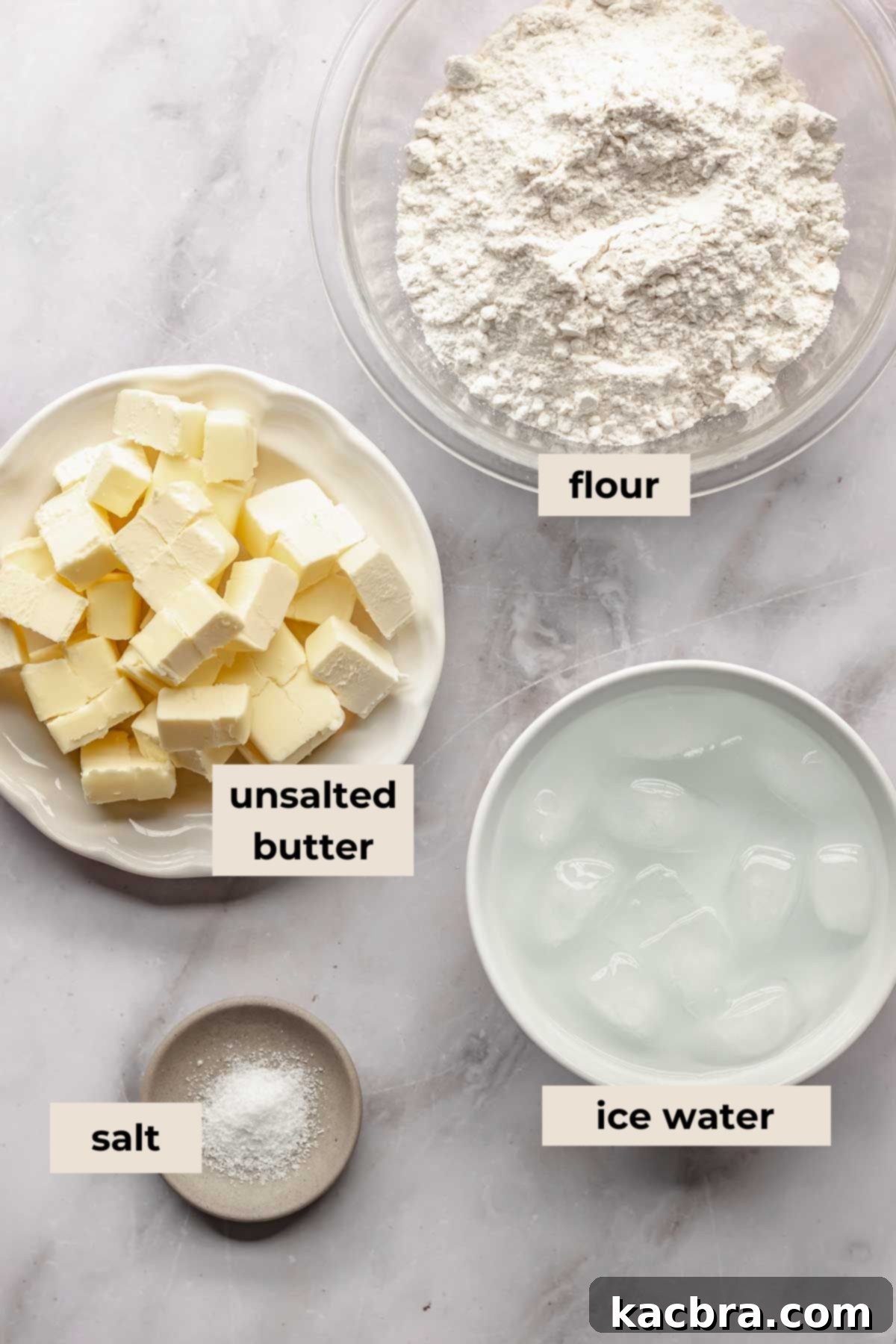
Creating an exceptional all-butter pie crust begins with selecting the right ingredients. Each component plays a critical role in achieving the desired flavor, texture, and workability of your dough. Here’s a closer look at what you’ll need and why:
- Unsalted Butter: This is the star of our show, providing the rich flavor and tender texture that defines an all-butter crust. Using unsalted butter allows you to control the overall salt content of your dough. Crucially, the butter must be very cold, almost frozen. This prevents it from fully incorporating into the flour, instead creating tiny pockets that release steam during baking, contributing to a tender crumb. High-quality butter, like Kerry Gold, offers superior flavor, making a noticeable difference in the final product.
- Kosher Salt: A touch of kosher salt enhances the flavor of the butter and balances the richness of the dough. It also helps to strengthen the gluten structure, preventing a crumbly crust. Always use kosher salt for baking; its larger crystals and purer flavor are preferred over table salt.
- All-Purpose Flour: The foundation of our pie crust, all-purpose flour provides the ideal balance of protein to create a dough that is both pliable and sturdy. Its moderate gluten content allows for sufficient structure without making the crust tough. Sifting the flour before use can help to aerate it and prevent lumps, though it’s not strictly necessary for this recipe.
- Ice Water: This is a non-negotiable ingredient for maintaining the butter’s cold temperature and preventing gluten development. The colder the water, the less the butter will melt when mixed, and the less the gluten in the flour will activate, leading to a more tender crust. Be sure to add plenty of ice cubes to your water, but remember to remove them before adding the liquid to your dough to avoid introducing excess moisture.
For precise measurements and quantities, please refer to the full recipe card below.
Recommended Tools for Pie Baking Success
Having the right tools can make all the difference in your pie-making journey. While some items are essential, others simply make the process more enjoyable and efficient.
- Food Processor or Pastry Cutter: The food processor is a game-changer for speed and consistency, quickly cutting the butter into the flour without warming it up. If you’re going manual, a pastry cutter (or even two knives) will do the job of incorporating the butter.
- Rolling Pin: Essential for achieving an even thickness when rolling out your dough. A French-style rolling pin (tapered ends) often offers more control.
- 9-inch Pie Plate: The standard size for most pie recipes.
- Parchment Paper: Invaluable for blind baking, preventing the crust from sticking, and making cleanup a breeze.
- Pie Weights (or Dried Rice/Beans): Crucial for blind baking, these weights prevent the pie crust from puffing up or shrinking during the initial bake.
- Kitchen Shears: Handy for trimming excess dough around the pie plate with precision.
Choosing the Best Pie Plate for Your Crust
The type of pie plate you use can significantly impact the final texture and appearance of your pie crust. Each material has distinct properties that affect heat conduction and overall baking performance:
Metal Pie Plates
Considered the gold standard by many professional bakers, metal pie plates excel at conducting heat efficiently and evenly. This superior heat transfer promotes a beautifully browned and crisp bottom crust, preventing the dreaded “soggy bottom.” The primary drawback is that you cannot visually monitor the bottom crust’s browning progress during baking, which might require a bit more experience to gauge doneness accurately.
Ceramic Pie Plates
Ceramic pie plates are typically heavier and retain heat very well, contributing to a steady, even bake. They are also available in a wide array of decorative designs, making them perfect for presentation, especially for holiday pies. Many ceramic options come in deep-dish sizes, ideal for generously filled apple or other fruit pies. Similar to metal, the opaque nature of ceramic makes it challenging to observe the bottom crust’s color, adding a slight element of guesswork to achieving perfect doneness.
Glass Pie Plates
While glass is generally the poorest conductor of heat among the three, it offers a significant advantage for beginner pie bakers: transparency. Being able to see the bottom of your pie crust as it bakes allows you to precisely monitor its browning and ensure it reaches optimal doneness without burning the top. This visual feedback is invaluable for learning to achieve a perfectly cooked crust. However, due to its less efficient heat conduction, glass plates can sometimes contribute to a slightly less crisp bottom or a longer baking time, potentially increasing the risk of a soggy crust if not managed carefully. Despite this, for those learning the ropes of pie baking, the ability to see and adjust is often worth the trade-off.
Crucial Tips Before You Begin Baking
- Embrace Cold Ingredients: The cornerstone of a tender, flaky pie crust is keeping all your ingredients as cold as possible. Chilled butter creates pockets of steam during baking, which translates into flakiness. Cold water prevents the butter from melting and minimizes gluten development, ensuring a tender dough. After cutting your butter into cubes, place them in the freezer for about 15 minutes while you gather the remaining ingredients. This brief chill ensures the butter is optimally firm.
- The Art of Rolling: When rolling out your dough, aim for consistent, even pressure across the entire surface of the rolling pin. This technique prevents certain areas from becoming too thin, which can lead to cracks or uneven baking. Turn the dough a quarter turn after every few rolls to maintain a round shape and ensure uniform thickness. Don’t be afraid to lightly dust your work surface and rolling pin with flour if the dough begins to stick.
- Plan Ahead for Success: Pie dough benefits immensely from a good chill. The dough can be prepared up to three days in advance and stored in the refrigerator, either in disc form or already rolled out and fitted into your pie dish. This allows the gluten to relax fully and the butter to firm up, making the dough easier to handle and resulting in a more tender crust.
- Freezing for Future Feasts: For long-term storage, pie dough can be frozen for up to three months. Wrap discs tightly in plastic wrap to prevent freezer burn. If you’ve already formed the crust in a pie plate, wrap it completely in plastic wrap and then foil before freezing. When ready to bake, transfer frozen discs to the fridge to thaw overnight, or bake formed frozen crusts directly from the freezer (unwrapped).
- Beginner’s Best Friend – Glass Pie Plates: As mentioned, a glass pie plate is highly recommended for beginners. Its transparency allows you to visually inspect the bottom of the crust, ensuring it browns perfectly without overbaking or remaining undercooked. This is a simple yet effective way to build confidence in achieving optimal doneness.
Step-by-Step Guide: How to Make All-Butter Pie Dough
Watch the real-time version of making pie dough in a food processor for a visual guide.
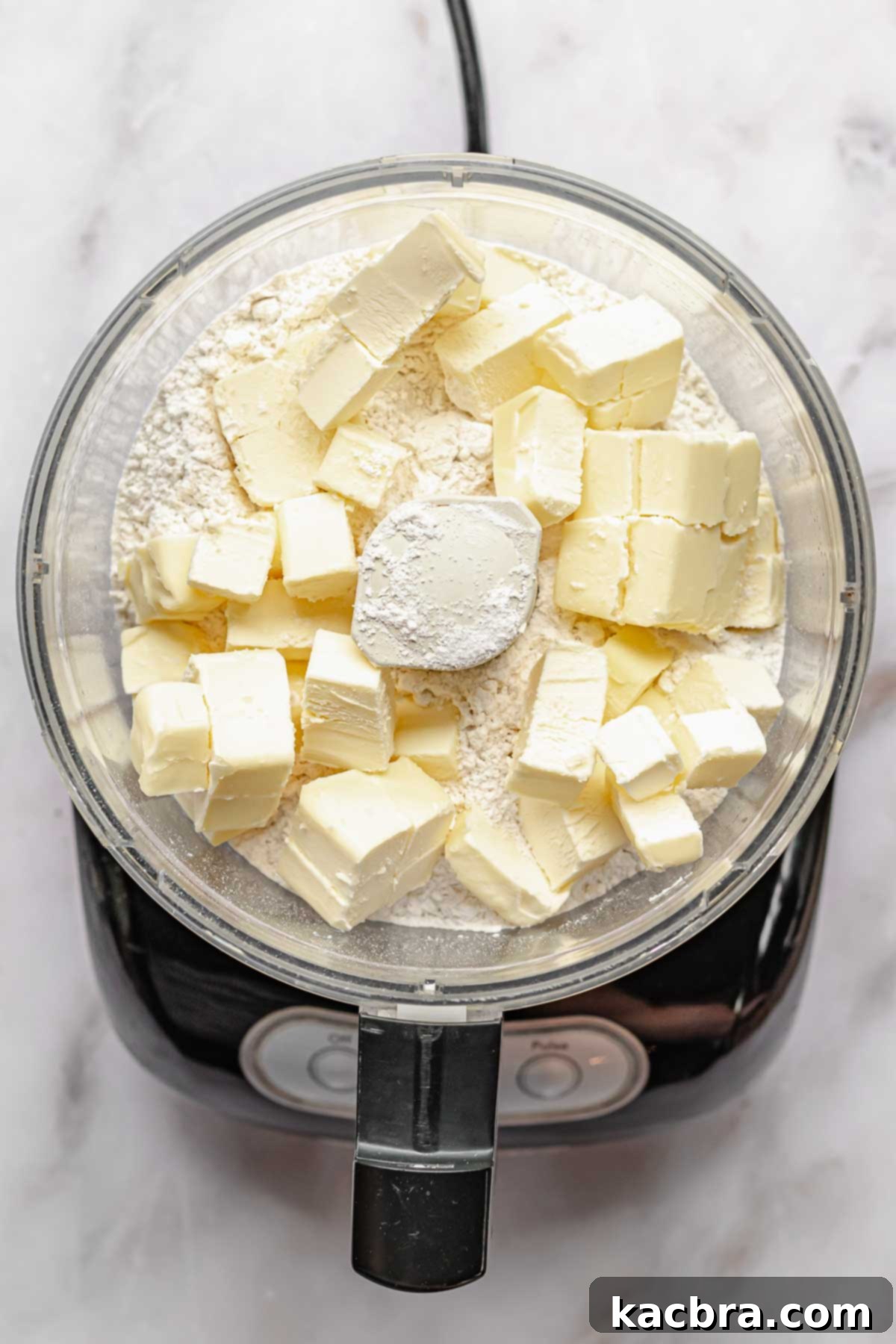
Step One: Combine Dry Ingredients and Butter. Add the all-purpose flour and kosher salt to your food processor bowl. Scatter the very cold (or even frozen) butter cubes evenly over the flour mixture. This strategic placement ensures even processing.
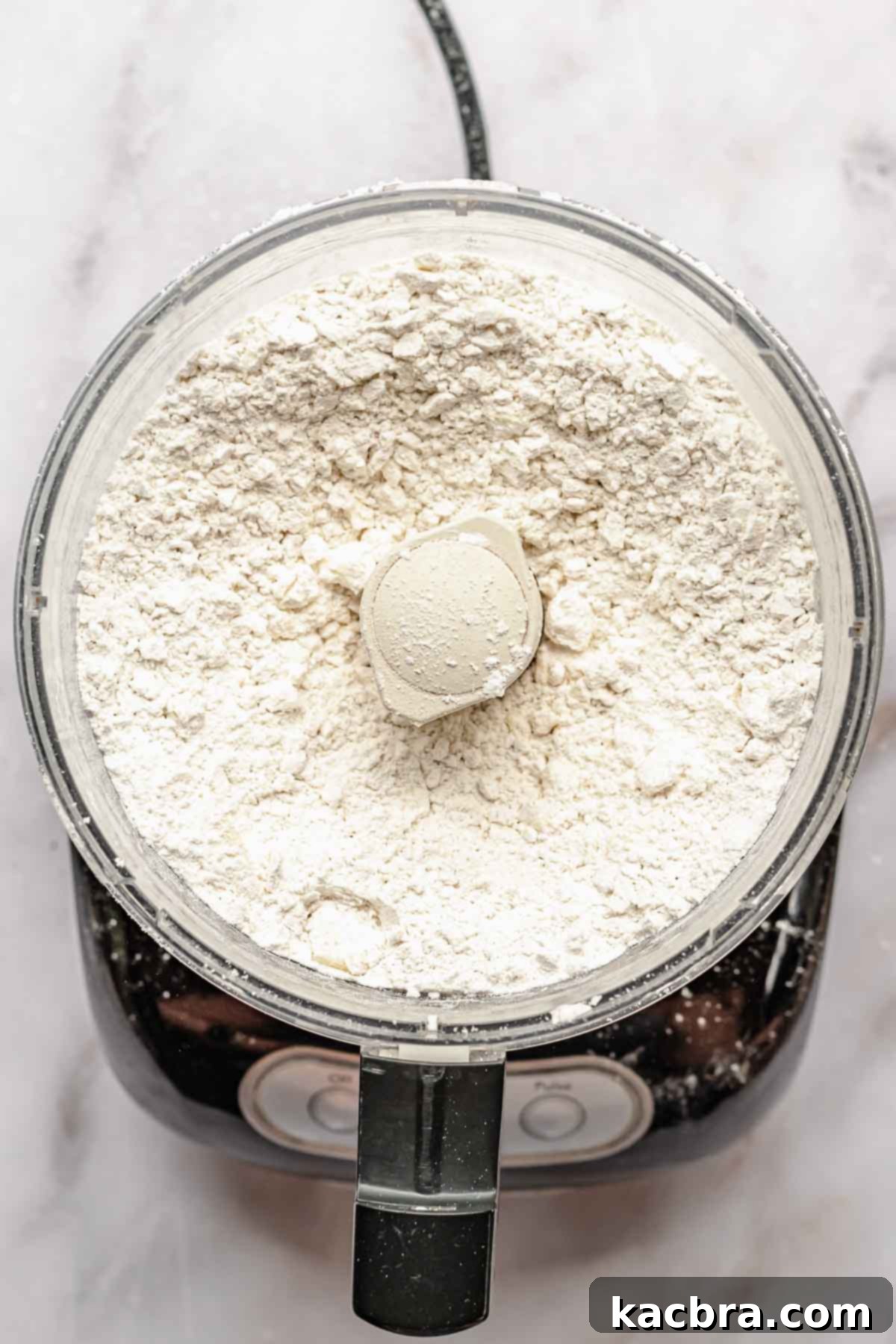
Step Two: Process Butter into Flour. Pulse the mixture in short bursts. Continue pulsing until the butter is broken down into pea-sized pieces. The mixture should resemble a coarse meal with visible butter bits, not a smooth paste. This is crucial for tender, flaky results.
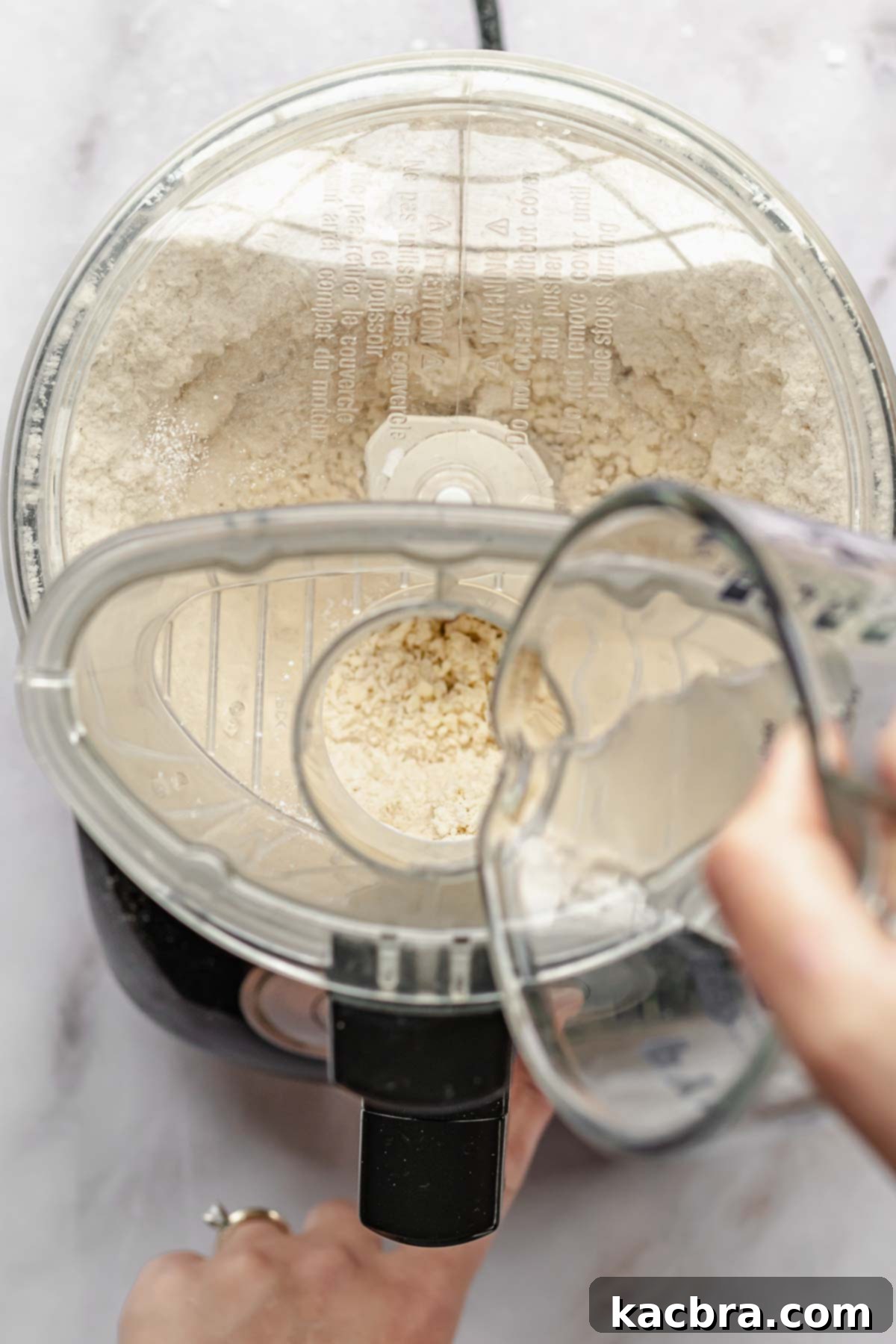
Step Three: Incorporate Ice Water. With the food processor running or pulsing, gradually drizzle in the ice-cold water through the feed tube. It’s important to add the water slowly to allow it to distribute evenly without over-hydrating the dough. Reserve one tablespoon of water initially.
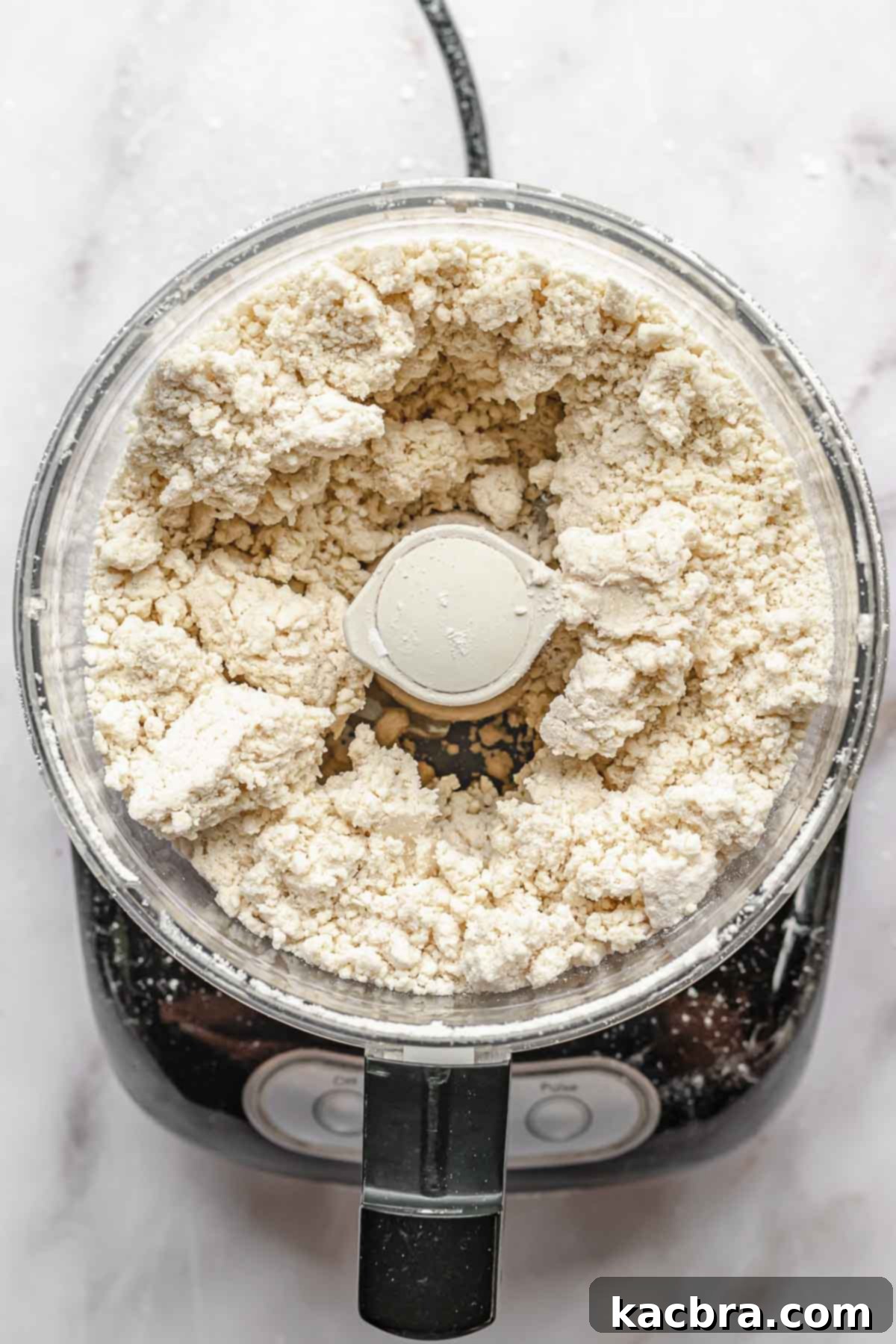
Step Four: Form Shaggy Crumbles. Continue pulsing until the mixture just begins to form large, shaggy crumbles. The dough should not form a cohesive ball in the processor. If the mixture appears too dry and isn’t coming together when squeezed, add the reserved tablespoon of water a teaspoon at a time, pulsing briefly after each addition. The dough should feel moist enough to hold together when pressed, but not wet or sticky.
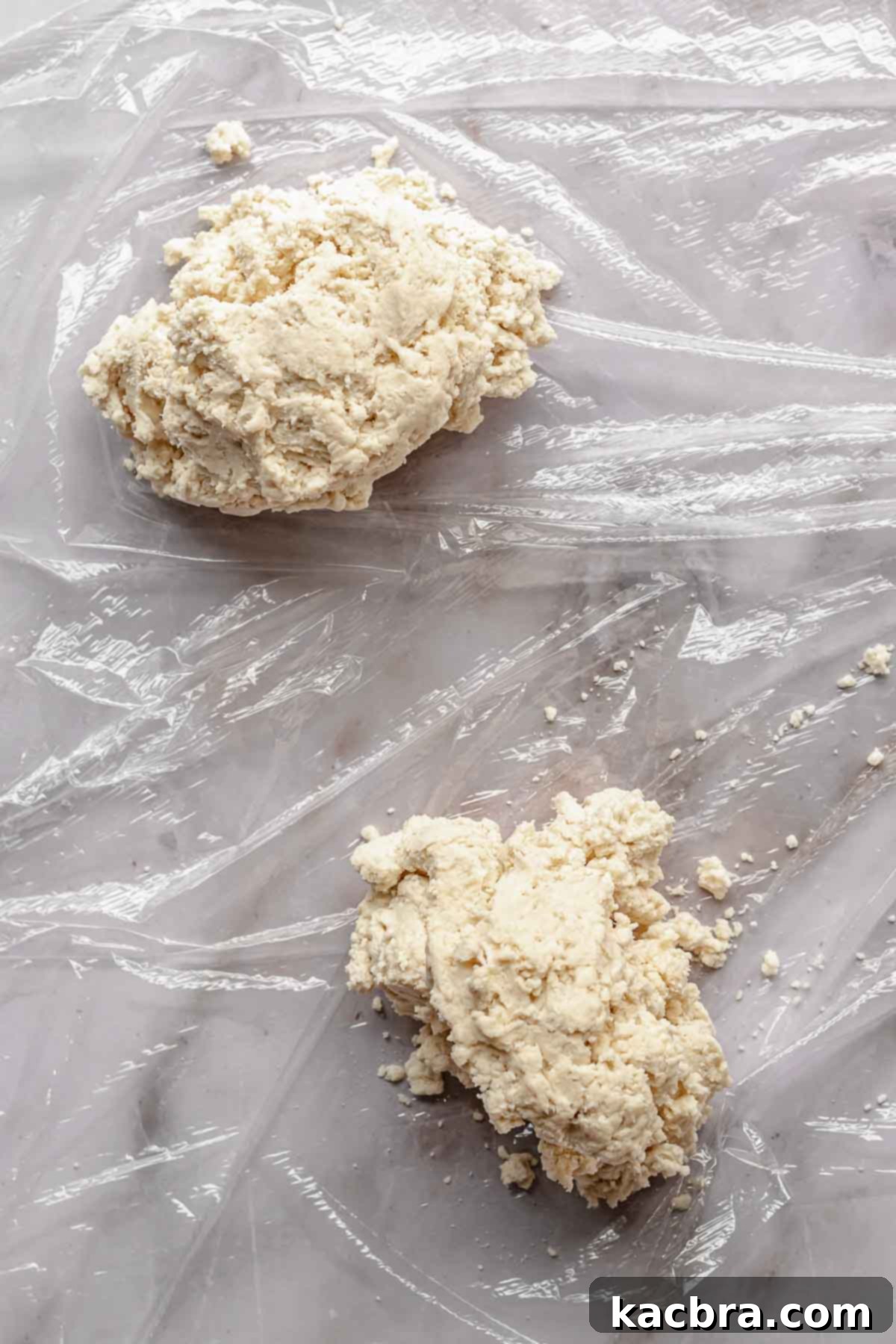
Step Five: Divide and Wrap. Transfer the dough crumbles from the food processor to a clean work surface. Divide the dough evenly into two portions, as this recipe yields two crusts. Place each portion onto a separate sheet of plastic wrap. Tightly wrap each piece, ensuring no air can penetrate.
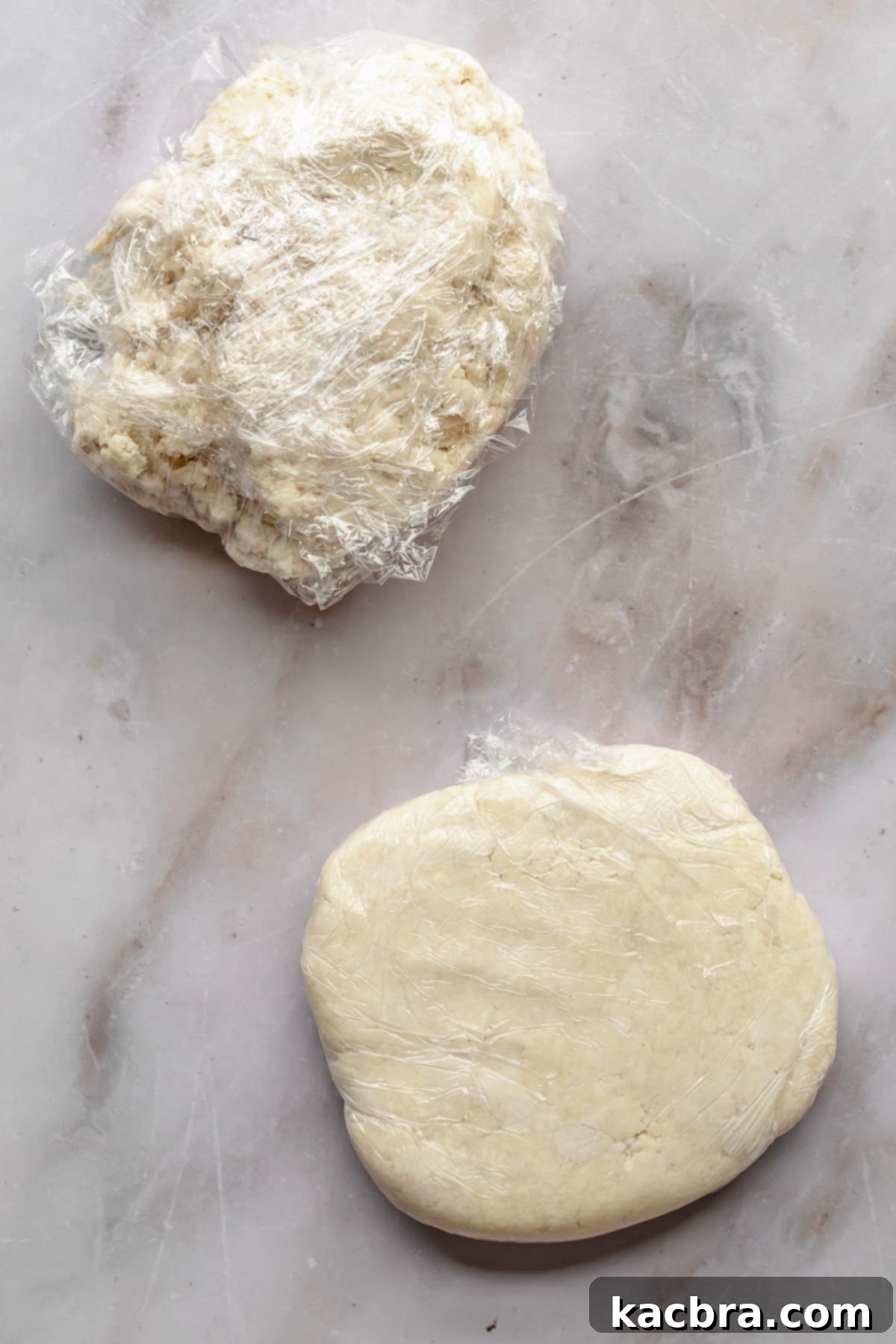
Step Six: Shape and Chill. Gently flatten each wrapped dough portion into a 1-inch thick disc. Use a rolling pin to smooth out any cracks that might form around the edges, creating neat, cohesive discs. This step helps the dough relax and makes it easier to roll out later. Refrigerate the dough discs for a minimum of two hours, or ideally, overnight (up to 24 hours). This chilling period is crucial for the dough to fully hydrate and for the butter to firm up, which will greatly improve its workability and final texture.
Hot tip! For the absolute best results, allow your pie dough to hydrate in the fridge for a full 24 hours. A minimum of two hours is required, but longer chilling truly makes a difference in flavor and workability.
Mastering the Art of Rolling Out Pie Dough
Once your pie dough has sufficiently chilled (at least 2 hours, ideally overnight), remove it from the refrigerator and let it rest at room temperature for approximately 15 minutes. This brief period helps the butter soften slightly, preventing excessive cracking as you begin to roll.
Lightly flour your clean work surface and your rolling pin. Before you start rolling vigorously, gently press the rolling pin into the dough three times – once at the top, once in the middle, and once at the bottom. This creates slight indentations, signalling to the dough where to begin expanding and helping to prevent uneven thickness.
Using firm, even pressure, roll the dough forward and backward a few times. Then, turn the dough a quarter turn and repeat the rolling process. Continue this pattern of rolling and turning, adding a light dusting of flour to your surface or rolling pin whenever you feel the dough starting to stick. The goal is to keep the dough as circular as possible and maintain an even thickness throughout. If you notice any cracks beginning to form along the edges, gently push the edges back together with your hands before continuing to roll. Cracking can sometimes indicate that you’re applying too much pressure or that the dough is still too cold.
Continue rolling until the dough is approximately ⅛-inch thick and measures 2 to 3 inches wider than your pie plate. To transfer the rolled dough gracefully, gently roll it over your rolling pin, brushing off any excess flour as you do so. Position one edge of the rolled dough over your pie dish, then carefully unroll the dough over the entire surface of the plate, allowing it to settle naturally.
Perfectly Setting Your Pie Crust
For a live demonstration, watch how to set a pie crust.
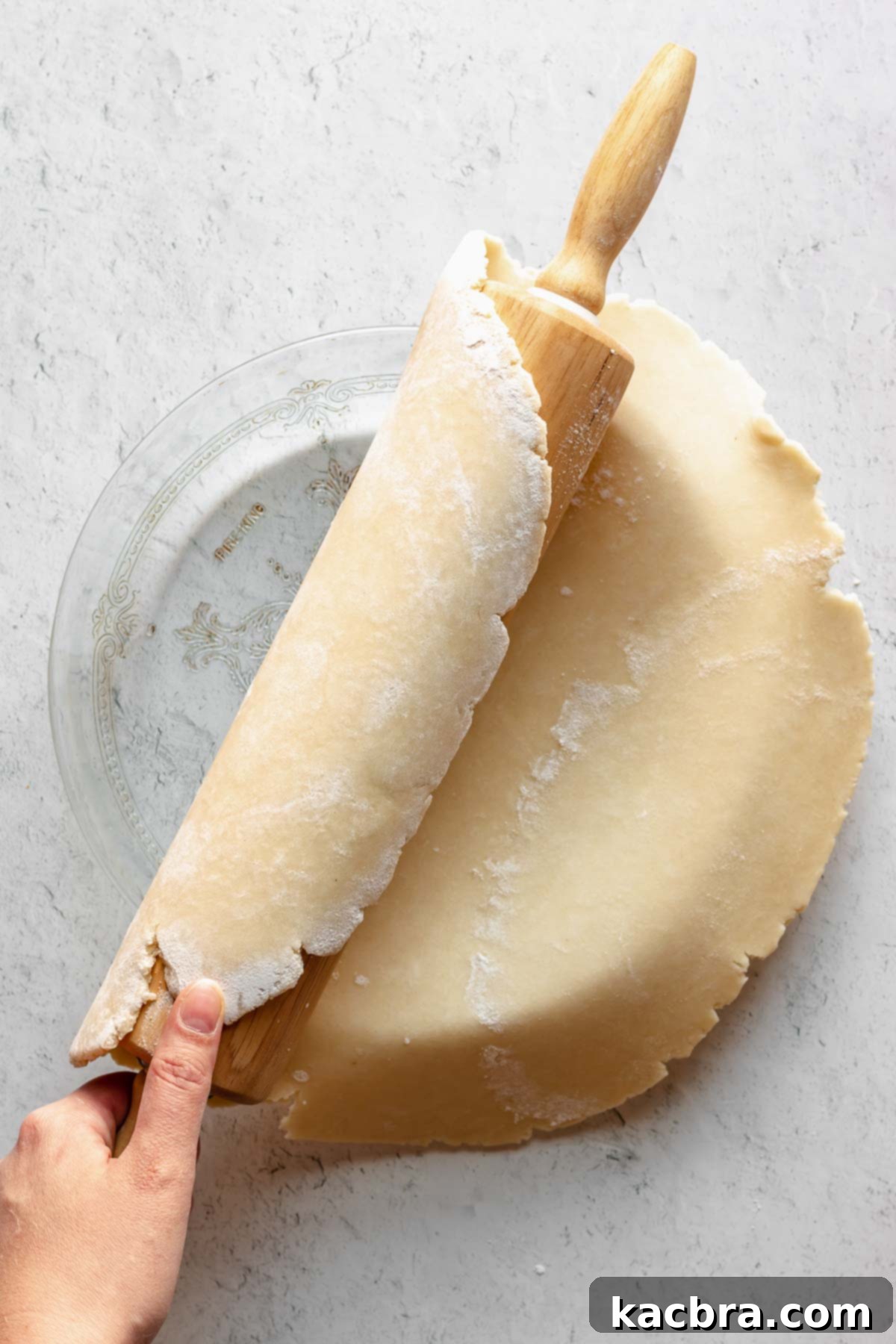
Step One: Transfer and Trim. Once your dough is rolled to about ⅛-inch thick and 2-3 inches wider than your pie dish, carefully roll it onto your rolling pin and transfer it over the pie plate. Gently press the dough into the bottom and sides of the pan, ensuring it fits snugly. Using kitchen shears, trim off the excess dough, leaving a generous 1-inch overhang around the rim.
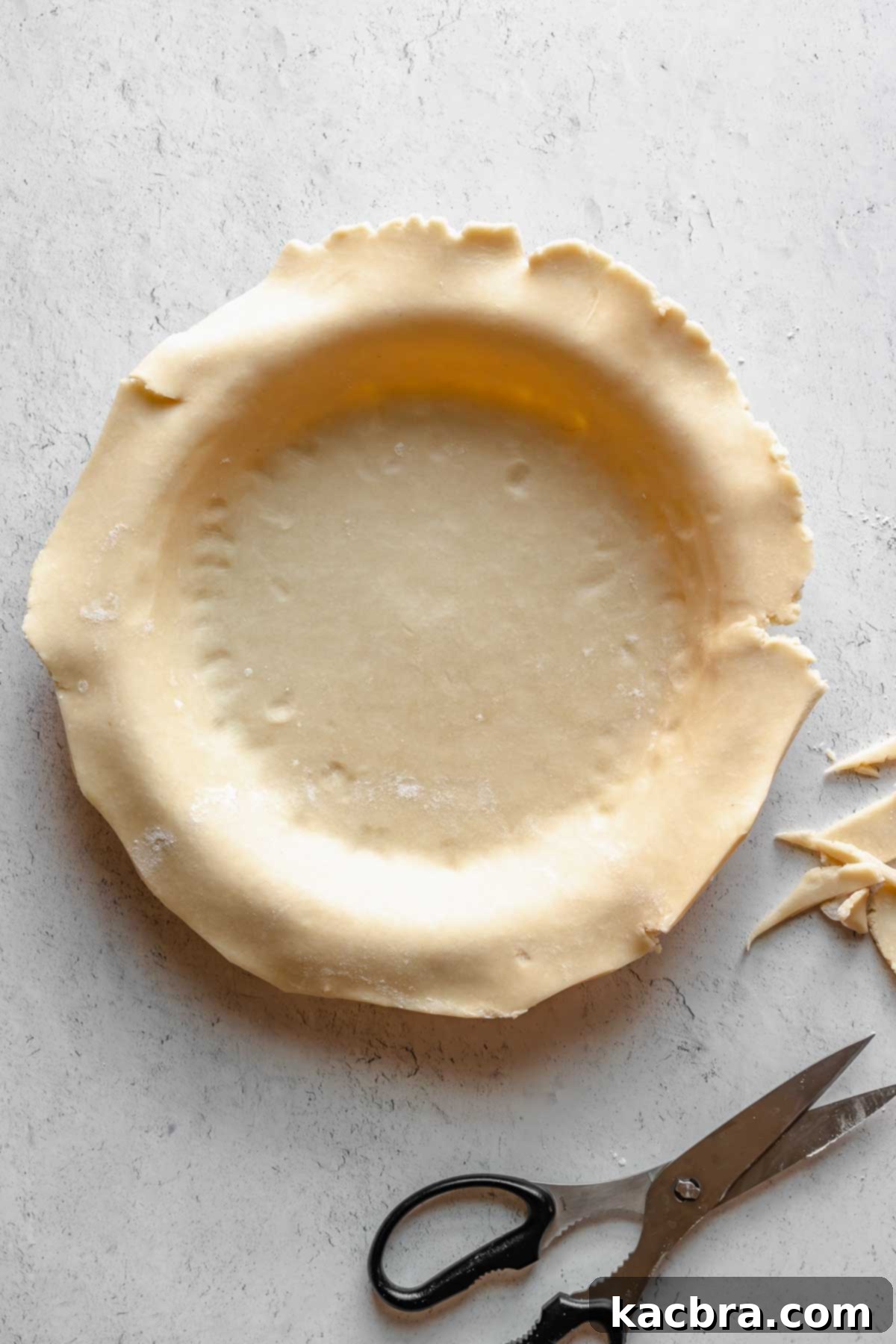
Step Two: Fold the Edges. Carefully fold the 1-inch overhang of dough inwards, tucking it neatly underneath the crust and between the crust and the inner edge of the pie pan. This creates a thicker, reinforced edge that will hold its shape better during baking and provide a beautiful foundation for crimping.
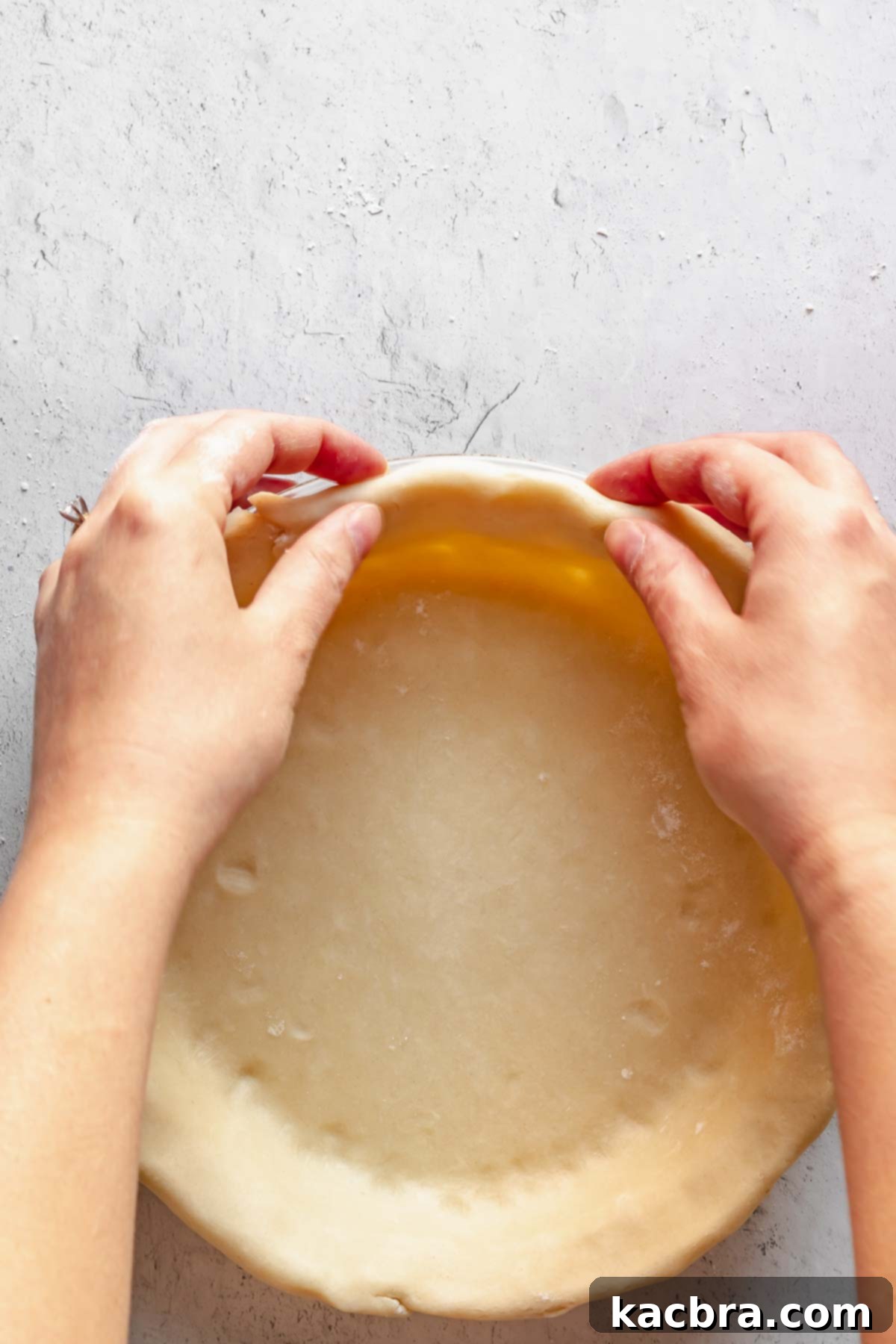
Step Three: Crimp for Beauty and Structure. Now comes the artistic part: crimping the edges of the dough into your desired decorative design. There are many techniques, from simple fork presses to elaborate fluted edges. Whichever you choose, ensure the crimps are firm and well-defined. After crimping, place the entire pie crust in the freezer for at least 15 minutes. This quick chill is vital to help the butter firm up and set the crimped design, preventing it from losing its shape during baking.
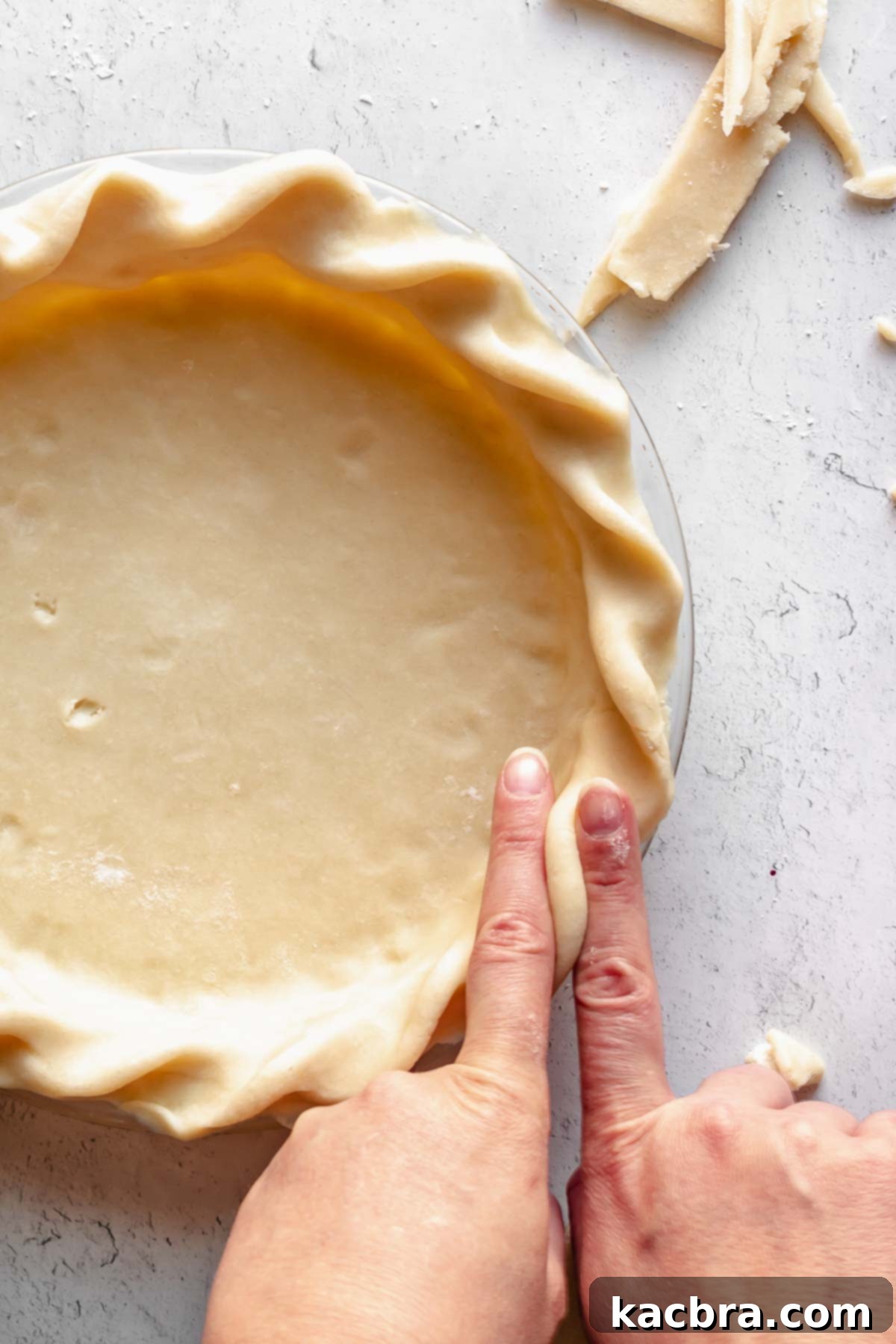
Step Four: Final Chill. A final chill is crucial for the structural integrity of your pie crust. Freezing for at least 15 minutes (or even longer, up to an hour) ensures that the butter remains very cold and the gluten strands relax. This significantly reduces the likelihood of the crust shrinking or losing its beautiful crimped edges when it hits the heat of the oven. A well-chilled crust is a sturdy crust!
Blind Baking vs. Par Baking: Understanding the Difference
While often used interchangeably, blind baking and par-baking refer to two distinct stages of pre-baking a pie crust, each serving a specific purpose depending on your pie recipe. Both techniques use the same initial method of weighted baking, but the duration and desired outcome differ significantly.
- Par-baked Crusts (Partially Baked): This technique involves baking the pie crust until it is set but not fully browned. It’s used when your pie filling requires further baking, as the crust will continue to cook alongside the filling. Par-baking helps to prevent a soggy bottom, particularly with wet fillings. You’ll typically use a par-baked crust for creamy custard pies like pumpkin pie, apple butter pie, sweet potato pie, maple bourbon pecan pie, honey chess pie, and savory pies such as smoked salmon and spinach quiche or ham and Swiss quiche. The goal here is to establish the crust’s structure and begin the browning process before adding the filling.
- Blind-baked Crusts (Fully Baked): A blind-baked crust is cooked completely until golden brown and crisp, with no moist spots remaining. This method is essential for recipes with no-bake fillings, such as mousses, puddings, or fresh fruit fillings, where the crust needs to be fully cooked and cooled before the filling is added and the pie is served. Examples include my banoffee cream pie and mini lemon meringue tarts. The crust must be robust enough to hold the filling without softening over time.
- Fruit Pies (Often Not Pre-baked): Many traditional fruit pies, especially those with juicy fillings like apples or berries, do not require par-baking. The long baking time necessary for the fruit to cook through is usually sufficient to fully cook and brown the raw pie crust simultaneously. This approach ensures a unified texture where the crust and filling bake together harmoniously. Recipes like my dutch caramel apple pie, strawberry rhubarb tartlets, peach frangipane galette, and classic cherry pie typically follow this method.
How to Par-Bake Pie Crust
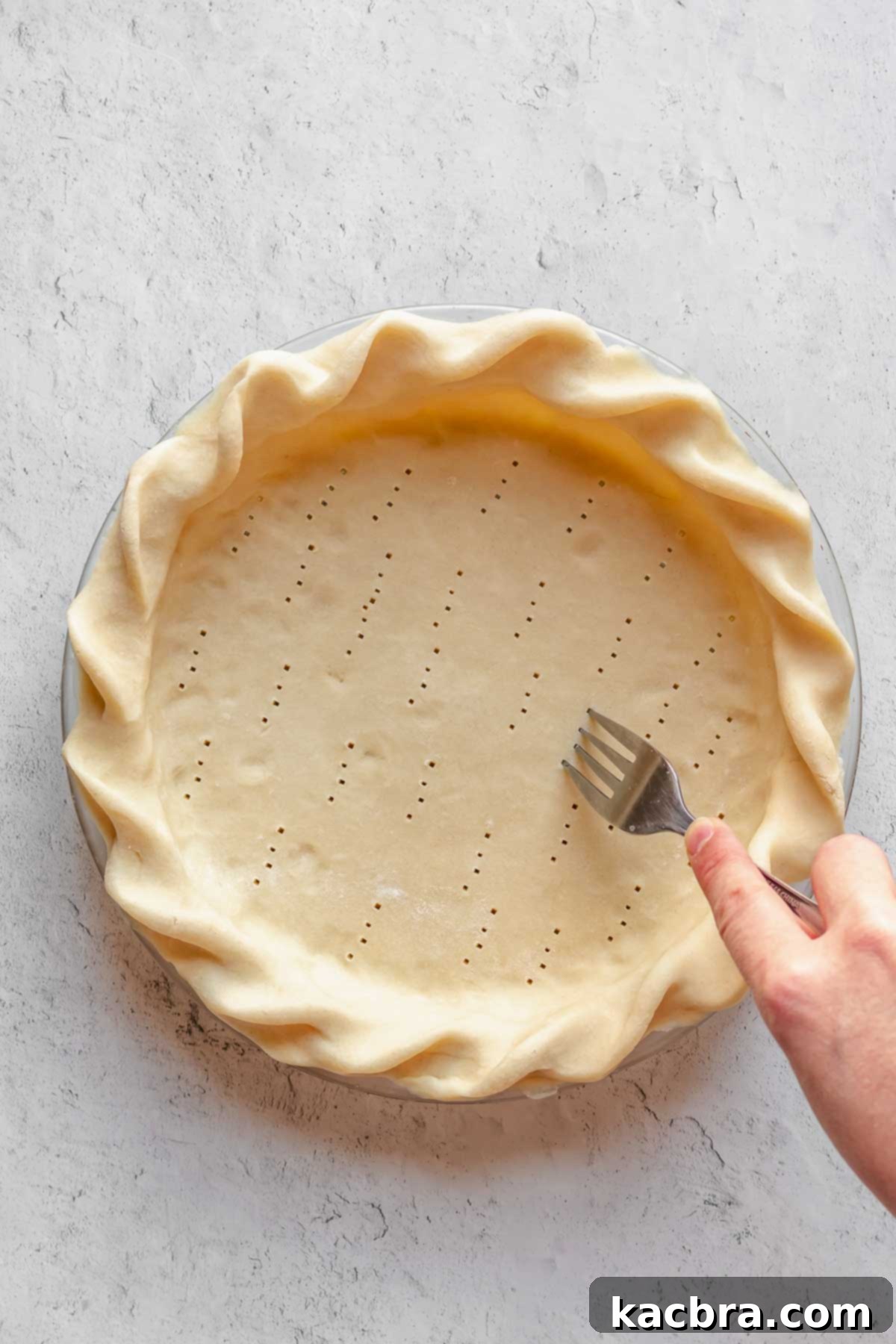
Step One: Dock the Crust. After freezing your crimped pie crust for at least 15 minutes, use the tines of a fork to generously prick the bottom and sides of the dough. This process, known as “docking,” creates small holes that allow steam to escape during baking, preventing the crust from puffing up unevenly.
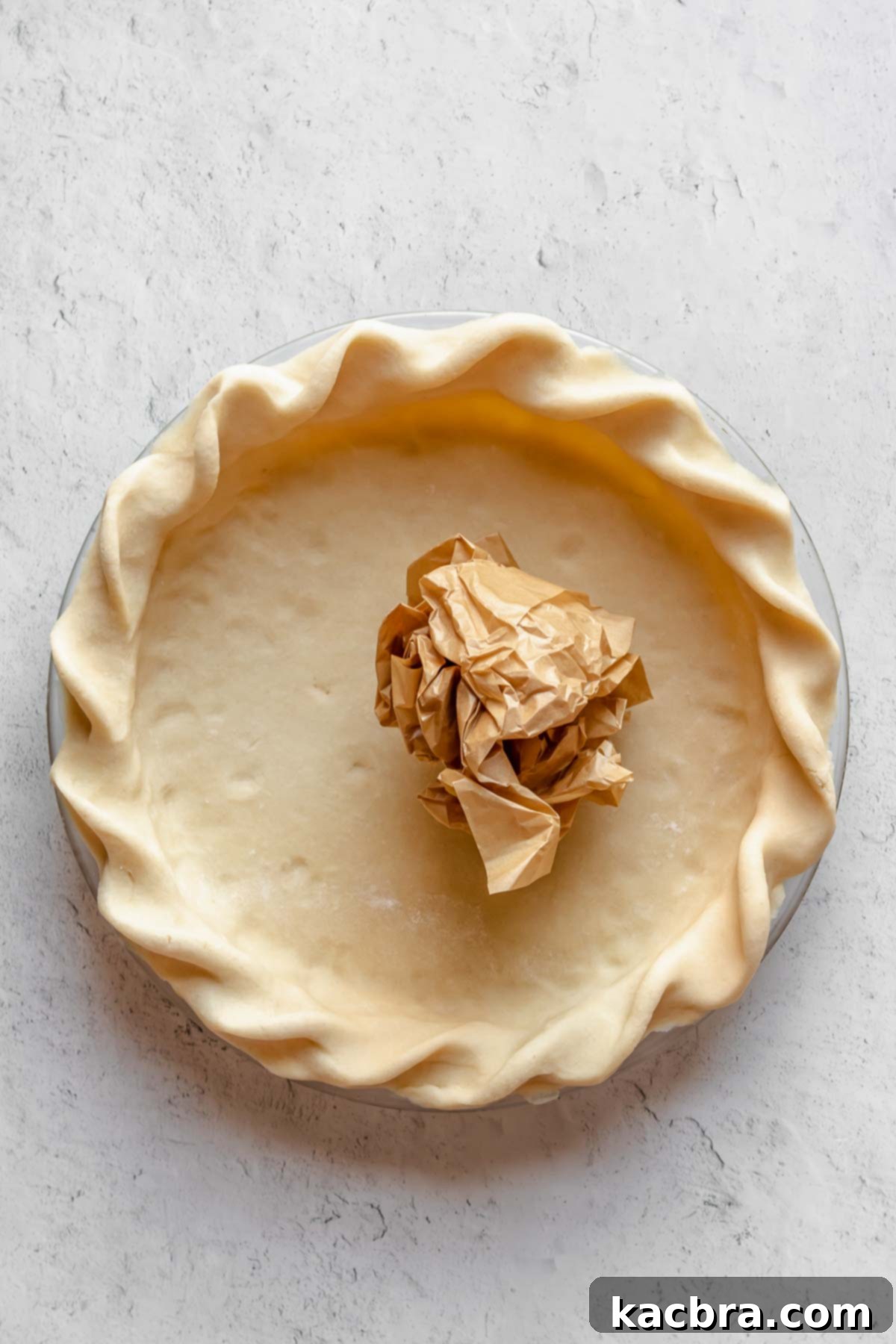
Step Two: Prepare Parchment. Take a piece of parchment paper, larger than your pie plate, and tightly crumble it into a ball. This step softens the paper and allows it to conform more easily to the shape of the pie crust when pressed into place.
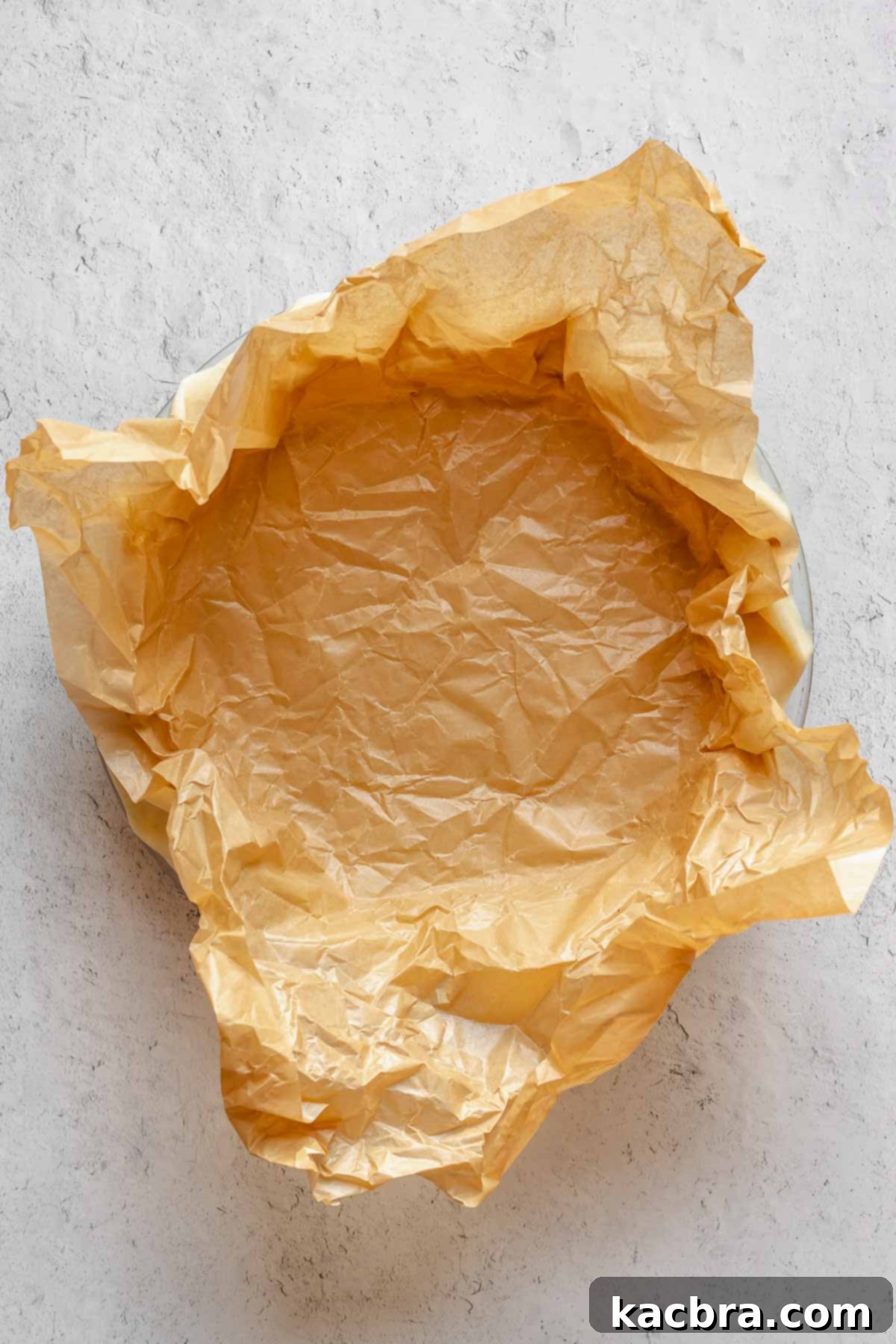
Step Three: Line with Parchment. Gently unravel the crumbled parchment paper and carefully press it into the prepared pie crust. Ensure it lines the bottom and extends up the sides, creating a protective barrier between the dough and the pie weights.
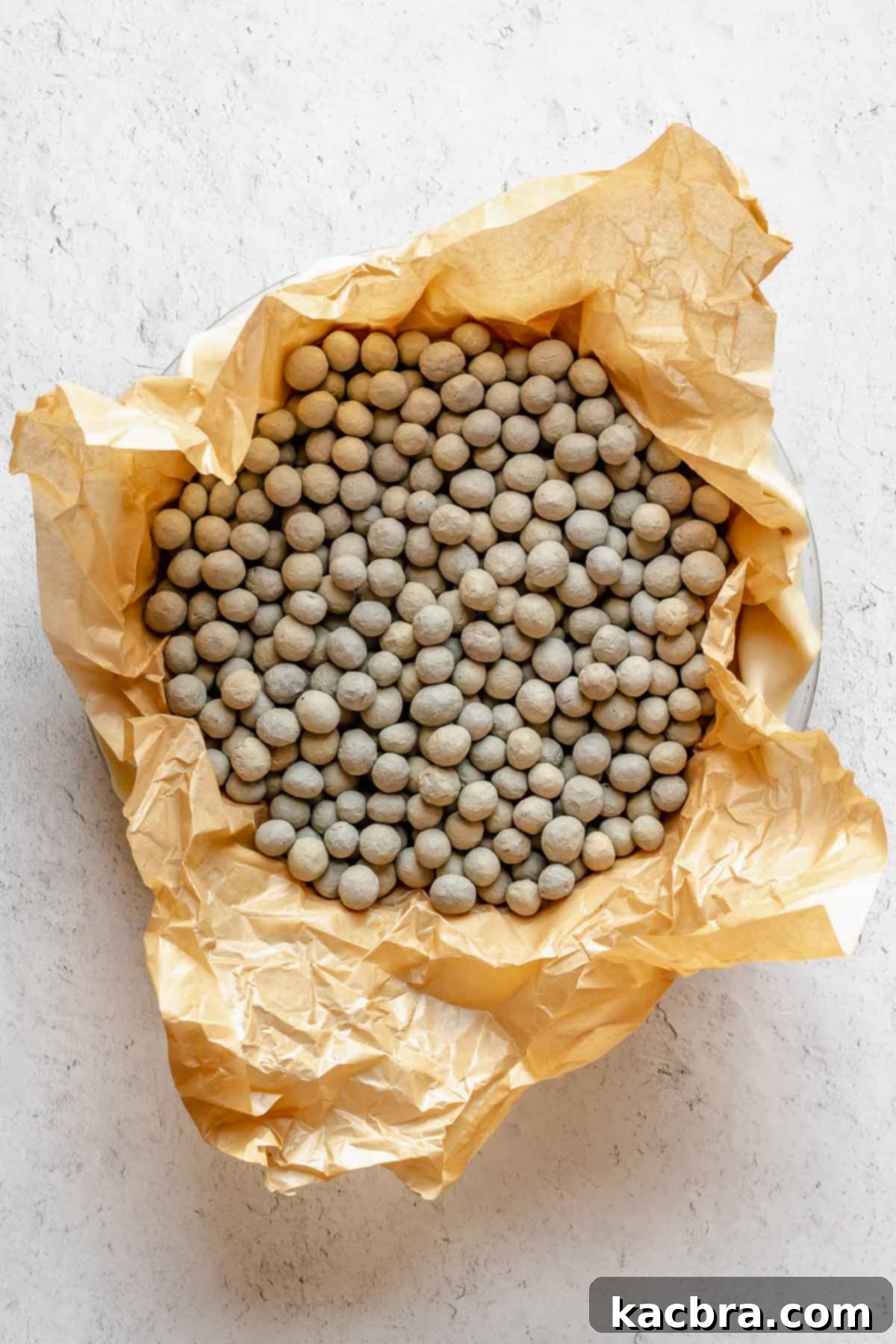
Step Four: Add Pie Weights. Fill the parchment-lined crust completely with pie weights, dried rice, or dried beans. Distribute the weights evenly and push them firmly into the sides of the crust. This ensures the crust holds its shape and prevents the edges from slumping down during baking.
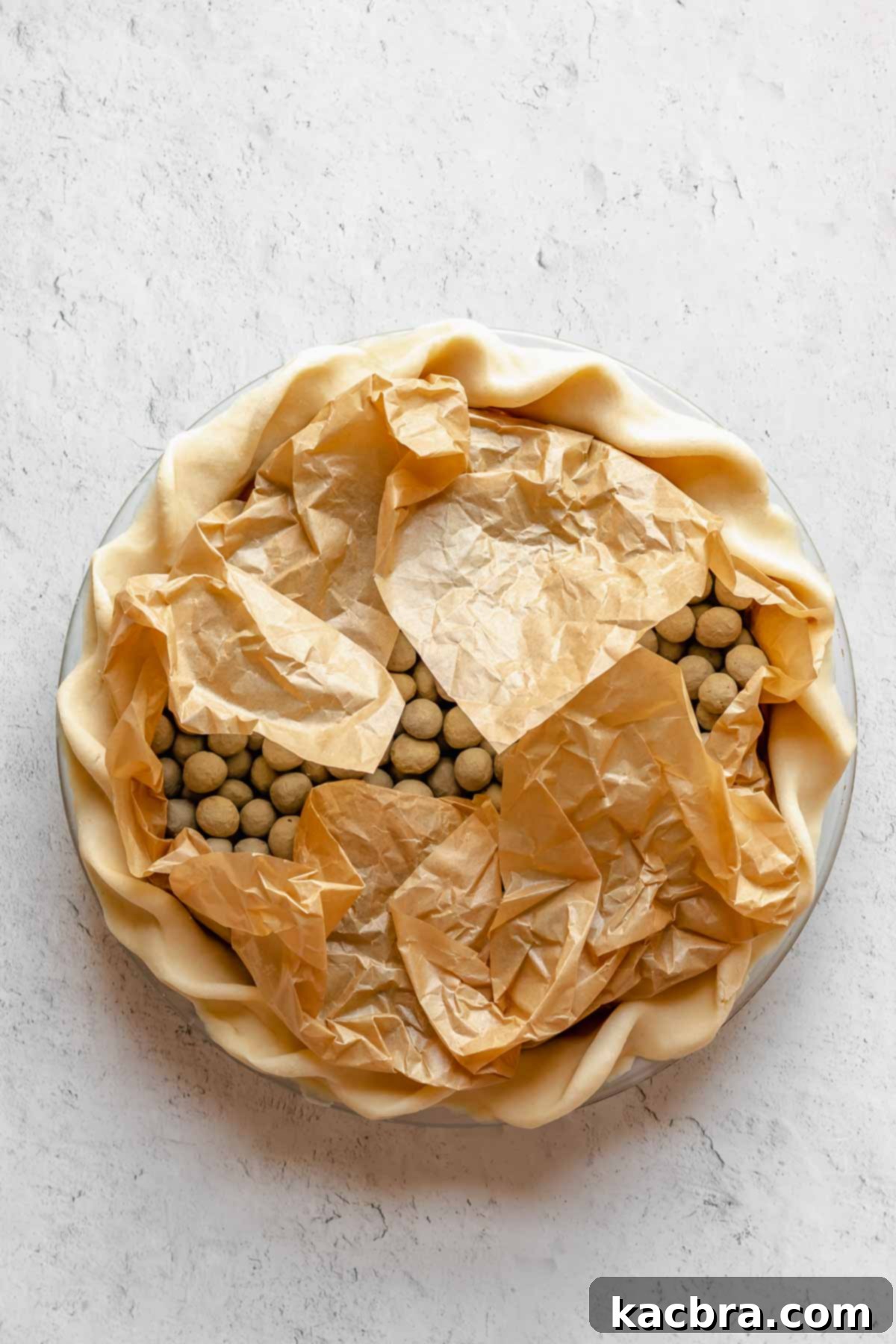
Step Five: Bake with Weights. Fold any overhanging parchment paper inwards, so it doesn’t get overly browned or bake into the crimped edges. Bake the crust in a preheated 375°F (190°C) oven for 15-20 minutes. After this initial bake, carefully remove the pie weights and the parchment paper.
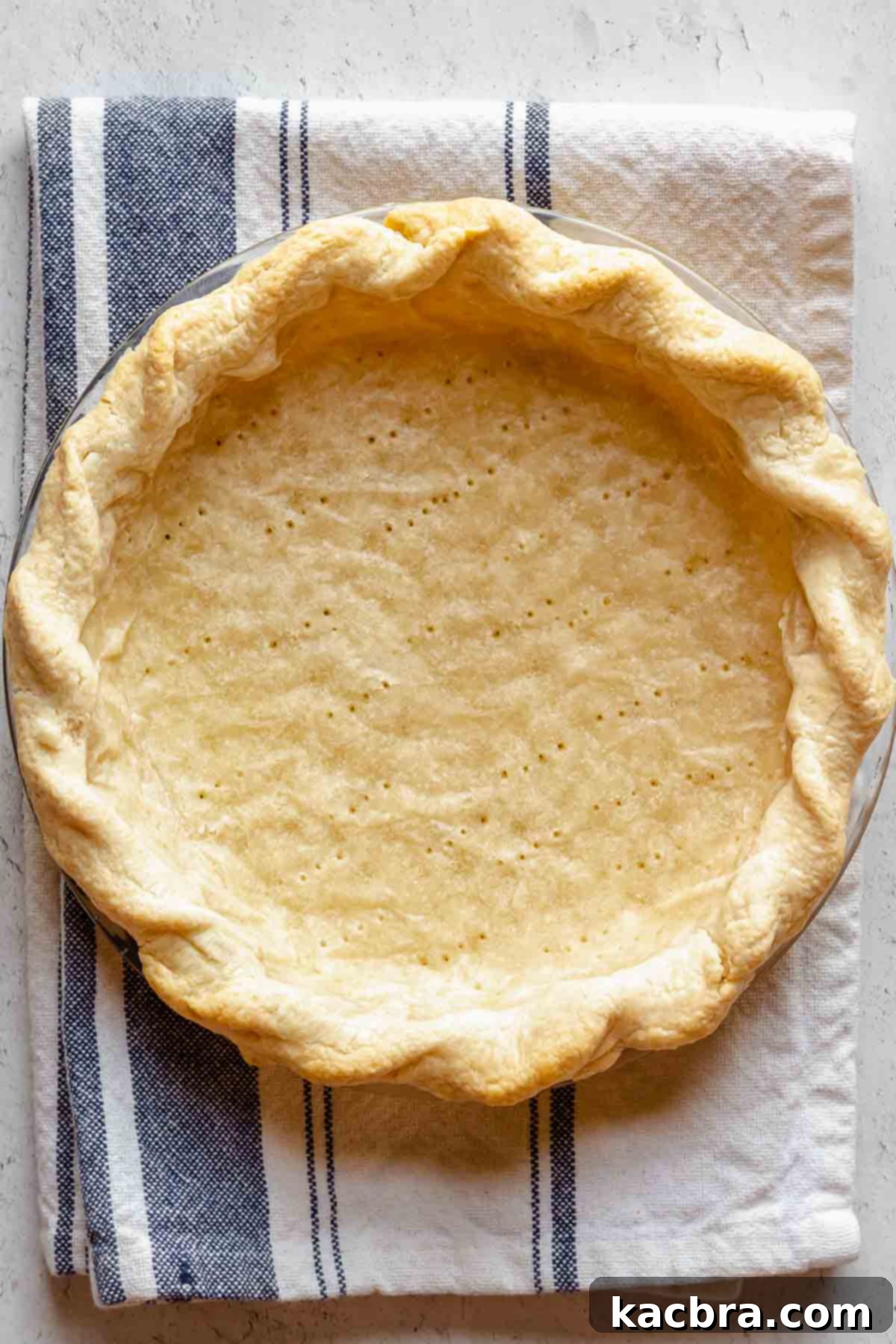
Step Six: Finish Par-Baking. Return the crust to the oven for another 5-10 minutes, or until the edges are lightly browned and the crust feels set. The bottom may still have some slightly moist spots, which is perfectly fine for a par-baked crust, as it will continue to cook with the filling. The pie is now par-baked and ready for your chosen filling and subsequent final baking.
How to Blind Bake a Pie Crust for No-Bake Fillings
For a detailed explanation of the differences and techniques, watch this video about par-baking and blind baking a pie crust.
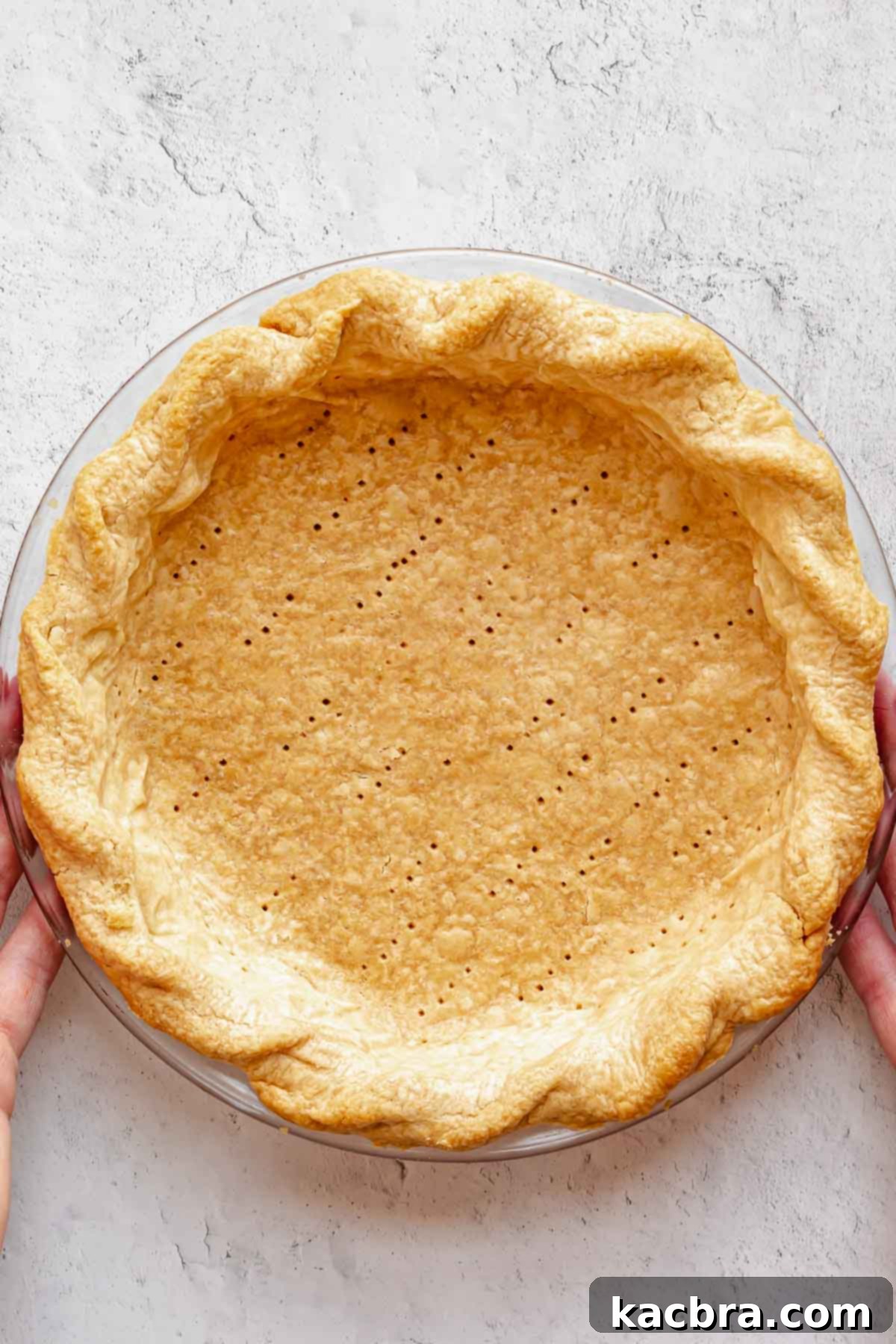
To blind bake your pie crust, you will follow the exact same initial steps as for par-baking, including docking, lining with parchment, filling with pie weights, and baking for the first 15-20 minutes. The key difference lies in the extended baking time after the weights are removed.
Once you remove the pie weights and parchment paper, return the crust to the oven for an additional 10-15 minutes, or potentially longer. Continue baking until the entire crust, including the bottom, is uniformly golden brown and crisp. There should be no moist or doughy spots remaining anywhere on the crust. If desired, you can brush the edges with an egg wash before this final baking period for an extra golden sheen.
The fully blind-baked crust should be completely cooked through and firm. Allow it to cool completely before adding any no-bake fillings, as instructed by your specific recipe. This ensures the integrity of the crust and prevents the filling from becoming prematurely warm.
Making Pie Crust By Hand: A Traditional Approach
Even without a food processor, crafting a beautiful all-butter pie crust by hand is absolutely achievable and incredibly satisfying. The process requires a bit more elbow grease and attention to temperature, but the results are just as rewarding.
The most common manual method involves a pastry cutter. Begin by combining your flour and salt in a large bowl. Add the cold butter cubes. Then, use the pastry cutter to press down and twist, breaking the butter into the flour. Continue this motion until the butter pieces are roughly the size of small peas. This ensures that the butter remains distinct from the flour, creating pockets for steam and contributing to a tender texture.
If you don’t have a pastry cutter, your hands can be just as effective. Flatten the butter cubes with your thumbs and forefingers, then gently rub the butter into the flour. Work quickly to minimize heat transfer from your hands. Continue until the mixture has a sandy texture with some visible pea-sized butter bits. Because this manual process can take longer and cause the butter to warm, once the butter is incorporated, place the entire bowl into the freezer for about 15 minutes to re-chill the butter.
Next, remove the bowl from the freezer. Drizzle most of the ice water (reserving about one tablespoon) around the flour mixture. Using a rubber spatula or wooden spoon, gently mix the ingredients until they are just moistened. Avoid overmixing, as this can develop gluten and lead to a tough crust.
Now, use your hands to carefully gather the mixture and press it together into a large, cohesive ball. If the dough doesn’t quite hold together, add the reserved tablespoon of water, one teaspoon at a time, to any dry areas and gently work it in until the dough comes together. The goal is to achieve a dough that is firm enough to handle but not sticky or wet.
Once formed, divide the dough into two equal portions, wrap each tightly in plastic wrap, and flatten them into discs. Refrigerate for at least 2 hours (or up to 3 days) before rolling out and using according to your recipe instructions.
Expert Tips for a Flawless Pie Crust
- Optimal Hydration is Key: While two hours of chilling is the minimum, making your pie dough 24 hours in advance allows it to fully hydrate and the gluten to relax. This results in a more pliable dough that is less prone to cracking during rolling and yields a noticeably more tender crust.
- Maintain Maximum Coldness: The colder your ingredients and dough, the better your final results will be. Freezing the shaped pie crust for a minimum of 15 minutes before any baking process is highly recommended. For even better structural integrity and to prevent shrinkage, consider freezing it for 12-24 hours.
- Utilize Pie Weights Effectively: When par-baking or blind-baking, ensure you fill the pie crust completely with pie weights (or dried rice/beans). Press the weights firmly into the sides of the crust. This firm, even pressure is crucial for preventing the crust from slouching down the sides of the pan. If using dried goods, remember they are no longer edible after baking but can be stored as reusable pie weights.
- Decorative Crimping Techniques: Don’t underestimate the impact of a beautifully crimped edge! Explore various crimping techniques to add an elegant and personalized touch to your pies. A well-defined crimp not only looks appealing but also helps to contain your filling.
Pie Crust Troubleshooting: Common Problems Solved
Even experienced bakers encounter pie crust challenges. Here’s how to tackle common issues and ensure a perfect crust every time:
How do I stop my pie crust from shrinking?
Crust shrinkage is often due to gluten elasticity. Firstly, once you’ve fitted the dough into the pie pan, allow it to rest in the refrigerator for at least 15-30 minutes before baking. This resting period gives the gluten strands time to relax. If they don’t relax, they will contract sharply when exposed to oven heat, causing the crust to shrink significantly. Secondly, ensure your pie crust is very cold, even frozen, before it goes into the oven. A well-chilled crust helps the butter maintain its structure longer, providing more stability against shrinkage.
How do I stop my pie crust from slouching down the sides of the pan?
Slouching is another common issue tied to dough temperature and support. The key is to ensure the crust is thoroughly chilled or frozen just before baking. This keeps the butter firm, helping the dough hold its shape. Crucially, always use pie weights (or dried beans/rice) during the par-baking or blind-baking process. Fill the crust completely to the very top with weights, ensuring they are pressed firmly against the sides. This provides essential support, preventing the edges from collapsing under their own weight during the initial bake.
Why did my crimped edge lose its decorative shape during baking?
A lost crimp is almost always a sign that your crust was not cold enough when it went into the oven. The butter in the dough melts too quickly, causing the delicate crimped design to relax and spread. To maintain sharp, beautiful crimps, ensure your set and crimped crust chills in the refrigerator for at least one hour, or ideally, freezes for a minimum of 15 minutes (or longer) before baking. The colder the crust, the longer the butter will take to melt, preserving your decorative work.
Why did the bottom of my crust puff up after removing the pie weights?
A puffed-up bottom crust is typically caused by trapped steam. While docking the bottom of the pie crust with a fork helps, sometimes it’s not enough, especially after the heavy pie weights are removed. If you notice the bottom of your crust puffing up during the subsequent baking time, simply use a fork or the tip of a small, sharp knife to gently pierce the inflated areas. This releases the trapped steam and pressure, allowing the crust to settle back into its proper shape. Don’t worry, this minor intervention won’t harm the final texture or appearance.
Recipe FAQs: All-Butter Pie Crust Edition
All-purpose flour is the superior choice for pie dough. Its protein content provides just the right amount of gluten development to create a crust that is both tender and has a pleasant, subtle flakiness. Flours with very high protein percentages, like bread flour, can lead to a tough crust, while very low protein flours might result in a crumbly dough that’s difficult to work with. All-purpose flour strikes the perfect balance.
This is largely a matter of personal preference, but for flavor, butter is hands down the winner. All-butter crusts offer a rich, nuanced, and truly delicious taste that shortening (like Crisco) simply cannot replicate, as shortening is flavorless. However, shortening can create an incredibly flaky crust and is sometimes preferred for pies that require a full blind bake, as shortening-based crusts tend to “stale” or soften less quickly than butter crusts over time.
Metal pie dishes are often considered best for achieving a consistently well-baked crust because they conduct heat most efficiently and evenly, promoting a crisp, golden bottom. However, glass pie plates also produce excellent results and are particularly advantageous for beginners. The transparency of glass allows you to visibly check the browning of the bottom crust, helping you to perfectly gauge when it’s done and prevent a soggy bottom.
Storing Your All-Butter Pie Crust
Proper storage is essential for maintaining the quality and usability of your homemade pie crust. Here’s a guide for various stages of the dough:
Pie Dough Discs:
After forming your dough into discs, wrap each tightly in plastic wrap to prevent air exposure. For added protection, place the wrapped discs into a zip-top freezer bag. They can be refrigerated for up to 3 days. For longer storage, freeze the discs for up to two months. When ready to use, transfer frozen discs to the refrigerator to thaw overnight before rolling out.
Pie Dough in Pie Plate:
If you’ve already fitted the pie dough into a pie plate, wrap the entire dish securely with plastic wrap. This prepared crust can be refrigerated for up to 3 days. For longer storage, freeze the crust in its plate for up to two months. When baking, you can place the frozen, unwrapped crust directly into a preheated oven, often with slightly extended baking times.
Important Note on Freezing Assembled Crusts: If you plan to freeze your assembled pie crust in the plate for more than approximately 15 minutes before baking, it is strongly recommended to use a metal pie dish. Glass and ceramic dishes can be prone to cracking or shattering when subjected to extreme temperature changes, such as going directly from a very cold freezer into a very hot oven.
Par-baked Crust:
A par-baked crust can be stored at room temperature, lightly tented with foil, for up to 2 days. For extended freshness, store it in the refrigerator, lightly covered with foil, for up to 5 days. Ensure it is completely cooled before storing.
Blind-baked Crust:
A fully blind-baked crust can be stored at room temperature, lightly covered with foil, for up to three days. Alternatively, it can be kept in the refrigerator, lightly covered with foil, for up to 5 days. As with par-baked crusts, ensure it’s fully cooled before storage to prevent condensation and sogginess.
Delicious Pie Recipes Featuring Our All-Butter Pie Crust
- Purple Sweet Potato Pie
- Apple Butter Pie with Cinnamon Whipped Cream
- Mini Strawberry Rhubarb Galettes
- Honey Chess Pie
Did you make this recipe? Share your creations with us! Tag @thecozyplum on Instagram & Facebook and leave a star rating ⭐️ below!
📖 Recipe: All-Butter Pie Crust
All-Butter Pie Crust
Callan Wenner
This All-Butter Pie Crust is your secret weapon for any pie. Tender, flavorful, and perfectly flaky, this fool-proof recipe is suitable for both single and double-crust pies. Prepare it with ease using a food processor, or simply by hand with no special equipment required. It’s the ultimate base for all your sweet and savory pie creations.
Pin Recipe
Cook Time 30 mins
Chill time 2 hrs
Total Time 3 hrs
Cuisine American, French
Calories 1553 kcal
Equipment
- 9″ pie plate
- Rolling Pin
- Food processor (optional, can be made by hand)
- Parchment paper
- Pie weights, or dried beans/rice
Ingredients
- 3¼ cups (390g) all-purpose flour
- 1 cup + 6 tablespoons (311g) unsalted butter, very cold
- 1 teaspoon kosher salt
- ⅔ cup (5.3oz) ice-cold water (no ice cubes)
- 1 egg for egg wash (optional)
Instructions
- Cut the cold butter into ½-inch cubes and place them in the freezer for about 15 minutes while you prepare the other ingredients.
- In a bowl, add about a cup of water and a handful of ice cubes; set aside to ensure the water is ice-cold when needed.
- Add the flour and salt to a food processor and pulse once to incorporate the salt evenly.
- Disperse the cold butter cubes around the flour in the food processor. Pulse the mixture until the butter breaks down into pea-sized pieces and the mixture looks slightly textured, almost like wet sand.
- Measure out ⅔ cup of ice-cold water (without the ice cubes). With the food processor running or pulsing, drizzle it through the chute (leaving one tablespoon remaining). Continue pulsing until the dough just starts to form shaggy crumbles. Add the last tablespoon of water only if the dough appears excessively dry. Do not allow the mixture to form a cohesive ball in the processor. The dough should easily press together between your fingers but should NOT feel wet.
- Remove the dough, separate it into two even pieces, then wrap each piece separately in plastic wrap and flatten into a 1-inch thick disc. Place in the fridge for 1-2 hours until firm. Freeze the other disc of dough if not using immediately (after the chill time).
- Once chilled, remove one disc from the fridge and allow it to sit at room temperature for about 15 minutes to take the chill off. This helps prevent the dough from cracking too much during rolling. Lightly flour your rolling pin and work surface, then roll out the dough, turning it a quarter turn every few rolls to keep it round and even.
- Roll the dough until it’s about ⅛-inch thick and is at least 2 inches wider than your pie dish. Continue to lightly flour your surface and pin anytime the dough begins to stick.
- Carefully transfer the dough to a pie dish, pressing it into place on the bottom and sides (there will be overhang). Trim the edges with kitchen shears so they’re even and about 1 inch wider than the dish.
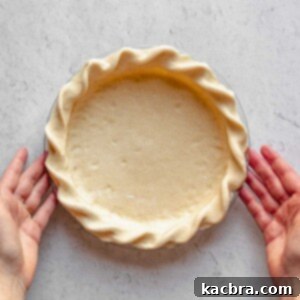
- Fold the excess dough inwards underneath the crust so the fold meets the edge of the pan, then crimp the edges into your desired design. Follow any recipe instructions on how to fill or bake from here.
Par Baking Instructions
- To par bake the crust, freeze the crimped crust for 15 minutes. Then, dock the bottom and sides generously with a fork. Add a piece of parchment paper to the inside and fill it completely with pie weights (or dried rice/beans), pushing them into the sides. If using an egg wash, brush the edges of the crust with a beaten egg before baking. Bake in a preheated 375℉ (190°C) oven for 15-20 minutes. Then, carefully remove the weights and parchment and finish baking according to your recipe instructions.
Blind Baking Instructions
- To blind bake the crust (fully bake it), follow the same initial instructions as for par-baking. After baking for 15-20 minutes with weights, remove the weights and parchment paper. Return the crust to the oven for another 10-15 minutes, or until the entire crust is golden brown and crisp, with no moist spots remaining on the bottom. If you desire a very golden edge, you can apply another round of egg wash before this final bake. Continue baking until thoroughly cooked through.
Video: How to Set a Pie Crust
Notes
Tips:
- It’s best to make the dough 24 hours ahead to allow it to fully hydrate and relax, resulting in a more tender and workable crust.
- The colder your ingredients and dough, the better the results. Freezing the shaped pie crust for at least 15 minutes minimum prior to any baking is highly recommended; 12-24 hours is even better for maximum stability.
- Fill the pie crust completely with pie weights (or dried rice or beans) and press them fully into the sides. This technique is crucial to prevent the crust from slouching during baking. If using dried goods, remember they are no longer edible for consumption afterward, but can be stored and reused as your dedicated pie weights.
Storage:
Pie dough discs – Keep wrapped tightly in plastic wrap, then place the discs of dough into a zip-top bag. Refrigerate for up to 3 days, or freeze for up to two months. Allow frozen discs to thaw in the refrigerator before rolling out.
Pie dough in pie plate – Once the pie dough is set in the pie plate, wrap it securely with plastic wrap. Refrigerate for up to 3 days, or freeze for up to two months. Baked the pie crust directly from frozen (unwrapped).
Par-baked crust – Store at room temperature, lightly tented with foil, for up to 2 days. Alternatively, store in the refrigerator, lightly covered with foil, for up to 5 days.
Blind-baked crust – Store at room temperature, lightly covered with foil, for up to three days. Alternatively, store in the refrigerator, lightly covered with foil, for up to 5 days.
Note that if you are planning to freeze your assembled crust in the plate for more than ~15 minutes before baking, you’ll want to use a metal dish. Glass and ceramic dishes can crack in the oven when going from very cold to very hot.
Carbohydrates: 155 g
Protein: 22 g
Fat: 94 g
Saturated Fat: 59 g
Polyunsaturated Fat: 4 g
Monounsaturated Fat: 24 g
Trans Fat: 4 g
Cholesterol: 244 mg
Sodium: 1179 mg
Potassium: 245 mg
Fiber: 5 g
Sugar: 1 g
Vitamin A: 2836 IU
Calcium: 58 mg
Iron: 9 mg
The provided nutritional information is an estimate per serving. Accuracy is not guaranteed.