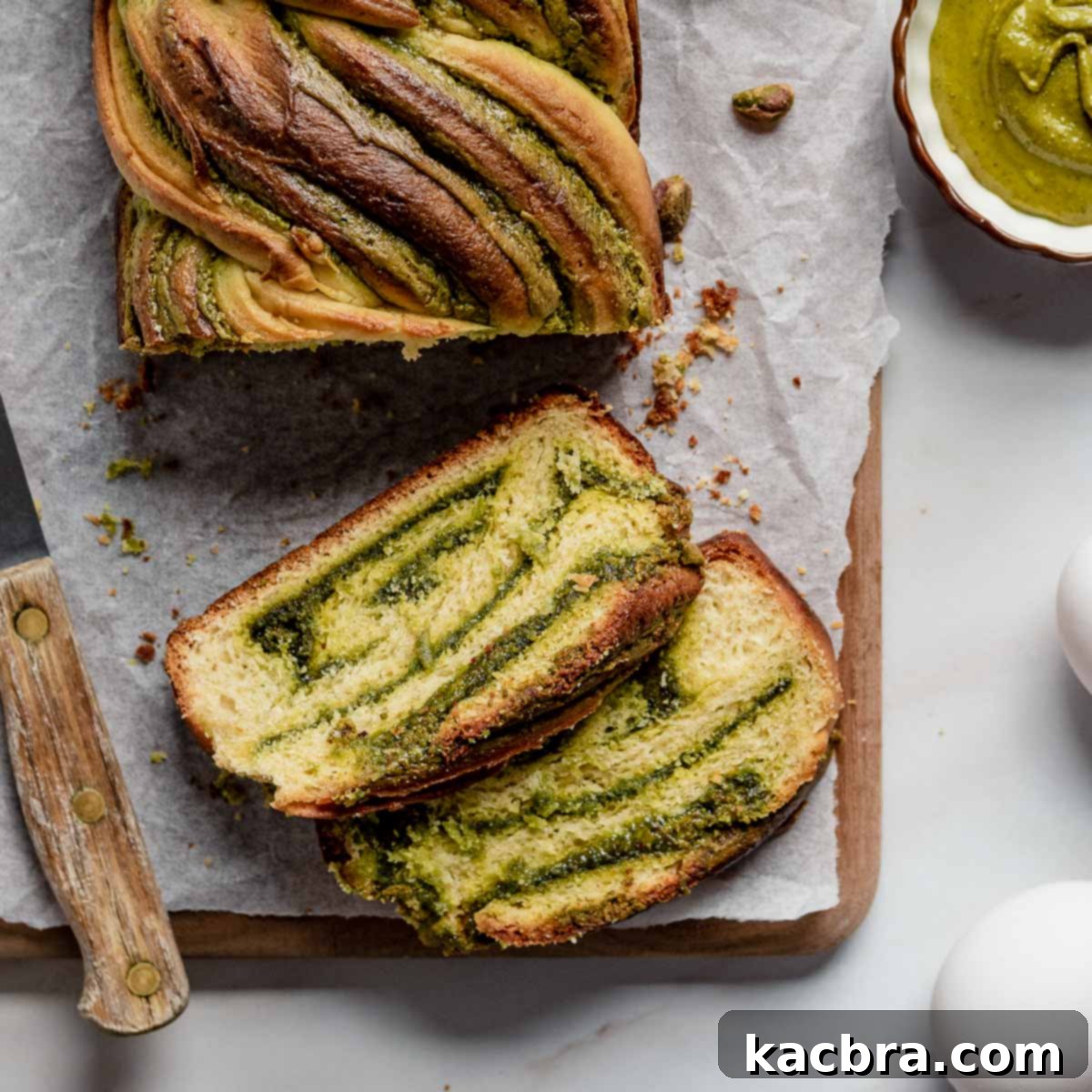
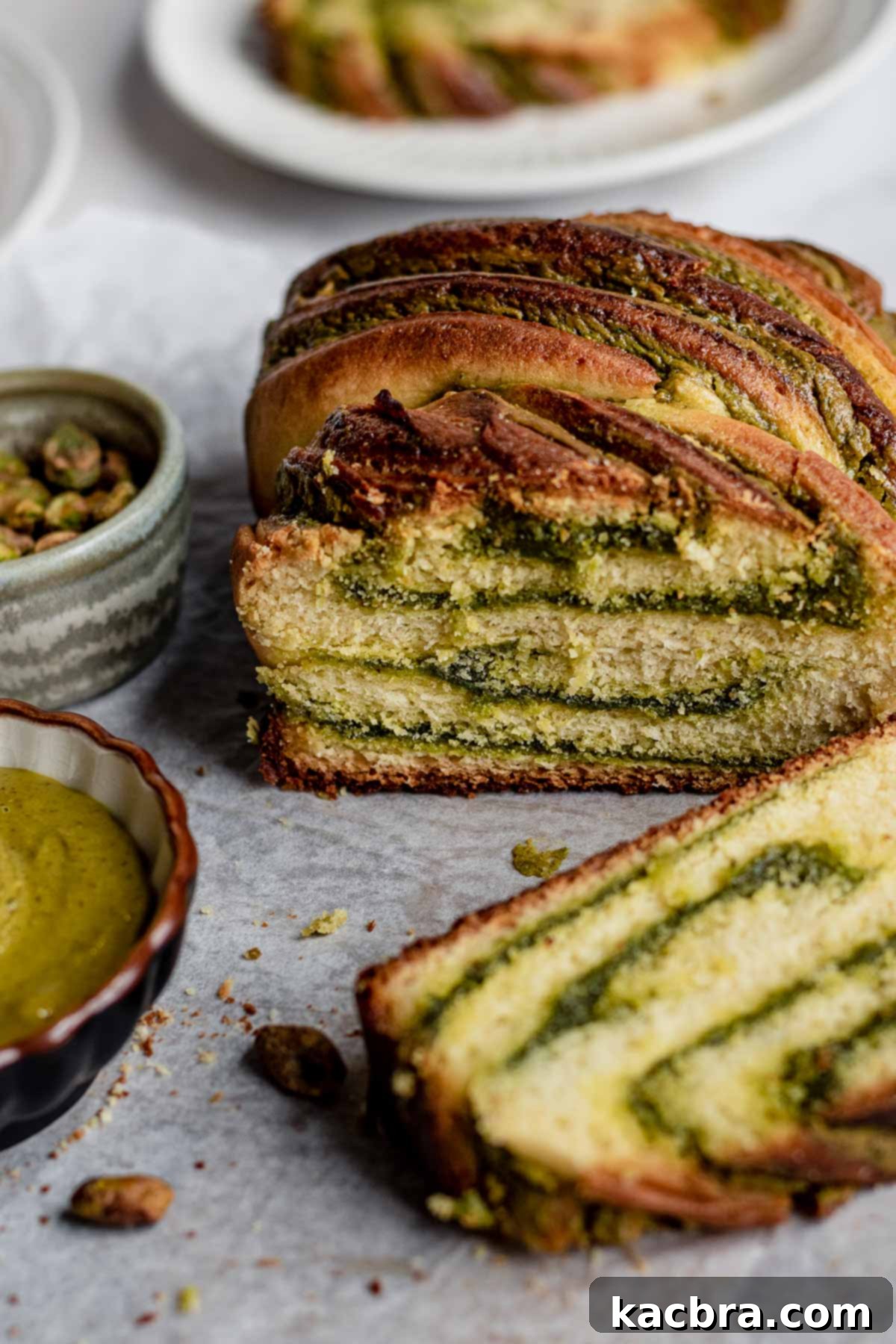
Indulge in the exquisite flavor and tender texture of homemade Pistachio Babka, a true labor of love that rewards every baker with a deliciously rich and aromatic sweet bread. This recipe features a soft, billowy enriched dough, generously swirled with a thick, sweet pistachio filling, creating layers of pure delight. Best savored while still slightly warm, this versatile babka is perfect for any occasion – be it a luxurious breakfast, a sophisticated dessert, or a delightful treat for an afternoon snack. Prepare to be captivated by its charm and irresistible taste!
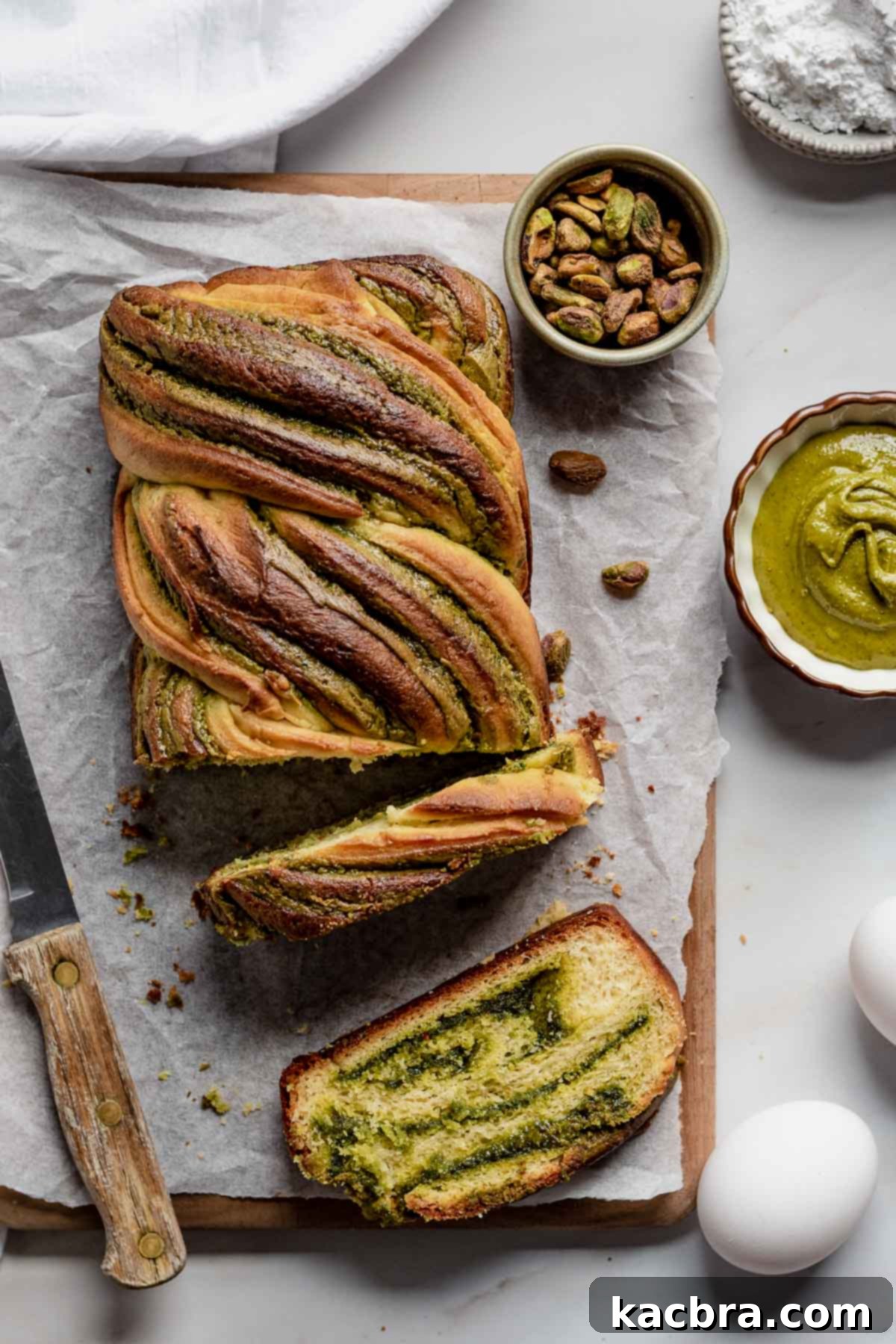
Babka, a traditional sweet bread, is renowned for its intricate swirls and incredibly soft texture. While crafting this delightful bread requires a little patience and tender loving care, the final reward makes every moment in the kitchen worthwhile. This recipe, though detailed, is not overly complicated; it involves several straightforward steps and essential resting and rising periods. As with all truly good things, the best results are born from time and dedication.
Our Pistachio Babka boasts an exceptionally soft, enriched dough. What makes it “enriched”? The inclusion of eggs, butter, and sugar, which lend it an unparalleled tenderness and a rich, melt-in-your-mouth quality. This dough is designed to pull apart beautifully, revealing the stunning layers of filling with every tear.
The star of this babka is undoubtedly its luscious pistachio filling. Unlike thinner pistachio creams, our recipe utilizes a rich, thick pistachio butter. This creates wonderfully defined, thick swirls that offer a delightful textural contrast to the soft, pillowy dough. The result is a babka so compelling, you’ll find yourself reaching for “just one more slice” until every last morsel is happily consumed.
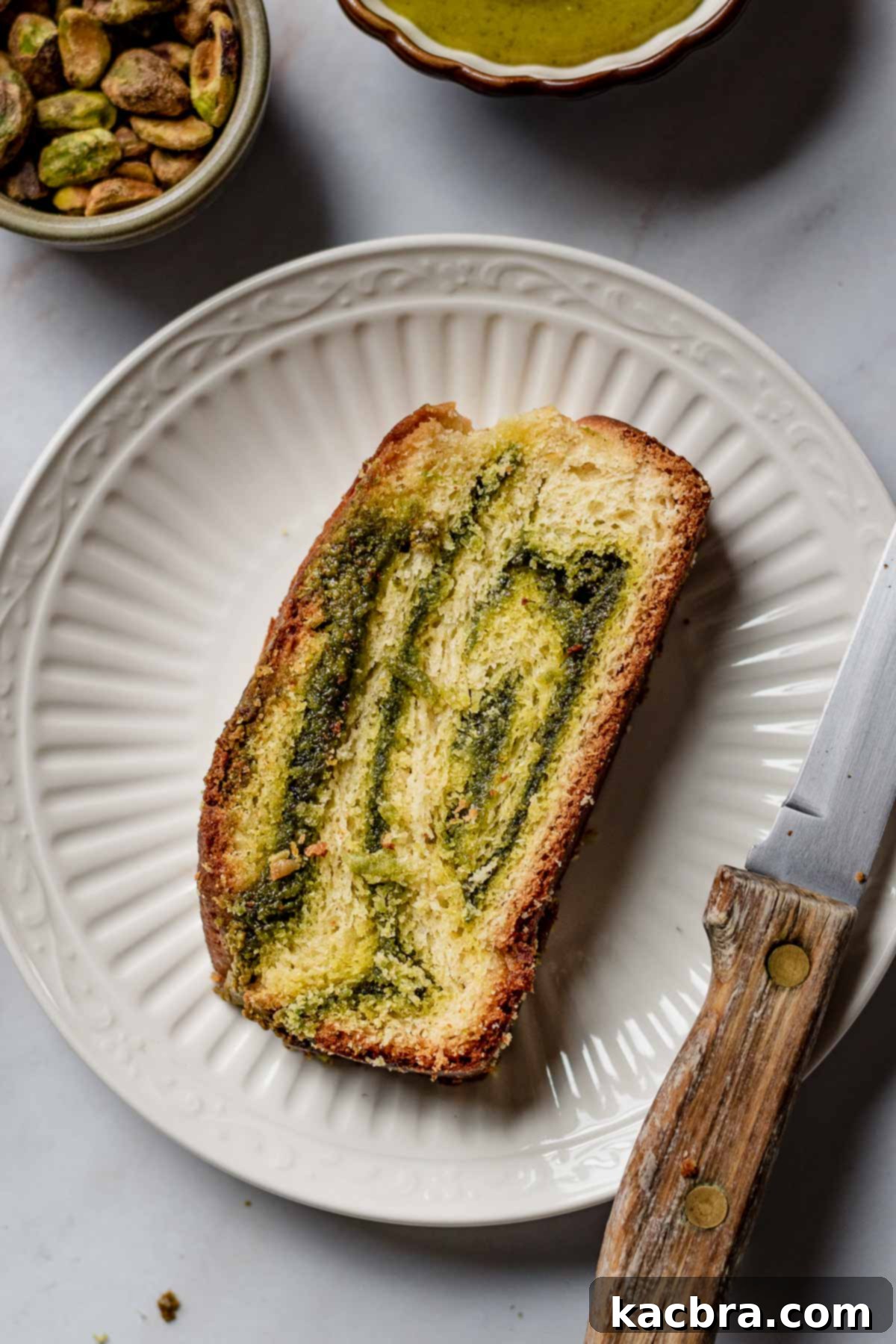
Not a fan of pistachio, but still craving the comforting embrace of babka? We have you covered! Explore our enticing Chocolate Espresso Babka recipe. It delivers the same exquisite, pull-apart texture and rich, tender crumb, but with a wonderfully different and equally captivating flavor profile. And as an added bonus, your kitchen will be filled with the most incredible aroma as it bakes!
The Origins of Babka: A Sweet History
Before we dive into the delicious details of making pistachio babka, let’s take a moment to appreciate the rich history of this beloved sweet bread. Babka originates from the Jewish communities of Eastern Europe, particularly Poland and Ukraine, dating back to the early 19th century. The name “babka” itself is derived from “babcia,” meaning “grandmother” in Polish, or “baba,” referring to an old woman, likely due to its shape reminiscent of a grandmother’s skirt or a squat, round cake. Traditionally, babka was made from leftover challah dough, enriched with eggs and butter, and then braided with fruit jams or cinnamon. Over time, it evolved into the decadent, chocolate-swirled masterpiece many know today, especially after Jewish immigrants brought the recipe to North America. Our pistachio rendition is a modern twist on this classic, honoring its heritage while offering a fresh, vibrant flavor.
Ingredient Notes for the Perfect Pistachio Babka
Crafting exceptional babka begins with understanding the role of each ingredient. While many staples like eggs, flour, and butter form the foundation, a few key components deserve special attention to ensure your pistachio babka turns out perfectly:
- Active Dry Yeast: The Heart of Your Dough. Always double-check the expiration date of your active dry yeast. Fresh yeast is crucial for a successful rise. I prefer active dry yeast over instant yeast because its activation process provides an early indicator of its vitality. Witnessing that foamy bloom confirms your yeast is alive and ready to perform, ensuring a light and airy dough.
- Whole Milk: The Secret to Richness. Do not substitute whole milk. Its higher fat content is absolutely essential for creating the luxurious, tender, and incredibly soft texture that defines an authentic babka dough. The fat contributes to a richer flavor and a more delicate crumb.
- Premium Pistachio Butter: The Flavor Star. This isn’t just a filling; it’s the soul of your pistachio babka. You might find high-quality pistachio butter in specialty grocery stores, particularly those focusing on gourmet ingredients or international selections. However, for consistent quality and convenience, I often order mine online. The specific pistachio butter I recommend for this recipe ensures a deep, authentic pistachio flavor and the desired thick consistency for perfect swirls.
- Almond Extract: The Unexpected Flavor Enhancer. You might be surprised to learn that almond extract is often used to enhance the “pistachio” flavor in many commercially available pistachio-flavored items. Pure pistachio extract can be subtle or hard to find. Almond extract provides a bright, slightly nutty complement that truly brings out the best in the pistachio butter, making the flavor more pronounced and vibrant.
- Green Food Coloring: For Visual Appeal. The natural color of pistachio butter can vary, sometimes appearing a bit dull or brownish. If you desire a more vibrant, eye-catching green hue in your babka’s swirls, a touch of green food coloring can work wonders. Add it gradually, drop by drop, until you achieve your preferred shade. This step is entirely optional but greatly enhances the visual allure of your finished babka.
- Room Temperature Ingredients: The Foundation of Success. Ensure your eggs, butter, and milk are at room temperature. This allows them to incorporate smoothly into the dough, creating a more uniform and elastic texture, which is vital for proper kneading and rising.
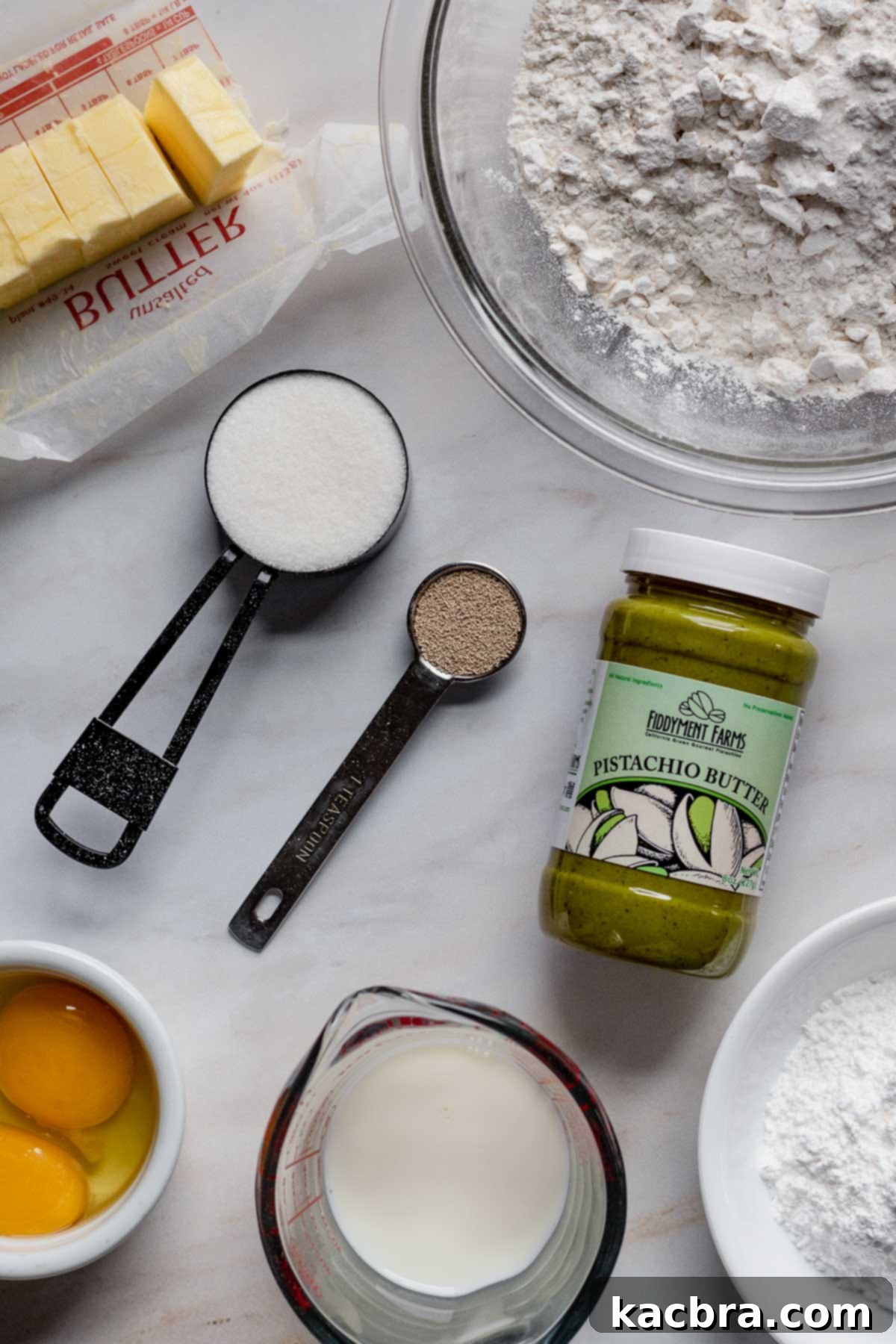
How to Make Homemade Pistachio Babka: A Step-by-Step Guide
Creating this stunning Pistachio Babka is an enjoyable process. Follow these detailed steps for a truly exceptional result:
Crafting the Enriched Babka Dough
The foundation of a great babka is its dough. Take your time with these initial steps to ensure a tender and airy result.
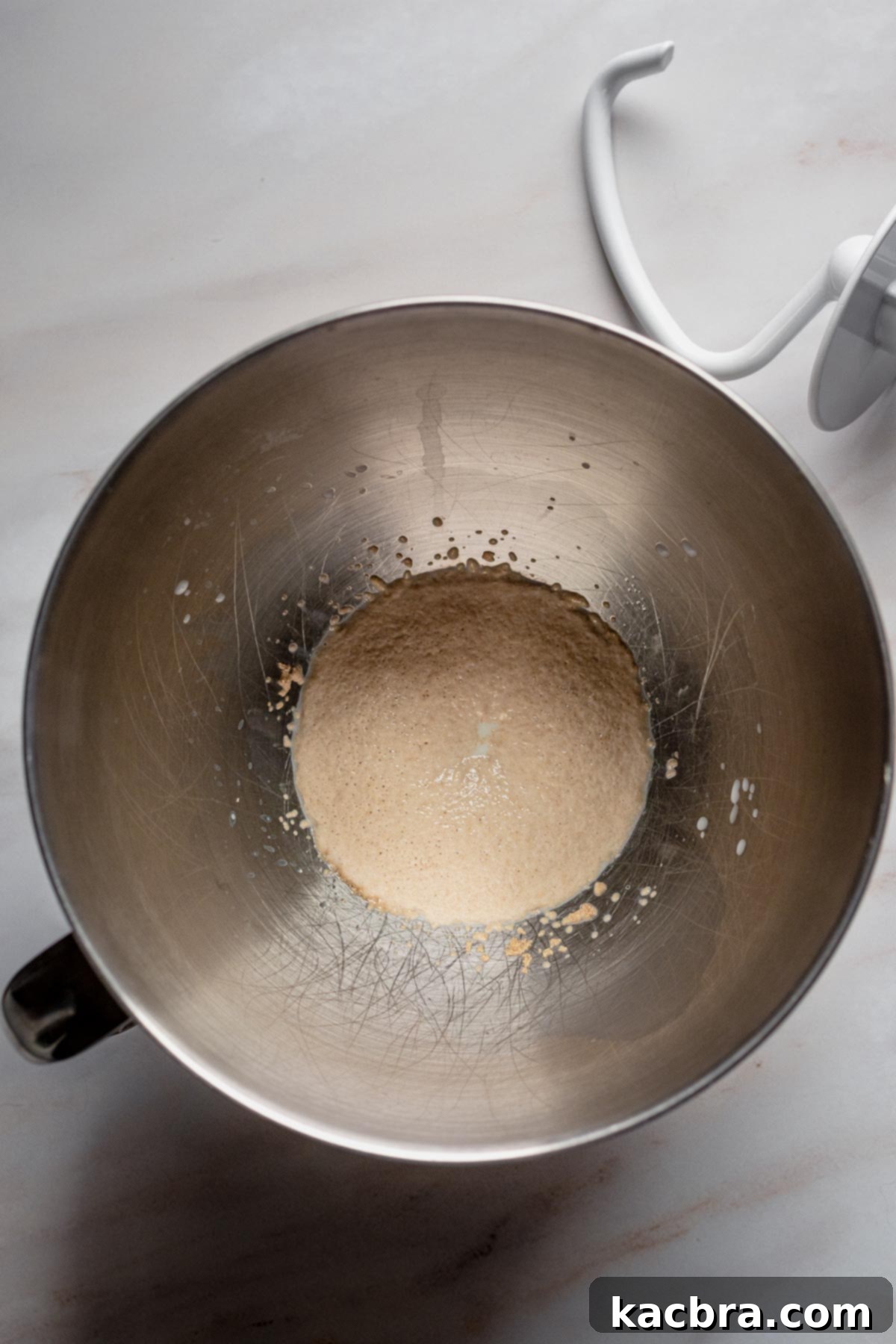
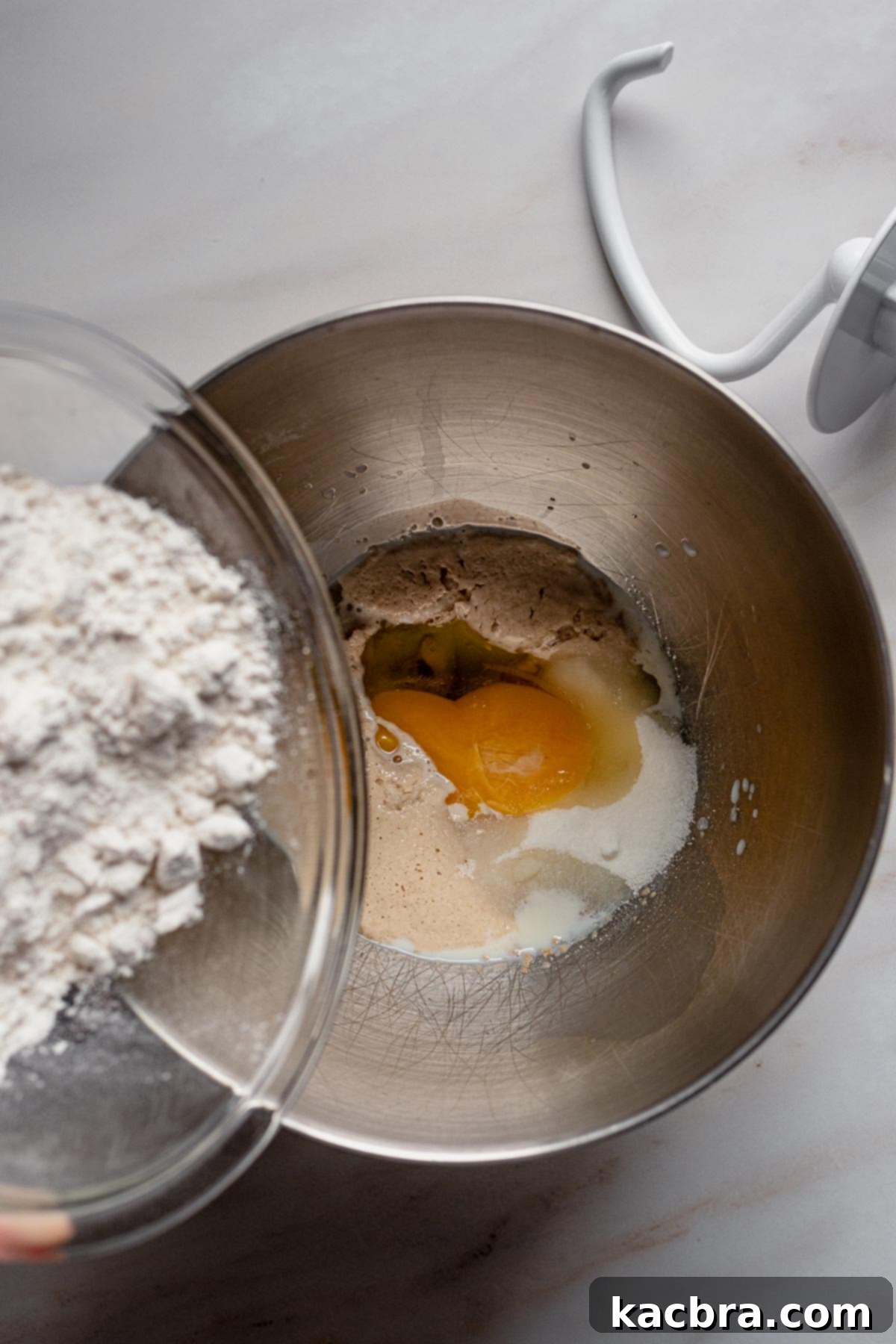
STEP 1: Activate the Yeast. In the bowl of your stand mixer, combine the active dry yeast with a tablespoon of granulated sugar (from your measured amount) and the warmed whole milk. The milk should be around 110°F (43°C) – warm to the touch but not hot. Stir gently and let this mixture sit for 5-10 minutes. You’re looking for a foamy layer to form on the surface, which indicates your yeast is active and ready to work. Once foamy, add the remaining granulated sugar, the large egg and egg yolk, all-purpose flour, and kosher salt to the bowl.
STEP 2: Initial Dough Mixing. Attach the dough hook to your stand mixer. Begin mixing on low to medium speed until all the ingredients come together and form a rough, shaggy ball. This initial mixing helps hydrate the flour and brings the mixture into a cohesive mass. Don’t worry if it looks a bit uneven at this stage.
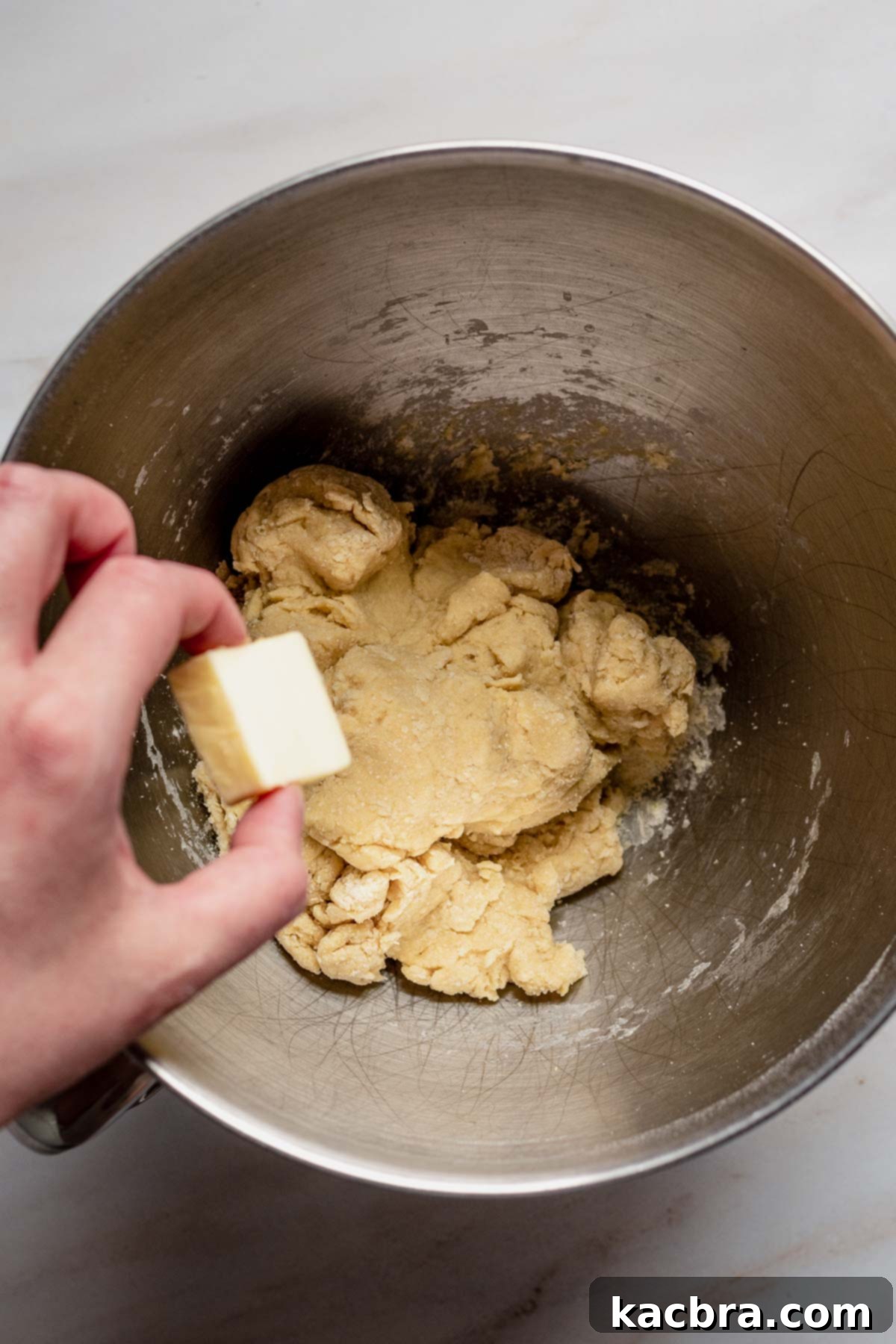
STEP 3: Incorporating the Butter. Reduce the mixer speed to low or medium-low. Gradually add the softened unsalted butter, one tablespoon at a time. It’s crucial to add the butter slowly, allowing each piece to be mostly incorporated into the dough before adding the next. This ensures proper emulsification and prevents the dough from becoming greasy. Continue mixing until all the butter is fully incorporated and the dough starts to become smoother and more elastic.
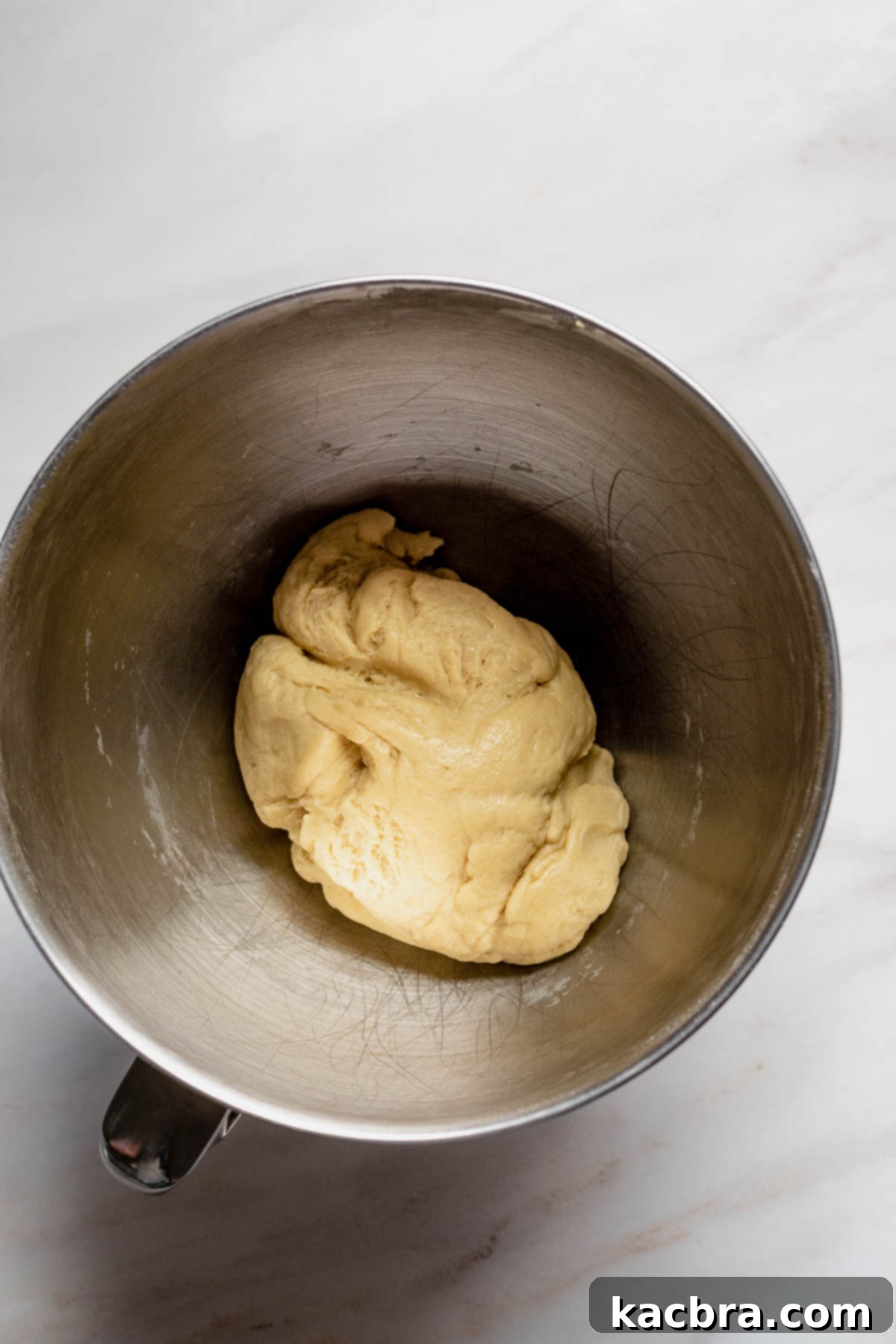
STEP 4: Kneading to Perfection. Increase the mixer speed to medium-high. Let the dough knead for about 8-10 minutes. During this time, the dough will transform from sticky and shaggy to smooth, supple, and elastic. You’ll notice it beginning to pull away cleanly from the sides and mostly from the bottom of the mixing bowl. If it’s still very sticky after 10 minutes, you can add an additional tablespoon of flour, one at a time, until it reaches the desired consistency. The dough should be soft to the touch and pass the windowpane test (where a small piece can be stretched thin enough to see light through it without tearing).
STEP 5: First Rise (Resting Period). Gently gather the kneaded dough into a ball. Lightly grease a clean bowl with a neutral oil, place the dough inside, and turn it once to coat. Cover the bowl tightly with plastic wrap to prevent a skin from forming. Place the covered bowl in a warm, draft-free spot for approximately 30 minutes. This short rest allows the gluten to relax and jumpstarts the fermentation process, making the dough easier to handle in the next steps.
Preparing the Rich Pistachio Babka Filling
The vibrant heart of your babka, this filling comes together quickly while your dough rests.
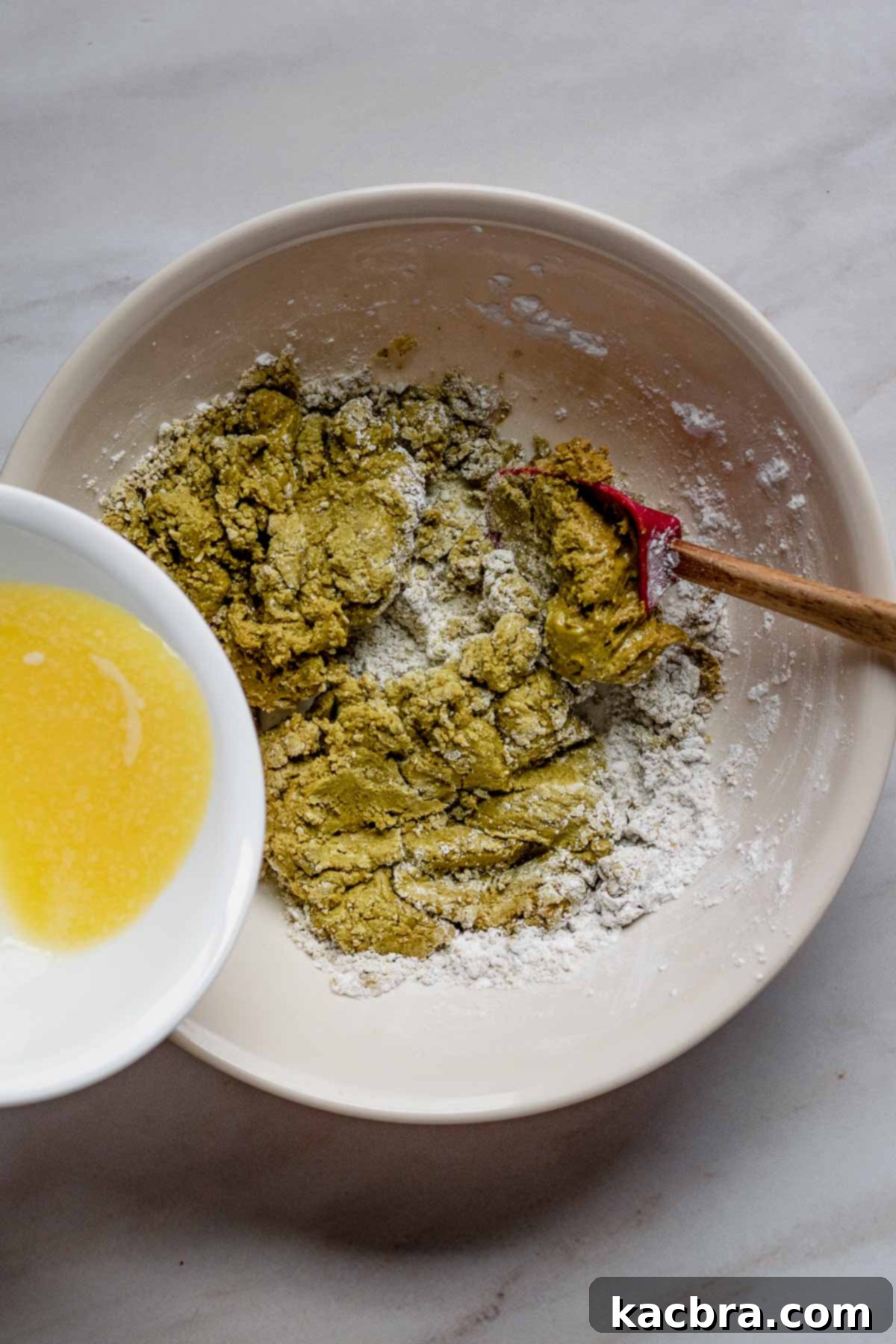
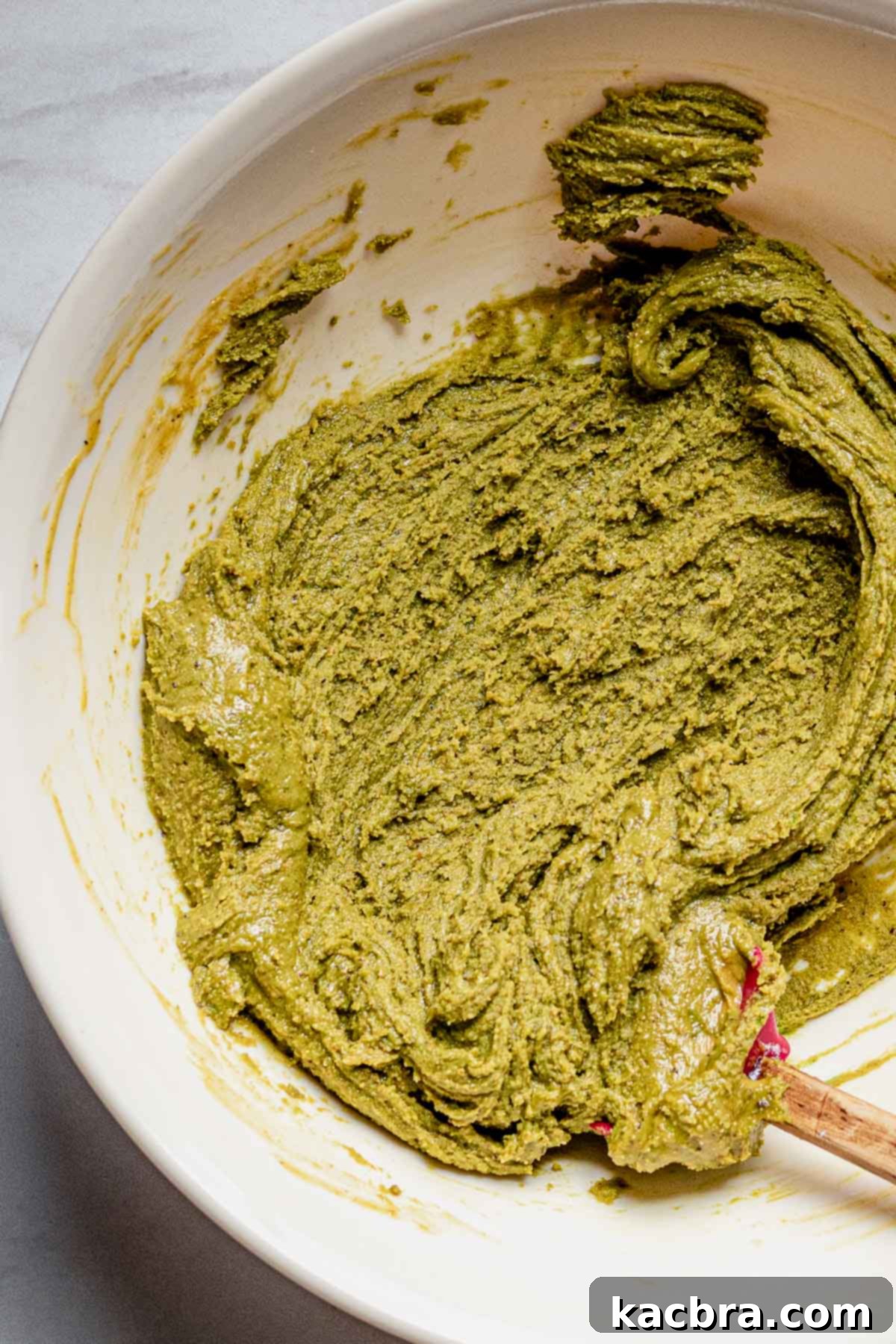
STEP 6: Combine Filling Ingredients. Just before you’re ready to roll out the dough, prepare your delicious pistachio filling. In a medium bowl, combine the thick pistachio butter, powdered sugar, melted unsalted butter, and almond extract. Mix these ingredients thoroughly until they are well combined and form a thick, spreadable paste. The consistency should be smooth and uniform.
STEP 7: Achieving the Desired Color (Optional). If the natural color of your pistachio paste isn’t as vibrant green as you’d like, now is the time to add a touch of green food coloring. Add it gradually, a drop or two at a time, mixing well after each addition. Continue until you achieve your desired shade of green, making those babka swirls truly pop!
Assembling Your Beautiful Pistachio Babka
This is where the magic happens, transforming your dough and filling into the iconic babka shape.
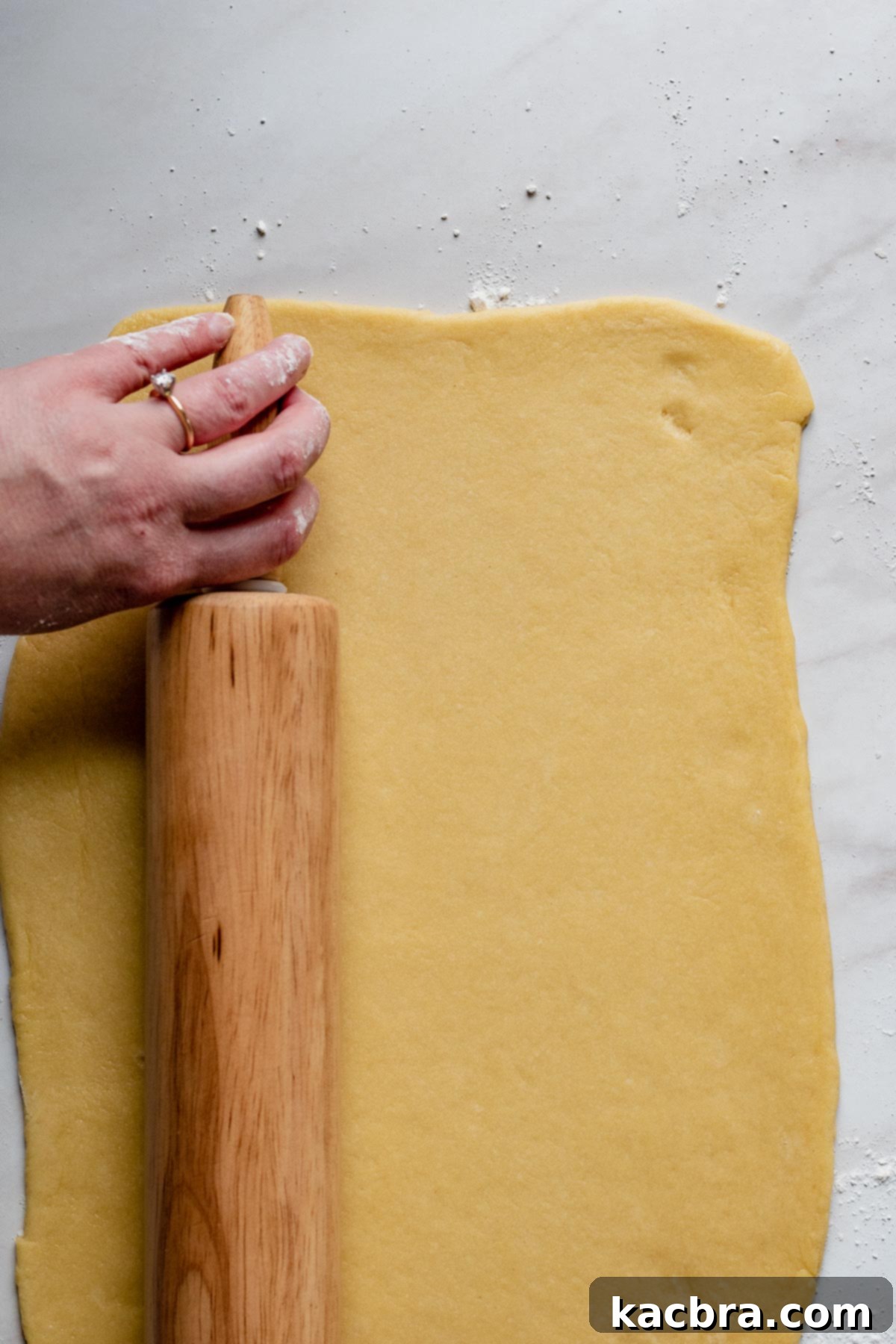
STEP 8: Roll Out the Dough. Lightly flour your clean work surface and your rolling pin. Take the rested dough and gently shape it into a rough rectangle with your hands. Then, carefully roll it out into a precise 10×14 inch rectangle. Use a bench scraper or the edge of your hand to keep the edges straight and maintain the rectangular shape as you roll. A consistent thickness is key for even layers.
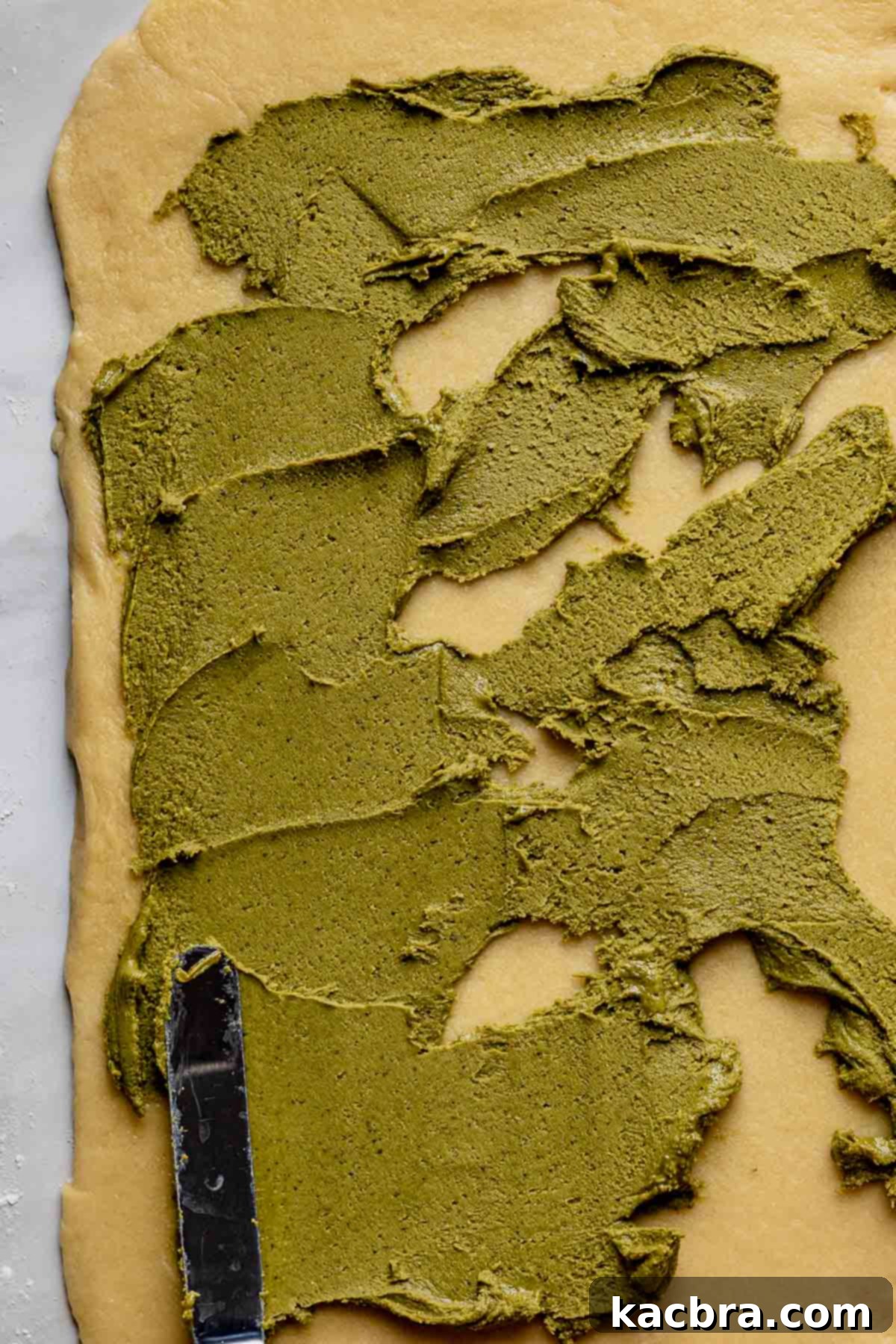
STEP 9: Spread the Filling. With an offset spatula or the back of a spoon, spread the pistachio filling evenly over the entire surface of the rolled-out dough, extending all the way to the edges. Ensure every inch is covered for maximum flavor in every bite.
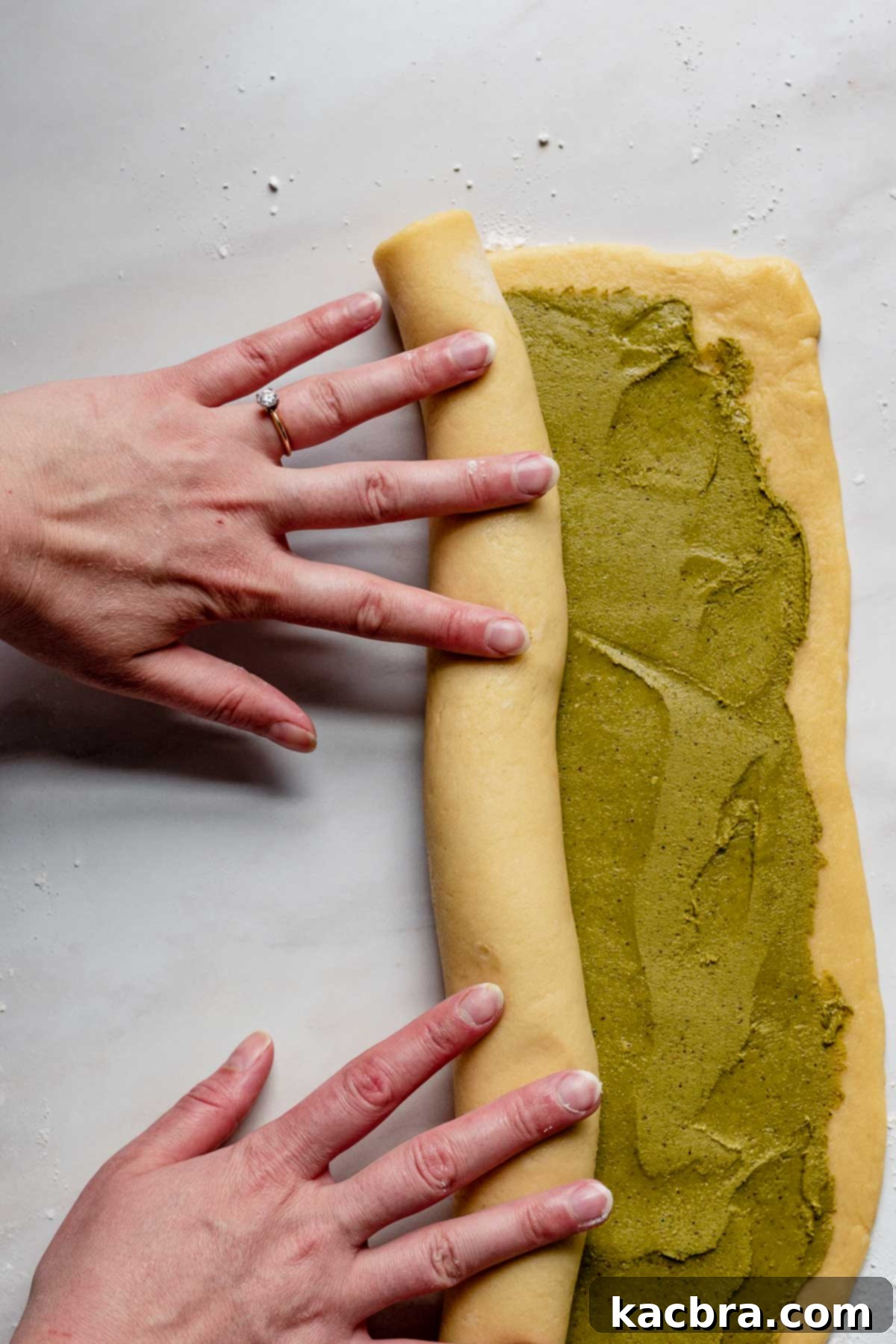
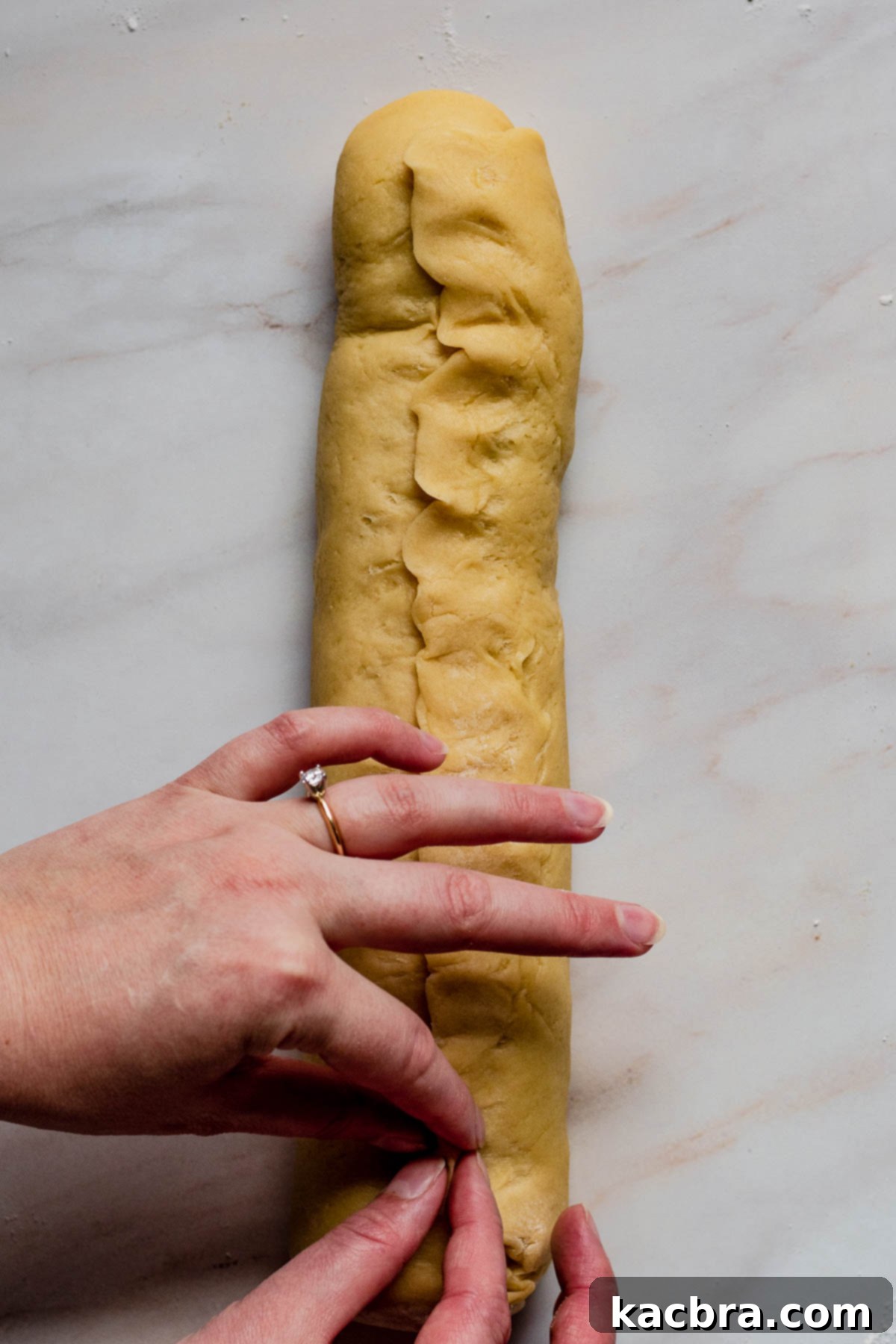
STEP 10: Roll and Seal the Log. Starting from one of the long ends, tightly and carefully roll the dough into a snug log. The tighter you roll, the more distinct and beautiful your swirls will be. Once rolled, pinch the seam firmly to seal it completely, preventing the filling from escaping during baking. Place the log seam-side down on your counter. Gently press inwards from each end to slightly re-compact the log, ensuring it’s uniform.
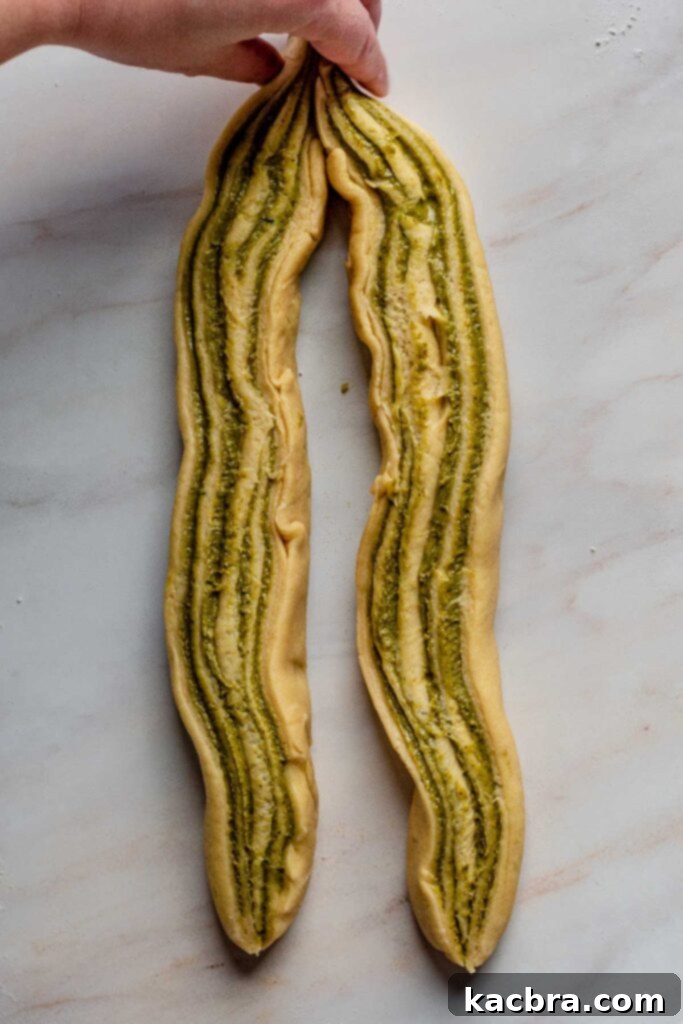
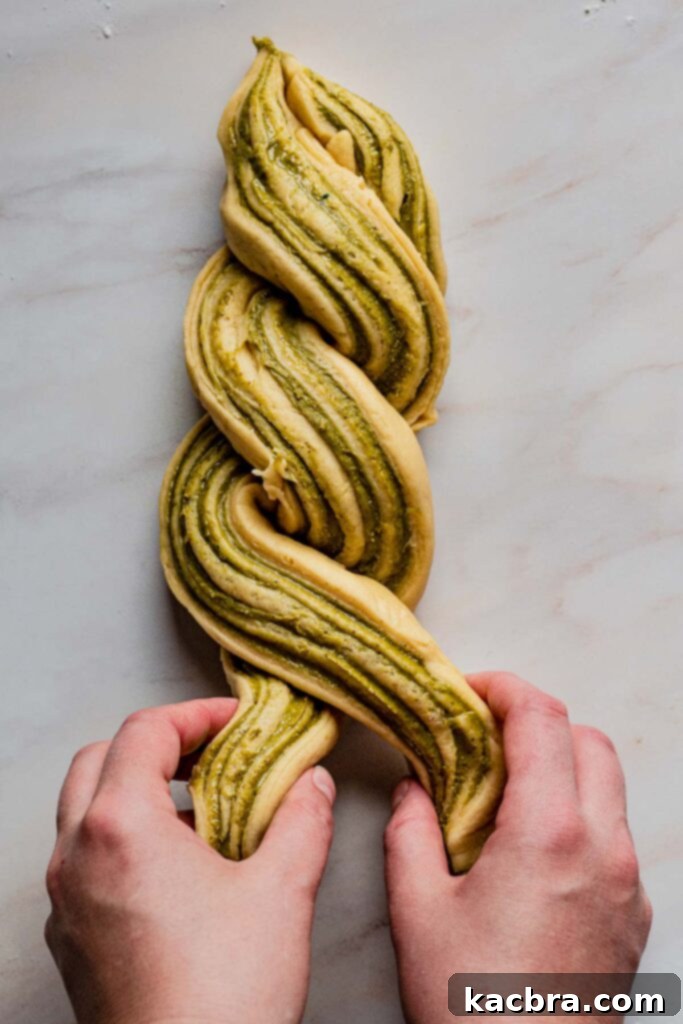
STEP 11: Cut and Twist. Using a sharp knife or a bench scraper, carefully cut the log in half lengthwise, creating two long strips. Position the two strips parallel to each other with the cut sides facing up, revealing the beautiful pistachio swirls. Pinch the very top ends of the two strips together to join them securely. Then, carefully wrap or twist the pieces around each other, always keeping the cut sides facing upwards to showcase the layers. Pinch the bottom ends together to seal. This braiding technique creates the classic babka appearance.
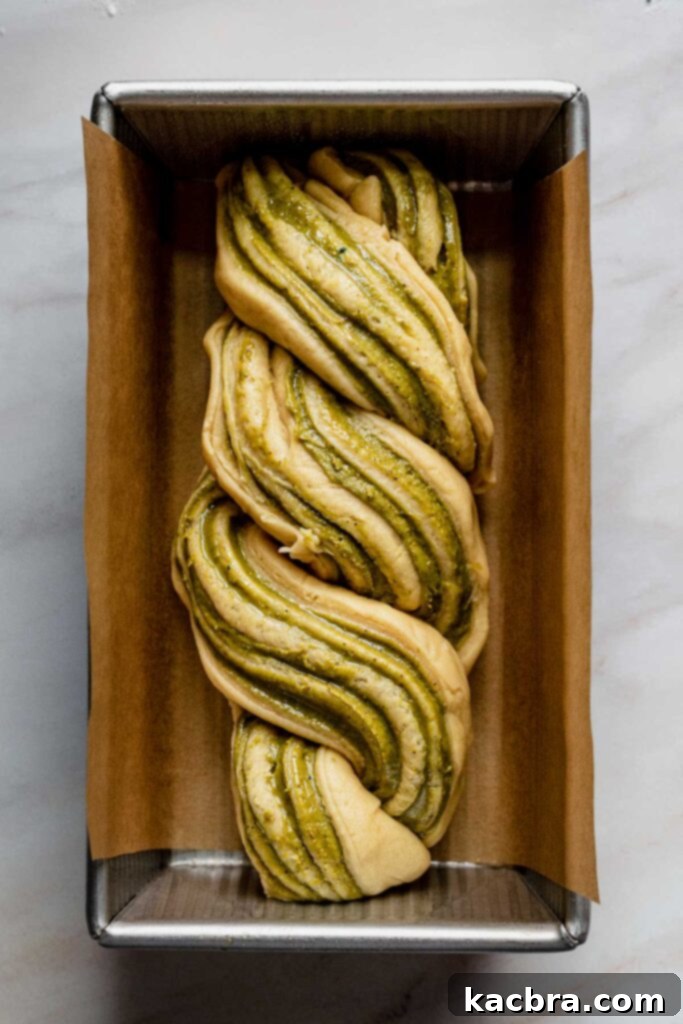
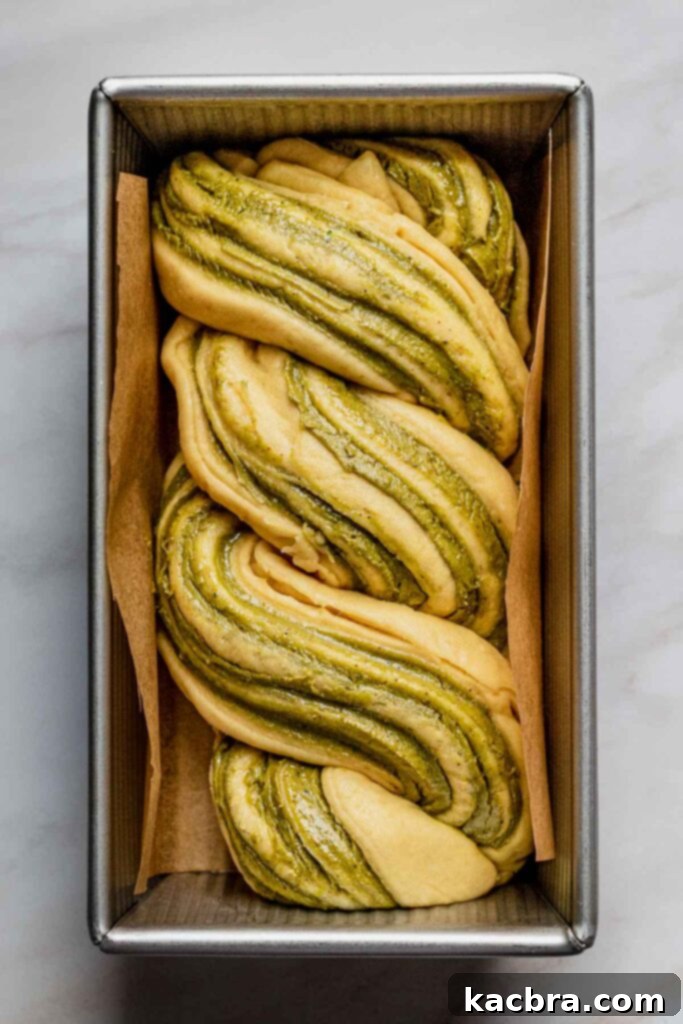
STEP 12: Second Rise (Proofing). Line a standard loaf pan (9×5-inch or 8×4-inch) with parchment paper, leaving an overhang on the long sides for easy removal later. Carefully transfer the twisted dough into the prepared loaf pan. If the twisted dough is a bit long for the pan, you can gently tuck one end under or next to the other to fit it in an “S” shape. Cover the pan loosely with plastic wrap and place it in a warm, draft-free environment for about 1 hour. During this time, the babka will undergo its second rise, becoming visibly puffy and filling out the pan. If your kitchen is cool, a slightly warmed (but turned off) oven with the light on can provide an ideal environment.
STEP 13: Bake to Golden Perfection. Preheat your oven to 375°F (190°C). Once preheated, remove the plastic wrap from the babka loaf. Place the loaf pan on the middle rack of your oven and bake for 25-30 minutes. The babka is ready when its top is golden brown, and a sharp knife or skewer inserted into the center meets little resistance, indicating the dough is cooked through and no longer gooey. If it still feels soft or stretchy, continue baking for another 3-5 minutes and re-test.
Making the Simple Syrup and Finishing Touch
A glossy, moist finish is achieved with a quick brush of simple syrup.
STEP 14: Prepare the Simple Syrup. While your babka is baking, prepare the simple syrup. In a small saucepan, combine the water and granulated sugar. Heat this mixture over medium heat, stirring continuously until the sugar completely dissolves. Once dissolved, remove the saucepan from the heat and allow the syrup to cool completely. Once cool, stir in the almond extract. This syrup will keep the babka moist and add a subtle extra layer of flavor.
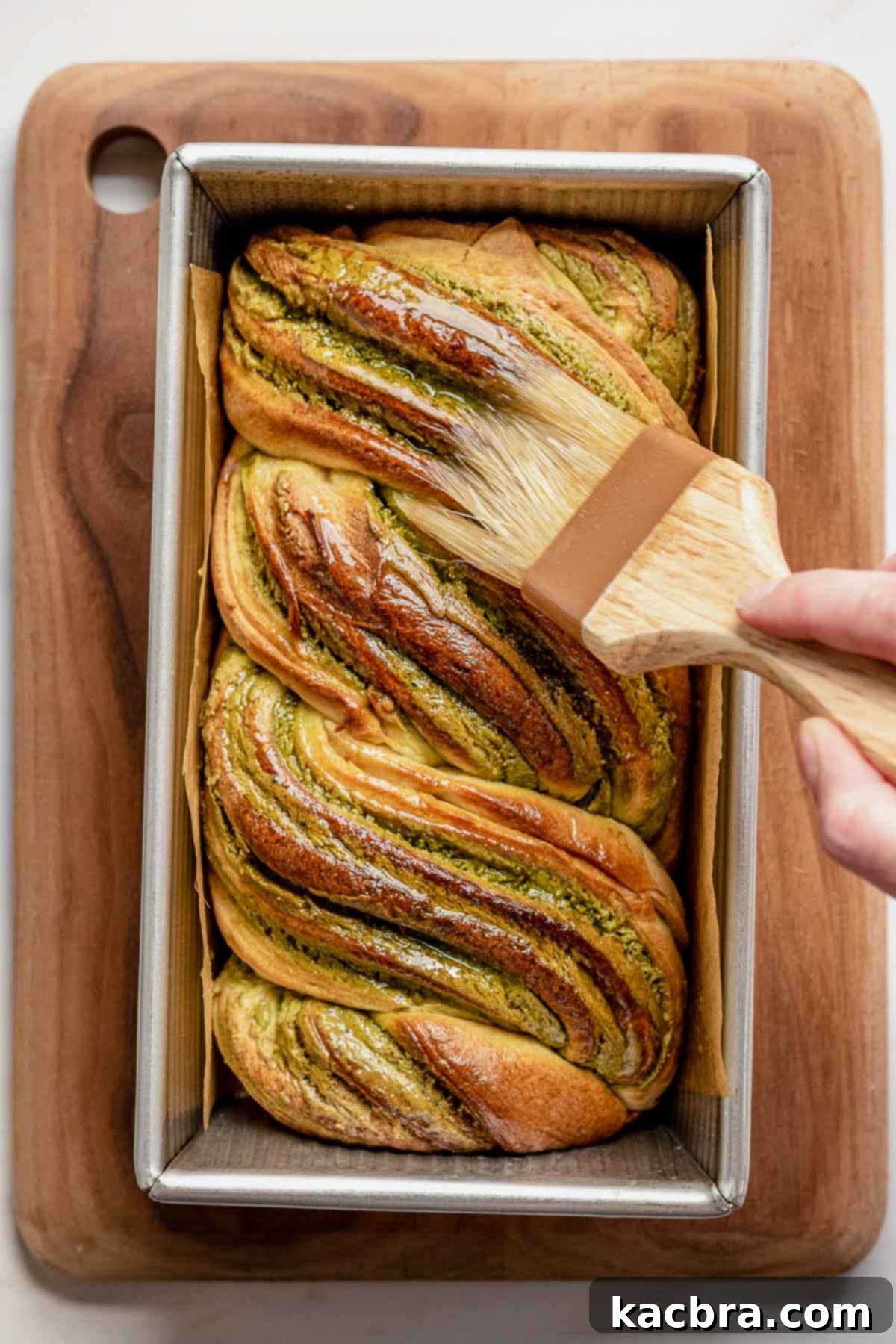
STEP 15: Apply the Syrup. The moment the babka emerges from the oven, still piping hot, immediately brush or spoon the cooled simple syrup generously all over the top surface of the loaf. Ensure you get into all the nooks, crannies, and edges. It might seem like a lot of syrup, but the hot babka will absorb it beautifully, keeping it incredibly moist and adding a lovely sheen. Allow the babka to cool completely in the pan on a wire rack before attempting to remove and slice it. This cooling process is essential for the structure to set and the flavors to fully develop.
Baking Tips for a Perfect Babka Every Time
Achieving a bakery-quality babka is within your reach with these helpful tips:
- Don’t Rush the Rise: Yeast doughs thrive on patience. Ensure your dough gets sufficient time for both its initial rest and its second proofing. A warm, draft-free environment is key.
- Accurate Flour Measurement: For consistent results, especially with enriched doughs, measure your flour by weight using a kitchen scale (grams are ideal). If using cups, spoon the flour into the measuring cup and level it off, rather than scooping directly, which can compact the flour and lead to too much.
- Knead Thoroughly: The kneading process develops the gluten, which gives babka its characteristic chewiness and strength to hold the filling. Don’t stop until the dough is smooth, elastic, and pulls away from the bowl.
- Tight Rolling is Key: When rolling the dough with the filling, ensure it’s tightly rolled. This creates the beautiful, distinct swirls that babka is famous for. Loose rolling results in gaps.
- Don’t Overbake: Overbaking can lead to a dry babka. Keep an eye on it during the last few minutes of baking. The knife test is your best friend here.
Variations to Customize Your Pistachio Babka
While the classic pistachio babka is a delight on its own, you can easily experiment with additional flavors to add your unique touch and create an even more complex and intriguing sweet bread:
- Cardamom: A pinch of ground cardamom, added to either the dough or the pistachio filling, introduces a warm, aromatic, and slightly exotic spice note that pairs beautifully with pistachios.
- Raspberry: Incorporate fresh raspberries (or a swirl of good quality raspberry jam) along with the pistachio filling. The tartness of the raspberries offers a wonderful counterpoint to the sweet pistachio, creating a vibrant flavor and visual contrast.
- Cranberry: Dried cranberries, chopped and sprinkled over the pistachio filling before rolling, add a chewy texture and a subtle tart-sweet flavor that complements the nutty richness.
- Cherry: Similar to raspberry, tart dried cherries or a thin layer of cherry preserve can elevate the babka with their bright, fruity essence, offering a delightful twist on the classic.
- White Chocolate: For an extra layer of decadence, sprinkle mini white chocolate chips over the pistachio filling before rolling. As the babka bakes, the white chocolate will melt and mingle with the pistachio, creating an incredibly rich and creamy swirl.
Storing and Freezing Your Pistachio Babka
To enjoy your delicious pistachio babka for longer, proper storage is key:
Store the baked babka tightly wrapped in plastic wrap or aluminum foil at room temperature for up to 3 days. To maintain its freshness, you can also place the wrapped babka in an airtight container.
For longer storage, babka freezes beautifully. Once completely cooled, wrap the entire loaf or individual slices tightly in plastic wrap, then again in aluminum foil, and finally place it in a sealed freezer-safe container or a large zip-top bag. It can be frozen for up to 3 months. To enjoy, simply unwrap the frozen babka and thaw at room temperature. For a fresh-baked experience, you can gently warm slices in the oven at a low temperature (around 300°F/150°C) for 10-15 minutes.
Serving Suggestions for Pistachio Babka
Pistachio babka is wonderfully versatile. Here are a few ideas to enjoy it:
- Breakfast Treat: Serve warm with a cup of coffee or tea for a luxurious start to your day.
- Elegant Dessert: Pair a slice with a scoop of vanilla bean ice cream or a dollop of whipped cream for a simple yet impressive dessert.
- Afternoon Pick-Me-Up: Enjoy a slice with a glass of milk or a light fruit salad for a satisfying snack.
- Gift Idea: A beautifully wrapped babka makes a thoughtful and impressive homemade gift for friends, family, or hosts.
- Brunch Centerpiece: It’s a show-stopping addition to any brunch spread, sure to impress your guests.
Frequently Asked Questions About Babka
Babka is traditionally considered a dessert, often enjoyed after holiday dinners in Jewish households, particularly during Jewish holidays. However, its rich, sweet, and comforting nature makes it incredibly versatile. Many people enjoy it as a decadent breakfast pastry, a delightful brunch item, or a satisfying snack any time of day!
Babka is a sweet, enriched yeast bread. Its dough is very similar to brioche, characterized by the generous addition of eggs, butter, and sugar, which give it a rich flavor, a tender, soft crumb, and a beautiful golden hue. This enrichment makes it distinct from standard lean bread doughs.
Yes, you can typically substitute instant yeast for active dry yeast. If using instant yeast, you don’t necessarily need to activate it in warm milk first. You can often mix it directly with the dry ingredients. However, it’s always a good idea to ensure your instant yeast is fresh. Use the same amount of instant yeast as active dry yeast.
The natural color of pistachio butter can vary. To achieve a more vibrant green filling, add a small amount of green food coloring, drop by drop, to the filling mixture until your desired shade is reached. Gel food coloring often provides a more intense color with less liquid.
The windowpane test is a way to check if your dough has been sufficiently kneaded and its gluten is well-developed. To perform it, pinch off a small piece of dough and gently stretch it between your fingers. If you can stretch it thin enough to see light through it without the dough tearing, like a windowpane, then your dough is properly kneaded and ready for its first rise.
Other Recipes to Try: Sweet Breads and Desserts
If you enjoyed making this Pistachio Babka, you might love these other delightful sweet bread and dessert recipes:
- Chocolate Espresso Babka: A rich, coffee-infused twist on the classic.
- Cranberry Orange Rolls: Bright, zesty, and perfect for brunch.
- Bread Pudding with Bourbon Sauce: A comforting, indulgent dessert.
Did you make this recipe? We’d love to see your creations! Tag us on Instagram or Facebook and leave a star rating⭐️ below! For more culinary inspiration, follow us on Pinterest.
📖Recipe: Pistachio Babka
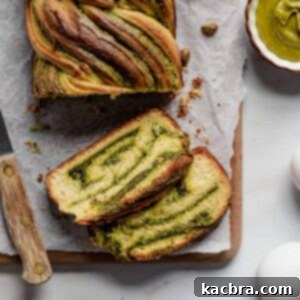
Pistachio Babka
By Callan Wenner
This flavorful Pistachio Babka is made with a soft and billowy enriched dough that wraps around layers of thick, sweet, pistachio butter. Best enjoyed slightly warm, this babka can be eaten for dessert, breakfast, or even when you need a quick snack!
Pin Recipe
| Prep Time: | 20 mins | Cook Time: | 30 mins |
| Rise Time: | 1 hr 30 mins | Total Time: | 2 hrs 20 mins |
| Course: | Breakfast, Dessert |
| Cuisine: | Jewish |
| Servings: | 12 |
| Calories: | 259 kcal |
Use the metric toggle to convert the measurements
Equipment
- Stand mixer with dough hook attachment
- Bench scraper
- Rolling Pin
- Offset spatula
- Standard loaf pan (9×5-inch or 8×4-inch)
- Pastry brush
Ingredients
Dough
- ¼ cup granulated sugar (50g)
- 1 teaspoon active dry yeast
- ¼ cup whole milk warmed to 110℉ (60ml)
- 1 large egg + 1 large egg yolk, room temperature
- 2¼ cups all-purpose flour + extra ¼ cup (270-300g)
- ½ teaspoon kosher salt
- 6 tablespoons unsalted butter, cut into tablespoon pieces (85g)
Pistachio Filling
- ½ cup pistachio butter (150g)
- ¼ cup + 2 tablespoons powdered sugar (45g)
- 2 tablespoons unsalted butter, melted (28g)
- ¼ teaspoon almond extract
- Green food coloring (optional, for desired color)
Simple Syrup
- ¼ cup water (60ml)
- ¼ cup granulated sugar (50g)
- ¼ teaspoon almond extract
Instructions
- Combine one tablespoon of sugar (from the ¼ cup), yeast, and warm milk in the bowl of a stand mixer. Let it sit for 5 minutes to activate the yeast and foam. Once foamy, add the remaining sugar, egg and yolk, flour (2¼ cups), and salt.
- Using the dough hook attachment, mix on medium speed until the ingredients come together into a rough ball.
- Turn the mixer speed one click lower, then add 1 tablespoon of the softened butter at a time. Wait for each piece of butter to be mostly incorporated before adding the next.
- Mix on medium-high speed until the dough is smooth and elastic, scraping down the sides and bottom of the bowl a few times. If the dough hasn’t come together, increase the speed and continue mixing until it pulls away from the sides.
- When ready, the dough should completely pull away from the sides and mostly or fully off the bottom of the bowl. If a bit is still sticking to the bottom, that’s acceptable. However, if it’s very sticky, add an additional tablespoon of flour at a time until it mostly detaches itself. The dough should be soft and supple.
- Form the dough into a ball and place it in an oiled bowl. Cover with plastic wrap and let it rest in a warm location for about 30 minutes.
- Right before rolling out the dough, prepare the pistachio filling.
Pistachio Filling
- Add the pistachio butter, powdered sugar, melted butter, almond extract, and a touch of green food coloring to a bowl. Mix well to combine. Add more food coloring, if desired, until the desired vibrant green color is reached.
- Prepare a standard loaf pan by lining it with a strip of parchment paper, leaving an overhang on the long sides. Set aside.
Assembly
- Lightly flour your work surface and rolling pin. Shape the dough into a rectangle with your hands, then roll it out into a 10×14 inch rectangle. Use a bench scraper to maintain the rectangular shape.
- Once rolled out, spread the pistachio filling evenly over the dough with an offset spatula, extending to all edges.
- Starting from one of the long edges, tightly and evenly roll the dough into a log. Pinch the seam together to seal, then turn and place the seam side down on the counter. Gently push the dough inwards from each side to re-compact the log slightly.
- Cut the entire log in half lengthwise. Place each piece parallel to each other with the cut sides up. Pinch the top edges together firmly. Then, keeping the cut sides up, twist each piece of dough around each other as many times as possible to create the braid. Pinch the bottom pieces together to seal.
- Place the twisted dough into the prepared loaf pan. If it’s too long to fit straight, gently tuck one of the edges next to it to form an “s” shape.
- Cover the dough loosely with plastic wrap and allow it to rise in a slightly warm location for about 1 hour, or until the dough puffs up and starts to fill out the pan. If your kitchen is cold, let it rise in a closed oven (turned off) with just the light on.
- Preheat the oven to 375°F (190°C). Uncover the loaf and bake for 25-30 minutes on the middle rack. The babka is done when it’s golden brown and a sharp knife inserted into the center meets little resistance. If it still feels stretchy or doughy, bake for another 3-5 minutes and check again.
Simple Syrup
- As soon as the babka goes into the oven, prepare the simple syrup. Add the water and sugar to a small saucepan and heat, stirring, until the sugar completely dissolves. Remove from heat and cool completely. Once cool, stir in the almond extract.
- As soon as the hot babka comes out of the oven, immediately brush or spoon the cooled simple syrup generously over the entire top of the loaf, ensuring it soaks into all the nooks, crannies, and edges. It may seem like a lot, but the babka will absorb it. Allow the babka to cool completely in the pan before removing, slicing, and enjoying.
Notes
- Store the loaf, tightly wrapped in plastic wrap or foil, at room temperature for up to 3 days. For longer storage, freeze (wrapped in plastic wrap, then foil, and placed in a ziplock bag or airtight container) for up to 3 months. Thaw at room temperature.
- If the yeast does not get foamy after 5 minutes, discard the mixture and start again (checking yeast expiration date and milk temperature).
- It is crucial to properly measure your flour for this recipe. Using a kitchen scale for accuracy is highly recommended.
- Initially, the dough may appear dry, crumbly, and shaggy. After incorporating the butter, it will begin to moisten. As it mixes on medium to medium-high speed, it will start to come together, slapping the sides of the bowl and eventually pulling away cleanly. It should then become soft and supple, having completely pulled off the sides and mostly off the bottom. A small amount still adhering to the bottom is fine.
- While pistachio extract can be used, almond extract is often found in many pistachio-flavored baked goods and is typically easier to source. It also provides a wonderful complementary flavor.
Carbohydrates: 31 g
Protein: 7 g
Fat: 12 g
Saturated Fat: 6 g
Polyunsaturated Fat: 1 g
Monounsaturated Fat: 4 g
Trans Fat: 0.3 g
Cholesterol: 96 mg
Sodium: 130 mg
Potassium: 125 mg
Fiber: 1 g
Sugar: 12 g
Vitamin A: 372 IU
Vitamin C: 0.3 mg
Calcium: 29 mg
Iron: 2 mg
The provided nutritional information is an estimate per serving. Accuracy is not guaranteed.
Let us know how it was!