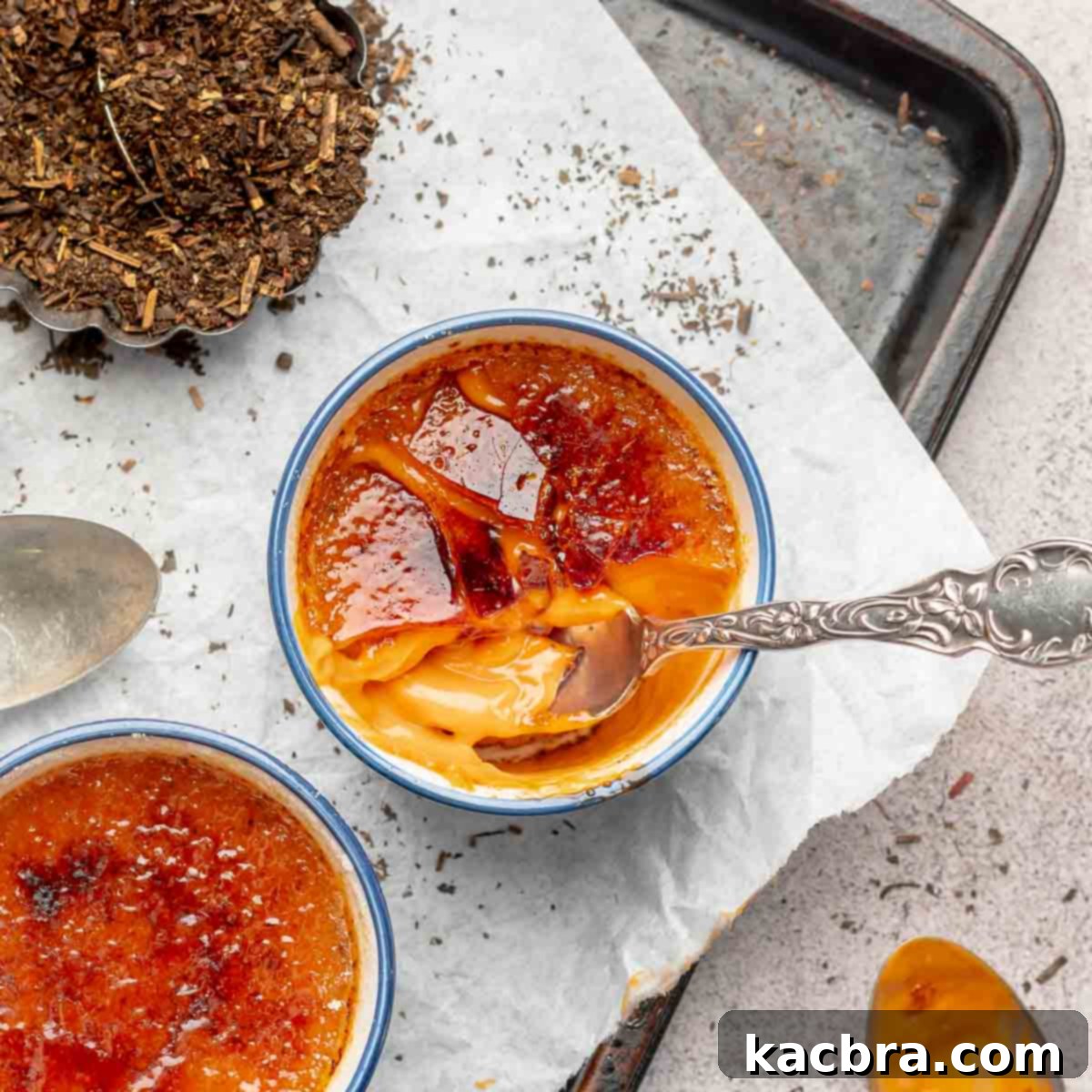
Decadent Thai Tea Crème Brûlée: A Unique Culinary Fusion
Experience a delightful journey where classic French elegance meets exotic Thai flavors in this exquisite Thai Tea Crème Brûlée. This recipe masterfully combines the signature creamy, velvety texture of a traditional crème brûlée with the aromatic, spiced notes of authentic Thai iced tea. The result is a truly thick, luscious custard, crowned with the iconic shatteringly crisp caramelized sugar topping, offering a distinct and unforgettable taste sensation. Perfect for entertaining or a special personal treat, this dessert is a harmonious blend of nostalgia and novelty.
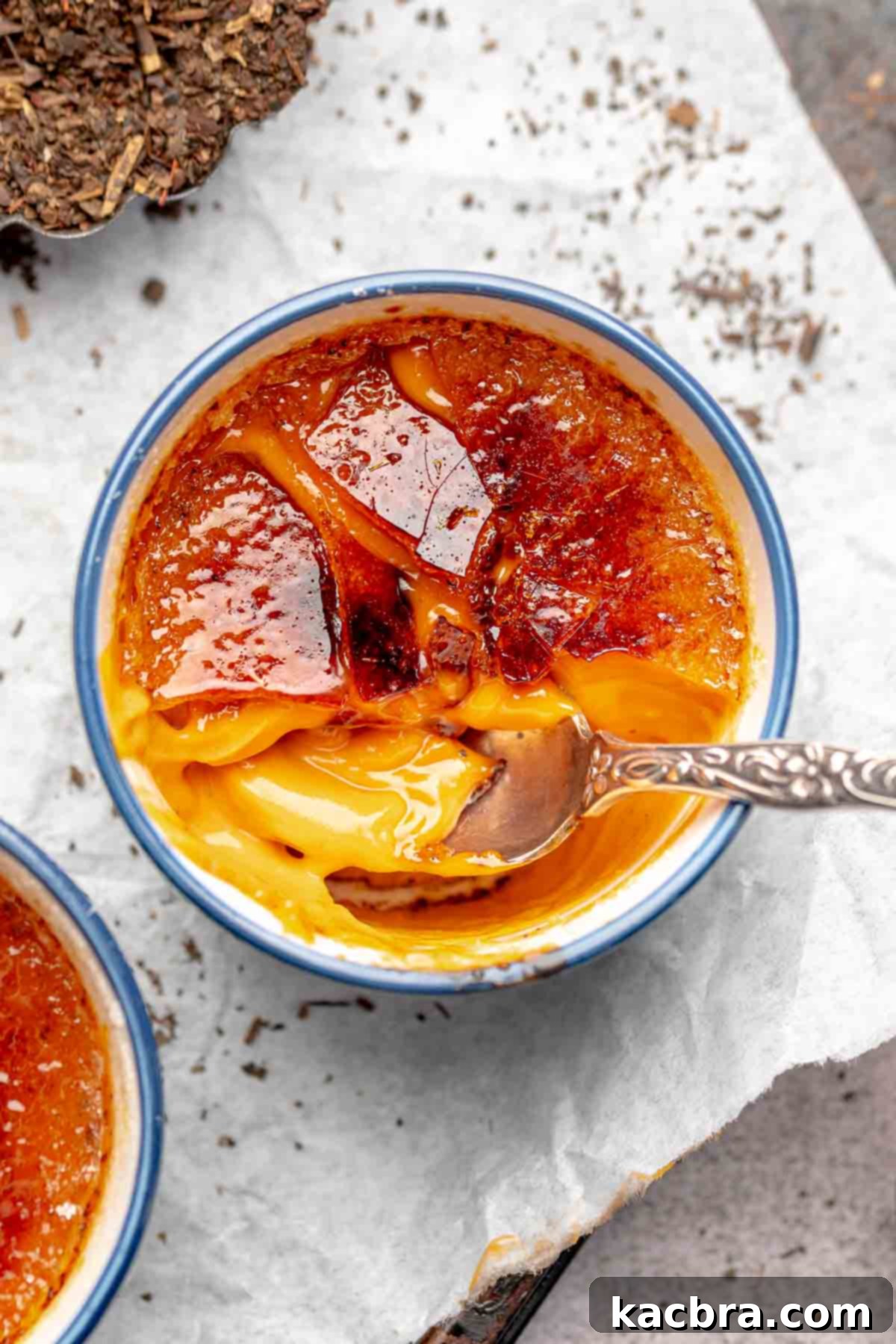
I find immense joy in the simple sophistication of a classic crème brûlée. Its effortless elegance and indulgent texture make it an absolute treat. My affection for Thai Iced Tea runs just as deep; its intoxicating blend of floral notes, warm spices, and uniquely flavorful tea profile is utterly captivating. It was only natural, then, to combine these two loves into one perfect dessert. Imagine a Thai milk tea transformed into a silken custard – that’s precisely what this Thai Tea Crème Brûlée delivers.
There’s something truly special about infusing familiar, cherished desserts with unexpected, vibrant flavors. It creates a culinary experience that is both comforting and exciting, tapping into nostalgia while simultaneously introducing something new and thrilling. If you appreciate unique dessert fusions, you might also enjoy exploring other adventurous combinations such as this Eggnog Crème Brûlée, a refreshing Thai Tea Ice Cream (No Churn), or the vibrant hues and taste of an Ube Cheesecake. Each offers a novel twist on beloved classics, much like our delightful Thai Tea Crème Brûlée.
Why This Thai Tea Crème Brûlée Recipe Will Become Your Favorite
This Thai Tea Crème Brûlée isn’t just another dessert; it’s an experience designed to captivate your senses and impress your guests. Here’s why this recipe will earn a permanent spot in your culinary repertoire:
Creamy, Silken Custard: The foundation of any great crème brûlée is its custard, and ours is nothing short of perfection. The Thai tea custard is meticulously baked in a hot water bath, a gentle technique that ensures an incredibly smooth, lump-free texture. Each spoonful melts in your mouth, delivering a velvety mouthfeel that is expertly set yet sumptuously delicate. This careful baking process prevents curdling and creates a custard that truly defines decadence.
Exotic Floral and Spice Flavor: What truly sets this crème brûlée apart is its unique flavor profile, directly inspired by the beloved Thai iced tea. The infusion of quality Thai tea mix imparts a signature bright orange hue and a wonderfully complex taste. Expect a harmonious blend of lightly spiced notes, with subtle hints of aromatic cardamom, warm cinnamon, sweet star anise, and the delicate perfume of orange blossom. This intricate flavor elevates the simple custard into an exotic, sophisticated treat that is both comforting and exhilaratingly new.
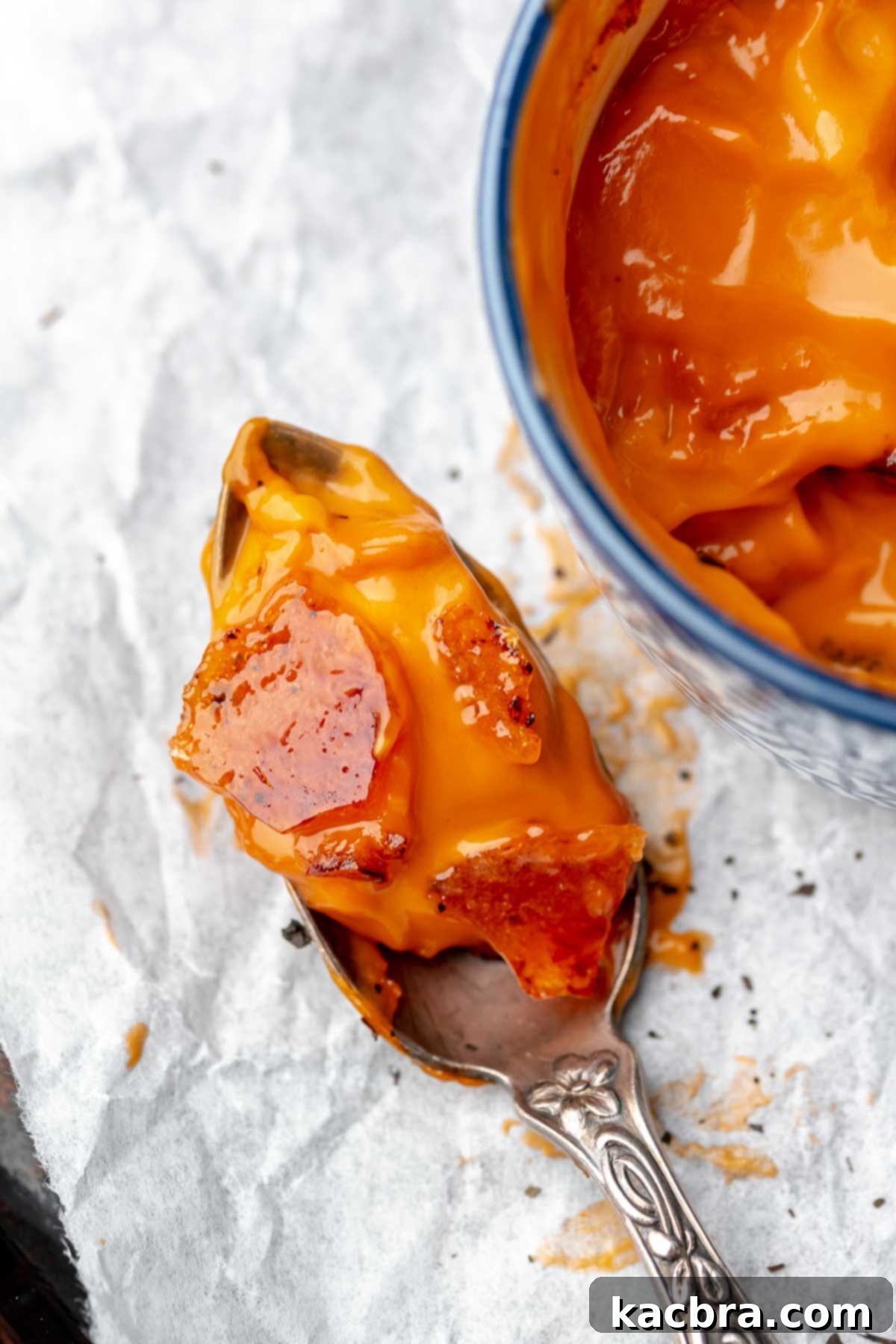
Unforgettable Caramelized Tops: Let’s be honest – the moment of cracking through that caramelized sugar top is often the most anticipated part of a crème brûlée. This recipe goes above and beyond to deliver an epic crack and crunch. We employ a special double sugaring method, creating a thicker, more robust caramelized layer that shatters beautifully with every tap of the spoon. This crisp, golden-brown crust provides a perfect textural contrast to the soft, creamy custard beneath, adding another layer of delightful sensory pleasure.
The Fascinating Story and Rich History of Thai Tea
Thai tea, known locally as “Cha Yen” (เย็นชา), is more than just a beverage; it’s a cultural icon deeply ingrained in Thailand’s culinary landscape. At its heart, Thai tea is typically a strong black tea, often a blend of Ceylon tea, traditionally brewed with a unique assortment of spices. These spices commonly include star anise, crushed tamarind seeds, and sometimes other aromatics like orange blossom, which contribute to its distinctive fragrance and taste.
The vibrant, almost neon-orange color that is so characteristic of Thai tea is not natural. It’s achieved through the addition of food coloring, a practice that likely originated to help differentiate it from Thai coffee, which shared a similar brownish hue. This visual distinction helped establish Thai tea as its own unique and recognizable beverage, popular throughout the country.
Thai Iced Tea is typically served chilled, often sweetened generously, and mixed with various dairy or non-dairy products. Depending on the region in Thailand, or simply personal preference, you might find it prepared with sweetened condensed milk for a rich, creamy sweetness, evaporated milk for a subtle creaminess, heavy cream for an indulgent texture, or even coconut milk for a tropical, dairy-free twist. The versatility of Thai tea makes it a beloved staple, enjoyed in bustling street markets, quaint cafes, and homes across Thailand and increasingly around the world. To delve deeper into its captivating origins and evolution, you can explore more about the origins of Thai Tea.
Essential Ingredients for Your Thai Tea Crème Brûlée
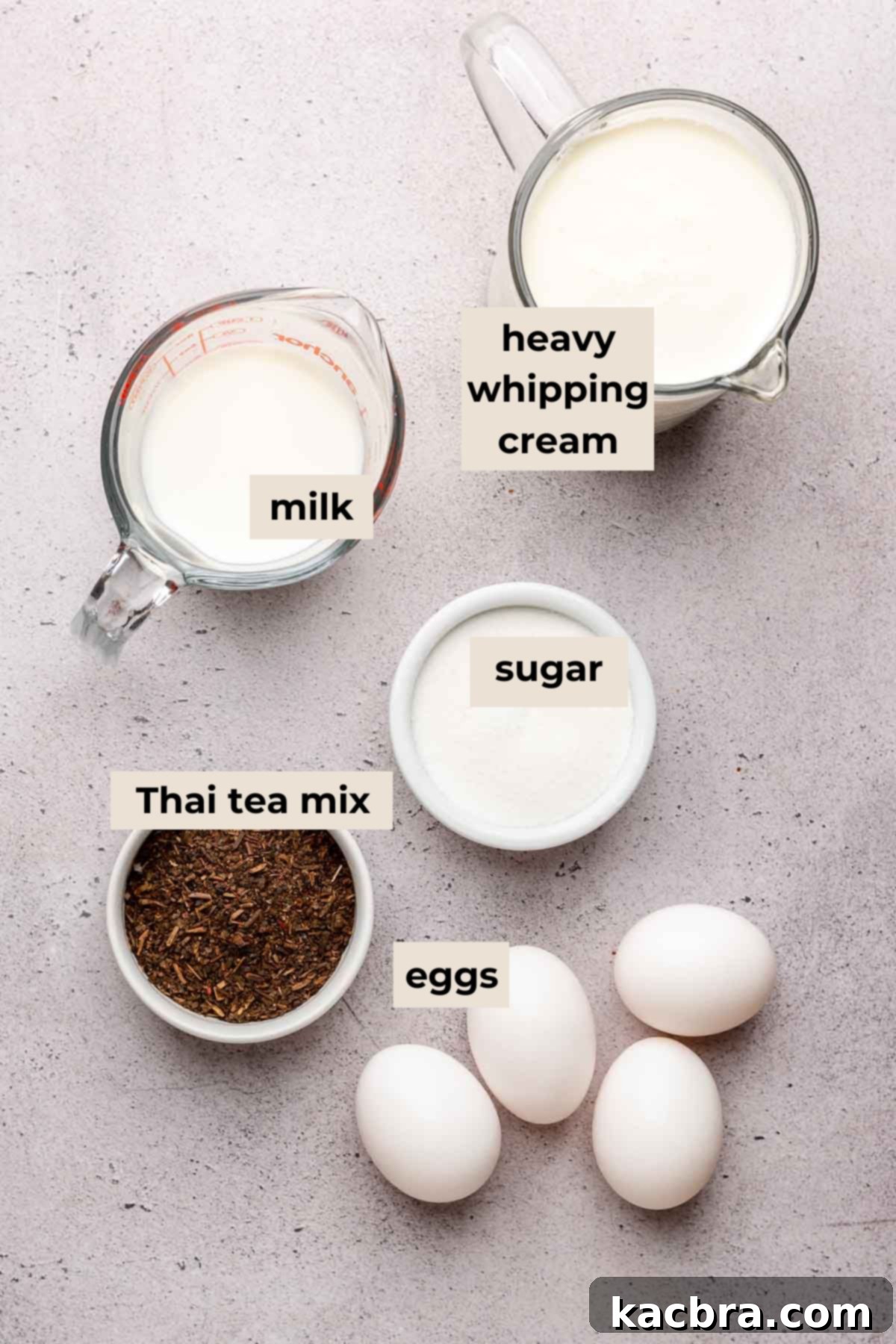
Crafting this unique Thai Tea Crème Brûlée begins with a classic crème brûlée base, elegantly infused with Thai tea to impart its distinctive flavor and beautiful color. Here’s a detailed look at the simple yet crucial ingredients required for this easy and impressive dessert:
- Thai Tea Mix: This is the star ingredient that gives our crème brûlée its unmistakable Thai tea essence. I highly recommend the Pantai brand for its authentic flavor profile, which translates beautifully from a refreshing Thai iced tea into delicious desserts. You can typically find this vibrant tea mix in most well-stocked Asian markets or conveniently order it online through platforms like Amazon. Its unique blend of black tea and spices is what truly defines this recipe.
- Eggs: For this recipe, we specifically use only the egg yolks. These yolks are essential for thickening the custard, providing its signature richness, and contributing to the silky-smooth texture. Don’t let those leftover egg whites go to waste! They are perfect for making other delightful treats like light and airy mini pavlovas or a delicate meringue.
- Milk: Whole milk is used as the steeping medium for the Thai tea. Its thinner consistency, compared to heavy cream, allows the tea leaves to more easily release their full flavor and brilliant color into the mixture, ensuring a deeply infused custard.
- Heavy Whipping Cream: This is the primary base for our rich, creamy baked custard. Opt for heavy whipping cream with at least 36% milk fat content. The higher fat percentage is crucial for achieving that decadent, luxurious texture that is characteristic of a perfect crème brûlée.
- Granulated Sugar: Standard granulated sugar plays a dual role in this recipe. Firstly, it provides the ideal level of sweetness to balance the complex flavors of the Thai tea in the custard. Secondly, and perhaps most famously, it is key to achieving those perfectly caramelized, crisp tops that shatter with every spoonful.
- Kosher Salt: A small pinch of kosher salt is added to enhance and balance the sweetness and complex flavors of the custard, preventing it from tasting flat and bringing out the best in the Thai tea.
For precise measurements and quantities, please refer to the detailed recipe card provided below.
Creative Substitutions and Delicious Variations
While this Thai Tea Crème Brûlée recipe is designed for perfection, you can easily adapt it to suit your dietary needs or explore new flavor profiles. Here are some thoughtful substitutions and variations to inspire your culinary creativity:
- Dairy-Free Option: For a delightful dairy-free or vegan version, you can substitute the heavy whipping cream with full-fat canned coconut milk. This alternative not only provides a similar richness and creamy texture but also beautifully complements the tropical undertones often found in Thai tea. Ensure you use full-fat coconut milk to maintain the desired consistency.
- Explore Other Teas: While Thai tea is central to this recipe, you could experiment with other strong, aromatic teas like Earl Grey for a London Fog Crème Brûlée, or even a robust matcha for a Japanese-inspired treat. Adjust steeping times to achieve desired flavor intensity.
- Add Extracts: A few drops of vanilla extract, almond extract, or even a hint of orange blossom water (if not already prominent in your Thai tea mix) can subtly enhance the flavor complexity of the custard. Add these with the cream before heating.
- Garnish Get-Creative: Beyond the caramelized top, consider garnishing your finished crème brûlée with a sprinkle of toasted coconut flakes, a delicate edible flower, or a dusting of finely ground pistachios for added texture and visual appeal.
- Adjust Sweetness: If you prefer a less sweet dessert, you can slightly reduce the amount of granulated sugar in the custard base, though be mindful not to reduce it so much that it affects the texture or caramelization process.
Step-by-Step Guide: Crafting Your Thai Tea Crème Brûlée
Making this Thai Tea Crème Brûlée is a rewarding process, surprisingly straightforward for such an elegant dessert. Follow these steps to achieve a perfectly creamy custard with a dazzling caramelized crust:
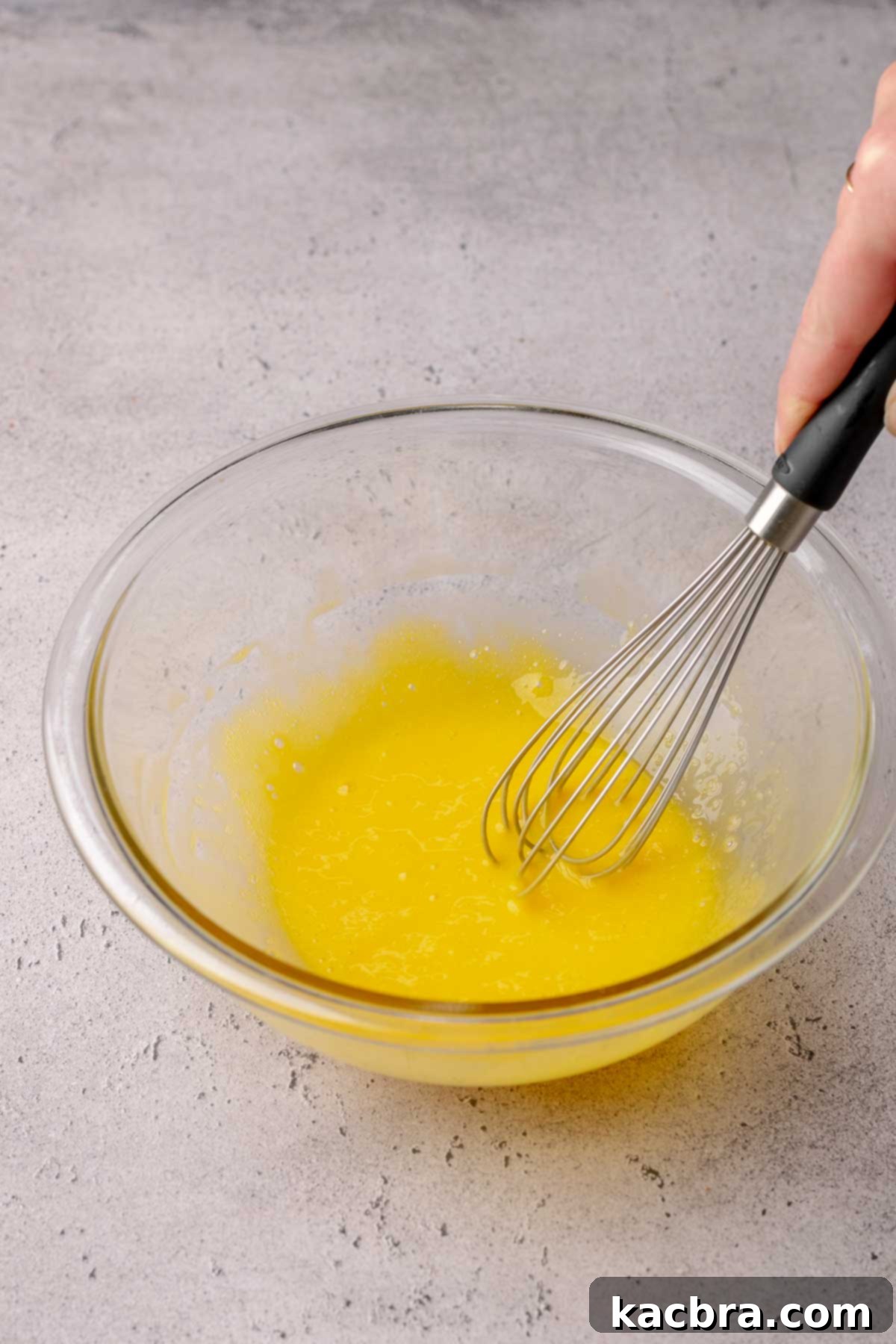
Step One: Prepare the Egg Yolks. Begin by separating your eggs, reserving the whites for another use. In a medium-sized bowl, vigorously whisk the egg yolks until they become light, fluffy, and slightly aerated. This step is crucial for achieving a smooth, well-emulsified custard base.
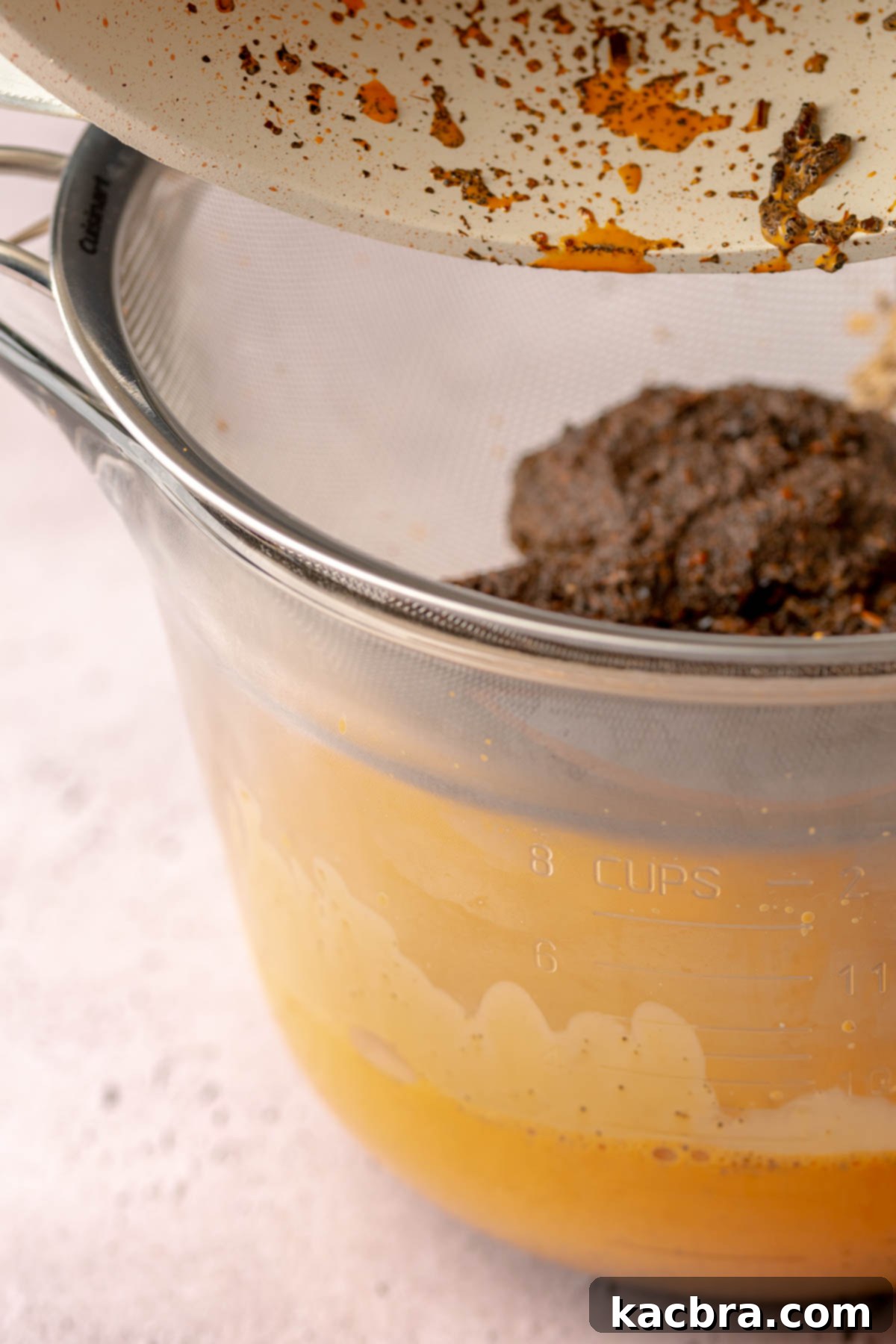
Step Two: Steep the Thai Tea. In a saucepan, combine the whole milk, heavy whipping cream, and Thai tea mix. Heat this mixture over low heat, stirring occasionally, allowing the tea to steep gently for 5-7 minutes until it’s warm and steaming, but not boiling. This slow infusion ensures maximum flavor extraction. Once steeped, carefully strain the tea-infused milk through a fine-mesh sieve into a clean bowl, pressing the tea leaves to extract as much liquid and flavor as possible. Rinse the saucepan to remove any tea specks.
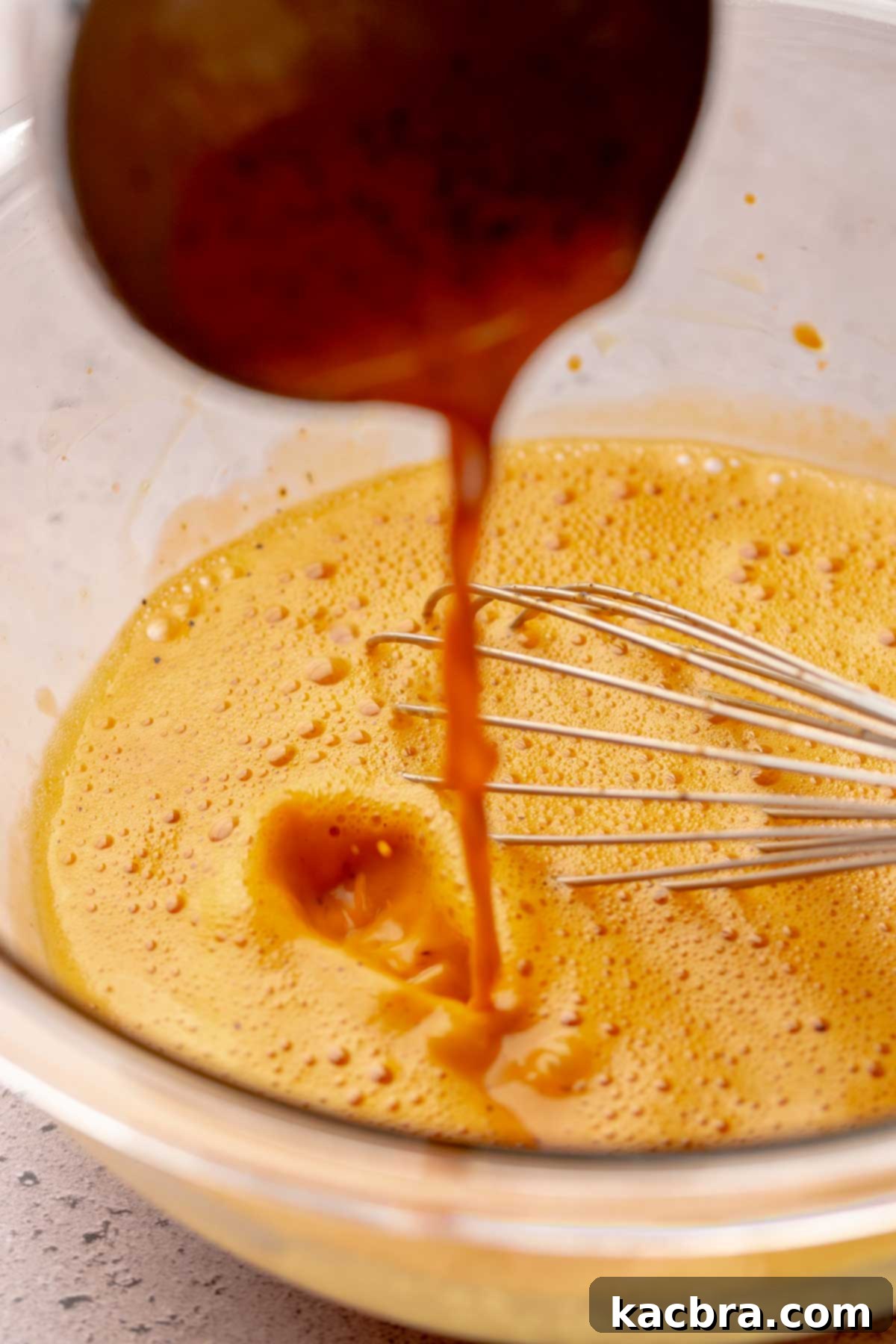
Step Three: Temper the Egg Yolks. Return the strained tea mixture to the cleaned saucepan. While gently heating over medium heat until it reaches a low simmer (sugar and salt are added here if not already), gradually add a ladleful of the hot milk tea to the whisked egg yolks. Whisk continuously as you drizzle to slowly raise the temperature of the egg yolks without scrambling them. Repeat with a second ladleful. This tempering process is vital for preventing the eggs from cooking too quickly when combined with the hot liquid.
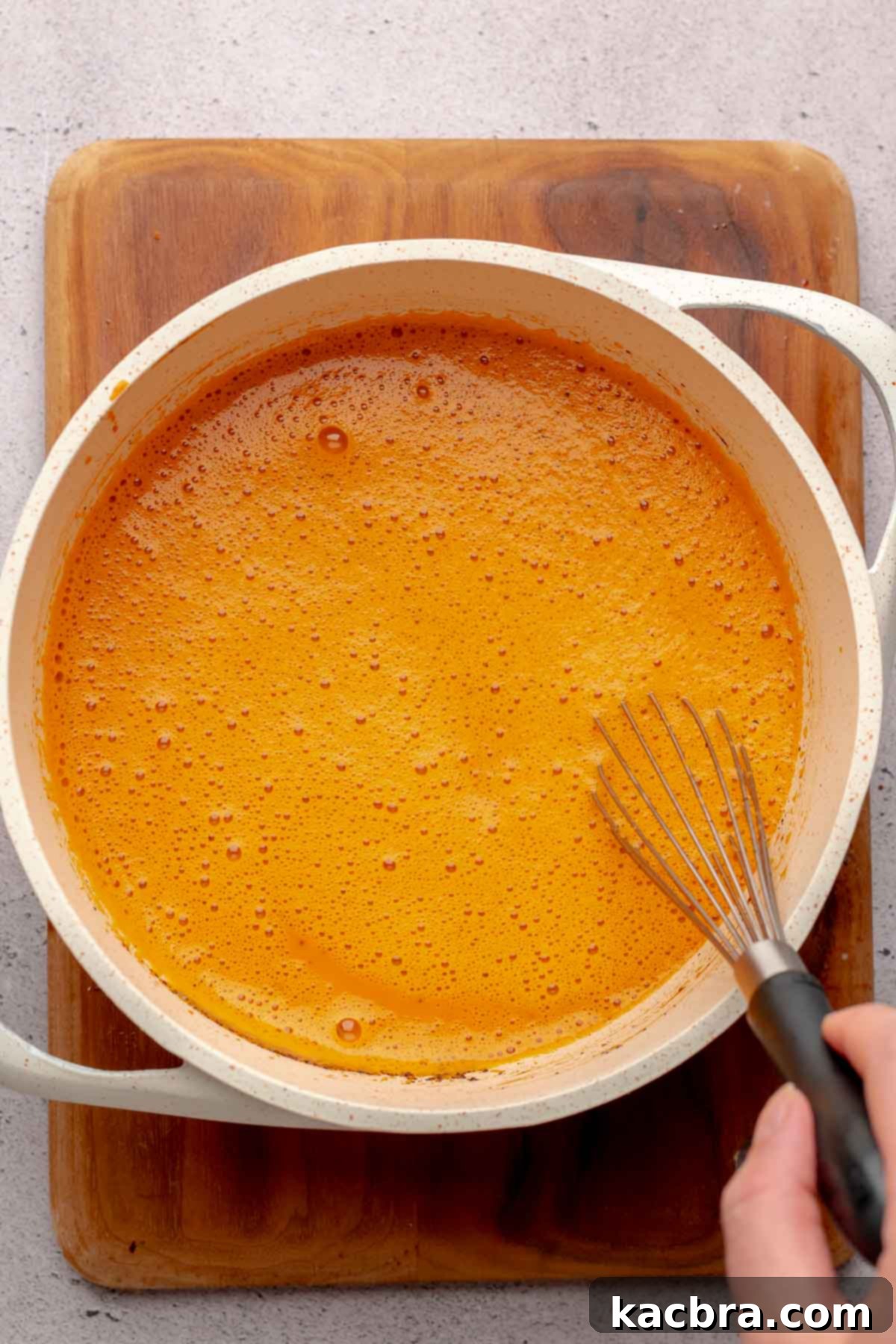
Step Four: Finish the Custard Base. Once tempered, pour the egg yolk mixture back into the saucepan with the remaining hot milk tea. Whisk gently over medium heat until the custard starts to thicken slightly and small bubbles appear around the edges, indicating a very low simmer. Be careful not to let it boil. The custard should be just thick enough to coat the back of a spoon. Remove from heat immediately.
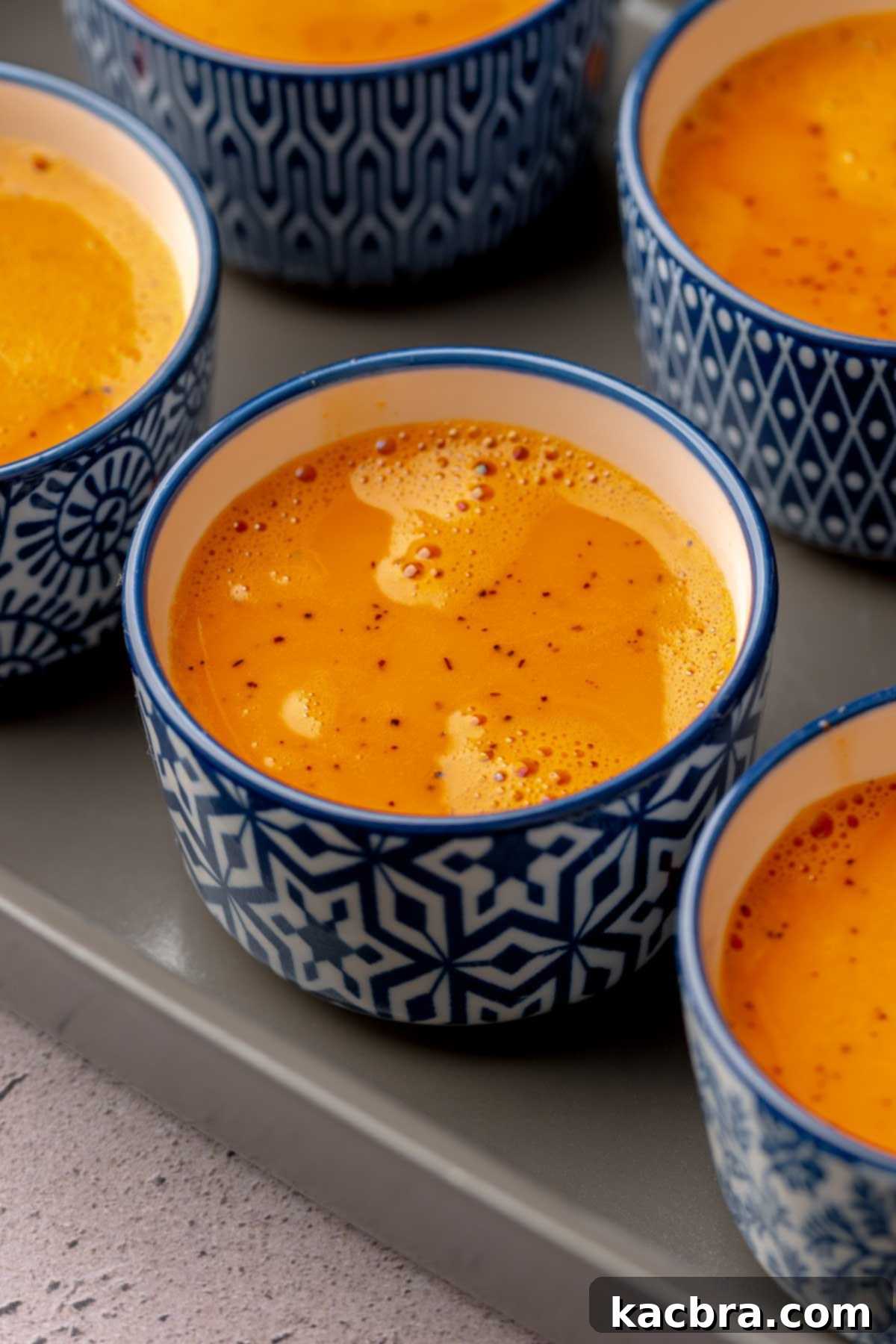
Step Five: Fill the Ramekins. Arrange your 4oz ramekins (or chosen oven-safe vessels) in a larger casserole dish. Carefully ladle the warm Thai tea custard mixture evenly into each ramekin, filling them to about 1.5 inches high. Ensure they are distributed without overfilling.
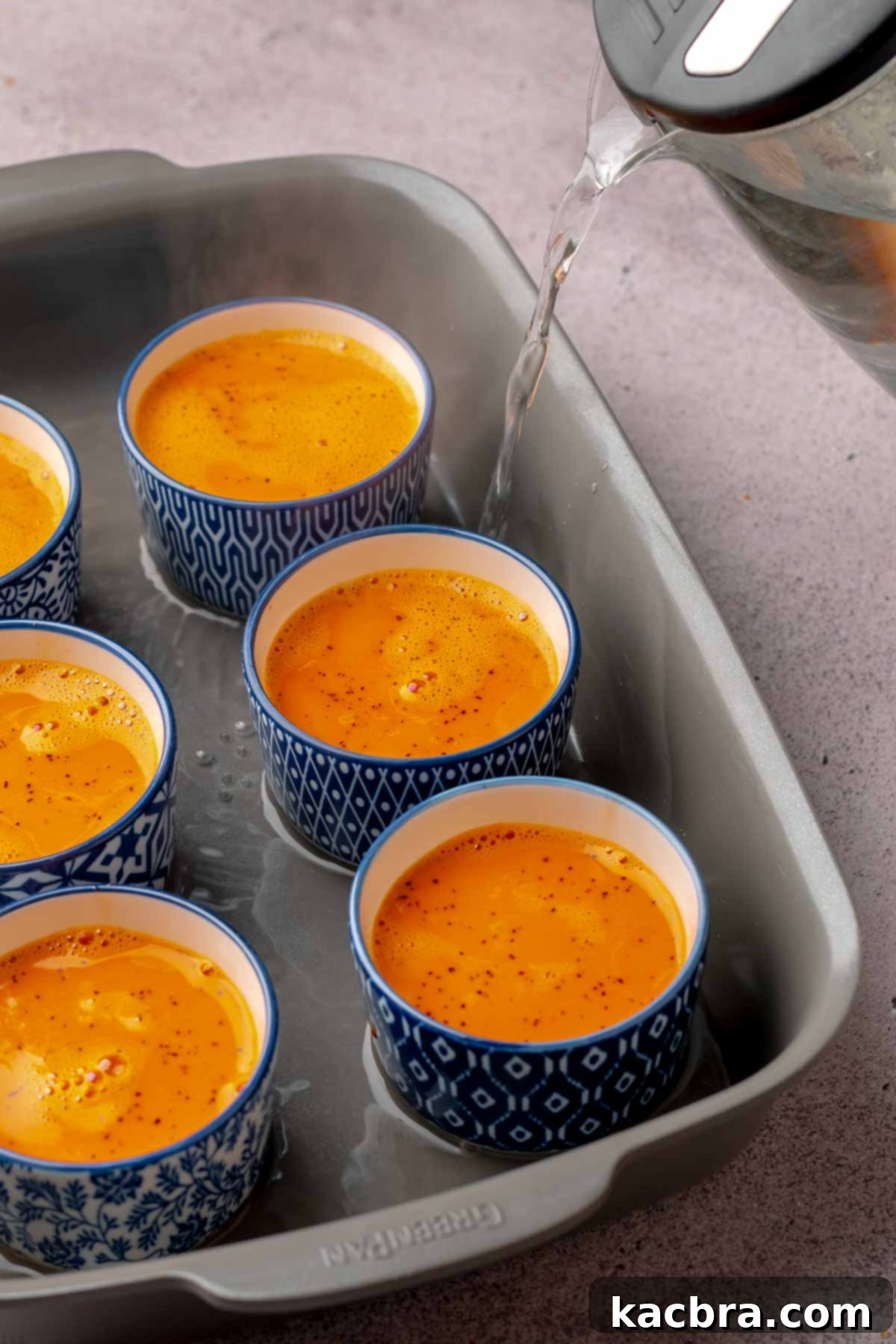
Step Six: Bake in a Water Bath. Preheat your oven to 325℉ (160°C). Once the ramekins are in the casserole dish, carefully pour boiling hot water into the casserole dish around the ramekins, filling it halfway up their sides. Be extremely cautious not to splash any water into the custard itself. This hot water bath (bain-marie) ensures even, gentle cooking, resulting in that perfectly smooth and creamy texture. Bake for 20-25 minutes, or until the edges are set and the center still has a slight jiggle. This slight movement indicates the custard will continue to set as it cools.
Hot tip! After baking, it’s crucial to remove the ramekins from the hot water bath immediately. Leaving them in the hot water will cause them to overcook, potentially leading to a curdled or eggy texture. Use a pair of tongs and a dish towel for a safe and secure transfer to a wire rack for cooling. This small step makes a big difference in the final texture of your crème brûlée.
Mastering the Caramelized Top: The Secret to a Perfect Crème Brûlée Crack
The hallmark of an exceptional crème brûlée is its perfectly caramelized, crunchy sugar crust. Achieving that satisfying “crack” requires precision and the right technique. Here’s how to create a flawless caramelized top, emphasizing our superior double-sugaring method:
First, ensure your custards are thoroughly chilled. When ready to serve, sprinkle a spoonful of granulated sugar evenly over the top of one ramekin. Gently tilt and tap the ramekin to ensure the sugar forms a thin, even layer across the entire surface. Pour off any excess sugar onto the next ramekin, repeating the process until all custards have a delicate, uniform layer of sugar. The key here is a *thin* first layer.
Next, using a kitchen torch set to a medium flame, begin caramelizing the first layer of sugar. Move the flame slowly and consistently across the sugar, melting it into a beautiful golden-brown liquid. Keep the torch moving to prevent burning. Watch as the sugar bubbles and transforms, developing a rich amber color. Once the entire surface is caramelized, allow it to cool for about a minute.
Now, for the “epic crack,” sprinkle on a *second* thin, even layer of granulated sugar. This time, apply it more delicately, perhaps with your fingers, ensuring a uniform distribution without dumping excess. Re-torch this second layer until it, too, is beautifully caramelized. The double layer of sugar creates a stronger, more robust crust, guaranteeing the most satisfying shatter and crunch when you break into it. This technique adds depth to the caramel flavor and provides a superior textural contrast to the silky custard beneath.
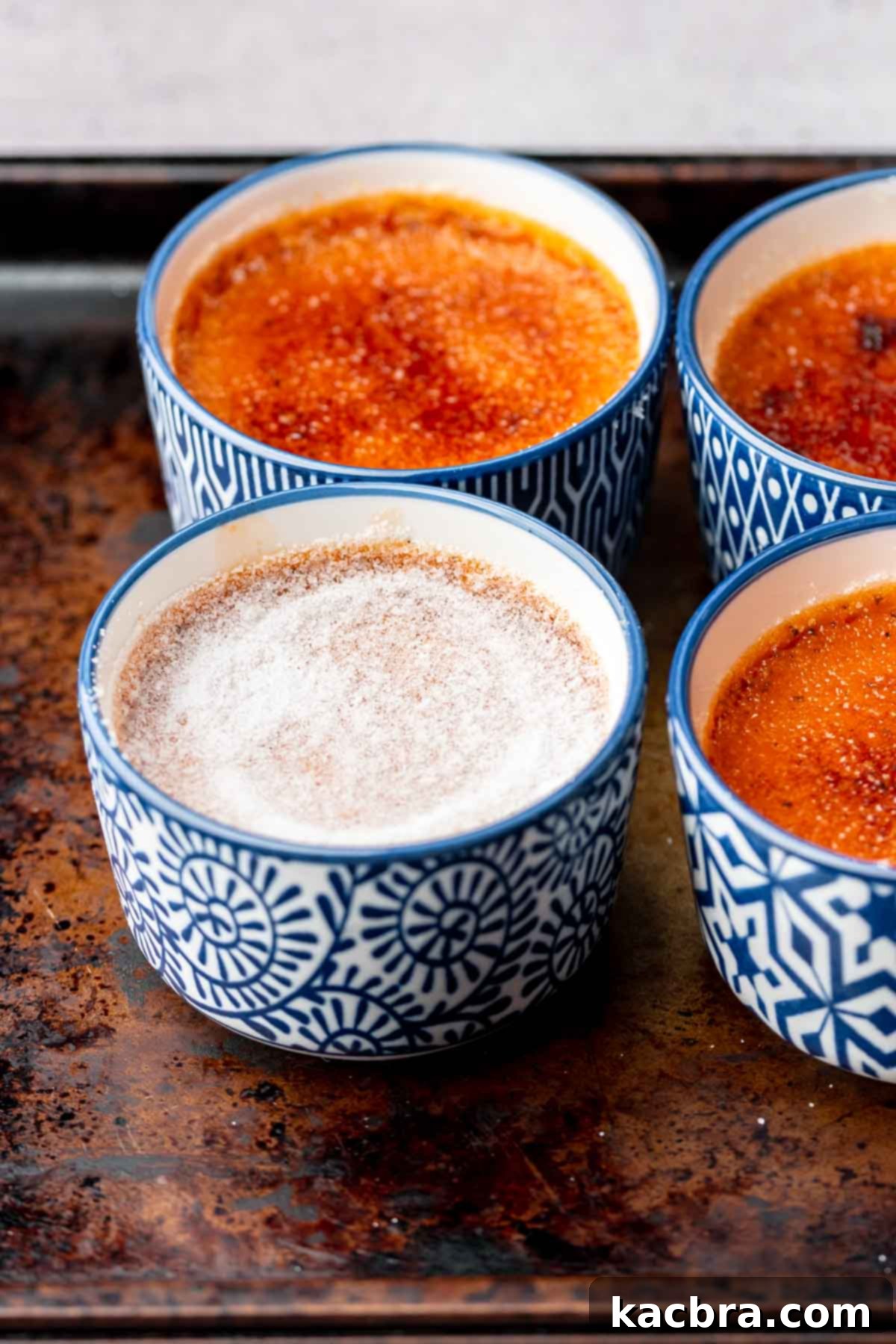
Step Seven: First Sugar Layer and Torch. Once the custard is completely cooled and chilled, evenly sprinkle a thin layer of granulated sugar over the top of each ramekin. Use your kitchen torch to carefully caramelize this first layer until it turns a rich amber color. Allow it to set for about a minute.
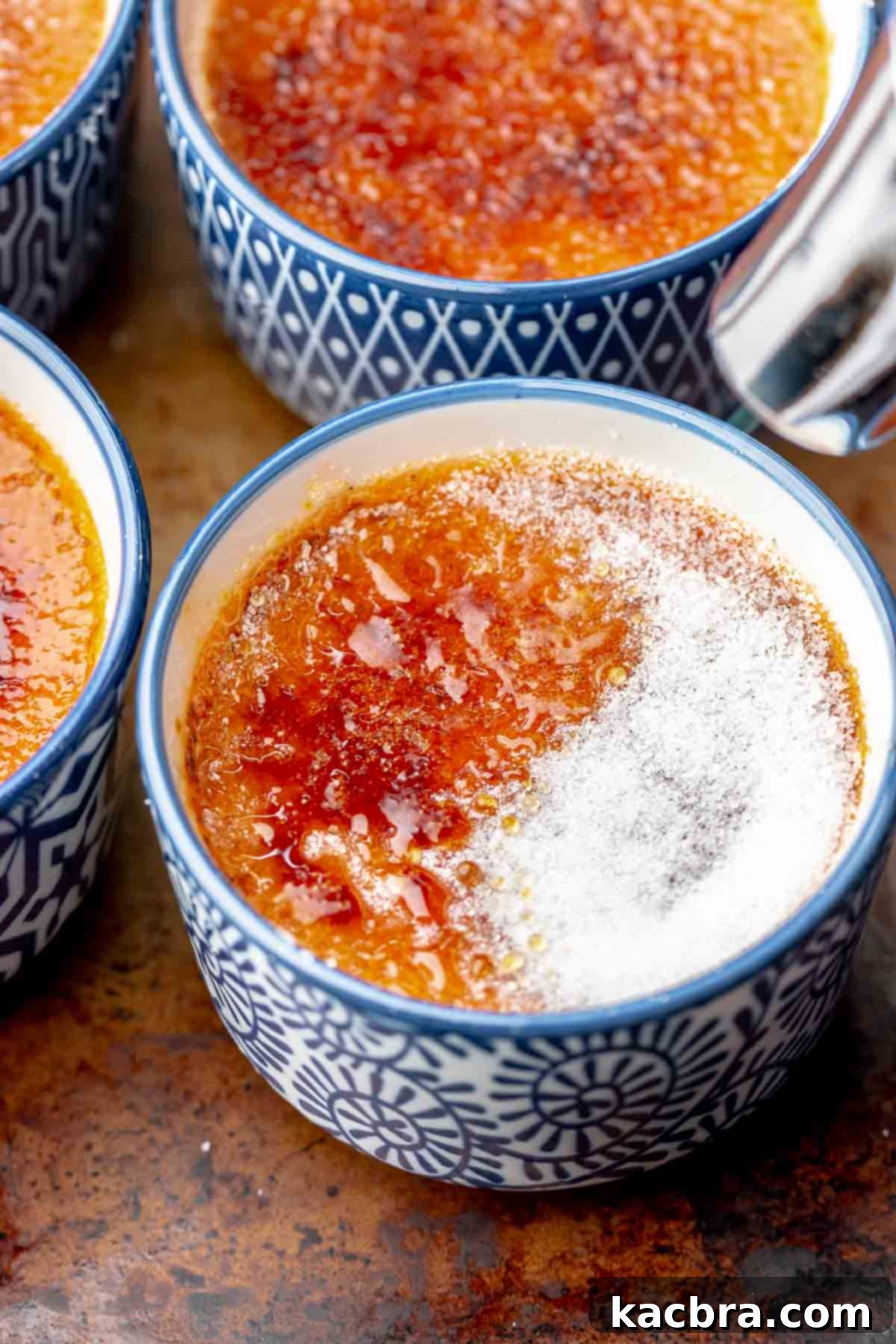
Step Eight: Second Sugar Layer and Torch. Sprinkle a second, even thinner layer of sugar over the already caramelized crust. Torch it once more until it’s perfectly golden and hardened. This double-layer method ensures an incredibly sturdy and satisfyingly crisp crack, ready to be enjoyed immediately.
Expert Tips for Crème Brûlée Perfection
Achieving crème brûlée perfection is within your reach with these expert tips:
- Safe Water Bath Setup: To prevent accidental splashing and ensure a smooth transfer, place the casserole dish with the empty ramekins on an oven rack that is partially pulled out. Then, carefully pour the boiling hot water directly into the casserole dish around the ramekins. This method minimizes the risk of spilling hot water or getting it into your delicate custard.
- Check for Doneness with Precision: While the “jiggle” test is common, for ultimate precision, use a reliable instant-read thermometer. The custard is food safe at 150℉ (65.5°C). For a very creamy, slightly thinner custard, aim for this temperature. If you prefer a slightly more set yet still incredibly creamy custard, I recommend cooking it to approximately 157℉ (69.5°C). Overcooking will result in a thicker, eggier, and potentially curdled texture, though it will still be delicious.
- The Power of a Kitchen Torch: For the most consistent, even, and professional-looking caramelized tops, a kitchen torch is indispensable. Unlike an oven broiler, a torch offers precise control over the heat, allowing you to caramelize the sugar slowly and evenly without inadvertently heating up the custard too much or scorching it.
- Chill Thoroughly: Ensure your custards are fully chilled for at least 4 hours, or preferably overnight, before attempting to caramelize the tops. A cold custard provides a stark temperature contrast with the hot caramelized sugar, which is crucial for achieving that firm, crisp shell.
How to Caramelize Crème Brûlée Tops Without a Kitchen Torch
While a kitchen torch offers the best control for caramelizing crème brûlée, it’s entirely possible to achieve a beautiful crisp top using your oven’s broiler. Here’s how to do it effectively:
First, ensure your custards are cold and ready. Set your oven broiler to its highest setting and allow it to preheat thoroughly for at least 10-15 minutes. Position an oven rack as close to the broiler heating element as safely possible, typically the top-most rack.
Evenly sugar the tops of your chilled ramekins as described in the “How to Caramelize” section, making sure the layer is thin and uniform. Place the sugared ramekins on a sturdy cookie sheet or baking tray. Carefully slide the cookie sheet onto the preheated top rack under the broiler.
This part requires your full, undivided attention: **Do not walk away from the oven.** The sugar can go from perfectly caramelized to burnt in a matter of seconds. Watch the entire process intently. The sugar will melt, bubble, and turn golden-brown. If you notice any hot spots where the sugar is browning too quickly, use oven mitts to quickly move and rotate the cookie sheet as needed to ensure even caramelization across all ramekins.
Once the sugar is a uniform amber color, immediately remove the ramekins from the oven. Allow them to cool slightly, then refrigerate them for at least 30 minutes. This chilling period allows the custard to re-set slightly after being exposed to the broiler’s heat and helps the caramelized sugar harden into a crisp, crackable shell before serving. While not as precise as a torch, this broiler method is a viable alternative.
Frequently Asked Questions About Thai Tea Crème Brûlée
The best indicator of a perfectly baked crème brûlée is when the outer edges are set and firm, but the center still has a distinct wobble or jiggle when the ramekin is gently tapped. It should not be sloshy or liquid. This slight movement is crucial because the custard will continue to set and firm up during the cooling process. If the custard puffs up significantly during baking, it’s a sign that it has been overcooked. While an overcooked custard will still be delicious, its texture will be much thicker, eggier, and may appear slightly curdled rather than smooth and creamy.
While you don’t absolutely *have* to use a kitchen torch, it is by far the easiest, most reliable, and recommended method for achieving the ideal caramelized crust. A torch provides precise control over the heat, allowing for even melting and browning of the sugar. Using the broiler function in an oven can be challenging; it can lead to uneven caramelization, or worse, heat the custard too much, potentially causing it to become watery, break, or separate beneath the crust. If you don’t have a torch, the broiler method (as described above) is an alternative, but requires careful monitoring.
Absolutely, this dessert is an excellent candidate for making ahead! In fact, it’s often best when prepared in advance, as it requires ample time to chill thoroughly for optimal texture. However, a crucial tip: only add the sugar and caramelize the tops with a torch right before you are ready to serve. If you caramelize the sugar and then store the crème brûlée in the fridge, the sugar will absorb moisture, soften, and eventually turn into a syrupy mess, losing that coveted crisp, cracking texture. Prepare the custards, chill them, and then perform the brûlée step just before your guests arrive or you plan to enjoy it.
You can be quite flexible with your baking vessels! While 4oz ramekins are ideal for individual servings and perfectly sized for this recipe (holding about ½ cup of liquid and filling to approximately 1.5 inches high), you can use pretty much any oven-safe container. This includes other sized ramekins, a larger baking dish (like a shallow gratin dish), a bread loaf pan, or even oven-safe coffee cups or mugs. Just remember that the bake time will vary significantly based on the depth and size of your chosen vessel. Deeper dishes will require a longer baking time, while more shallow containers will cook faster. Always check for the characteristic ‘jiggle’ to determine doneness.
Curdled custard usually happens due to overcooking or adding hot liquid to cold eggs too quickly (improper tempering). If your custard curdles slightly, don’t despair! You can try straining it through a fine-mesh sieve again, or even a cheesecloth, to remove any small clumps before baking. While it might not be perfectly smooth, it will still taste delicious. To prevent this, ensure gentle heat during cooking and gradual tempering of the egg yolks.
It is highly recommended to use whole milk and heavy whipping cream (at least 36% milk fat) for this recipe. The high fat content is crucial for achieving the rich, creamy, and luxurious texture that defines an authentic crème brûlée. Low-fat alternatives can result in a thinner, less satisfying custard that may not set properly or have the desired mouthfeel. For the best results, stick to the full-fat dairy specified.
Storage Instructions for Your Thai Tea Crème Brûlée
Proper storage is key to enjoying your Thai Tea Crème Brûlée at its best, especially when planning ahead.
Store the baked Thai milk tea custard, *uncovered*, in the refrigerator for up to 5 days. It’s important to leave them uncovered to prevent condensation from forming on the surface, which could affect the future caramelization process. When you are ready to serve, simply take out the chilled custards, add the granulated sugar, and torch the tops for that signature crisp crust.
I strongly advise against storing crème brûlées that have already been caramelized. After about a day in the fridge, the moisture in the refrigerator air will cause the caramelized sugar to soften and turn into a syrupy layer, completely losing that delightful cracking texture. For the ultimate experience, always brûlée just before serving.
More Individual Dessert Recipes You’ll Love
If you enjoy elegant, perfectly portioned desserts, you’re in for a treat! Explore these other delightful individual dessert recipes that are perfect for entertaining or simply indulging:
- Mini Biscoff Cheesecake
- Individual Tiramisu Cups
- Dark Chocolate Pots de Creme
- Mini Strawberry Cheesecake Cups
Important Notes When Cooking with The Cozy Plum
At The Cozy Plum, we aim for consistency and accuracy in all our recipes. Please keep the following important notes in mind:
- Salt Usage: All recipes on The Cozy Plum are developed and tested using Diamond Crystal kosher salt, which is known for being the least salty variety of kosher salt. If you are using Morton’s kosher salt or sea salt, you will need to reduce the amount of salt in the recipe by half, as these varieties are approximately twice as salty. Please refrain from using standard table salt, as its fine grain and additives can significantly alter the flavor and sodium level.
- Measurements: For precision, especially in baking, we encourage using the metric toggle on the recipe card to switch between U.S. Customary (cups) and Metric measurements. Baking by weight using a digital kitchen scale will always yield the most accurate and consistent results, making your culinary endeavors more successful.
- Recipe Scaling: You can easily scale this recipe to yield more or fewer servings by utilizing the ‘1X’, ‘2X’, and ‘3X’ buttons found on the recipe card. Please note that while the ingredient quantities will adjust automatically, the baking times for larger or smaller batches will not automatically change and may require manual adjustment.
- Pan Size Conversion: Should you wish to bake this recipe in a different sized pan than specified, a helpful pan size converter tool is available to guide you in making the necessary adjustments to ingredient quantities and baking times.
Did you make this delightful Thai Tea Crème Brûlée recipe? We’d love to see your creations and hear your thoughts! Share your photos with us by tagging @thecozyplum on Instagram & Facebook, and please remember to leave a star rating ⭐️ below to help other home bakers!
📖 Recipe Card
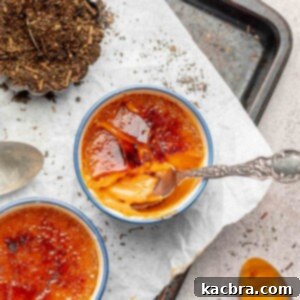
Thai Tea Crème Brûlée
Callan Wenner
Pin Recipe
Equipment
- Six, 4oz ramekins
- 13×9” casserole dish
- Fine mesh strainer
- Cheesecloth (optional)
- Large measuring cup or bowl
- Kitchen torch
Ingredients
- ½ cup whole milk
- 2 cups heavy whipping cream
- ⅓ cup Thai tea mix
- 4 large egg yolks room temperature
- ½ cup granulated sugar
- Pinch kosher salt
- ⅓ cup granulated sugar for brûlée
Instructions
- Add the milk, heavy cream, and Thai tea mix to a saucepan, stir, and steep the tea on low for about 5-7 minutes until warm and steaming. Continue stirring occasionally.½ cup whole milk, 2 cups heavy whipping cream, ⅓ cup Thai tea mix
- Separate 4 eggs, reserving the whites for another time.4 large egg yolks
- Preheat the oven to 325℉ and add the empty ramekins to a 13×9” casserole dish. Set aside.
- Strain the cream through a fine mesh strainer into a bowl to remove the large pieces of tea, then rinse out the pot to remove all pieces.
- Note: some specks of tea will remain, this is ok.
- Transfer the mixture to the cleaned pot and add the sugar and salt. Heat over medium heat, stirring occasionally, until the sugar dissolves and it comes to a very low simmer.½ cup granulated sugar, Pinch kosher salt
- During this time, vigorously whisk the egg yolks in a medium-sized bowl for about 1 minute. The mixture will become a bit lighter in color and slightly airy.
- Once the cream comes to a simmer, drizzle in one ladle full of cream to the egg mixture while whisking. Do the same with a second ladle, then transfer the egg mixture into the pot with the cream. Whisk immediately until combined. Ladle the mixture evenly between the ramekins.
- Boil a small pot of water and pour it into the pan in between the ramekins (don’t get any into the ramekins). Place the pan onto the center rack of the oven (with the rack slightly pulled out), and fill the pan halfway with the hot water.
- Bake for 20-25 minutes. The custard will still feel rather sloshy and jiggly, but will be slightly set on the edges.
- Remove from the oven, and very carefully transfer the ramekins to a wire rack to cool using tongs and a dish towel. Keeping them in the water will cause the custard to overcook. Cool for 30 minutes, then transfer to the fridge for at least 4 hours, or overnight (uncovered).
- When ready to serve, add a spoonful of sugar to the top of one ramekin, rotate the ramekin to spread evenly, then dump the excess sugar to the next ramekin and repeat.⅓ cup granulated sugar
- Use a kitchen torch to brûlée the sugar until caramelized. Then, sprinkle on a thin layer of sugar with your fingers and brûlée again. This double method creates the best crust and crack.
- Serve immediately.
Video
Notes
To brûlée the sugar under a broiler, set the broiler to high and allow it to get very hot. Move an oven rack as close to the broiler as possible. Place the sugared ramekins on a cookie sheet, then broil until the sugar becomes caramelized. Watch the entire process and don’t walk away. Move and rotate ramekins, as needed, to catch the hot spots. Refrigerate for 30 minutes to allow the custard to re-set before serving.
The provided nutritional information is an estimate per serving. Accuracy is not guaranteed.