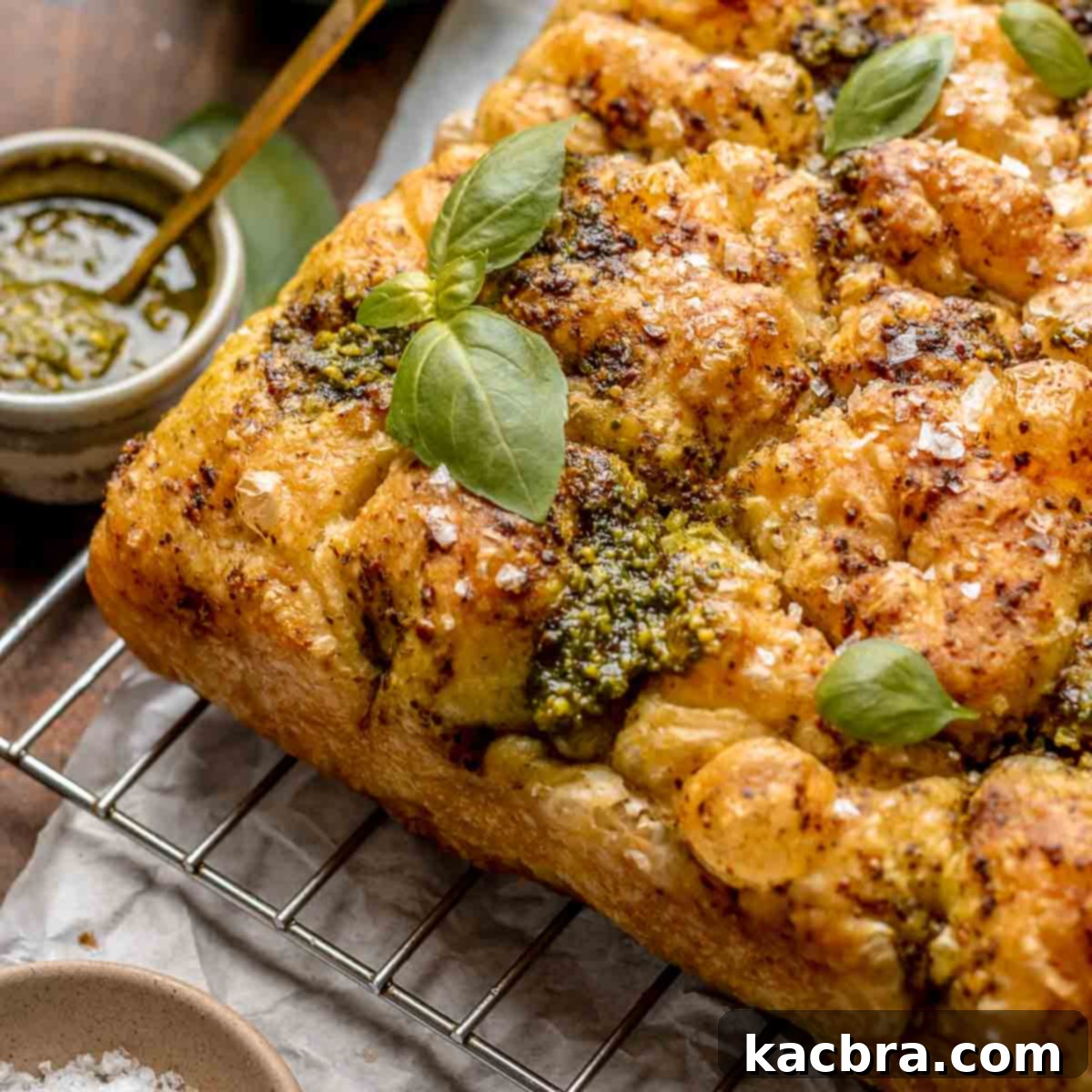
Pesto Focaccia Bread: Your Ultimate Guide to an Easy No-Knead Recipe
Discover the joy of baking with our incredibly easy and satisfying no-knead pesto focaccia bread. This recipe delivers a wonderfully soft and airy bread, generously topped with vibrant basil pesto and a scattering of flaky sea salt. Designed for a slow rise, it allows for three flexible rising options, ensuring a super soft interior with characteristic large air bubbles and an exterior crust that crisps to perfection in the oven.
Whether you’re looking for a delightful standalone snack, a perfect accompaniment to a rich bowl of pasta or a refreshing tomato caprese salad, or a versatile base for an amazing sandwich, this pesto focaccia is your answer. Its simple preparation method makes it approachable for novice bakers, while its exceptional flavor and texture will impress even the most seasoned bread enthusiasts.
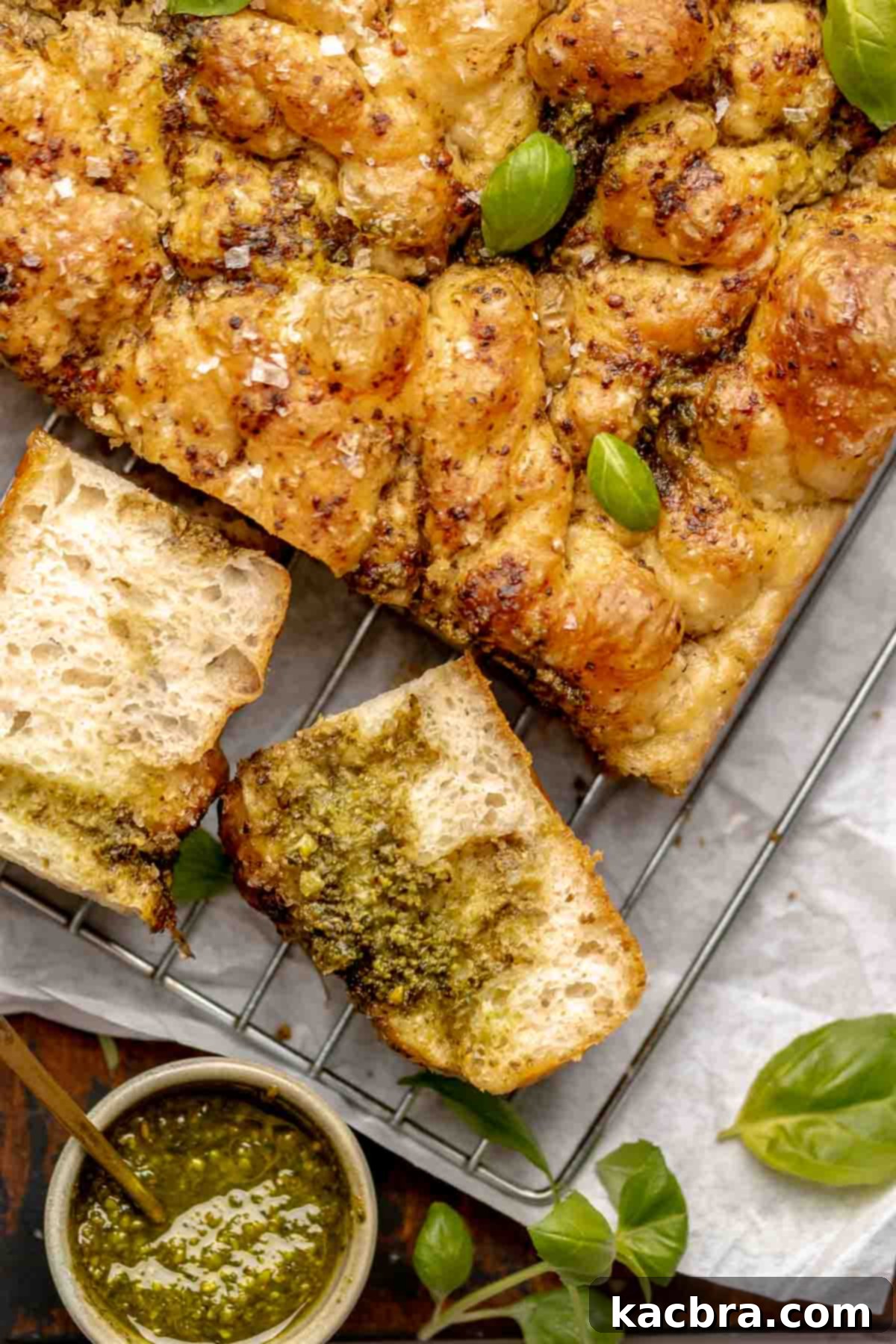
Baking bread doesn’t have to be an intimidating task. This pesto focaccia recipe simplifies the process with a no-knead technique and adaptable rising schedules, including a convenient overnight option. This flexibility means you can easily fit homemade bread into your busy life, regardless of your experience level. Choose from letting the dough rise overnight in the fridge for enhanced flavor, a combination of fridge and room temperature, or a quicker all-room-temperature rise. While a longer cold fermentation undoubtedly develops a deeper, more complex flavor profile, all methods promise a luscious, fluffy focaccia that’s truly a delight to eat.
Why You’ll Adore This Irresistible Pesto Focaccia Recipe
This pesto focaccia isn’t just a recipe; it’s an experience waiting to happen in your kitchen. Here’s why this bread will quickly become a cherished favorite:
Unmatched Versatility for Every Occasion
One of the greatest appeals of this pesto focaccia bread is its incredible versatility. Bake it on the thicker side, and you’ve got the perfect foundation for gourmet sandwiches. Imagine slicing it horizontally and filling it with roast turkey, fresh mozzarella, and a drizzle of balsamic glaze for a truly elevated meal. Beyond sandwiches, this focaccia can transform into a quick and delicious pan pizza crust – simply pre-bake it for 15 minutes, add your favorite toppings, and finish baking. Or, keep it classic and serve it as a luxurious bread alongside dinner, perfect for dipping in olive oil or sopping up sauces. Its robust flavor and satisfying texture make it suitable for appetizers, main courses, and everything in between.
The Aromatic Magic of Pesto
The star of this focaccia is undoubtedly the pesto. Whether you opt for a vibrant homemade basil pesto, bursting with fresh herbs, pine nuts, Parmesan, and garlic, or a high-quality store-bought variety for convenience, the result is an explosion of herbaceous flavor and richness. Pesto infuses the bread with an incredible depth that complements its airy texture beautifully. And if basil pesto isn’t your preferred choice, don’t worry! Focaccia is wonderfully adaptable, allowing for a myriad of other delicious toppings.
A Symphony of Textures: Fluffy, Chewy, and Crispy
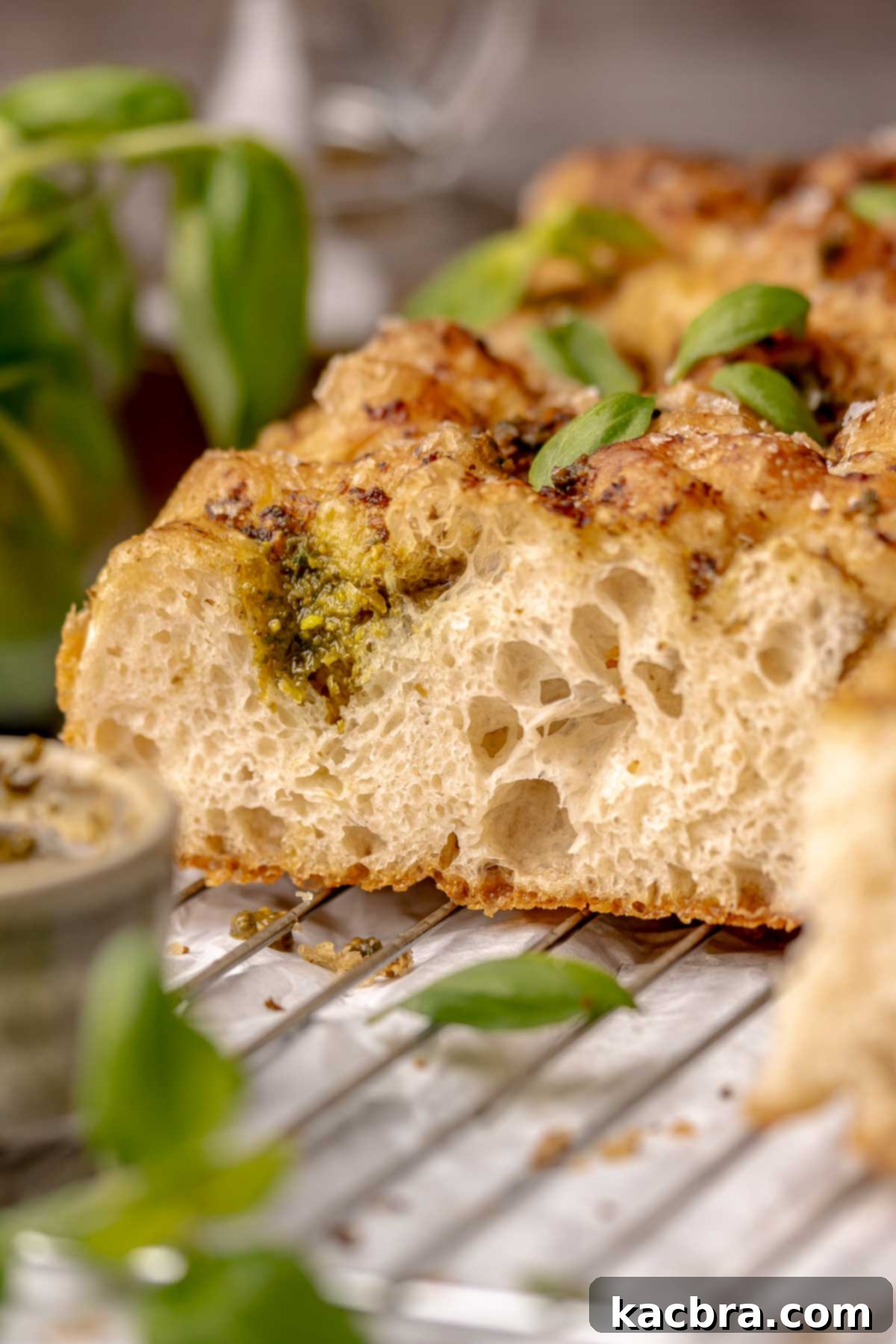
Focaccia is celebrated for its unique textural qualities, and this recipe absolutely nails it. Each bite offers a harmonious balance of fluffiness from the well-developed air pockets, a satisfying chewiness that gives the bread character, and an irresistible crispness from the olive oil-coated exterior. The generous coating of olive oil on the dough ensures that the edges and the signature bubbles on top become beautifully golden and ultra-crisp in the oven, creating a delightful contrast with the soft, warm interior. It’s a sensory experience that keeps you coming back for more.
Flexible Rising Options to Suit Any Schedule
Life is busy, and traditional bread-making can sometimes feel daunting due to strict timing. The true beauty of this recipe lies in its multiple rising options. You can choose an extended cold fermentation in the refrigerator, which can last up to three days and yields the most flavorful bread. Alternatively, a combination of fridge and room temperature rising, or even a quicker all-room-temperature rise, still produces fantastic results. This adaptability ensures that you can bake this incredible bread whenever it best fits your schedule, making homemade focaccia accessible and stress-free.
Essential Ingredients for Your Pesto Focaccia
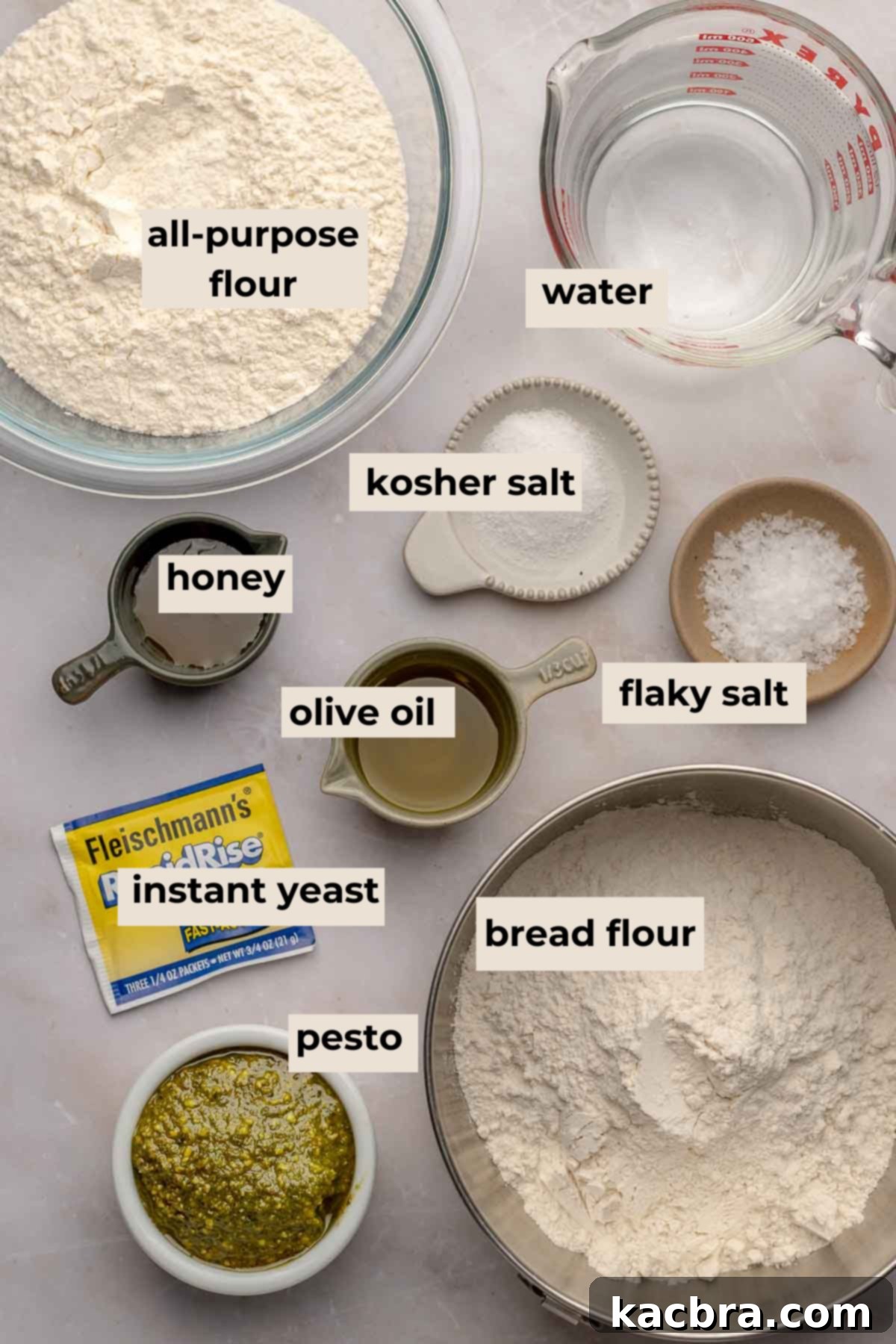
Key Ingredients Explained
Crafting the perfect pesto focaccia begins with understanding the role each ingredient plays. Here’s a breakdown of what you’ll need and why:
- Bread Flour: This type of flour is higher in protein compared to all-purpose flour. The higher protein content contributes to a stronger gluten network, which is crucial for giving the focaccia its desirable chewy texture and allowing those signature large air bubbles to form beautifully.
- All-Purpose Flour: Balancing the bread flour, all-purpose flour helps create a tender crumb while still maintaining structure. If bread flour isn’t available, you can use solely all-purpose flour, though the focaccia might be slightly less chewy.
- Instant Yeast: The convenience of instant yeast is unmatched for this no-knead recipe. Unlike active dry yeast, it doesn’t require prior activation, meaning you can simply mix all dry and wet ingredients together at once, saving you time and an extra step.
- Honey: Beyond adding a subtle sweetness, honey serves a vital role as food for the yeast, encouraging its activity and promoting a robust rise. Two teaspoons of granulated sugar can be used as a direct substitute if honey is unavailable.
- Extra Virgin Olive Oil: A cornerstone of any good focaccia, olive oil is indispensable. It’s incorporated into the dough for flavor and tenderness, used generously to coat the dough and pan to prevent sticking, and drizzled over the top before baking to achieve that irresistible crispy crust. Opt for a high-quality extra virgin olive oil with a pleasant, not-too-bold flavor, as it significantly impacts the final taste. Brands like California Ranch are excellent choices.
- Pesto: The star flavoring! Whether you choose the fresh, herbaceous punch of homemade basil pesto or the convenience of a good quality store-bought version, it adds incredible depth and richness to this bread.
- Salt: Kosher salt is used within the dough to enhance flavor and regulate yeast activity. Flaky sea salt is sprinkled on top just before baking, providing a delightful textural contrast and a burst of savory seasoning.
For precise measurements and quantities, please refer to the comprehensive recipe card below.
Creative Substitutions and Flavorful Variations
One of the most enjoyable aspects of baking focaccia is how easily it can be customized. Here are some ideas to adapt this recipe to your preferences:
- Pesto Choice: Feel free to experiment with different types of pesto. While basil pesto is traditional, sun-dried tomato pesto, kale pesto, or even a nut-free pesto can offer exciting new flavor profiles. Alternatively, make your own from scratch for ultimate freshness.
- Yeast Alternatives: If you only have active dry yeast, it works perfectly fine. Just remember to activate it first by dissolving it in the warm water and honey for about 5 minutes until foamy, then proceed with the recipe.
- Adjusting Batch Size: This recipe is designed for a 9×13-inch pan. If you’re baking for a smaller crowd or want individual portions, you can easily halve the recipe and bake it in a 9×9-inch square pan. Adjust baking time accordingly.
- Plain Focaccia: For a more classic and simple focaccia, omit the pesto entirely and simply top the dough with a generous sprinkle of flaky sea salt and a drizzle of extra virgin olive oil before baking. It’s equally delicious!
- Sweetener Swap: Honey can be swapped for 2 teaspoons of granulated sugar without significantly altering the outcome. Both act as fuel for the yeast.
- Flour Flexibility: While a blend of bread flour and all-purpose flour provides the best texture, if you only have all-purpose flour on hand, you can use it for the entire recipe. The focaccia will still be delicious, just perhaps a touch less chewy.
Endless Focaccia Topping Ideas Beyond Pesto
The true canvas of focaccia lies in its toppings. While pesto offers a fantastic starting point, the possibilities are virtually endless, allowing you to tailor this versatile bread to any meal or craving. Traditional toppings are always a hit: fresh rosemary sprigs, halved cherry tomatoes bursting with sweetness, briny olives (Kalamata or Castelvetrano work beautifully), or thinly sliced caramelized onions that melt into the dough. These classic additions enhance the focaccia’s inherent savory qualities.
For a more substantial and meal-like focaccia, consider adding mini mozzarella balls (bocconcini) that get delightfully melty, or shredded cooked chicken for a hearty protein boost. Don’t be afraid to venture into new flavor territories; a sprinkle of everything bagel seasoning can provide an unexpected savory crunch, while finely chopped sun-dried tomatoes offer a concentrated burst of umami. Think about your favorite flavor combinations – perhaps a blend of feta and oregano, or even a spicy kick with red pepper flakes and thinly sliced jalapeños. Get creative and have fun experimenting with different herbs, cheeses, vegetables, and spices to make your focaccia truly your own!
Once your dough has completed its final rise in the pan, artfully arrange your chosen toppings, then use your fingers to gently dimple the dough, pushing the toppings into the surface. This creates those iconic focaccia craters and helps the toppings adhere before baking according to the recipe instructions.
Understanding Yeast: Instant vs. Active Dry
This recipe is specifically designed to use instant yeast, which is incredibly convenient as it requires no prior activation. You can simply add it directly to your dry ingredients along with the rest of your dough components, making the mixing process quick and seamless.
However, if your pantry only contains active dry yeast, rest assured it can be used with a slight modification. To ensure proper leavening, active dry yeast must first be “activated” or “proofed.” Reduce the amount of yeast to 2 teaspoons (as active dry yeast is often more potent by volume than instant). In a small bowl, combine this yeast with the warm water (around 105-115°F or 40-46°C, ensuring it’s not too hot to kill the yeast) and honey specified in the recipe. Stir gently and let the mixture sit for about 5 minutes. You’ll know it’s activated when the yeast rises to the top, forming a foamy, bubbly layer across the surface. Once proofed, add this liquid mixture to your flour, salt, and olive oil, and continue following the recipe as written. This simple extra step guarantees your focaccia will rise beautifully.
Step-by-Step: Crafting Your Perfect Pesto Focaccia
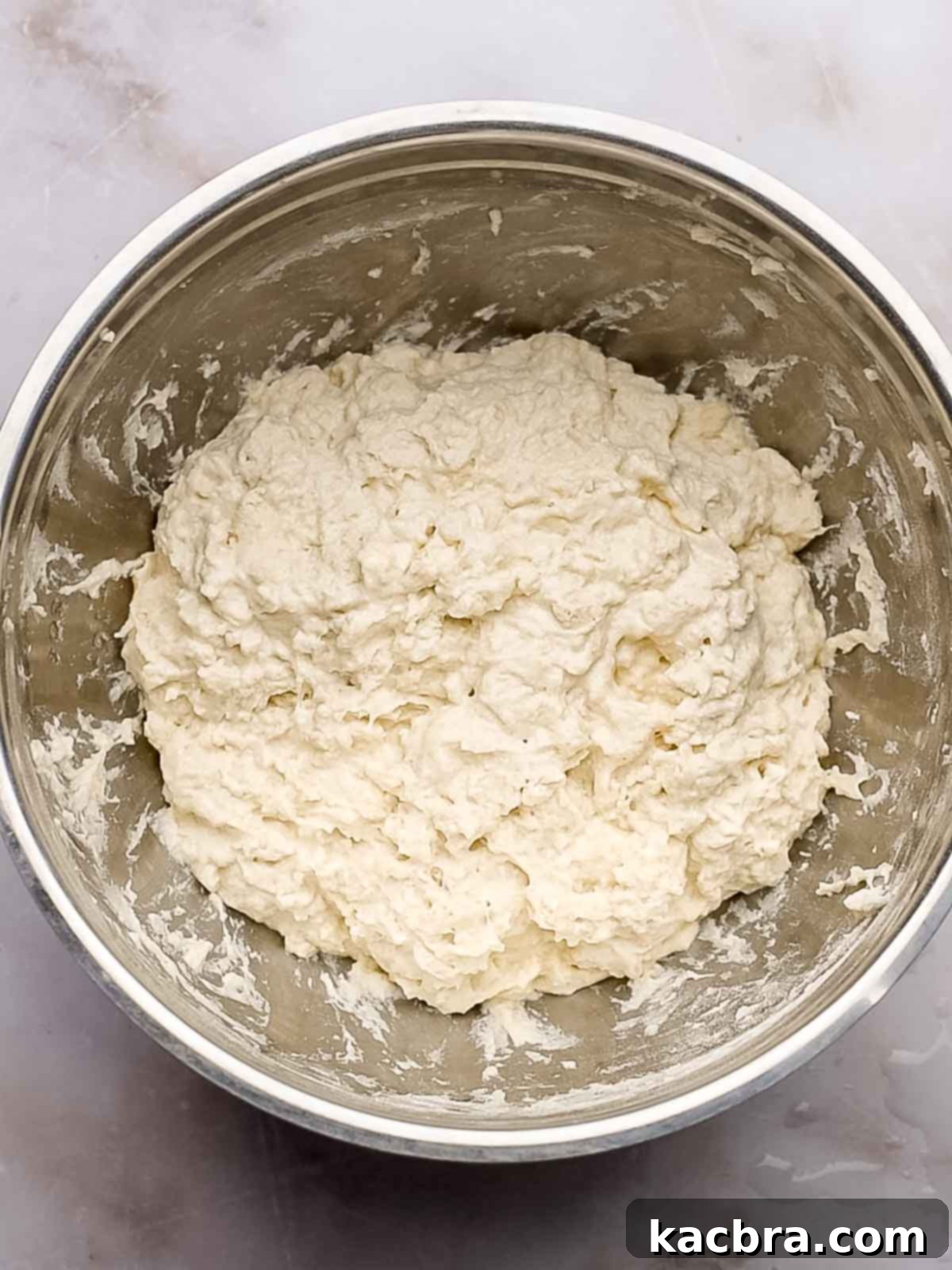
One: Initial Mix. In a very large mixing bowl, combine the bread flour, all-purpose flour, kosher salt, and instant yeast. Give them a quick whisk to ensure they are evenly distributed. Then, in a separate small bowl or measuring cup, gently stir together the honey, extra virgin olive oil, and lukewarm water. Pour the wet ingredients into the dry. Using a sturdy dough whisk or a wooden spoon, mix everything until all the flour is fully moistened and no dry pockets remain. You’ll notice the dough will be quite shaggy and sticky – this is exactly what we want for a high-hydration focaccia.

Two: Hydration Rest. Once mixed, cover the bowl tightly with a clean dish towel. Allow the dough to rest undisturbed for 5 minutes. This short rest period is crucial; it gives the flour time to fully hydrate and the gluten to begin developing naturally, even without kneading. You’ll notice the dough becoming slightly less shaggy and more cohesive after this brief pause.
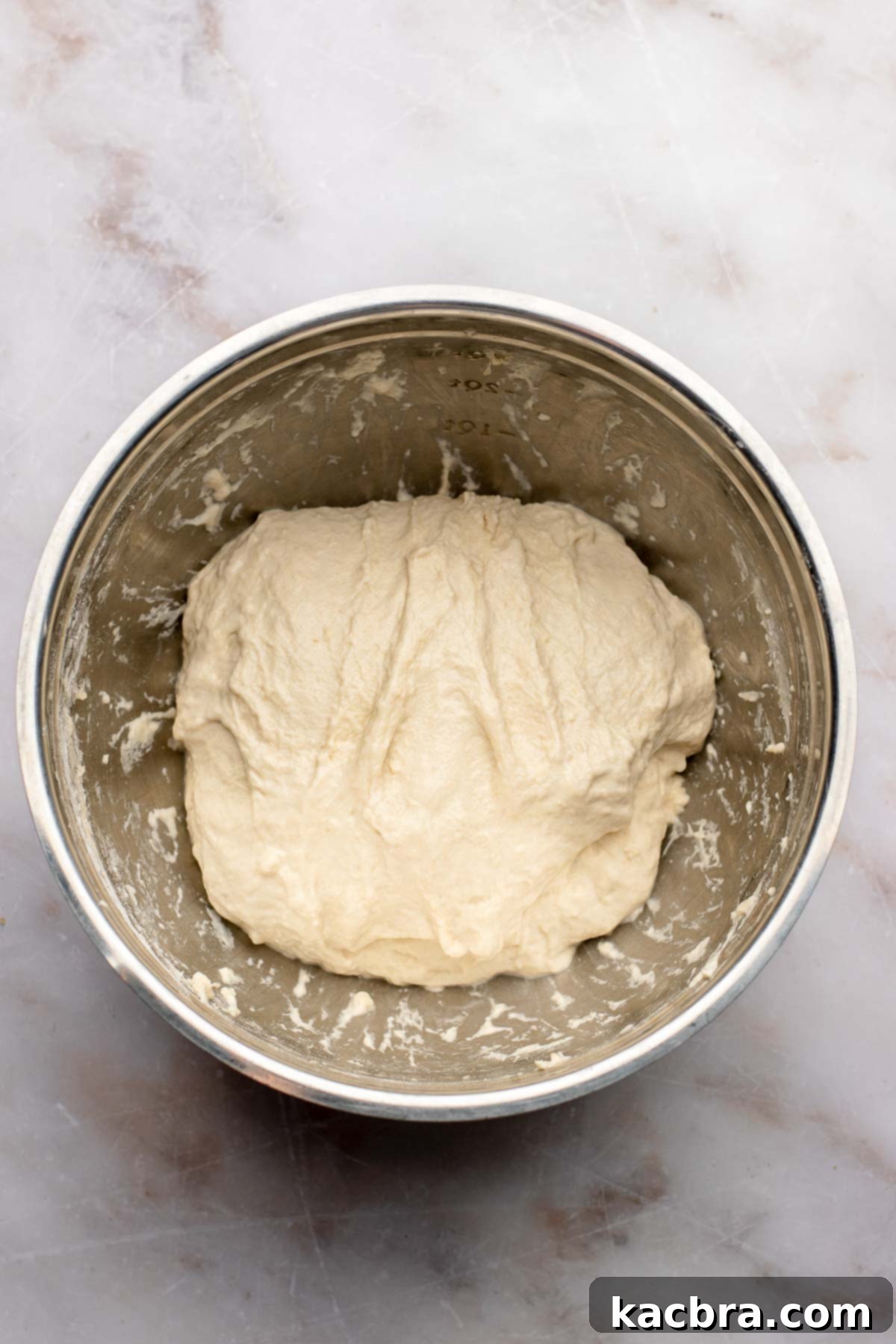
Three: Post-Rest Dough. After the initial 5-minute rest, uncover the bowl. You’ll observe that the dough has relaxed and appears slightly smoother on the surface compared to its initial shaggy state. This indicates that the water has been absorbed by the flour, and the gluten strands are beginning to align, preparing for the stretch-and-fold process.
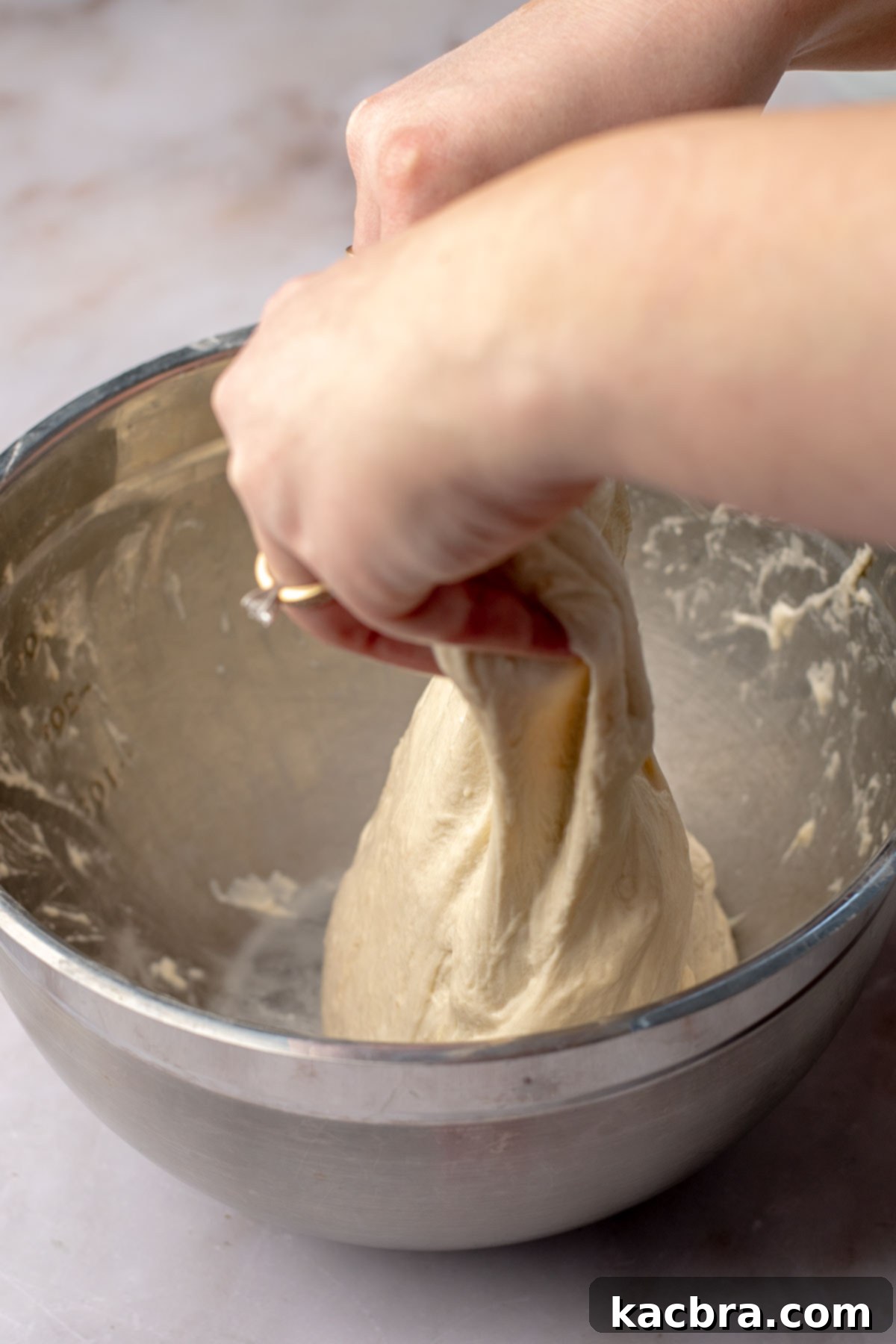
Four: First Stretch and Fold. Lightly wet your hands and fingers to prevent sticking. Reach underneath one side of the dough, gently pull it upwards, stretching it as far as it will go without tearing. As you lift, jiggle it slightly to release it from the bowl, then fold that portion of the dough over onto itself towards the center of the bowl. This action helps to build strength and structure in the dough.
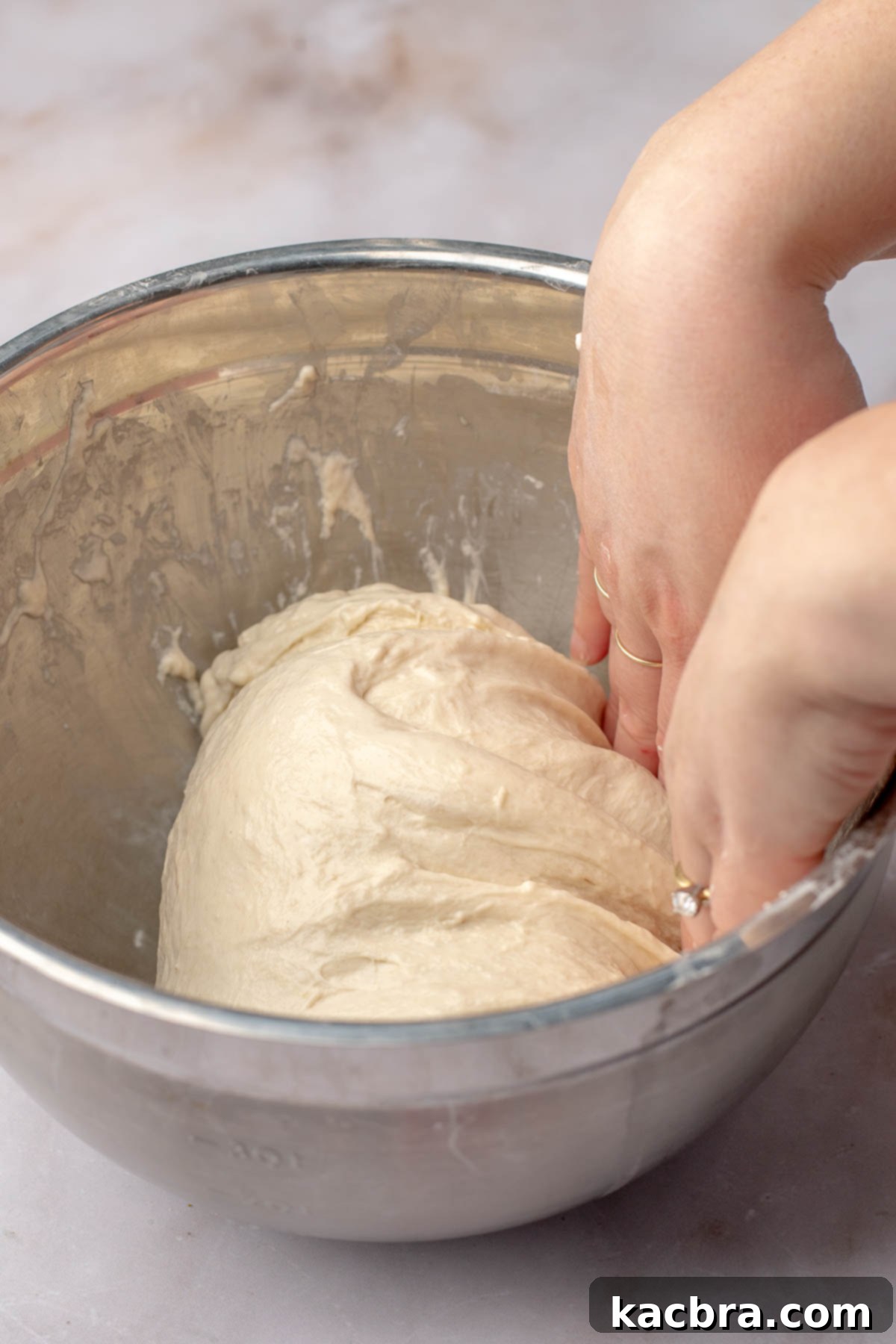
Five: Complete the Folds. After folding the first section, give the bowl a quarter turn. Repeat the stretch-and-fold process: wet your fingers, pull a new section of dough upwards, and fold it over. Perform this action a total of four times, rotating the bowl each time, to ensure the dough is strengthened from all sides. Once all four folds are complete, cover the bowl again with the dish towel and let it rest for another 5 minutes.

Six: Repeat for Strength. After the 5-minute rest from the first series of folds, repeat the entire sequence of four stretch-and-folds. Cover the bowl once more and allow it to rest for another 5 minutes. Finally, perform one last series of four stretch-and-folds. In total, you will complete three series of folds, each followed by a 5-minute rest. This repetitive, gentle handling develops the gluten structure without intensive kneading, resulting in a strong yet extensible dough.
Hot Tip! You’ll notice a remarkable transformation in the dough with each stretch-and-fold series. It will become progressively more elastic, smoother, and much more supple, indicating excellent gluten development. This is the secret to a beautifully textured focaccia.
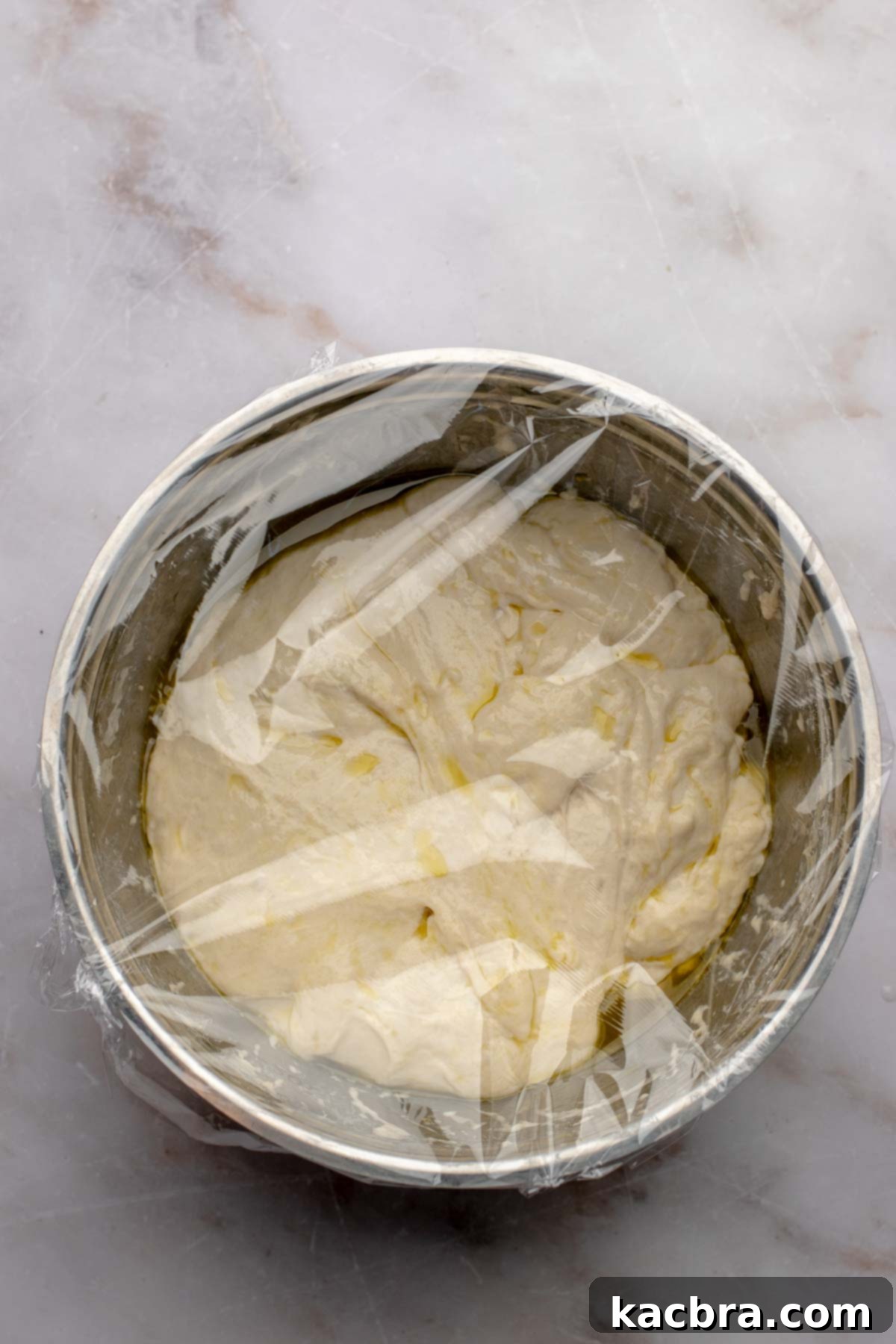
Seven: Cold Fermentation. After the final series of stretch-and-folds, lightly drizzle the dough with extra virgin olive oil. Gently turn the dough in the bowl to ensure it’s completely coated in the oil, which prevents a skin from forming and adds flavor. Tightly wrap the bowl with plastic wrap. Transfer the covered bowl to the refrigerator for its long, slow fermentation. This crucial step should last for at least 12 hours, but can extend up to 3 days. This cold rise significantly enhances the flavor development, resulting in a more complex and delicious focaccia.
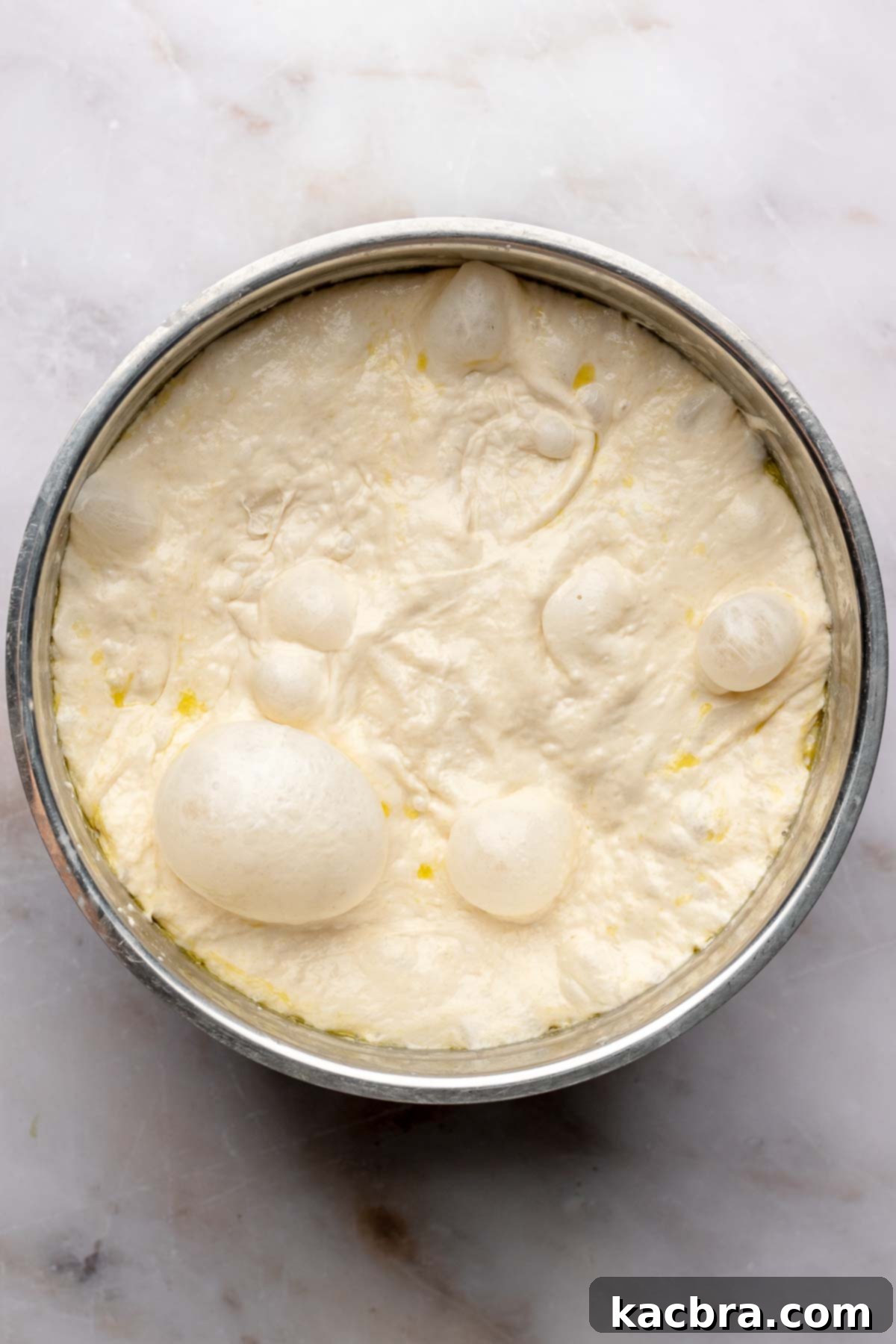
Eight: Post-Rise Dough. When you retrieve the dough from the refrigerator after its cold fermentation, you’ll be amazed at its transformation. It will have almost tripled in size, filling the bowl with a visibly airy, jiggly, and significantly bubbly texture. These bubbles are a clear sign of yeast activity and excellent gluten development, promising a light and open crumb in your baked focaccia. The dough will feel incredibly soft and pliable.
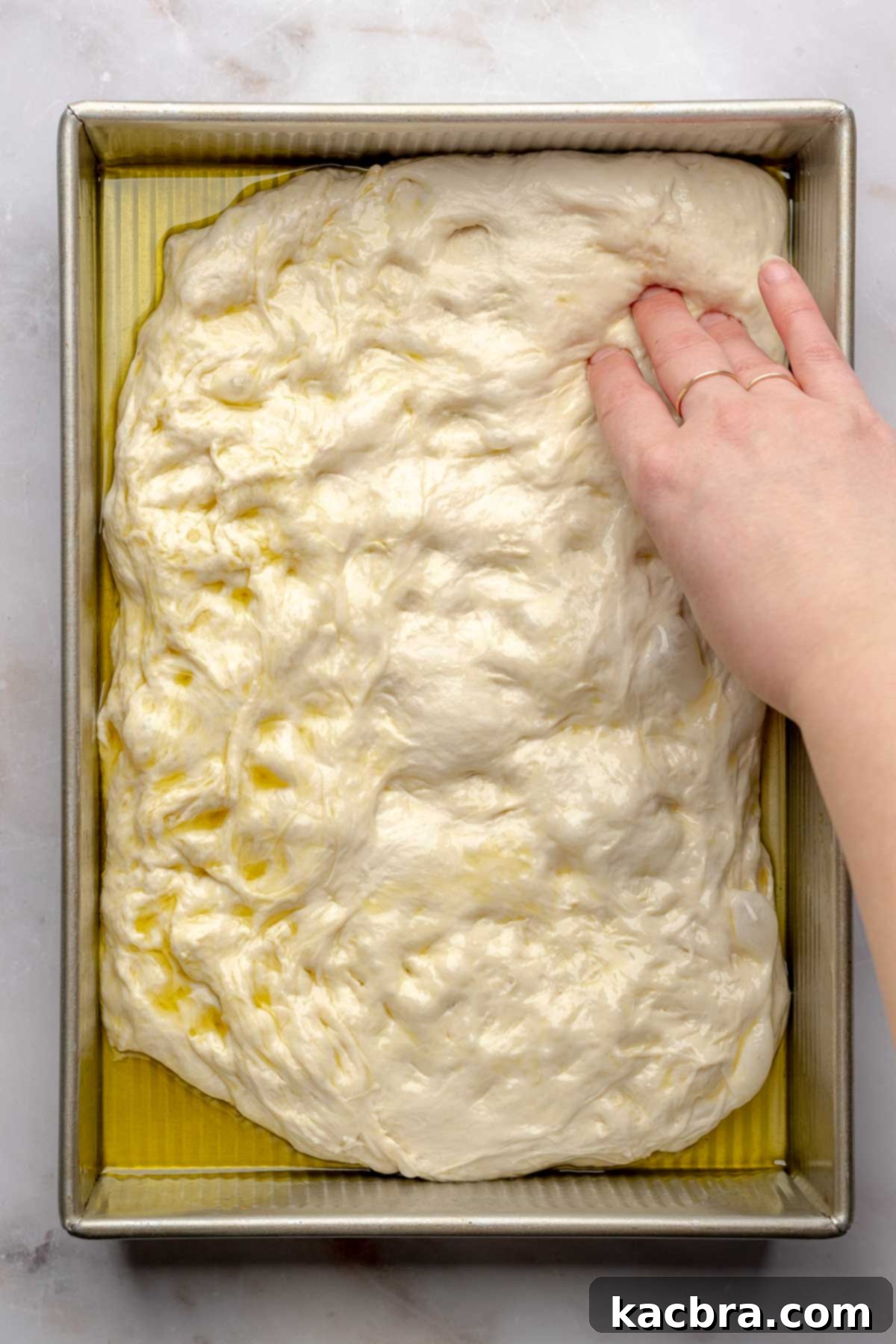
Nine: Transfer to Pan. Generously coat a 9×13-inch metal baking pan with extra virgin olive oil. This is crucial for preventing sticking and contributing to a crispy bottom crust. Gently turn the risen dough out into the prepared pan. If the dough seems a bit sticky, lightly oil your fingertips to help release it from the bowl. Carefully press the dough outwards towards the corners and sides of the pan with your oiled fingers. Don’t force it too much if it resists initially; it will relax during the next rise.
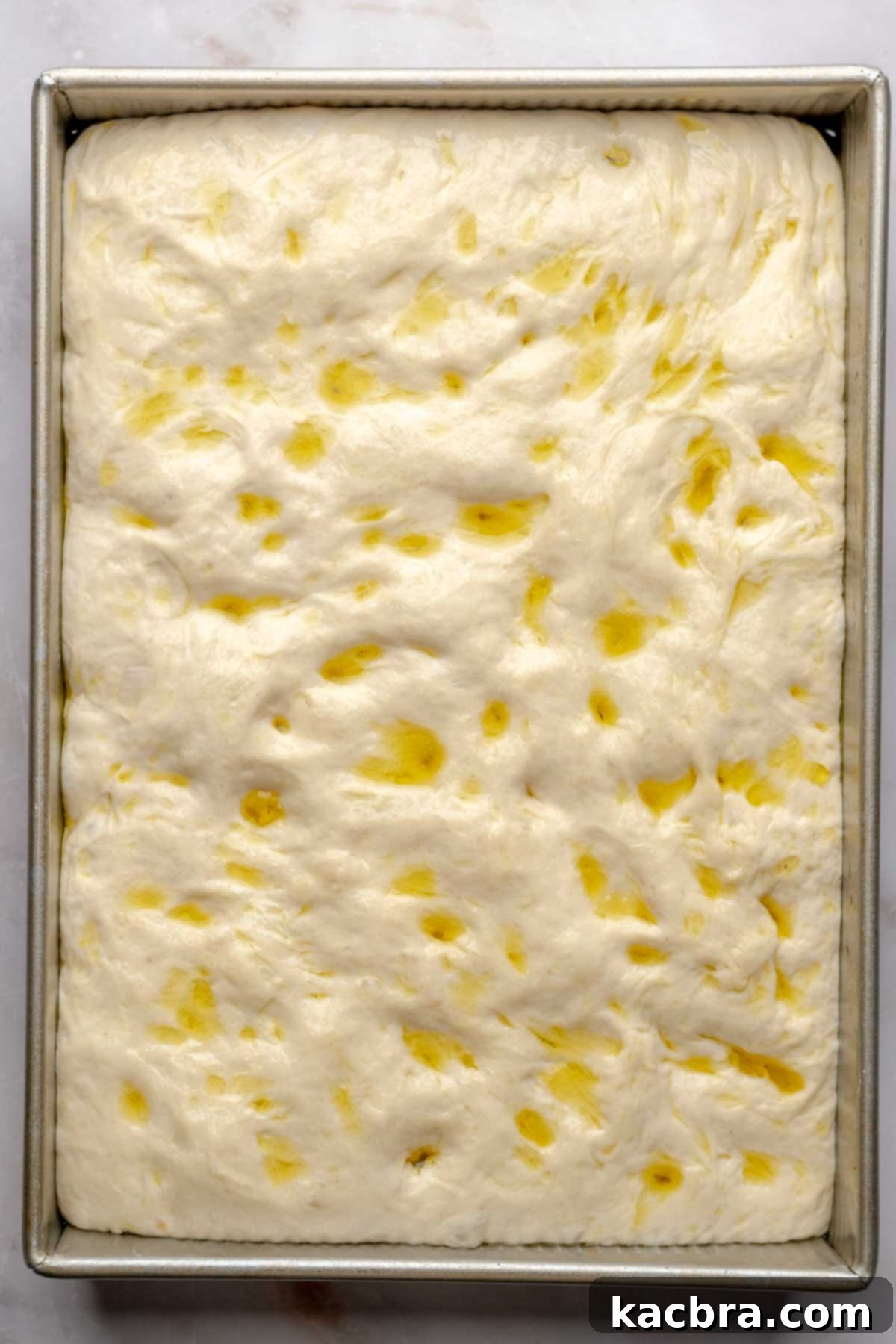
Ten: Final Room Temperature Rise. Drizzle a little more olive oil over the top of the dough to prevent it from drying out during its final proof. Cover the pan loosely with plastic wrap or a clean kitchen towel. Place the pan in a warm spot in your kitchen and let the dough rise for approximately 2-4 hours. The exact time will depend on the ambient temperature of your environment. The dough is ready when it has significantly expanded to completely fill the pan, appears very airy and jiggly, and feels light to the touch. This final rise develops the focaccia’s characteristic open crumb structure.
Hot Tip! To help the dough maintain a more rectangular shape after transferring it to the pan, you can gently fold the top and bottom edges underneath itself a few times. This creates a slightly tighter structure that encourages it to spread evenly.
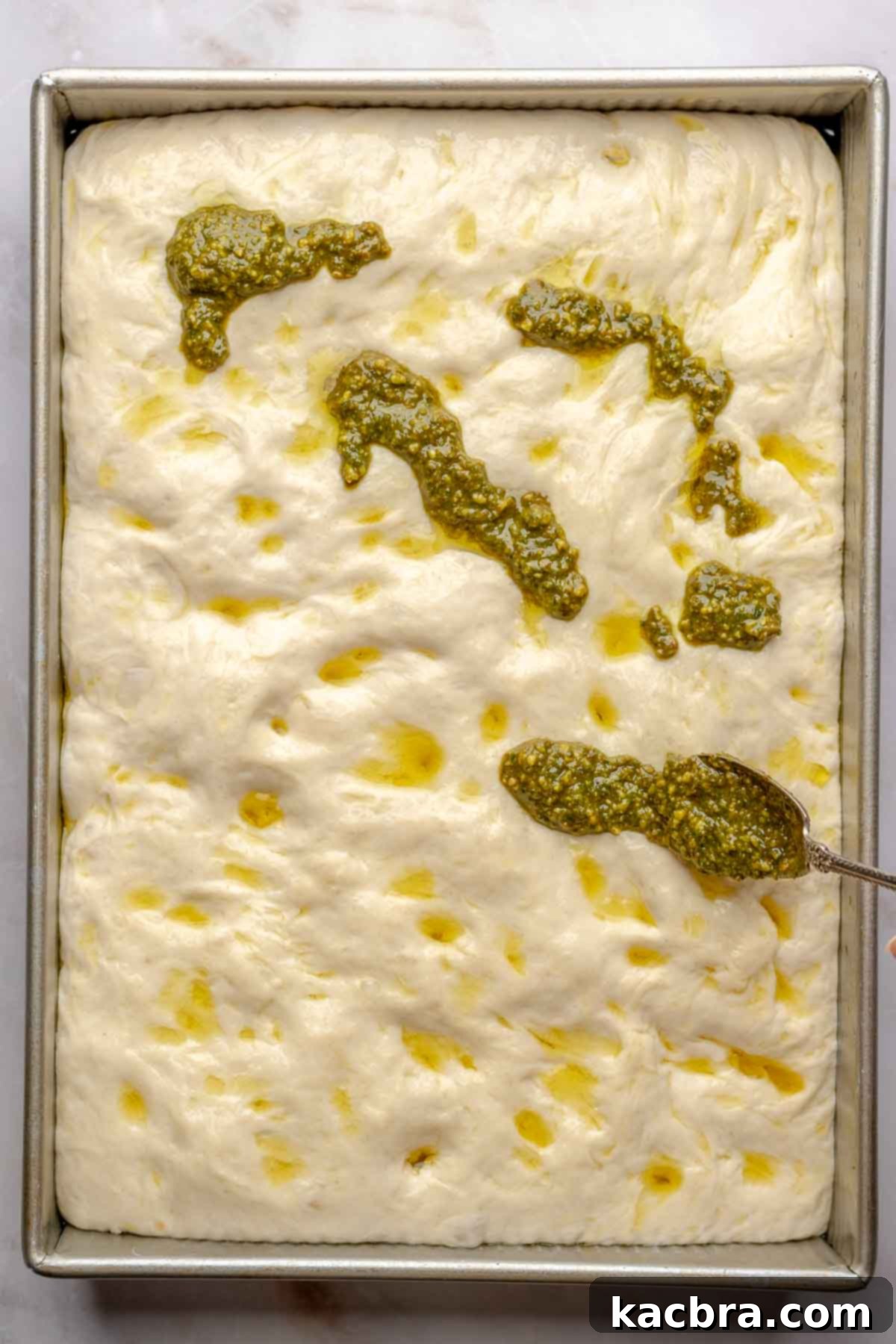
Eleven: Add Pesto. Once your dough has achieved its perfect final rise, preheat your oven to 450°F (230°C). Then, spoon dollops of your prepared pesto strategically all over the surface of the dough. Distribute it evenly, but don’t overload any single area. This ensures a balanced flavor in every bite and prevents the dough from becoming soggy.
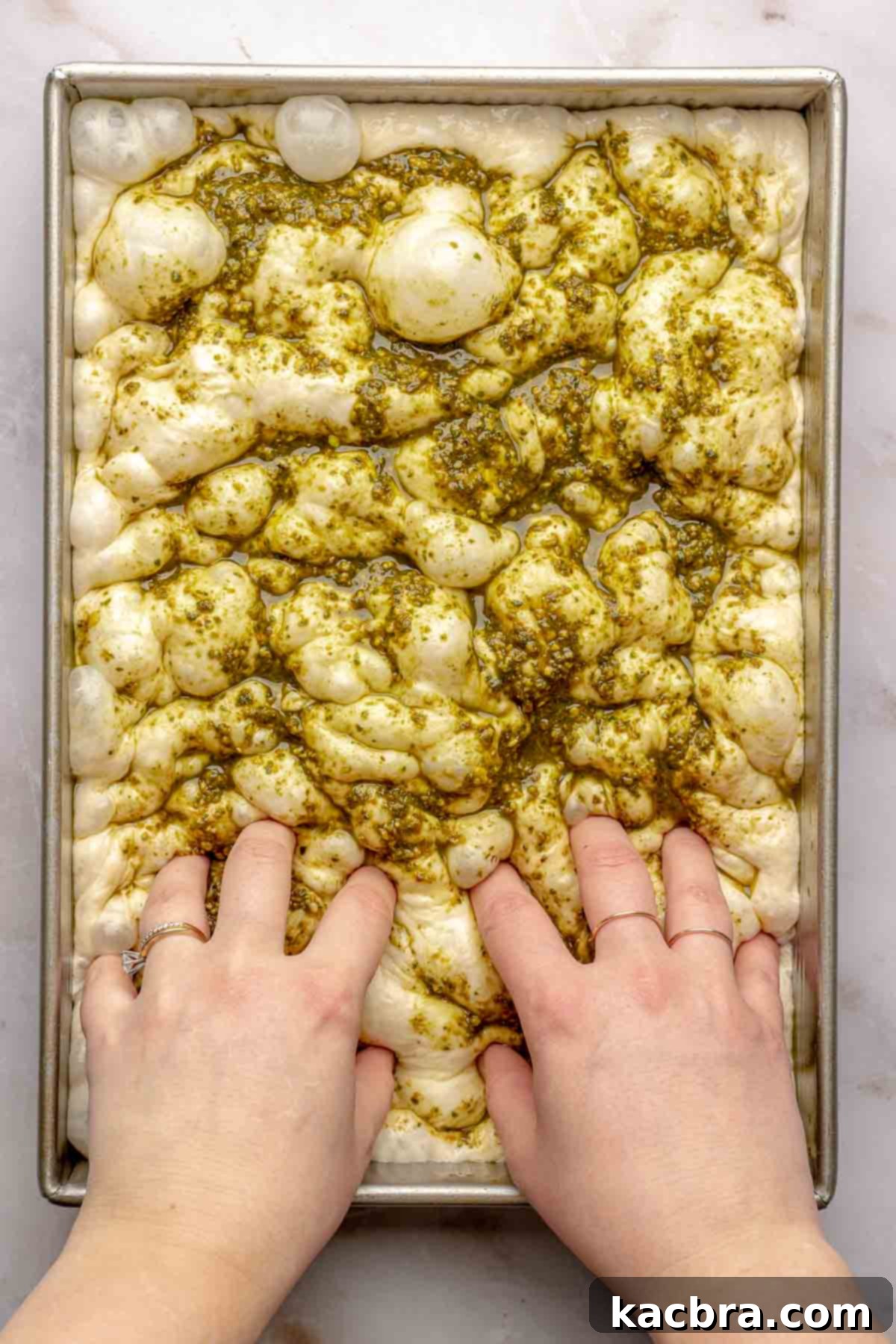
Twelve: Dimple and Season. With lightly oiled fingertips, gently press down into the dough, reaching all the way to the bottom of the pan and slightly pushing forward. Repeat this iconic focaccia dimpling technique all over the surface, including the edges. This creates those signature pockets for olive oil and pesto, and encourages air bubbles to form, contributing to the focaccia’s airy texture. As you dimple, the pesto will get pushed into the crevices. Finally, generously sprinkle flaky sea salt over the entire surface of the dough.
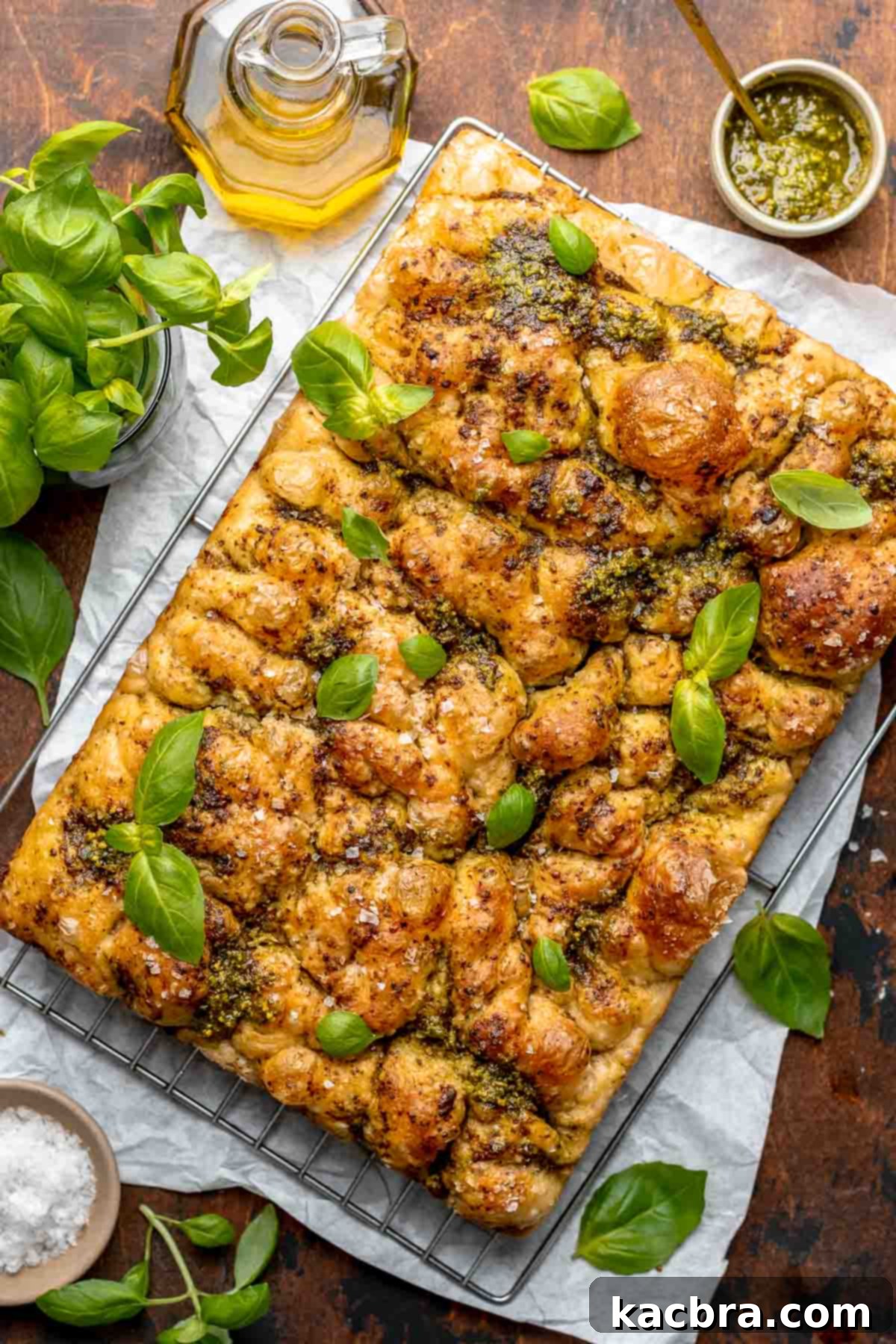
Transfer the pan to the preheated oven and bake for 25-30 minutes. Keep an eye on it, baking until the focaccia is beautifully golden brown on top and deeply crispy on the bottom. Once baked, immediately use a sturdy spatula to carefully loosen the focaccia from the sides of the pan and transfer it to a wire rack to cool completely. This immediate transfer is essential to prevent the bottom crust from becoming soggy from trapped steam.
Hot Tip! Before attempting to lift the focaccia out, run a thin, heat-resistant spatula around all four sides of the pan. This helps release any sections that might have stuck during baking, making removal much easier and preventing tears.
Detailed Rising Options for Optimal Flavor and Texture
The beauty of this no-knead focaccia recipe lies in its adaptability, particularly when it comes to proofing. Choosing the right rising method can significantly impact both the flavor and texture of your final bread. Here are the three primary options, allowing you to tailor the baking process to your schedule and desired outcome:
1. Overnight Fridge Rise (Recommended Method): This is the preferred method for achieving the deepest flavor and most complex crumb. As outlined in the recipe, after completing all the stretch-and-fold series, the olive oil-coated dough is tightly covered with plastic wrap and placed in the refrigerator. It rests there for a minimum of 12 hours, and can comfortably stay for up to 3 days. This extended cold fermentation allows the yeast to work slowly, producing organic acids that dramatically enhance the bread’s flavor profile and contribute to its characteristic open, airy texture. When you’re ready to bake, remove the dough from the fridge and allow it to come to room temperature while you prepare your pan and preheat the oven.
2. Room Temperature Rise First, Refrigerator Second: This option offers a compromise between speed and flavor development. After mixing, stretching, and folding, and coating the dough with olive oil, allow it to undergo an initial bulk fermentation at room temperature. Let it rise until it has nearly doubled in size, which typically takes about 1-2 hours, depending on your kitchen’s warmth. Once this initial rise is complete, transfer the dough to your oiled baking pan, gently pressing it towards the corners. Cover the pan and then refrigerate it overnight. The long cold rest in the pan allows for further flavor development and makes for a convenient morning bake. Remove the pan from the fridge and uncover it while the oven preheats, then dimple and bake.
3. All Room Temperature Rise: If time is of the essence and you need a quicker focaccia, this method is for you. After mixing, performing the stretch-and-folds, and oiling the dough, cover it and let it rise at room temperature until it has fully doubled in size (approximately 1-2 hours). Once doubled, gently transfer the dough to your oiled baking pan, press it out to the corners, and allow it to undergo a second rise at room temperature. This final rise will take about an hour, or until the dough has completely filled the pan and is light and jiggly. While this method yields a delicious focaccia, the flavor will be less complex compared to the cold-fermented options due to the faster yeast activity. However, it’s still a wonderfully soft and crispy bread!
Pro-Tip for Timing: If at any point during a room-temperature rise, you find yourself not quite ready to bake, or if the dough is rising faster than anticipated, simply cover the dough and transfer it to the refrigerator. The cold temperature will significantly slow down the yeast activity, effectively pausing the rise until you’re ready to continue.
Expert Tips for Focaccia Success
Achieving a consistently perfect focaccia is easier than you think with these expert tips:
- Choose a Large Bowl: Always use a very large mixing bowl for your dough. Focaccia dough rises significantly, especially during a long fermentation. A spacious bowl prevents overflow and provides ample room for the dough to expand comfortably.
- Mind the Water Temperature: The temperature of your water is critical for yeast activity. Aim for lukewarm water, ideally around 105-115°F (40-46°C). Water that’s too hot can kill the yeast, while water that’s too cold will inhibit its activity, leading to a slow or failed rise.
- Invest in Quality Olive Oil: Extra virgin olive oil is a foundational flavor in focaccia. Using a high-quality, flavorful olive oil will profoundly impact the bread’s taste and aroma. I highly recommend a brand like California Olive Ranch for its balanced and pleasant notes.
- Wet Hands for Handling: Focaccia dough is a high-hydration dough, meaning it’s quite sticky. To prevent it from clinging to your hands during the stretch-and-fold process or when transferring it to the pan, simply wet your hands and fingers with water. This creates a non-stick surface.
- Understand Rise Time Variability: The exact time it takes for your dough to rise will vary based on the temperature of your kitchen environment. A warmer room will result in a faster rise, while a cooler room will slow it down. Pay attention to the dough’s appearance and texture rather than strictly adhering to exact times.
- Create a Warm Environment for Rising: If your kitchen is cool, you can create a makeshift warm proofing box. Place your covered dough in a turned-off oven with just the oven light on. The warmth from the light creates an ideal environment for the dough to rise effectively and evenly. Just ensure the oven itself is not heated!
- Master the Dimpling Technique: When dimpling the dough, use wide fingers and press firmly down to the bottom of the pan, then slightly push forward. This action encourages the formation of large, characteristic air bubbles and helps distribute the pesto and salt evenly, enhancing both texture and flavor.
- Opt for Metal Pans: For the crispiest focaccia crust, especially on the bottom and sides, metal pans are your best friend. They are excellent conductors of heat, ensuring a beautifully browned and ultra-crispy exterior that contrasts wonderfully with the soft interior.
Behind the Recipe: Testing and Development
Developing this pesto focaccia recipe was a labor of love, spanning over 15 rounds of meticulous testing and refinement. My goal was to create a foolproof method that consistently delivers perfect results, even for those new to bread baking. I drew inspiration from several well-regarded recipes, carefully analyzing and adapting techniques to achieve the ideal focaccia. For instance, I appreciated the hydration level from Cloudy Kitchen’s easy focaccia, adopted the efficient folding technique from a popular no-knead version, and worked towards the desirable chewiness found in other bread recipes, ultimately deciding on bread flour over potatoes to achieve it.
Ultimately, I perfected an 88% hydration dough, which strikes the perfect balance between manageability and an incredibly airy crumb. The simple stretch-and-fold technique, combined with strategic 5-minute rest periods, ensures optimal gluten development and elasticity without requiring any traditional kneading. I specifically aimed for a focaccia that was substantial enough to be easily sliced horizontally for hearty sandwiches, yet equally ideal for tearing, dipping, and sharing. The final result is a focaccia with the perfect crispy exterior and a wonderfully fluffy, yet satisfyingly chewy interior – a recipe I am incredibly proud of and eager for you to try.
Frequently Asked Questions About Pesto Focaccia
Here are answers to some common questions you might have about making this delicious pesto focaccia:
For mixing this no-knead dough, a sturdy dough whisk is highly recommended as it efficiently combines the ingredients without overworking them. However, if you don’t have one, a firm rubber spatula or a robust wooden spoon will also work perfectly well to achieve the initial shaggy dough consistency.
Preventing focaccia from sticking to the pan is crucial for a perfect crust. The key is to use a very generous amount of high-quality extra virgin olive oil to thoroughly coat your baking pan. Additionally, using a good quality metal pan, such as those from USA Pan, will greatly aid in release due to their superior non-stick properties and heat conduction.
Yes, absolutely! This focaccia uses an 88% hydration dough, meaning it has a high water content relative to its flour. This high hydration is what contributes to the focaccia’s characteristic airy, open crumb and moist texture. Don’t be alarmed by its stickiness; simply wet your fingers with water or lightly oil them when performing the stretch-and-folds and transferring the dough to the pan to prevent it from sticking to your hands.
After its final rise in the pan, the dough should look noticeably airy, pillowy, and very jiggly when the pan is gently shaken. To perform a simple test, gently press a floured finger into the dough about half an inch deep. If the indentation slowly springs back partially but not completely, your dough is perfectly proofed and ready for baking. If it springs back immediately, it needs more time; if it collapses, it’s over-proofed.
Storage & Reheating Your Delicious Focaccia
To keep your pesto focaccia fresh and flavorful, proper storage is key. Store the focaccia in a closed paper bag; this allows for a slight amount of airflow, which helps maintain its crisp exterior while keeping the interior soft. If using a zip-top bag, leave about an inch of the bag open to allow for some air circulation, preventing it from becoming overly moist and soggy.
For longer storage, focaccia freezes exceptionally well. Wrap the entire loaf or individual slices completely in plastic wrap, ensuring no air exposure, then wrap again tightly in aluminum foil. Place the well-wrapped focaccia in a freezer-safe zip-top bag. It can be frozen for up to 4 months without losing quality.
How to Reheat Focaccia Bread
To enjoy warm, crispy focaccia, reheating is simple. For fresh or thawed focaccia slices, place them in a preheated 350°F (175°C) oven for about 5 minutes. This will revive the crust and warm the center beautifully. For frozen focaccia slices, there’s no need to thaw. Unwrap them completely and place them directly into a 350°F (175°C) oven for approximately 10 minutes. Bake until the bread is thoroughly thawed, the exterior is crispy once more, and the inside is warm and soft.
More Irresistible Bread Recipes You’ll Love
If you enjoyed making this pesto focaccia, you’ll love exploring these other delightful bread-based recipes from our kitchen. Each offers unique flavors and textures perfect for any occasion:
- Pimento Cheese Filled Pretzels
- Garlic Parmesan Bread Bites
- Homemade Pepperoni Bread
- Crab Pretzel
Essential Cooking Notes from The Cozy Plum Kitchen
To ensure your baking experience is always successful, please keep these important notes in mind:
- Salt Type Matters: All our recipes are developed using Diamond Crystal kosher salt, which is known as the least salty variety of kosher salt. If you are using Morton’s kosher salt or any type of sea salt, you will need to reduce the amount of salt by half, as these are approximately twice as salty. Please do not use table salt, as its fine grain and high sodium content will drastically alter the flavor.
- Accuracy with Measurements: While a cups-to-metric toggle might be available on some recipe cards, baking by weight using a digital scale will always yield the most accurate and consistent results in baking. We highly recommend this method for best outcomes.
- Scaling Recipes: Buttons to scale recipes (e.g., ‘1X’, ‘2X’, ‘3X’) can adjust ingredient quantities for larger or smaller batches. However, please note that these adjustments do not automatically alter baking or rising times. You will need to make those estimations based on your adjusted volume.
- Pan Size Adjustments: If you plan to bake this recipe in a different sized pan, utilize a reliable pan size converter to adjust quantities appropriately. This ensures your focaccia maintains its desired thickness and cooks evenly.
📖 Recipe Card: Pesto Focaccia Bread (No-Knead)

Pesto Focaccia Bread (No-Knead)
Callan Wenner
Pesto focaccia bread is an easy, no-knead bread topped with a flavorful basil pesto and flaky sea salt. This slow-rise focaccia with three rising options is super soft with big bubbles and an ultra-crispy exterior. It’s the perfect appetizer, side for pasta or salads, and makes for an amazing sandwich!
Rating: 5 out of 5 stars from 4 votes
Print Recipe | Pin Recipe
Prep Time: 20 mins | Cook Time: 30 mins | Rise Time: 1 day | Total Time: 1 day 50 mins
Course: Appetizer, Side Dish | Cuisine: Italian | Servings: 24 slices | Calories: 139 kcal
Equipment
- Large mixing bowl
- Dough whisk or wooden spoon
- 9×13-inch pan (metal is best)
Ingredients
- 2 ⅔ cups bread flour
- 2 ⅔ cups all-purpose flour
- ½ tablespoon kosher salt
- 2 ½ teaspoons instant yeast (1 packet)
- 1 tablespoon honey
- 2 tablespoons extra virgin olive oil (plus more for coating)
- 2½ cups lukewarm water (about 110℉)
- ½ cup pesto (homemade or store bought)
- Flaky sea salt
Instructions
- In a very large bowl, mix together the bread flour, all-purpose flour, salt, and yeast.
- Combine the honey, olive oil, and water, then pour into the flour mixture.
- Use a dough whisk or wooden spoon to mix the dough together completely until no dry bits remain and a shaggy dough forms.
- Cover the bowl with a dish towel and allow the dough to relax and hydrate for 5 minutes.
- Wet your hands. Reach halfway under the dough, lift up, and pull towards you, folding the dough over itself (from 12 o’clock to 6 o’clock).
- Turn the bowl a quarter turn and repeat the fold. Do this two more times (a total of 4 folds), then cover the bowl and rest for 5 minutes.
- Repeat the 4 folds and rest for 5 minutes. Then, repeat one more time for a total of 3 folding series.
- Drizzle the dough with olive oil and turn it so the oil is fully coating the dough and bowl. Cover tightly with plastic wrap and refrigerate for at least 12 hours or up to 3 days.
- Generously oil a 9×13” metal pan and turn the dough out into it. Use your fingertips to help release the dough from the sides of the bowl, if needed.
- Gently fold the edges of the dough under itself to create somewhat of a rectangular shape (this does not need to be perfect).
- Use your fingers to gently push the dough to the sides and corners of the pan (it likely won’t go the whole way immediately). Drizzle with more olive oil so it doesn’t dry out.
- Allow the dough to sit in a relatively warm place for about 2-3 hours until airy, jiggly, and the dough has completely filled the pan. (You can place the dough in your oven with the light on, but ensure the oven itself is turned OFF).
- Once risen, preheat the oven to 450℉ (230°C).
- Spoon the pesto in dollops all over the top of the dough. Then, use your fingers and thumbs (in a claw shape) to press down firmly to the bottom of the pan and slightly forward. Repeat all over the dough, pushing the pesto into the dimples and allowing bubbles to form.
- Sprinkle generously with flaky sea salt.
- Bake the focaccia for 25-30 minutes until quite golden brown and crispy.
- Use a spatula to help remove the bread from the pan and transfer it immediately to a wire rack to cool. Do this within a few minutes to prevent the bottom crust from getting soggy from steam.
- Slice with a serrated knife and serve warm or at room temperature.
Video Guide
Notes
Store the focaccia in a closed paper bag to allow a bit of airflow, preventing it from getting soggy. If using a zip-top bag, keep about an inch of the bag open for air circulation.
Reheat fresh or thawed focaccia slices in a 350℉ (175°C) oven for about 5 minutes until the edges are crispy and the center is warm.
Refer to the “Detailed Rising Options” section in the main article for alternative rise methods (half fridge-half room temperature, all room temperature).
Estimated Nutritional Information per Serving
Calories: 139 kcal | Carbohydrates: 23g | Protein: 4g | Fat: 4g | Saturated Fat: 1g | Polyunsaturated Fat: 0.3g | Monounsaturated Fat: 1g | Cholesterol: 0.4mg | Sodium: 196mg | Potassium: 42mg | Fiber: 1g | Sugar: 1g | Vitamin A: 106IU | Vitamin C: 0.01mg | Calcium: 13mg | Iron: 1mg
The provided nutritional information is an estimate per serving. Accuracy is not guaranteed.
Tried this recipe? We’d love to hear how it was! Share your experience with us.
Did you make this recipe? Share it with us! Tag @thecozyplum on Instagram & Facebook and leave a star rating ⭐️ below!