There’s nothing quite like the taste of a homemade dessert, especially when it evokes feelings of warmth, comfort, and nostalgia. Our recipe for homemade fried peach pies does exactly that, bringing a delightful burst of summer flavor and cherished memories right into your kitchen. Imagine biting into a golden-brown, perfectly crisp pastry, revealing a luscious, spiced peach filling, all finished with a sweet cinnamon glaze. These aren’t just any treats; they are the quintessential peach hand pies of your dreams, promising an irresistible experience that will have you reaching for more.
Each individual pie is a labor of love, combining the juiciness of fresh peaches with aromatic warm spices, encased in a tender, flaky pie crust. Once deep-fried to perfection, they are generously drizzled with a simple yet exquisite cinnamon glaze, creating a symphony of textures and flavors that is truly unforgettable. Whether you’re a seasoned baker or a beginner, this recipe guides you through creating these iconic southern fried peach pies that are perfect for any occasion.
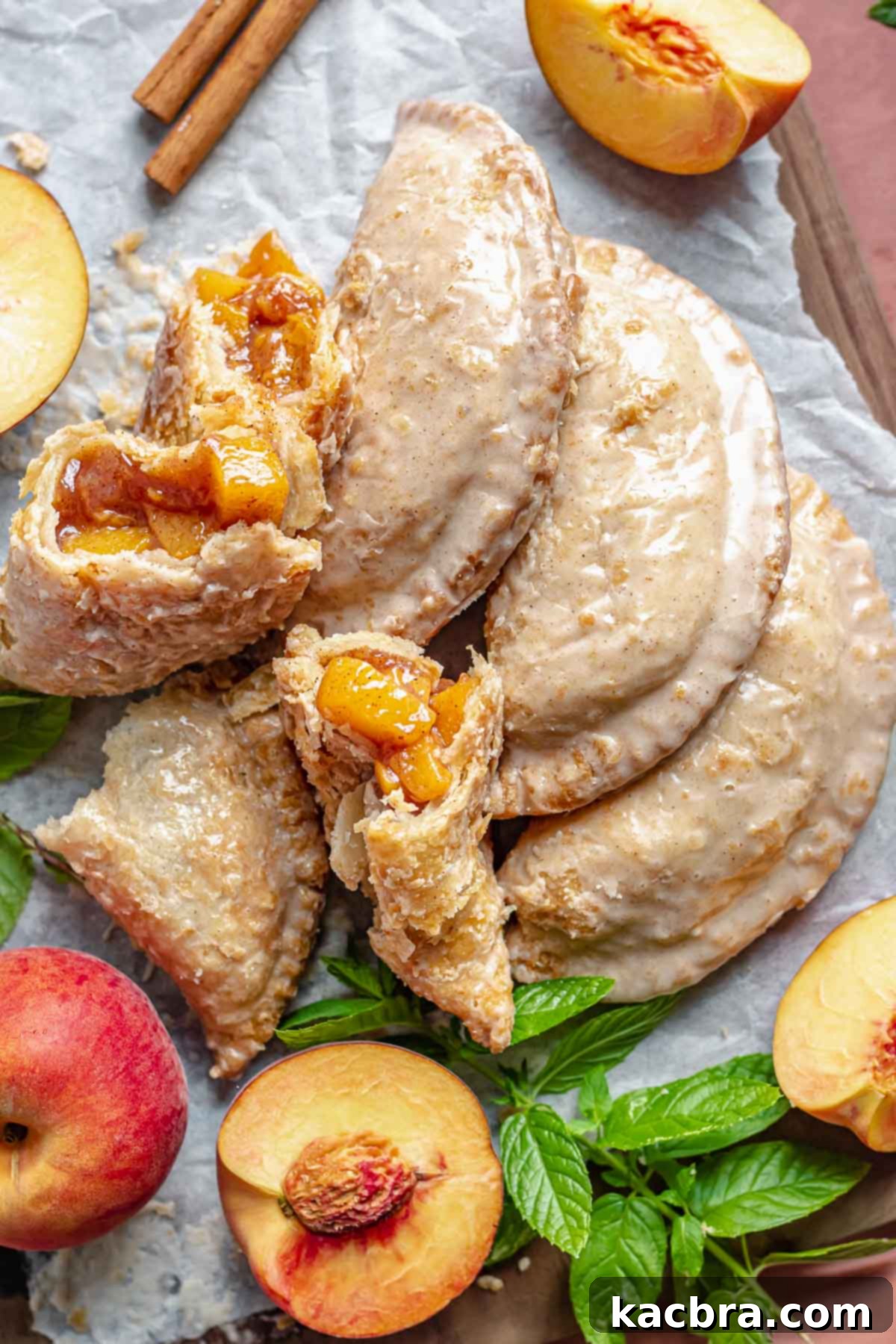
Why These Fried Peach Pies Will Become Your Favorite
Our homemade fried peach pies stand out for several compelling reasons, making them an instant classic in any household:
- Unmatched Flavor & Texture: The magic begins with the peaches themselves. We gently cook fresh peaches down with rich brown sugar and a blend of warm spices, allowing their natural juices to release and concentrate, intensifying that irresistible fresh peach flavor. The result is a deeply comforting and aromatic peach pie filling. Paired with our homemade pie crust, which transforms into an exquisitely flaky and crispy exterior after frying, these pies offer a delightful contrast. The inside of the crust remains subtly soft, absorbing moisture from the filling, creating a perfect balance of crispy, doughy, and utterly delicious goodness. The delicate cinnamon glaze adds another layer of texture and sweetness, elevating each bite.
- Effortless Handheld Enjoyment: One of the greatest appeals of this recipe is its simplicity and convenience. By creating these as individual peach hand pies instead of a traditional large pie, assembly becomes remarkably straightforward. This format not only simplifies the baking process but also makes them incredibly easy to serve and enjoy. Everyone gets their own special pie, which adds a personal and charming touch to any meal or gathering.
- Perfect for Making Ahead: Life can be busy, but that doesn’t mean you have to compromise on delicious homemade treats. These fried peach pies are wonderfully freezer-friendly! You can assemble them in advance and freeze them, ready to be fried and glazed whenever a craving strikes or an unexpected occasion arises. This makes them an excellent option for last-minute entertaining, a thoughtful housewarming gift, or simply ensuring you always have a delightful dessert on hand.
If you find yourself enchanted by the sweet allure of peaches, don’t miss out on exploring more of our delightful peach-centric creations. Indulge in our Peach Frangipane Galette, savor the rich notes of our Brown Butter Peach Crisp, enjoy the convenience of Brown Butter Peach Bars, or delight in the rustic charm of our Cast Iron Peach Cobbler!
The Storied History of Southern Fried Peach Pies
The tradition of fried peach pies runs deep in the culinary heart of the American South. Historically, these rustic, individual pastries were born out of necessity and ingenuity. A traditional southern fried peach pie recipe often featured dried fruit, a practical solution for preserving the harvest and enjoying peaches long after their season ended. The dough, akin to a humble biscuit dough, was made with readily available ingredients, reflecting the resourcefulness of home cooks.
In those days, dried peaches would be rehydrated with sugar, warm spices, and thickeners, then mashed to create a flavorful filling. This method ensured that families could enjoy the sweet essence of peaches throughout the year. While many cherished southern recipes continue this traditional route, our recipe takes a modern approach, opting for a tender, homemade pie dough and vibrant fresh peaches. This choice prioritizes the bright flavor and delicate texture that fresh fruit brings, offering a delightful contemporary twist on a classic. However, we acknowledge and appreciate the historical roots, and you’ll find that the spirit of homemade comfort remains at the core of our recipe, just as it did in the kitchens of generations past.
Essential Ingredients for Your Peach Hand Pies
Crafting these delectable peach hand pies requires a surprisingly minimal list of ingredients, allowing the natural flavors to truly shine:
- Peaches: The star of the show! We recommend using fresh, slightly ripe peaches for the best flavor and texture. However, don’t let seasonality stop you; canned peaches or frozen peaches can also be used with slight adjustments. Consult our substitutions section for detailed guidance on preparing them.
- Flavorful Spices: A harmonious blend of ground cardamom and cinnamon infuses the peach filling with warmth and depth, creating a truly inviting aroma and taste. A touch of cornstarch is also essential to achieve that perfectly thick, gooey filling consistency.
- Perfect Pastry: Our recipe shines with a homemade sweet pie crust. This specific dough is designed to hold up beautifully to frying, resulting in an irresistibly crispy and flaky crust that cradles the sweet filling. If time is a constraint, a good quality store-bought pie dough is a perfectly acceptable quicker option. You will need approximately three rounds of pre-made dough for this recipe.
- Frying Oil: For deep frying, vegetable oil or canola oil are excellent choices due to their neutral flavor and high smoke point. For a slightly different flavor profile reminiscent of traditional southern frying, peanut oil can also be used.
- Sweeteners and Glaze: Light brown sugar provides a rich, caramel-like sweetness to the peach filling, complementing the spices. For the iconic glaze, powdered sugar (confectioners’ sugar) is combined with cinnamon and a touch of water, creating a smooth, quick-setting finish that adds both sweetness and a delicate crunch to the exterior of your fried peach pies.
Refer to the full recipe card below for exact quantities and detailed instructions.
Understanding Peaches: Freestone vs. Clingstone
When selecting peaches for your homemade peach pies, understanding the difference between freestone and clingstone varieties can save you a lot of effort in the kitchen. The distinction lies in how easily the peach flesh separates from its pit.
- Freestone Peaches: As the name suggests, freestone peaches are varieties where the flesh readily pulls away from the pit. This makes them incredibly easy to work with; you can simply cut the peach in half and effortlessly remove the stone. If you can find freestone peaches, they are highly recommended for pie making due to their convenience and the clean slices they yield. Freestone peaches are typically available from mid-June to mid-August, making them a peak summer delight.
- Clingstone Peaches: In contrast, clingstone peaches have flesh that “clings” tightly to the pit, making it challenging to separate cleanly. Attempting to cut them in half and twist will often result in a squashed, messy peach. If clingstone peaches are your only option, don’t despair! The trick is to carefully cut the flesh off the pit in sections. Make four cuts around the pit, slicing downward along each side, then carefully slice these sections. This method prevents excessive bruising and ensures you get usable peach pieces for your peach pie filling. Clingstone peaches are generally the first varieties to appear in the season, typically available from May to early June.
Grocery stores don’t always label peaches as freestone or clingstone, so keep these seasonal windows in mind or don’t hesitate to ask a produce attendant for guidance on the best peaches for your baking needs.
Mastering the Art of Peach Peeling for Pies
Peeling peaches is a crucial step for achieving that silky-smooth peach pie filling texture without tough skin pieces. The best method for peeling depends entirely on the ripeness of your stone fruit. Here are two effective techniques:
-
Method 1: The Vegetable Peeler (for firmer peaches)
If your peaches are relatively firm and the flesh has not yet begun to soften significantly, a standard vegetable peeler is your fastest and easiest tool. Simply hold the peach securely and carefully peel the skin downwards, just as you would an apple or potato. This method is efficient and minimizes waste when the peaches can withstand the pressure. -
Method 2: The Boiling Water & Ice Bath Blanch (for softer, ripe peaches)
Once peaches ripen and their flesh becomes soft, a vegetable peeler can tear the delicate fruit, making it difficult to peel cleanly. In this scenario, blanching is the superior method.- Gently score a small ‘X’ mark on the bottom skin of each peach using a sharp paring knife. This helps the skin release more easily.
- Carefully drop the peaches into a pot of rapidly boiling water. Let them cook for exactly one minute. This brief blanching helps to loosen the skin without cooking the flesh.
- Immediately transfer the blanched peaches from the boiling water into a prepared ice bath (a bowl filled with ice water). This shock treatment stops the cooking process and further aids in skin separation.
- After a minute or two in the ice bath, remove the peaches. You’ll find that the skins will now effortlessly peel right off with your fingers or a small knife, leaving you with perfectly peeled, unblemished fruit ready for your fried peach pies.
Adapt Your Recipe: Substitutions & Creative Variations
This recipe for fried peach pies is wonderfully versatile, allowing for several substitutions and creative variations to suit your preferences or what you have on hand. Don’t be afraid to experiment!
Smart Substitutions for Your Peach Pies
- Frozen Peaches: No fresh peaches? No problem! You can use chopped frozen peaches directly in the pan without thawing first to create your delicious peach pie filling. The cooking process will gently thaw and soften them, though you might find the filling takes slightly longer to come together as more liquid will need to cook off before thickening.
- Canned Peaches: For ultimate convenience, canned peaches are a great option. Be sure to drain the syrup or water thoroughly before chopping the peaches. Melt together the other filling ingredients (sugar, spices, cornstarch slurry) and then add the drained peaches towards the very end of the cooking process. This prevents them from becoming overly mushy, as canned peaches are already quite soft.
- Store-Bought Pie Crust: While our homemade crust delivers unparalleled flakiness, using store-bought pie crust is a fantastic time-saver. Opt for a good quality all-butter or shortening-based crust for the best results. You will typically need about three rounds of pre-made dough to yield the same number of peach hand pies as our homemade version. Ensure it’s cold when you start working with it.
Exciting Variations to Explore
- Alternative Stone Fruits: Don’t limit yourself to just peaches! This recipe’s structure works beautifully with almost any type of stone fruit. Imagine the possibilities with plums, nectarines, apricots, or even cherries for a tart and sweet sensation. For a delightful autumn twist, try making fried apple pies using this same method and spice blend!
- Cinnamon Sugar Coating: If you prefer a simpler finish or want to skip the liquid glaze, roll the freshly fried peach hand pies in a generous mixture of cinnamon sugar while they are still warm. The sugar will adhere beautifully and create a wonderfully crispy, sweet coating.
Crafting Your Perfect Fried Peach Pies: A Step-by-Step Guide
Creating these delightful homemade fried peach pies is a rewarding process. For optimal results and ease of assembly, we highly recommend preparing the pie crust and the peach pie filling a day in advance, or at least two hours prior to assembly. This allows the dough to properly chill and the filling to cool and set, which are crucial steps for preventing soggy pies and ensuring structural integrity.
Part 1: Preparing the Irresistible Peach Pie Filling
Step One: Prepare the Peaches. Begin by carefully peeling and chopping your fresh peaches into uniform 1cm (approximately ⅜-inch) pieces. This ensures even cooking and a consistent texture in your filling. Once chopped, combine these juicy peach pieces in a large skillet with the brown sugar, ground cinnamon, and optional ground cardamom. Stir everything together to coat the peaches evenly with the sweet spices.
Step Two: Cook and Thicken. Place the skillet over medium heat and cook, stirring occasionally, until the sugar completely dissolves and the peaches begin to release their natural juices. In a separate small bowl, whisk together the cornstarch with a small amount of cold water to create a slurry. Pour this cornstarch slurry into the simmering peach mixture and stir immediately and continuously until the filling visibly thickens. A rubber spatula dragged across the bottom of the pan should leave a clean streak, indicating it’s thick enough. Finally, stir in the vanilla paste or extract. Remove the filling from the heat and transfer it to a shallow dish to cool completely. Cooling is essential; a warm filling can make your pie crust soggy during assembly and frying.
Part 2: Expert Assembly of Your Hand Pies
Step Three: Roll Out the Dough. Take your well-chilled pie dough from the refrigerator. Lightly flour your work surface and your rolling pin. Roll out the dough, starting from the center and working outwards, turning the dough a quarter turn after every few rolls. This technique helps maintain a round shape and ensures even thickness. Continue rolling until the dough is uniformly about ⅛ inch (3mm) thick.
Step Four: Cut Dough Rounds. Using a 6-inch (15cm) bowl, a round cookie cutter, or another round object as a guide, carefully cut out as many dough circles as possible using the tip of a sharp paring knife. Gently transfer these rounds to a large baking sheet lined with parchment paper. Gather the dough scraps, layer them on top of each other (do not knead), and roll out again to cut more rounds. Continue this process until you have approximately 6 rounds of dough. This minimizes waste and maximizes your batch of fried peach pies.
Pro Tip: When re-rolling dough scraps, stack them rather than kneading. This helps maintain the flaky layers within the pastry. Avoid overworking the dough, which can make it tough.
Step Five: Fill the Pies. Place a generous scoop, about ⅓ to ½ cup, of the completely cooled peach pie filling onto the center of each dough circle. Be careful not to overfill, as this can make sealing difficult and lead to leaks during frying. Gently lift one side of the dough over the filling to meet the other side, forming a half-moon shape. Lightly press the edges together to start the seal.
Step Six: Initial Seal. Carefully pick up each half-moon shaped pie. Pinch the edges together firmly with your fingers, working your way around the entire perimeter of the pie. This creates the crucial first seal, ensuring the filling remains securely inside during frying.
Step Seven: Strengthen the Seal. Place the sealed half-moon pie back on your counter. Use your fingers to press down again on the sealed edges, ensuring a tight, even seal. This step helps to flatten the seam slightly and further secure the filling.
Step Eight: Crimp for Security and Beauty. For the final seal and a beautiful, traditional finish, use the tines of a fork to press firmly along the entire edge of each hand pie. This crimping creates a decorative pattern and a robust seal. Once all pies are assembled, place them back on the parchment-lined baking sheet and freeze them for at least 30 minutes while your frying oil heats up. Freezing the pies before frying helps them hold their shape and prevents the crust from absorbing too much oil.
Part 3: Frying to Golden Perfection & Glazing
Chef’s Essential Setup: Before you start frying, set up your station! Have paper towels ready to absorb excess oil, a wire rack or another sheet pan for draining, and a spider or slotted spoon within easy reach. This ensures a smooth and safe frying process.
Step Nine: Fry the Peach Pies. Pour the vegetable oil into a large, heavy-bottomed pot or Dutch oven. Heat the oil over medium heat until it reaches a steady temperature of 350-375°F (175-190°C). Use an oil thermometer to monitor the temperature; maintaining a consistent heat is key to crispy, non-soggy pies. Carefully lower 1-3 chilled peach hand pies into the hot oil, ensuring not to overcrowd the pot. Fry for 6-9 minutes, turning occasionally with your spider or slotted spoon, until they achieve a deep, golden-brown color and appear beautifully puffed. Transfer the fried pies to a wire rack lined with paper towels to drain any excess oil and cool slightly.
Step Ten: Glaze and Enjoy! While the pies are cooling, prepare the cinnamon glaze. In a medium bowl, whisk together the powdered sugar, ground cinnamon, and cold water. Start with the lowest amount of water (¼ cup) and gradually add more, just a teaspoon at a time, until a smooth, relatively runny glaze forms. The consistency should be thin enough to coat but thick enough to cling slightly. Once the fried peach pies have cooled completely (this is important for the glaze to set properly, about 30 minutes), dip each pie into the glaze, turning to coat it completely. Use two forks to lift the glazed pie, allowing any excess to drip off, then place it back on the wire rack to set and harden. Once the glaze is firm, your delicious homemade fried peach pies are ready to be savored!
Expert Tips for Perfect Fried Peach Pies
Achieving the perfect fried peach pies is all about technique and a few insider tips. Follow these recommendations to ensure your pies are flaky, flavorful, and fried to golden perfection every time:
- Plan Ahead for Best Results: Baking is often about patience. For this recipe, it’s highly beneficial to plan ahead. Make your pie crust and prepare the peach pie filling a day in advance. This allows the dough to fully hydrate and chill, leading to a flakier crust, and gives the filling ample time to cool and thicken properly, preventing a soggy bottom.
- Mastering the Pie Dough: Whether you prefer using a food processor for speed or a pastry cutter for control, the key to a tender, flaky crust is keeping the butter cold and not overworking the dough. Small pockets of cold butter create steam during frying, which is what gives you those beautiful, airy layers. For more in-depth guidance on making the perfect pastry, refer to our all-butter pie crust post.
- Customizable Dough Circles: The six-inch diameter for the dough rounds is a recommendation, but feel free to adjust the size to your preference. If you opt for smaller pies, simply reduce the amount of peach pie filling placed in the center. For larger pies, you’ll need slightly more filling. Just ensure your circles are uniform for even cooking.
- Secure Sealing is Key: To prevent your precious filling from escaping during frying, a good seal is paramount. If you’re concerned about the dough adhering sufficiently, use a pastry brush to add a very thin layer of water or an egg wash (a beaten egg mixed with a tablespoon of water) to the edges of the dough before pressing them together. This acts as a ‘glue’ and helps create a tight, secure seal.
- For a Polished Look: After crimping the edges of your peach hand pies with a fork, take an extra moment to trim the very edges of the dough with a paring knife. This small step creates super clean, uniform half-moons, giving your finished pies a professional and visually appealing finish.
- Choose the Right Frying Vessel: For deep frying, a heavy-bottomed Dutch oven or a deep pot is ideal as it helps maintain a consistent oil temperature and minimizes splattering. Alternatively, if you prefer to shallow fry (frying in less oil), use a deep skillet or a cast iron skillet. In this case, you’ll need to turn the pies over every two minutes or so to ensure both sides cook to a golden brown.
- Temperature Control is Crucial: The oil temperature is arguably the most critical factor in achieving crispy, non-greasy fried peach pies. Always keep a reliable oil thermometer handy and ensure the temperature remains consistently between 350-375°F (175-190°C). If the oil is too cool, the pies will absorb too much oil and become soggy. If it’s too hot, the crust will brown too quickly, leaving the interior undercooked or the filling cold. Adjust the heat as necessary between batches.
- Cool Before Glazing: Always allow your peach hand pies to cool completely on a wire rack before applying the cinnamon glaze. Applying glaze to warm pies will cause it to melt and run off, resulting in a thin, uneven coating and a potentially soggy crust. Patience here ensures a beautiful, firm glaze.
Recipe FAQs: Your Fried Peach Pie Questions Answered
Soggy fried peach pies are typically a result of the oil not being hot enough when the dough was added. If the oil temperature is too low, the pie crust will slowly absorb the oil instead of quickly crisping up. Another common reason is not frying the pies for long enough, preventing the inner layers of the dough from cooking completely. To salvage slightly soggy pies (without glaze), you can place them on a baking sheet and bake in a preheated 350°F (175°C) oven for an additional 10-15 minutes until they crisp up.
For a classic peach pie filling, a standard yellow peach is generally best, especially a freestone variety if you can find one, as it offers the best balance of sweetness and acidity. However, white peaches can also be used for a milder, sweeter flavor. Nectarines are an excellent alternative if you prefer a smoother skin that doesn’t require peeling. Donut peaches (also known as Saturn peaches) are also delicious but are smaller, so you would need more of them to yield sufficient filling.
Absolutely! Freezing fried peach pies is a fantastic way to enjoy them later. We recommend freezing the assembled but unfried dough. To do this, flash freeze the assembled hand pies on a cookie sheet for about 30 minutes until firm. Then, transfer them to a zip-top freezer bag or airtight container and freeze for up to three months. You can fry them directly from frozen, though the frying time may need to be slightly increased. Alternatively, you can freeze the pies after frying but *before* adding the glaze. Allow the fried pies to cool completely, then store them in a zip-top bag or sealed container in the freezer for two to three months. Glaze them after reheating for the best results.
Storage & Reheating for Peak Enjoyment
To keep your homemade fried peach pies at their best, proper storage and reheating techniques are important, particularly regarding the glaze.
Optimal Storage Guidelines
Store the fried pies at room temperature for 2-3 days. For best results, keep them uncovered and not touching each other, as this helps prevent the crust from becoming soft. The pies store best *prior* to adding the cinnamon glaze, as the glaze can make the crust a bit soggy over time. If glazed, they will still be delicious, but enjoy them within a day or so for maximum crispness.
For longer storage, un-fried pies can be flash-frozen on a baking sheet for 30 minutes, then transferred to an airtight container or zip-top bag and frozen for up to three months. Fry directly from frozen when ready to enjoy.
How to Reheat Fried Peach Pies
To bring back that crispy, warm goodness, reheat your pre-glazed fried peach hand pies. Preheat your oven to 350°F (180°C) and bake for 10-15 minutes, or until thoroughly heated through and crispy. Allow the pies to cool slightly before applying the glaze. Alternatively, an air fryer works wonderfully: reheat at the same temperature for about 5-7 minutes. Always cool and glaze *after* reheating for the freshest taste and texture.
Making these homemade fried peach pies is a journey into flavor and a nod to tradition. With our detailed guide, you’re well on your way to creating a truly special dessert that captures the essence of fresh peaches and the joy of homemade baking. Enjoy every crispy, sweet, and comforting bite!
More Pie Recipes You’ll Love
- No-Bake Mascarpone Cheesecake
- Mini Strawberry Rhubarb Galettes
- Banoffee Cheesecake
- Mini Lemon Meringue Tarts
Did you create these delicious fried peach pies? We’d love to see your creations! Share your photos with us by tagging @thecozyplum on Instagram & Facebook, and don’t forget to leave a star rating ⭐️ below! Your feedback helps us grow and inspires other home bakers.
📖 Recipe: Homemade Fried Peach Pies

Fried Peach Pies
Authored by Callan Wenner
These homemade fried peach pies bring all the flavor and nostalgia to your home kitchen. Fresh peaches doused in warm spices get folded into a flaky pie crust, deep fried, and covered in a cinnamon glaze. They’re the peach hand pies of dreams and will leave you going back for bite after bite!
Pin Recipe
Prep Time: 30 mins
Cook Time: 15 mins
Chill Time: 2 hrs
Total Time: 2 hrs 45 mins
Course: Dessert, Snack
Cuisine: American
Servings: 6 pies
Calories: 868 kcal (Note: Caloric values do not account for oil absorbed while frying. Accuracy is not guaranteed.)
Equipment
- Food processor or pastry cutter
- Rolling Pin
- Paring knife
- Bowl or lid (to cut out dough rounds)
- Oil thermometer
- Wire rack
- Paper towels
- Spider, slotted spoon, or metal slotted spatula
- Large skillet or heavy-bottomed pot (Dutch oven)
- Baking sheet with parchment paper
- Rubber spatula
Ingredients
Sweet Pie Crust
- 1 cup unsalted butter, cold (2 sticks), cubed
- ½ cup ice water, very cold
- 3 cups all-purpose flour
- ½ cup granulated sugar
- ¼ teaspoon kosher salt
Peach Pie Filling
- 5 peaches, peeled and diced into 1cm pieces
- ½ cup light brown sugar
- 1 teaspoon ground cinnamon
- ½ teaspoon ground cardamom (optional)
- 2 tablespoons cornstarch
- ½ cup water (for slurry)
- 2 teaspoons vanilla paste or extract
Frying & Glaze
- 48 fl oz vegetable oil (or canola/peanut oil)
- 2 cups powdered sugar
- 1 teaspoon ground cinnamon
- ¼-½ cup water (for glaze)
Instructions
Pie Crust
- Cut the cold butter into ½” cubes and place in the freezer for about 15 minutes while you prepare the other ingredients.
- In a bowl, add about a cup of water and a handful of ice cubes and set aside. Add the flour, sugar, and salt to a food processor and pulse once to incorporate the salt.
- Disperse the cold butter cubes around the flour in the food processor, then pulse the mixture until the butter reaches pea-sized pieces and looks slightly textured, almost like wet sand.
- Measure out ⅔ cup ice cold water (sans ice cubes) and drizzle about half of it around the bowl. Continue pulsing until the dough just starts to form crumbles, adding more water as needed.
- The dough will easily press together in between your fingers, but should not feel wet. Remove the dough, separate into two even pieces, then wrap separately in plastic wrap and flatten into a 1” thick disc.
- Place in the fridge for 1-2 hours until firm and hydrated. Freeze the other disc of dough if not using (after the chill time).
Peach Pie Filling
- Peel, pit, and dice the peaches into 1 cm pieces. Then, add them to a large pan with the sugar, cinnamon, and cardamom. Cook over medium heat until the sugar dissolves and the peach juices begin to release.
- Mix together the cornstarch and cold water, then add to the peaches and stir immediately, continuing stirring until thickened. Add the vanilla at the end. A rubber spatula dragged across the pan will leave a clean streak.
- Remove the peaches from the pan and cool completely at room temperature or in the fridge.
Assembly
- Lightly flour your rolling pin and work surface, then roll out the dough, turning a quarter turn every few rolls to keep it round and even. Roll the dough until it’s about ⅛” thick.
- Use a 6″ bowl and the tip of a paring knife to cut out as many rounds as possible. Stack the scraps on top of each other, then roll out the dough again and repeat until there are 6 rounds of dough.
- Scoop out ⅓-½ cup of peach pie filling and add to the center of each piece of dough.
- Pull the sides up, then lift the entire pie so the filling is toward the bottom and press the edges together at the top into a half moon. Remove as much air as possible.
- Place the half moon on the counter and use your fingers to firmly press the dough together. Use the tines of a fork to press the dough together for a second time all around the edges.
- Add the hand pies to a sheet pan with parchment paper and refrigerate while you prepare the oil and frying station.
Frying & Glazing
- Add the oil to a large heavy bottomed pot and place it over medium heat until it reaches a steady 350-375℉.
- Carefully lower 1-3 hand pies into the hot oil and fry for 6-9 minutes until deeply golden brown. Use a spider or metal slotted spoon to remove the pies to paper towels.
- Note: Lift the pies (with a metal spatula) a few times within the first minute or two of frying to keep them from falling to the bottom and burning.
- Transfer the pies to a wire rack to cool completely. Once cool, mix together the powdered sugar, cinnamon, and water until a relatively runny glaze forms. Start with the lowest amount of water and add more as needed.
- Add a hand pie to the glaze, turn it over, and use two forks to lift it and allow the glaze to fall. Place back on to the wire rack.
- Once the glaze has set and hardened, bite in and enjoy!
Notes
- Store the hand pies at room temperature for 2-3 days. Enjoy at room temperature.
- Reheating: Only reheat unglazed hand pies. Add them to a preheated 350℉ oven for 5-10 minutes until hot and crispy, then cool and glaze.
- Freezing: Flash freeze un-fried hand pies on a sheet pan for 30 minutes, then transfer to a zip-top bag or airtight container and freeze for up to three months. Fry directly from frozen. Note that you may need to increase fry time.
- Alternatively, freeze the fried hand pies (prior to adding glaze) in a zip-top bag for two to three months. Reheat in a preheated 350℉ oven for 10 minutes until hot and crispy, then cool and glaze.
- Tips:
- Prepare the dough and peach filling a day in advance, or at least 2 hours prior to assembly.
- Remove as much air as possible from the hand pies when folding them together.
- Trim off the tiniest bit of edges after crimping for clean-looking half moons.
- Check the oil temperature during frying, and especially between batches to ensure the correct temperature. Keep it between 350-375℉ at all times, adjusting the heat as necessary.
- Allow the hand pies to cool completely at room temperature before glazing for best results (about 30 minutes).
- The caloric values in this recipe do not account for oil absorbed while frying. Accuracy is not guaranteed.